
This is really a question for Christians, but since it doesn't assume the validity of the Bible, I think it belongs here rather than in the Theology, Doctrine, and Dogma section.
There have been multiple canons of Scripture. Books have been accepted and rejected for various reasons throughout Christian history. Books have lied about their authorship. Passages have been added and removed. Books were written in different times and different places by different authors and for different reasons.
So how can I have confidence in any particular verse, chapter, or book, that what I am reading is the inspired work of the Holy Spirit, and not the work of a man, no matter how pious?
What method ought I use to reliably determine what is and is not the Word of God? Has someone already done this for me, and if so, how can I tell if they didn't make a mistake?
How can we determine which parts of Scripture are true?
Moderator: Moderators
Post #159
Can't do that, Joey, that's not my Thesis. Apparently you havn't read the seven posts I listed in my post #155, because those specific verses in large part exclude the miracles and only one eyewitness necessarily includes among its essence the Resurrection. That there were several eyewitnesses who wrote about Jesus without listing miracles, may increase willingness to consider eyewitnesses who do write about miracles, but you need to start small.JoeyKnothead wrote: I challenge you to present an OP that argues that there were indeed eyewitnesses to such claims as a risen Jesus, or any of the other miracle claims in the Bible, and how it is, we oughta trust 'em just for the having said it.
So look at those listed posts of mine. See which ones meet your criteria of believability by excluding miracles. See whether some of the others can be set apart from the miracles included. Maybe seven eyewitnesses won't seem reasonable to you, maybe just half that many. That's at least a start towards determining parts of Scripture that are true.
Post #160
No Gospel from Jesus?
Recent research by Steve Mason has shown that the word gospel may never have been spoken by Jesus, just attributed to Him particularly in the Gospel of Mark. Excluding use of the verb form to evangelize, the noun in Greek with the definite article (our the gospel fromto euangelion) is used primarily by Paul. In contrast the gospels of Luke and John never use the word as a noun, nor do the first 14 chapters of Acts. Consensus dating put these gospels after Mark, but my own research had come to the conclusion that Luke was first (and probably paralleling John in a different line). Since Paul wrote primarily in the 50s, it would seem that texts excluding gospel are earlier than the gospels that picked up Pauline terminology. It would seem that sources underlying our extant gospels did not use the noun the gospel, but that Mark with its seven occurrences edited it in in place of the crossor similar term. Similarly Matthew includes the gospel four times by using a text (later than Lukes source) that it shared with Mark. Similarly the source underlying Acts of the Apostles for the first 12 chapters never says the gospel, it only occurring in later chapters where the writer necessarily was influence by the Paul he wrote about (Acts 15:27, 20:24).
Perhaps Steve Mason (and almost everybody else) is wrong about his assumptions!
Mason's insights also tie in with my Thesis, my radical rethinking that there are seven written eyewitnesses accounts as sources within the four gospels. (Mason himself, however, attributes the absence of "the gospel" in Luke to Luke's unwillingness to use Pauline terminology.) Since Paul wrote largely in the '50's, and the seven sources I have identified do not use the term "the gospel", this argues for a still earlier date for the sources. Four of the eyewitnesses I find in John, which never uses the term. Another (Simon) I find only in Luke. The other two, Peter and Matthew, are found in the Triple Tradition,but "the gospel" does not appear in the earliest Synoptic, Luke. Paul's terminology "the gospel" had only spread to the gospels during the editing towards Mark and Matthew. So though these two eyewitnesses do have the term "the gospel" in some editions, it would seem the earlier sources did not have them and do go back as I say to 44 A. D. when John Mark and Peter got together and wrote Proto-Mark.
That further supports the gospel being a late term as far as the gospels go.. Luke, if late, nevertheless had an earlier version of Mark without the gospel. Canonical Mark is late, as is the closely related Matthew (that contains the extra four chapters of Mark that are not in Luke). As Matthew is less Pauline in theology than is Mark, it contains just four instances of the gospel. Both Matthew and Mark would seem to draw on a shared Pauline Proto-Matthew, thus both from the 50s or later. Even if Mark is so Pauline, that is evidence it is later than Luke, or its sources are later.
That date is more integral than Pauline typology is shown by the Acts of the Apostles. Its sources never contains the gospel, but where the writer (presumably Luke) does not have the source available, he uses the gospel at 15:7 and 20:24. So Luke does not on principle eliminate the gospel, at least where Paul himself is involved. I think I can reasonably stand on my contention that Masons discovery supports both my hypotheses, the seven written gospel accounts and the Evolving Proto-Gospel in which Luke got written before the other two Synoptics.
(Please refer to my Post #155 here for details on where in this thread to find my detailing of each of the seven written eyewitness accounts.)
Recent research by Steve Mason has shown that the word gospel may never have been spoken by Jesus, just attributed to Him particularly in the Gospel of Mark. Excluding use of the verb form to evangelize, the noun in Greek with the definite article (our the gospel fromto euangelion) is used primarily by Paul. In contrast the gospels of Luke and John never use the word as a noun, nor do the first 14 chapters of Acts. Consensus dating put these gospels after Mark, but my own research had come to the conclusion that Luke was first (and probably paralleling John in a different line). Since Paul wrote primarily in the 50s, it would seem that texts excluding gospel are earlier than the gospels that picked up Pauline terminology. It would seem that sources underlying our extant gospels did not use the noun the gospel, but that Mark with its seven occurrences edited it in in place of the crossor similar term. Similarly Matthew includes the gospel four times by using a text (later than Lukes source) that it shared with Mark. Similarly the source underlying Acts of the Apostles for the first 12 chapters never says the gospel, it only occurring in later chapters where the writer necessarily was influence by the Paul he wrote about (Acts 15:27, 20:24).
Perhaps Steve Mason (and almost everybody else) is wrong about his assumptions!
http://www.bibleinterp.com/articles/mason3.shtmlThat in itself is perhaps not surprising, but now we come to the data that really upset the applecart. Within the NT collection, distribution of to euangelion is in no way proportionate. The genuine and disputed letters of Paul, although they occupy somewhat less than a quarter of the NT (about 32,445 of 138,000 words), account for 60 of the 76 occurrences of the neuter singular. Now, Pauls letters are the earliest Christian writings to have survived, belonging to the first generation after Christ (roughly 30 to 65 CE). The Gospels belong to the next generation, from 35 to 100. Of the non-Pauline material in the NT, Mark is the heaviest user with 8 occurrences (including the long ending), all of these with the article. Thus, Paul (including pseudo-Paul) and Mark together account for fully 67 of 72 occurrences of to euangelion. By contrast Matthew, though most scholars think that its author used Mark as a source, taking over more than 90% of the earlier text and adding about 50%, has only 4 occurrences of this noun. Most surprisingly, although it also used Mark as a source, Luke omits the noun altogether and Acts has it only twice, though this double work accounts for nearly half (25) of the NTs 54 occurrences of the cognate verb euangeliz. John has no trace of the word group in any form, and the hypothetical sayings Gospel Q along with the structurally similar Thomas lack the noun. Hebrews also omits the noun, though it has the verb twice.
Mason's insights also tie in with my Thesis, my radical rethinking that there are seven written eyewitnesses accounts as sources within the four gospels. (Mason himself, however, attributes the absence of "the gospel" in Luke to Luke's unwillingness to use Pauline terminology.) Since Paul wrote largely in the '50's, and the seven sources I have identified do not use the term "the gospel", this argues for a still earlier date for the sources. Four of the eyewitnesses I find in John, which never uses the term. Another (Simon) I find only in Luke. The other two, Peter and Matthew, are found in the Triple Tradition,but "the gospel" does not appear in the earliest Synoptic, Luke. Paul's terminology "the gospel" had only spread to the gospels during the editing towards Mark and Matthew. So though these two eyewitnesses do have the term "the gospel" in some editions, it would seem the earlier sources did not have them and do go back as I say to 44 A. D. when John Mark and Peter got together and wrote Proto-Mark.
That further supports the gospel being a late term as far as the gospels go.. Luke, if late, nevertheless had an earlier version of Mark without the gospel. Canonical Mark is late, as is the closely related Matthew (that contains the extra four chapters of Mark that are not in Luke). As Matthew is less Pauline in theology than is Mark, it contains just four instances of the gospel. Both Matthew and Mark would seem to draw on a shared Pauline Proto-Matthew, thus both from the 50s or later. Even if Mark is so Pauline, that is evidence it is later than Luke, or its sources are later.
That date is more integral than Pauline typology is shown by the Acts of the Apostles. Its sources never contains the gospel, but where the writer (presumably Luke) does not have the source available, he uses the gospel at 15:7 and 20:24. So Luke does not on principle eliminate the gospel, at least where Paul himself is involved. I think I can reasonably stand on my contention that Masons discovery supports both my hypotheses, the seven written gospel accounts and the Evolving Proto-Gospel in which Luke got written before the other two Synoptics.
(Please refer to my Post #155 here for details on where in this thread to find my detailing of each of the seven written eyewitness accounts.)
-
JoeyKnothead

- Banned

- Posts: 20879
- Joined: Fri Jun 06, 2008 10:59 am
- Location: Here
- Has thanked: 4093 times
- Been thanked: 2576 times
Post #161
From Post 159:
Or, fess up and tell it, that you have little to be considered, beyond the mundane.
"Jesus was a carpenter" is not near an issue for me as, "And him and him, who is himself God himself, well neither the one, two, or the three of the one of 'em there, like how you carry on".
Conclusions?
"Sure there were eyewitnesses to the resurrection, OP!"
"Well then, hop on it!"
"Naw, I'm just here to swear up and down there was eyewitnesses to it, not that it actually happened."
So then, please present arguments, per the OP, that support the notion of the resurrection.Korah wrote:Can't do that, Joey, that's not my Thesis. Apparently you havn't read the seven posts I listed in my post #155, because those specific verses in large part exclude the miracles and only one eyewitness necessarily includes among its essence the Resurrection. That there were several eyewitnesses who wrote about Jesus without listing miracles, may increase willingness to consider eyewitnesses who do write about miracles, but you need to start small.JoeyKnothead wrote: I challenge you to present an OP that argues that there were indeed eyewitnesses to such claims as a risen Jesus, or any of the other miracle claims in the Bible, and how it is, we oughta trust 'em just for the having said it.
Or, fess up and tell it, that you have little to be considered, beyond the mundane.
Meh.Korah wrote: So look at those listed posts of mine. See which ones meet your criteria of believability by excluding miracles. See whether some of the others can be set apart from the miracles included. Maybe seven eyewitnesses won't seem reasonable to you, maybe just half that many. That's at least a start towards determining parts of Scripture that are true.
"Jesus was a carpenter" is not near an issue for me as, "And him and him, who is himself God himself, well neither the one, two, or the three of the one of 'em there, like how you carry on".
Conclusions?
"Sure there were eyewitnesses to the resurrection, OP!"
"Well then, hop on it!"
"Naw, I'm just here to swear up and down there was eyewitnesses to it, not that it actually happened."
I might be Teddy Roosevelt, but I ain't.
-Punkinhead Martin
-Punkinhead Martin
Post #162
[Replying to post 161 by JoeyKnothead]
We appreciate your humor, Joey,
But don't your think your Post #161 shows a lot of ill will?
What OP are you talking about, and why do you demand I start a new thread to your specifications?
My Thesis of seven written gospel eyewitnesses (by the list I provided in my #155) does include several that stray into the Resurrection chapters. Only one is simple:
#97 has Simon (not Peter) writing about his Walk to Emmaus and more Resurrection appearances: Luke 24:13-53.
I list two for the Gospel of John. The gospels were built around the Passion Narrative which I say in #59 was originally written by John Mark, the disciple known to the high priest. This includes some disjointed verses in John 20 that are partly what he himself saw and partly what Mary Magdalene saw.
Most of the verses in-between I identify in my Post #101 by word styling as by the Apostle John (or his scribe). John was of course an eyewitness, but in his role as editor here some verses were not based on his own eyes on. I show him as writing much of John 21 also, where he was a direct eyewitness.
So if you are so determined to focus on the Resurrection (as much of the rest you dismiss as too mundane), let's start with the above-mentioned three posts on this thread.
We appreciate your humor, Joey,
But don't your think your Post #161 shows a lot of ill will?
What OP are you talking about, and why do you demand I start a new thread to your specifications?
My Thesis of seven written gospel eyewitnesses (by the list I provided in my #155) does include several that stray into the Resurrection chapters. Only one is simple:
#97 has Simon (not Peter) writing about his Walk to Emmaus and more Resurrection appearances: Luke 24:13-53.
I list two for the Gospel of John. The gospels were built around the Passion Narrative which I say in #59 was originally written by John Mark, the disciple known to the high priest. This includes some disjointed verses in John 20 that are partly what he himself saw and partly what Mary Magdalene saw.
Most of the verses in-between I identify in my Post #101 by word styling as by the Apostle John (or his scribe). John was of course an eyewitness, but in his role as editor here some verses were not based on his own eyes on. I show him as writing much of John 21 also, where he was a direct eyewitness.
So if you are so determined to focus on the Resurrection (as much of the rest you dismiss as too mundane), let's start with the above-mentioned three posts on this thread.
-
JoeyKnothead
- Banned
- Posts: 20879
- Joined: Fri Jun 06, 2008 10:59 am
- Location: Here
- Has thanked: 4093 times
- Been thanked: 2576 times
Post #163
From Post 162:
I respect my comments may be "ill will-ish", being all me and all. I swear I've got me a point, even if it upsets folks I do.
"They was eyewtnesses!"
"To what?"
"Naw, it's just they was."
I declare faulty claims to knowledge that if one asks if you have it, all you can do is declare there were eyewitnesses to events you are utterly incapable of showning to have occurred.
New term?
The "slippery sloppy"
Where declarations of the mundane and unchallenged become claims of the unproven and unprovable.
Example:
"And here it is, these folks witnessed God, who (insert supernatural claim in support of referenced God)."
"But I'm just here to tell what it is they witnessed, not so much they did."
"That'n there, well he really did tell it, what it did he tell!"
"Cool, show he speaks truth."
"Naw, I'm all about him saying what it is, it is he said!"
"And not so much about showing he spoke truth when he did."
I 'preciate your knowing I carry on. I can be insulting when I do, but hope y'all know it's about the argument, and not my fellow human being.Korah wrote: We appreciate your humor, Joey
,Korah wrote: But don't your think your Post #161 shows a lot of ill will?
I respect my comments may be "ill will-ish", being all me and all. I swear I've got me a point, even if it upsets folks I do.
I'm tryin' to get at the idea that you declare there's some eyewitnesses to stuff, and just what it is, they eywitnessed. So, in relation to the OP, well there we go.Korah wrote: What OP are you talking about, and why do you demand I start a new thread to your specifications?
I can dig it. But am flummoxed as to why you wouldn't present this particular argument all its own.Korah wrote: My Thesis of seven written gospel eyewitnesses (by the list I provided in my #155) does include several that stray into the Resurrection chapters. Only one is simple:
I was in the Army. I ain't ever fretted me the idea that some dude walked him somewhere.Korah wrote: 97 has Simon (not Peter) writing about his Walk to Emmaus and more Resurrection appearances: Luke 24:13-53.
Frankly, I tire of your argument... "These things here, they indicate that'n there was him an "eyewitness", but don't ask me to confirm the veracity of their reports.Korah wrote: I list two for the Gospel of John. The gospels were built around the Passion Narrative which I say in #59 was originally written by John Mark, the disciple known to the high priest. This includes some disjointed verses in John 20 that are partly what he himself saw and partly what Mary Magdalene saw.
Most of the verses in-between I identify in my Post #101 by word styling as by the Apostle John (or his scribe). John was of course an eyewitness, but in his role as editor here some verses were not based on his own eyes on. I show him as writing much of John 21 also, where he was a direct eyewitness.
"They was eyewtnesses!"
"To what?"
"Naw, it's just they was."
I declare faulty claims to knowledge that if one asks if you have it, all you can do is declare there were eyewitnesses to events you are utterly incapable of showning to have occurred.
New term?
The "slippery sloppy"
Where declarations of the mundane and unchallenged become claims of the unproven and unprovable.
Example:
"And here it is, these folks witnessed God, who (insert supernatural claim in support of referenced God)."
"But I'm just here to tell what it is they witnessed, not so much they did."
Meh.Korah wrote: So if you are so determined to focus on the Resurrection (as much of the rest you dismiss as too mundane), let's start with the above-mentioned three posts on this thread.
"That'n there, well he really did tell it, what it did he tell!"
"Cool, show he speaks truth."
"Naw, I'm all about him saying what it is, it is he said!"
"And not so much about showing he spoke truth when he did."
I might be Teddy Roosevelt, but I ain't.
-Punkinhead Martin
-Punkinhead Martin
Post #164
[Replying to post 163 by JoeyKnothead]
You aren't interested in the mundane.
You aren't interested in the miraculous.
Does that leave anything you might be interested to discuss?
Yet you asked me to start a new OP just for you?
You aren't interested in the mundane.
You aren't interested in the miraculous.
Does that leave anything you might be interested to discuss?
Yet you asked me to start a new OP just for you?
-
followthelamb
- Student
- Posts: 28
- Joined: Fri Oct 17, 2014 9:03 pm
Re: How can we determine which parts of Scripture are true?
Post #165I will answer you and i will give you wisdom concerning the matterZelduck wrote: This is really a question for Christians, but since it doesn't assume the validity of the Bible, I think it belongs here rather than in the Theology, Doctrine, and Dogma section.
There have been multiple canons of Scripture. Books have been accepted and rejected for various reasons throughout Christian history. Books have lied about their authorship. Passages have been added and removed. Books were written in different times and different places by different authors and for different reasons.
So how can I have confidence in any particular verse, chapter, or book, that what I am reading is the inspired work of the Holy Spirit, and not the work of a man, no matter how pious?
What method ought I use to reliably determine what is and is not the Word of God? Has someone already done this for me, and if so, how can I tell if they didn't make a mistake?
when you look up to the heavens and behold the clouds and the moon the sun and the stars who created it?
Who made man and the beast of the fields and the food that you consume all the days of your vanity?
Why is there so many religions and many different beliefs and vanities concerning God, creation and man, the scientists believes the world was created by an accident called the big bang, the other believes nature is god the other believes in the god of the muslims and an other is waiting on the messiah to come(though he came and left long ago).
Which god is true, which is the true creation?
Behold by the word of god was the heavens created and man formed. So by his words their is hope but who can understand?
The bible is book written of by faith, If you have no faith you can not begin to understand the sayings in it. And what man has faith of his self for all things was given from the heavens.
Besides all these it is written seeing they shall see and not percieve and hearing they shall hear and not understand.
Therefore if you do not believe nor understand it was not for you to understand but i tell you do not sleep but believe for every word of god written in the scriptures of the god of daniel and jesus him self(for he is god) i tell you that god all his words are true and their is no other god besides him.
ALL OTHER GODS BESIDES THE GOD OF DANIEL,JACOB AND JESUS HIMSELF THE SON OF GOD DO NOT EXIST
-
followthelamb
- Student
- Posts: 28
- Joined: Fri Oct 17, 2014 9:03 pm
Re: How can we determine which parts of Scripture are true?
Post #166I will answer you and i will give you wisdom concerning the matterZelduck wrote: This is really a question for Christians, but since it doesn't assume the validity of the Bible, I think it belongs here rather than in the Theology, Doctrine, and Dogma section.
There have been multiple canons of Scripture. Books have been accepted and rejected for various reasons throughout Christian history. Books have lied about their authorship. Passages have been added and removed. Books were written in different times and different places by different authors and for different reasons.
So how can I have confidence in any particular verse, chapter, or book, that what I am reading is the inspired work of the Holy Spirit, and not the work of a man, no matter how pious?
What method ought I use to reliably determine what is and is not the Word of God? Has someone already done this for me, and if so, how can I tell if they didn't make a mistake?
when you look up to the heavens and behold the clouds and the moon the sun and the stars who created it?
Who made man and the beast of the fields and the food that you consume all the days of your vanity?
Why is there so many religions and many different beliefs and vanities concerning God, creation and man, the scientists believes the world was created by an accident called the big bang, the other believes nature is god the other believes in the god of the muslims and an other is waiting on the messiah to come(though he came and left long ago).
Which god is true, which is the true creation?
Behold by the word of god was the heavens created and man formed. So by his words their is hope but who can understand?
The bible is book written of by faith, If you have no faith you can not begin to understand the sayings in it. And what man has faith of his self for all things was given from the heavens.
Besides all these it is written seeing they shall see and not percieve and hearing they shall hear and not understand.
Therefore if you do not believe nor understand it was not for you to understand but i tell you do not sleep but believe for every word of god written in the scriptures of the god of daniel and jesus him self(for he is god) i tell you that god all his words are true and their is no other god besides him.
ALL OTHER GODS BESIDES THE GOD OF DANIEL,JACOB AND JESUS HIMSELF THE SON OF GOD DO NOT EXIST
-
followthelamb
- Student
- Posts: 28
- Joined: Fri Oct 17, 2014 9:03 pm
Re: How can we determine which parts of Scripture are true?
Post #167I will answer you and i will give you wisdom concerning the matterZelduck wrote: This is really a question for Christians, but since it doesn't assume the validity of the Bible, I think it belongs here rather than in the Theology, Doctrine, and Dogma section.
There have been multiple canons of Scripture. Books have been accepted and rejected for various reasons throughout Christian history. Books have lied about their authorship. Passages have been added and removed. Books were written in different times and different places by different authors and for different reasons.
So how can I have confidence in any particular verse, chapter, or book, that what I am reading is the inspired work of the Holy Spirit, and not the work of a man, no matter how pious?
What method ought I use to reliably determine what is and is not the Word of God? Has someone already done this for me, and if so, how can I tell if they didn't make a mistake?
when you look up to the heavens and behold the clouds and the moon the sun and the stars who created it?
Who made man and the beast of the fields and the food that you consume all the days of your vanity?
Why is there so many religions and many different beliefs and vanities concerning God, creation and man, the scientists believes the world was created by an accident called the big bang, the other believes nature is god the other believes in the god of the muslims and an other is waiting on the messiah to come(though he came and left long ago).
Which god is true, which is the true creation?
Behold by the word of god was the heavens created and man formed. So by his words their is hope but who can understand?
The bible is book written of by faith, If you have no faith you can not begin to understand the sayings in it. And what man has faith of his self for all things was given from the heavens.
Besides all these it is written seeing they shall see and not percieve and hearing they shall hear and not understand.
Therefore if you do not believe nor understand it was not for you to understand but i tell you do not sleep but believe for every word of god written in the scriptures of the god of daniel and jesus him self(for he is god) i tell you that god all his words are true and their is no other god besides him.
ALL OTHER GODS BESIDES THE GOD OF DANIEL,JACOB AND JESUS HIMSELF THE SON OF GOD DO NOT EXIST
-
Tired of the Nonsense

- Site Supporter
- Posts: 5680
- Joined: Fri Oct 30, 2009 6:01 pm
- Location: USA
- Been thanked: 1 time
Re: How can we determine which parts of Scripture are true?
Post #168[Replying to post 167 by followthelamb]
When I look up into the sky and see the clouds and the moon and the sun and the stars, I see quantum mechanics at work. The clouds are water vapor, a result of evaporation caused by the sun. No intelligence is involved in their creation. They occur naturally because bits of really really small stuff called quanta which is the basic stuff of matter, are charged positively and negatively. And quanta with opposite charges are attracted to each other, while quanta with like charges are repelled by each other. And THAT is why there are clouds in the sky. It's also the reason the sun shines, as do the stars. This attraction/repulsion phenomenon is the driving force behind EVERYTHING THAT OCCURS, in fact. Because matter is energy, and matter/energy interacts with itself. Unfortunately the world of the quanta is not easy to observe, and that is a very strong understatement. So when one looks up into the sky at the clouds and the sun and the moon and the stars, the workings of quantum mechanics is not readily apparent. It's really far easier to declare that "God did it," and leave it at that. Ignorance comes easy. knowledge takes work.
Maybe it was ALL created by the same Who that created God? Because if the sun and the moon and the stars and man and the beasts of the field MUST have had a creator, then God MUST have had a creator. But then who created the creator creator? So we encounter a logical paradox here, don't we? If it's possible for God to exist without the necessity of a creator, then it's perfectly possible that the sun and the moon and the stars and man and the beasts of the field exist without the necessity of a creator. Declaring something to be true and then immediately breaking the rule is not an act of logic.followthelamb wrote: I will answer you and i will give you wisdom concerning the matter
when you look up to the heavens and behold the clouds and the moon the sun and the stars who created it?
Who made man and the beast of the fields and the food that you consume all the days of your vanity?
When I look up into the sky and see the clouds and the moon and the sun and the stars, I see quantum mechanics at work. The clouds are water vapor, a result of evaporation caused by the sun. No intelligence is involved in their creation. They occur naturally because bits of really really small stuff called quanta which is the basic stuff of matter, are charged positively and negatively. And quanta with opposite charges are attracted to each other, while quanta with like charges are repelled by each other. And THAT is why there are clouds in the sky. It's also the reason the sun shines, as do the stars. This attraction/repulsion phenomenon is the driving force behind EVERYTHING THAT OCCURS, in fact. Because matter is energy, and matter/energy interacts with itself. Unfortunately the world of the quanta is not easy to observe, and that is a very strong understatement. So when one looks up into the sky at the clouds and the sun and the moon and the stars, the workings of quantum mechanics is not readily apparent. It's really far easier to declare that "God did it," and leave it at that. Ignorance comes easy. knowledge takes work.
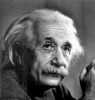 "The word God is for me nothing more than the expression and product of human weaknesses, the Bible a collection of honorable, but still primitive legends which are nevertheless pretty childish. No interpretation no matter how subtle can (for me) change this." -- Albert Einstein -- Written in 1954 to Jewish philosopher Erik Gutkind.
