
Fact: The universe began to exist out of nothing
---The conclusion of this lecture is that the universe has not existed forever. Rather, the universe, and time itself, had a beginning in the Big Bang, about 15 billion years ago. Source
---As a result of the Big Bang (the tremendous explosion which marked the beginning of our Universe), the universe is expanding and most of the galaxies within it are moving away from each other. Source
---The universe had a beginning. There was once nothing and now there is something. Source
Fact: The universe is fine tuned for life
---The laws of nature form a system that is extremely fine-tuned, and very little in physical law can be altered without destroying the possibility of the development of life as we know it. Were it not for a series of startling coincidences in the precise details of physical law, it seems, humans and similar life-forms would never have come into being. Source
---It is this extraordinary instance of apparent fine tuning, and others, which has brought the worlds most respected cosmologists, including Leonard Susskind, Alan Guth, Alexander Vilenkin, Brian Greene, Max Tegmark, & Andrei Linde, to recognize not only the legitimacy of the phenomenon, but the necessity to explain it. Source
Fact: Jesus was a historical figure and the New Testament relays semi-reliable information about him
---With respect to Jesus, we have numerous, independent accounts of his life in the sources lying behind the Gospels (and the writings of Paul) -- sources that originated in Jesus' native tongue Aramaic and that can be dated to within just a year or two of his life (before the religion moved to convert pagans in droves). Historical sources like that are is pretty astounding for an ancient figure of any kind. Moreover, we have relatively extensive writings from one first-century author, Paul, who acquired his information within a couple of years of Jesus' life and who actually knew, first hand, Jesus' closest disciple Peter and his own brother James. If Jesus did not exist, you would think his brother would know it......Whether we like it or not, Jesus certainly existed. Source
Fact: The tomb Jesus was buried in after his crucifixion and death was found empty
---The stolen body hypothesis posits that the body of Jesus Christ was stolen from his burial place. His tomb was found empty not because he was resurrected, but because the body had been hidden somewhere else by the apostles or unknown persons. Source
---An examination of both Pauline and gospel material leads to eight lines of evidence in support of the conclusion that Jesus's tomb was discovered empty: (1) Paul's testimony implies the historicity of the empty tomb, (2) the presence of the empty tomb pericope in the pre-Markan passion story supports its historicity, (3) the use of 'on the first day of the week' instead of 'on the third day' points to the primitiveness of the tradition, (4) the narrative is theologically unadorned and non-apologetic, (5) the discovery of the tomb by women is highly probable, (6) the investigation of the empty tomb by the disciples is historically probable, (7) it would have been impossible for the disciples to proclaim the resurrection in Jerusalem had the tomb not been empty, (8) the Jewish polemic presupposes the empty tomb. Source
And in light of all this I suspect there will still be nonbelievers posting in this thread who will continue to deny these 4, well established facts. For the sake of intellectual honesty (a virtue that is desperately needed on this forum) theists need to admit that these facts do not decisively prove God's existence. They only lend support to the proposition of God and the God hypothesis is only one of many explanations that accounts for these facts. In turn, atheists need to stop mimicking young earth creationists by denying these scientific and historical facts. There are many atheists and nontheists on this forum who do accept these facts without any reservations, but the ones that don't really need to start getting with program.
Question: Are the four items listed above facts? If so, how much credibility do they give the God hypothesis and Christian theism?
The Problem with NonTheists and Facts
Moderator: Moderators
-
historia

- Prodigy
- Posts: 3026
- Joined: Wed May 04, 2011 6:41 pm
- Has thanked: 299 times
- Been thanked: 470 times
Re: The Problem with NonTheists and Facts
Post #31Haven wrote:
I don't dispute that there were Christians in the first century; there is plenty of evidence to support that. This does not mean, however, that a literal Christ figure is necessary to explain the emergence of Christianity (unless, of course, you feel that a historical Xenu is necessary to explain the rise of Scientology or a historical Moroni is necessary to explain the rise of Mormonism).
I like your idea here of drawing an anlaogy to other religious movements. But in this case I think you have the particulars wrong.
Religious movements with non-existent central figures start all the time (such as the aforementioned Mormonism with Moroni and Scientology with Xenu). The real catalyst for the growth of Christianity was not Jesus, but Paul, just like the spark for the growth of Mormonism was Joseph Smith, not the angel Moroni. It was Paul, not Jesus, who spread the religion across Western Asia and Southern Europe, and it was Paul who established most of the central doctrine for the religion; a similar process occurred with Joseph Smith and L. Ron Hubbard.
Christians view Jesus of Nazareth as the founder of their religion. In the same way, Mormons view Joseph Smith as the founder of their church, and Scientologists view L. Ron Hubbard as the founder of their movement.
Mormons do not view the angel Moroni as the founder of their church, nor do Scientologists view Xenu as the founder of Scientology. Comparing Jesus to these figures, then, would be inaccurate. It would also be inaccurate to describe either as 'central' to each faith, although that is somewhat beside the point.
Rather, the direct analogy here would be: Arguing that Jesus didn't exist and that Paul was the 'real' founder of Christianity would be like arguing that Joseph Smith didn't exist and Brigham Young was the real founder of Mormonism, or that L. Ron Hubbard didn't exist and David Miscavige is the real founder of Scientology. That would be absurd, of course.
Again, I think your analogy here is mistaken. But putting that aside for a second:
Jesus could just as easily been the invention of Paul, the Essenes, the writer of Q, or some other first-century (group of) Hellenized Jew(s), in the same way that Xenu was the invention of L. Ron Hubbard or Moroni was the invention of Joseph Smith. To claim otherwise is to engage in the fallacy of special pleading.
We can, of course, dream-up all kinds of alternative hypotheses to explain any historical event. The question that faces us here, as elsewhere when examining the past, is: Which of the available hypotheses best explains the available data. An historical Jesus of Nazareth explains the emergence of Christianity and the subsequent historical documents of the movement quite well.
Could Paul just as easily have invented Jesus? If by that you mean that the hypothesis that Paul invented Jesus explains the available data equally as well as the hypothesis of an historical Jesus, I'd have to disagree quite strongly. Paul writes in his letters that he persecuted the Christian movement prior to converting to it. Contrary to your assertion above, he also tells us that the major tenants of the faith were passed onto him. It would be unusual for someone to persecute, and then convert to, the very movement he supposedly founded.
I think perhaps you've misunderstood the argument. If I may:No we don't. The Synoptics aren't independentWinePusher wrote:
We have multiple, independent attestation for Jesus of Nazareth.
Scholars are in agreement that the authors of the canonical gospels and Acts utilized a number of earlier sources when compiling their books. These sources include (1) the material in Mark, (2) the sayings source used by both Matthew and Luke (called 'Q'), (3) the material unique to Matthew's gospel (often called 'M'), (4) the material unique to Luke's gospel (likewise called 'L'), (5) the material used by the author of John, and (6) material used by Luke in Acts. These six sources do not show signs of dependence on each other, and so constitute independent attestations of Jesus of Nazareth.
True, but Paul met Jesus' brother, James, Jesus' closest disciple, Peter, and knew Jesus' other brothers. It would be unusual for someone who didn't exist to have a family and disciples.
Paul never met Jesus (and so can't attest to his existence)
-
Danmark

- Site Supporter
- Posts: 12697
- Joined: Sun Sep 30, 2012 2:58 am
- Location: Seattle
- Been thanked: 1 time
Post #32
Re: both Mormonism and Scientology, wouldn't Paul be analogous to both Joseph Smith and L. Ron Hubbard as founders of their respective faiths*? I assume Mormons have the same, or similar view of Jesus as being worthy of worship. Neither Paul nor Joseph Smith are worshiped in either mainstream Christianity or LDS.
________________
*With Scientology it seems wrong to call it a 'faith,' so I use the term for convenience only.
________________
*With Scientology it seems wrong to call it a 'faith,' so I use the term for convenience only.
-
Haven

- Guru
- Posts: 2023
- Joined: Sun Jan 12, 2014 8:23 pm
- Location: Great Barrington, MA
- Has thanked: 205 times
- Been thanked: 209 times
Re: The Problem with NonTheists and Facts
Post #33Actually, it isn't that simple. Most educated Christians recognize that Jesus himself wasn't a Christian, but a Jew, and that the framework for the modern Christian religion came largely from Paul, the gospel writers, and the early church fathers (Catholics, especially, accept this). In this sense, Jesus would be more analogous to a Xenu or Moroni than a Smith or Hubbard -- a 'spiritual founder' or central figure worthy of reverence, but not an individual who actually built the religion.[color=brown]historia[/color] wrote: I like your idea here of drawing an anlaogy to other religious movements. But in this case I think you have the particulars wrong.
Christians view Jesus of Nazareth as the founder of their religion. In the same way, Mormons view Joseph Smith as the founder of their church, and Scientologists view L. Ron Hubbard as the founder of their movement.
Mormons do not view the angel Moroni as the founder of their church, nor do Scientologists view Xenu as the founder of Scientology. Comparing Jesus to these figures, then, would be inaccurate. It would also be inaccurate to describe either as 'central' to each faith, although that is somewhat beside the point.
Well, no, it's not absurd. We have no documents written by Jesus, no direct records of Jesus, no artifacts linked to Jesus, no anything linked directly to Jesus. Everything we know of Jesus comes to us from Paul, the epistle writers, the gospel writers, and the early church fathers. These individuals, not Jesus, were responsible for creating Christianity.[color=orange]historia[/color] wrote:Rather, the direct analogy here would be: Arguing that Jesus didn't exist and that Paul was the 'real' founder of Christianity would be like arguing that Joseph Smith didn't exist and Brigham Young was the real founder of Mormonism, or that L. Ron Hubbard didn't exist and David Miscavige is the real founder of Scientology. That would be absurd, of course.
In contrast, we do have writings, direct records, and physical artifacts (including photographs and government documents) linked to L. Ron Hubbard and Joseph Smith. We have hard evidence that they existed and were responsible for establishing Scientology and Mormonism, respectively.
Because of this, comparing these two to Jesus is disanalogous, as there is direct evidence linking them to the development of their religions, while all historical evidence available to us today shows that the early church, while based on the veneration of Jesus, was not founded by Jesus.
A historical Moroni would also explain the rise of Mormonism quite well (perhaps even better than supposing Smith made everything up), but there is no evidence to support the angel's existence and there is evidence that Smith lied. It is a similar situation for Jesus and the emergence of Christianity: there is little evidence that he existed and zero evidence that he was involved in Christianity, but there is evidence that Paul, the early church fathers, and other first- and second-century individuals were involved in the emergence of the religion. A historical Jesus is wholly unnecessary to explain the rise of the Christian faith.[color=red]historia[/color] wrote: We can, of course, dream-up all kinds of alternative hypotheses to explain any historical event. The question that faces us here, as elsewhere when examining the past, is: Which of the available hypotheses best explains the available data. An historical Jesus of Nazareth explains the emergence of Christianity and the subsequent historical documents of the movement quite well.
(Keep in mind I am not a Christ mythicist, but an agnostic as to the existence or non-existence of Jesus).
Religious leaders, even today, often claim to have been skeptics or persecutors of their respective faiths before becoming advocates for them (such as, to give a few of many examples, Josh McDowell, Lee Strobel, Kirk Cameron, and C.S. Lewis). It's entirely possible, dare I say probable, that Paul fit into this category, whether by honest conversion, embellishment, or outright fabrication.[color=olive]historia[/color] wrote:Paul writes in his letters that he persecuted the Christian movement prior to converting to it. Contrary to your assertion above, he also tells us that the major tenants of the faith were passed onto him. It would be unusual for someone to persecute, and then convert to, the very movement he supposedly founded.
Even if his conversion was genuine, such a change wouldn't be unusual for leaders in evangelistic religious movements.
In addition, the "received" statement Paul made indicates nothing, as similar claims are made by founding members of other religions (such as Muhammad in Islam or Joseph Smith in Mormonism).
This is all correct, but we do know that the vast majority of Matthew, Luke, and Mark are interdependent (depending on Mark and Q), while M, L, and Acts (written by the unknown author of Luke) come to us from completely anonymous, unknown, and uncorroborated sources that contain numerous fantastical claims and express an explicit bias toward Christian belief. These documents do not count as 'multiple independent attestation' in the historical sense.[color=green]historia[/color] wrote: I think perhaps you've misunderstood the argument. If I may:
Scholars are in agreement that the authors of the canonical gospels and Acts utilized a number of earlier sources when compiling their books. These sources include (1) the material in Mark, (2) the sayings source used by both Matthew and Luke (called 'Q'), (3) the material unique to Matthew's gospel (often called 'M'), (4) the material unique to Luke's gospel (likewise called 'L'), (5) the material used by the author of John, and (6) material used by Luke in Acts. These six sources do not show signs of dependence on each other, and so constitute independent attestations of Jesus of Nazareth.
In fact, if such unknown and largely interdependent texts count as multiply attesting sources, then the Gnostic and apocryphal gospels (such as the Gospel of Thomas, Gospel of Peter, and the Gospel of Mary) should also count as independent attestation, yet no scholar considers them to be so. Why? Because many individuals, including a fair number of historians and Biblical scholars, are biased toward the Christian faith.
There is no evidence of this outside of Paul's own writings. Keep in mind Joseph Smith claimed to meet angels, Jesus, and the Abrahamic god himself, but no one outside of the LDS community takes such claims seriously. Why should we take Paul at his word when he says he knew Peter and James? And even if he did, why should we believe that Peter, James, and 'Jesus' brothers' were actually related to Jesus, and not simply claiming to be so to gain authority in the church?[color=indigo]historia[/color] wrote: True, but Paul met Jesus' brother, James, Jesus' closest disciple, Peter, and knew Jesus' other brothers. It would be unusual for someone who didn't exist to have a family and disciples.
Haven
“Reserve your right to think.†- Hypatia
“A wise man… proportions his belief to the evidence†- David Hume
“Reserve your right to think.†- Hypatia
“A wise man… proportions his belief to the evidence†- David Hume
-
historia
- Prodigy
- Posts: 3026
- Joined: Wed May 04, 2011 6:41 pm
- Has thanked: 299 times
- Been thanked: 470 times
Re: The Problem with NonTheists and Facts
Post #34I don't disagree with what you wrote here, but let's flesh it out a bit further:Haven wrote:Actually, it isn't that simple. Most educated Christians recognize that Jesus himself wasn't a Christian, but a Jew, and that the framework for the modern Christian religion came largely from Paul, the gospel writers, and the early church fathers (Catholics, especially, accept this).historia wrote: I like your idea here of drawing an anlaogy to other religious movements. But in this case I think you have the particulars wrong.
Christians view Jesus of Nazareth as the founder of their religion. In the same way, Mormons view Joseph Smith as the founder of their church, and Scientologists view L. Ron Hubbard as the founder of their movement.
Mormons do not view the angel Moroni as the founder of their church, nor do Scientologists view Xenu as the founder of Scientology. Comparing Jesus to these figures, then, would be inaccurate. It would also be inaccurate to describe either as 'central' to each faith, although that is somewhat beside the point.
Most educated Christians understand that Jesus wasn't setting out to found a new 'religion', as such. But most educated Christians, as well as virtually all scholars, recognize that Jesus was an historical person who preached a message, gathered followers, identified twelve of them as his disciples, and in that way started a religious movement.
After his death, Jesus' disciples and his brother James continued that movement, which developed into a Jewish sect (similar to the Pharisees and Essenes), which Paul originally persecuted, but then later converted to. Paul and many other Christian thinkers contributed to the early theology and practices of this sect, which over the centuries evolved into what we know of today as Christianity.
In that way, we can speak of Jesus as the founder of Christianity in the same way Joseph Smith is the founder of Mormonism or L. Ron Hubbard is the founder of Scientology -- while recognizing that, as with all analogies, each situation is slightly different.
Again, I think you are simply mistaken here, and your knowledge of these religious groups appears a bit fuzzy.
In this sense, Jesus would be more analogous to a Xenu or Moroni than a Smith or Hubbard -- a 'spiritual founder' or central figure worthy of reverence, but not an individual who actually built the religion.
Mormons do not view Moroni as the "spiritual founder" (whatever that might mean) of their church, nor do Scientologists view Xenu in this way. Joseph Smith claimed to have a vision of an angel he called Moroni, and Hubbard invented a mythology that includes a figure named Xenu. Neither are "central figures" in either religion, and are not "revered" as such. Xenu is a particularly bad choice here, as he functions as the antagonist in Scientologist mythology. He's more like a satan figure.
Perhaps I wasn't clear above. My argument here is that it would be absurd to argue that Brigham Young was the "real" founder of Mormonism or that David Miscavige was the "real" founder of Scientology. Obviously, both men are important and influential second-generation leaders of those movements. But they are not the founders; that role properly belongs to Smith and Hubbard, respectively.Well, no, it's not absurd. We have no documents written by Jesus, no direct records of Jesus, no artifacts linked to Jesus, no anything linked directly to Jesus. Everything we know of Jesus comes to us from Paul, the epistle writers, the gospel writers, and the early church fathers. These individuals, not Jesus, were responsible for creating Christianity.historia wrote:
Rather, the direct analogy here would be: Arguing that Jesus didn't exist and that Paul was the 'real' founder of Christianity would be like arguing that Joseph Smith didn't exist and Brigham Young was the real founder of Mormonism, or that L. Ron Hubbard didn't exist and David Miscavige is the real founder of Scientology. That would be absurd, of course.
Likewise, it would be absurd to argue that Paul is the "real" founder of the Christian movement. Paul is a classic second-generation leader who helped shape and oversee the growth of the movement. He tells us quite plainly that he persecuted the movement before converting to it. There were people in the movement, both in his day and in subsequent centuries (e.g., the Ebionites), who believed that Jesus was the messiah but didn't accept Paul's authority and teachings. How can you explain all of this if Paul was, in fact, the founder of the movement and that he "invented" Jesus? That makes no sense.
Well, yeah, this tends to be true of modern religious movements. Unfortunately, it's not always the case for ancient ones, like Christianity. That's simply a function of the literacy levels and the expense of producing literary texts in the ancient world, as well as the cost of copying and preserving those texts down through the centuries to our own time.
In contrast, we do have writings, direct records, and physical artifacts (including photographs and government documents) linked to L. Ron Hubbard and Joseph Smith. We have hard evidence that they existed and were responsible for establishing Scientology and Mormonism, respectively.
How so? Virtually every Christian document we posses from the first century to the present, as well as pagan and Jewish sources hostile to Christianity, point to Jesus of Nazareth as the originator and founder of the movement. Can you furnish a text naming Paul or anyone else as the founder? If not, it would seem, then, that "all of the historical evidence," whatever you want to make of it, points to Jesus as the founder.
Because of this, comparing these two to Jesus is disanalogous, as there is direct evidence linking them to the development of their religions, while all historical evidence available to us today shows that the early church, while based on the veneration of Jesus, was not founded by Jesus.
Your thinking here seems confused. Smith never claimed that Moroni was a person who lived in the 19th Century, and so no one imagines that he actually founded the Mormon Church rather than Smith. How then would an "historical Moroni" explain the emergence of Mormonism?A historical Moroni would also explain the rise of Mormonism quite well (perhaps even better than supposing Smith made everything up), but there is no evidence to support the angel's existence and there is evidence that Smith lied.historia wrote:
We can, of course, dream-up all kinds of alternative hypotheses to explain any historical event. The question that faces us here, as elsewhere when examining the past, is: Which of the available hypotheses best explains the available data. An historical Jesus of Nazareth explains the emergence of Christianity and the subsequent historical documents of the movement quite well.
As I already mentioned above, the gospels say quite plainly that Jesus preached a message of the coming of the Kingdom of God, gathered followers, and Paul and Luke tell us he had brothers and disciples that continued the movement after his death. To say that there is "zero evidence that he was involved in Christianity," then, is absurd, or leaves us quibbling over labels like "Christianity."
It is a similar situation for Jesus and the emergence of Christianity: there is little evidence that he existed and zero evidence that he was involved in Christianity, but there is evidence that Paul, the early church fathers, and other first- and second-century individuals were involved in the emergence of the religion. A historical Jesus is wholly unnecessary to explain the rise of the Christian faith.
Look at the issue the other way around:
Would Mormonism exist without Joseph Smith? Nope, we would have no knowledge of the Book of Mormon, the peculiars of the Mormon faith, or even the movement itself if not for Smith. Likewise, Scientology would simply not exist without the writings and organization founded by L. Ron Hubbard.
But would Christianity exist if Paul never existed? Sure. As I already mentioned, the movement started before Paul. He says himself that he persecuted the sect before later converting to it. We know that some Christians in Paul's day and later (e.g., the Ebionites) did not accept Paul's authority and teachings, and continued to practice a non-Pauline form of Christianity as late as the 5th Century. Christianity today would look very different without Paul, to be sure, but it would not exist at all if not for Jesus of Nazareth.
Okay, but the point here is that for Paul to convert to the Christian movement, that movement has to already exist. In that way, Paul cannot be the founder of the movement, in the same way Josh McDowell and Kirk Cameron didn't found Christianity either. That seems obvious, no?Religious leaders, even today, often claim to have been skeptics or persecutors of their respective faiths before becoming advocates for them (such as, to give a few of many examples, Josh McDowell, Lee Strobel, Kirk Cameron, and C.S. Lewis). It's entirely possible, dare I say probable, that Paul fit into this category, whether by honest conversion, embellishment, or outright fabrication.historia wrote:
Paul writes in his letters that he persecuted the Christian movement prior to converting to it. Contrary to your assertion above, he also tells us that the major tenants of the faith were passed onto him. It would be unusual for someone to persecute, and then convert to, the very movement he supposedly founded.
Even if his conversion was genuine, such a change wouldn't be unusual for leaders in evangelistic religious movements.
But Paul does not claim in 1 Cor. 15 that these traditions he received came from a revelation, as Muhammad or Smith claimed. These are clearly traditions he received from the Christians before him.
In addition, the "received" statement Paul made indicates nothing, as similar claims are made by founding members of other religions (such as Muhammad in Islam or Joseph Smith in Mormonism).
I'm glad we agree on that.This is all correct,historia wrote:
Scholars are in agreement that the authors of the canonical gospels and Acts utilized a number of earlier sources when compiling their books. These sources include (1) the material in Mark, (2) the sayings source used by both Matthew and Luke (called 'Q'), (3) the material unique to Matthew's gospel (often called 'M'), (4) the material unique to Luke's gospel (likewise called 'L'), (5) the material used by the author of John, and (6) material used by Luke in Acts. These six sources do not show signs of dependence on each other, and so constitute independent attestations of Jesus of Nazareth.
All historical sources are biased. That does not, in and of itself, discount them as independent attestations to a person or event. Many ancient documents likewise include legends and references to what we would today call "supernatural" events. That does not, in and of itself, discount the possibility that they also contain historical information, at least not in the minds of most historians. Your claim here, then, I think is simply misinformed.
, but we do know that the vast majority of Matthew, Luke, and Mark are interdependent (depending on Mark and Q), while M, L, and Acts (written by the unknown author of Luke) come to us from completely anonymous, unknown, and uncorroborated sources that contain numerous fantastical claims and express an explicit bias toward Christian belief. These documents do not count as 'multiple independent attestation' in the historical sense.
Actually, a fair number of scholars consider Thomas to be an early text and therefore constitutes our seventh early independent attestation to Jesus of Nazareth. Forgot about that one, thanks for reminding me. Many of the second century gospels are not considered independent as they seem dependent upon the canonical gospels.
In fact, if such unknown and largely interdependent texts count as multiply attesting sources, then the Gnostic and apocryphal gospels (such as the Gospel of Thomas, Gospel of Peter, and the Gospel of Mary) should also count as independent attestation, yet no scholar considers them to be so. Why?
Including Jewish scholars like Geza Vermes and an agnostic like Ehrman? Plus the untold numbers of non-Christian scholars of ancient history and related fields who believe Jesus was an historical figure? It seems to me the folks on this side of the issue are quite diverse, whereas the so-called Mythicists are almost all anti-Christian atheists. Funny that.
Because many individuals, including a fair number of historians and Biblical scholars, are biased toward the Christian faith.
The gospels also record that Jesus had brothers and one was named James. Or do you mean evidence of Paul meeting them? Why should we expect there to be?There is no evidence of this outside of Paul's own writings.historia wrote:
True, but Paul met Jesus' brother, James, Jesus' closest disciple, Peter, and knew Jesus' other brothers. It would be unusual for someone who didn't exist to have a family and disciples.
Why should we assume that he's lying?
Why should we take Paul at his word when he says he knew Peter and James?
Your comment here and above is a classic example of special pleading. You leveled that claim against WP, but clearly believing that one hypothesis better accounts for the available data compared to others is not special pleading.
But moving the goal posts every time you are confronted with data that dis-confirms your hypothesis -- claiming that the author is lying or that without additional mentions of an event we cannot take it as evidence -- as you have done here, is very much special pleading.
But I thought you said that Paul invented Jesus? Or rather you argued that this was just as likely as the claim that Jesus existed. Why would Paul allow other people to claim to be related to the figure he invented? Why couldn't Paul also claim he was the brother or early disciple of Jesus? Clearly, by not claiming this, he was at a disadvantage, and the chief reason his authority was doubted.
And even if he did, why should we believe that Peter, James, and 'Jesus' brothers' were actually related to Jesus, and not simply claiming to be so to gain authority in the church?
Do you not see how absurd this hypothesis is? Clearly, it cannot account for the available data.
-
Tired of the Nonsense

- Site Supporter
- Posts: 5680
- Joined: Fri Oct 30, 2009 6:01 pm
- Location: USA
- Been thanked: 1 time
Re: The Problem with NonTheists and Facts
Post #35[Replying to WinePusher]
Here's the problem with theists and their "facts." When their "facts" don't hold up, theists bail.
Here's the problem with theists and their "facts." When their "facts" don't hold up, theists bail.
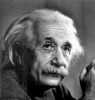 "The word God is for me nothing more than the expression and product of human weaknesses, the Bible a collection of honorable, but still primitive legends which are nevertheless pretty childish. No interpretation no matter how subtle can (for me) change this." -- Albert Einstein -- Written in 1954 to Jewish philosopher Erik Gutkind.
-
Jax Agnesson

- Guru
- Posts: 1819
- Joined: Mon Mar 12, 2012 11:54 am
- Location: UK
Re: The Problem with NonTheists and Facts
Post #36[Replying to post 35 by Tired of the Nonsense]
I get the impression that's especially true on religious debate forums. I get a little disappointed when I raise a really strong point and the debate 'partner' just fails to come back to the thread.
(NB: Often I might think I've raised a really strong point, but there's something I haven't considered. That happens, but in those cases the debater, or someone else, will usually come straight back at me. It's when s/he just bails that I'm left still thinking my point is a killer. How would I know?)
And IMO it does seem to happen more with religious debates than other subjects (philosophy, politics, economics etc)
Maybe it's something to do with the religious believers' frequent claim that you can choose what to believe. If you can't defeat an argument, you can just decide it's not real. Something like that.
For comparison: if someone shows that your current understanding of maths or physics is wrong, you can't just pretend it's not important; you have to think about it. And what's more, if your debate partner turns out to be right, you're more likely to be grateful than anything else. You've learned something. So there's no shame in going back to the thread and saying, 'Thanks, dude. That makes sense.'
In debates with religious believers, you rarely get that. Even if your point is logically so solid that it can't be refuted, they just drift off.
I get the impression that's especially true on religious debate forums. I get a little disappointed when I raise a really strong point and the debate 'partner' just fails to come back to the thread.
(NB: Often I might think I've raised a really strong point, but there's something I haven't considered. That happens, but in those cases the debater, or someone else, will usually come straight back at me. It's when s/he just bails that I'm left still thinking my point is a killer. How would I know?)
And IMO it does seem to happen more with religious debates than other subjects (philosophy, politics, economics etc)
Maybe it's something to do with the religious believers' frequent claim that you can choose what to believe. If you can't defeat an argument, you can just decide it's not real. Something like that.
For comparison: if someone shows that your current understanding of maths or physics is wrong, you can't just pretend it's not important; you have to think about it. And what's more, if your debate partner turns out to be right, you're more likely to be grateful than anything else. You've learned something. So there's no shame in going back to the thread and saying, 'Thanks, dude. That makes sense.'
In debates with religious believers, you rarely get that. Even if your point is logically so solid that it can't be refuted, they just drift off.
-
Tired of the Nonsense
- Site Supporter
- Posts: 5680
- Joined: Fri Oct 30, 2009 6:01 pm
- Location: USA
- Been thanked: 1 time
Re: The Problem with NonTheists and Facts
Post #37[Replying to Jax Agnesson]
The problem for theists is that they are locked into a system of belief that simply does not hold up to any sort of as sustained contemplation of it. Reason, logic and the facts themselves simply are not on their side. This comes as quite a shock to the newbies on the forum, who have been conditioned their entire lives to believe that Christian claims are not only completely and undeniably true, but that any sustained contemplation of the facts invariably leads to the total Christian conversion of the doubter. This is what I refer to as "Christian mythology." Christian mythology arises from the assumptions contrived from Christian storytelling which Christians pass among themselves and then contrive to believe actually represents accepted fact. Another example would be the popular notion among Christians that evolution is a failed "theory" which even science has now largely abandoned. This of course has no connection to the actual facts whatsoever, but it is a commonly held myth in many Christian circles all the same. As a result, when Christians come out into the arena of the real world, armed in the righteous shield and buckler of Christian "truths," truths which in fact are little more then massive amounts of assumption and Christian mythology, they are inevitably horrified and dismayed as they watch their unassailable assertions systematically destroyed before their very eyes as if they were so many children's fairy tales. Many simply recoil in horror and abruptly disappear from the forum as a result of first contact with such powerfully blasphemous and startlingly effective contradictions to their lifetime of religious programming. Others cease to debate, but then spend their efforts slinging invective at their tormentors as if their tormentors were the problem rather then the nature of the arguments that they themselves have so unexpectedly been presented with. As a result these individuals eventually get banished from the forum.
And then there are those few others like WinePusher, who choose to stay and fight the good fight, convinced that since they know for a fact that they are on the side of right they must ultimately prevail. Unfortunately for WinePusher and the others, they are still locked into the same ancient child-like system of mythology that simply cannot and does not hold up to any modern analysis of it. As a result they tend to flit from string to string, laying down their challenges (their "fun facts") and then abruptly moving on when confronted by counter arguments which effectively shreds their own, and for which they have no real means to overcome. At least they are consistent in that they do exhibit the strength of their convictions, something which the majority of believers on this forum completely fail to do. So kudos to them for that at least. But WinePusher, if you are reading this, we answered each one of your "facts" thoroughly. If you have no further comment then we can only conclude that our rebuttal to your "facts" were well taken by you, and that you have nothing further to say because there is nothing further you CAN say. If debate is a form of combat, then you have fled the field of battle and the day is ours. Means you lose. Again.
The problem for theists is that they are locked into a system of belief that simply does not hold up to any sort of as sustained contemplation of it. Reason, logic and the facts themselves simply are not on their side. This comes as quite a shock to the newbies on the forum, who have been conditioned their entire lives to believe that Christian claims are not only completely and undeniably true, but that any sustained contemplation of the facts invariably leads to the total Christian conversion of the doubter. This is what I refer to as "Christian mythology." Christian mythology arises from the assumptions contrived from Christian storytelling which Christians pass among themselves and then contrive to believe actually represents accepted fact. Another example would be the popular notion among Christians that evolution is a failed "theory" which even science has now largely abandoned. This of course has no connection to the actual facts whatsoever, but it is a commonly held myth in many Christian circles all the same. As a result, when Christians come out into the arena of the real world, armed in the righteous shield and buckler of Christian "truths," truths which in fact are little more then massive amounts of assumption and Christian mythology, they are inevitably horrified and dismayed as they watch their unassailable assertions systematically destroyed before their very eyes as if they were so many children's fairy tales. Many simply recoil in horror and abruptly disappear from the forum as a result of first contact with such powerfully blasphemous and startlingly effective contradictions to their lifetime of religious programming. Others cease to debate, but then spend their efforts slinging invective at their tormentors as if their tormentors were the problem rather then the nature of the arguments that they themselves have so unexpectedly been presented with. As a result these individuals eventually get banished from the forum.
And then there are those few others like WinePusher, who choose to stay and fight the good fight, convinced that since they know for a fact that they are on the side of right they must ultimately prevail. Unfortunately for WinePusher and the others, they are still locked into the same ancient child-like system of mythology that simply cannot and does not hold up to any modern analysis of it. As a result they tend to flit from string to string, laying down their challenges (their "fun facts") and then abruptly moving on when confronted by counter arguments which effectively shreds their own, and for which they have no real means to overcome. At least they are consistent in that they do exhibit the strength of their convictions, something which the majority of believers on this forum completely fail to do. So kudos to them for that at least. But WinePusher, if you are reading this, we answered each one of your "facts" thoroughly. If you have no further comment then we can only conclude that our rebuttal to your "facts" were well taken by you, and that you have nothing further to say because there is nothing further you CAN say. If debate is a form of combat, then you have fled the field of battle and the day is ours. Means you lose. Again.
Last edited by Tired of the Nonsense on Thu Jan 23, 2014 4:58 pm, edited 1 time in total.
"The word God is for me nothing more than the expression and product of human weaknesses, the Bible a collection of honorable, but still primitive legends which are nevertheless pretty childish. No interpretation no matter how subtle can (for me) change this." -- Albert Einstein -- Written in 1954 to Jewish philosopher Erik Gutkind.-
WinePusher
Re: The Problem with NonTheists and Facts
Post #38LOL oh gosh, I think you're taking this internet forum way to seriously. Apparently you see this forum as some type of war battle between theists and atheists for the fate of the world. I don't, I see this forum for what it is. An internet forum where people can come and go as they please. Unlike a lot of people here, I don't spend my entire life on the internet. I have a real life, and I have my priorities straight. I have a family, I have friends, I have a job, I go to school, I have other hobbies other than this forum, I have a REAL life. And when there's a lot of stuff going on in the real world, I'm going to have to cut back on the amount of time I spend on the internet world.Tired of the Nonsense wrote:And then there are those few others like WinePusher, who choose to stay and fight the good fight, convinced that since they know for a fact that they are on the side of right they must ultimately prevail. Unfortunately for WinePusher and the others, they are still locked into the same ancient child-like system of mythology that simply cannot and does not hold up to any modern analysis of it. As a result they tend to flit from string to string, laying down their challenges (their "fun facts") and then abruptly moving on when confronted by counter arguments which effectively shreds their own, and for which they have no real means to overcome. At least they are consistent in that they do exhibit the strength of their convictions, something which the majority of believers on this forum completely fail to do. So kudos to them for that at least. But WinePusher, if you are reading this, we answered each one of your "facts" thoroughly. If you have no further comment then we can only conclude that our rebuttal to your "facts" were well taken by you, and that you have nothing further to say because there is nothing further you CAN say. If debate is a form of combat, then you have fled the field of battle and the day is ours. Means you lose. Again.
Apparently this isn't true for you. What a shame
 . When it comes to my list of priorities, well...you actually don't even appear on it at all. But the forum itself ranks very low, and this forum will always come last. Please, try to keep all of this in mind before you arrogantly declare yourself the victor. It's just the internet bro, lighten up
-
Tired of the Nonsense
- Site Supporter
- Posts: 5680
- Joined: Fri Oct 30, 2009 6:01 pm
- Location: USA
- Been thanked: 1 time
Re: The Problem with NonTheists and Facts
Post #39[Replying to post 38 by WinePusher]
This is an interesting statement concerning which of us spends too much time on the internet and which of us has "a real life." My total posts on the forum currently stand at 1549. Your posts stand at 3276, more then twice my own. This despite the fact that I have been a member of the forum longer than you. So even THIS argument you lose. This is a debate forum bro. Argument is what we do here. No one ever says, "You are right and I concede defeat." Defeat occurs when one party discovers that they have no effective rebuttal, and as a result are compelled to discontinue the argument.
But since you have chosen to return to the string, which YOU started by the way, even if only as the result of a small amount of needling on my part, let's return to the subject at hand. Which you have most conspicuously failed to address. Some of it concerns what I referred to as your "fun facts." Which have been thoroughly addressed and disallowed. And some of it concerns just who exactly has been intellectually honest, and who has been guilty of intellectual dishonesty. And so to prove my point I am going to ask of you this question yet again. Which do you personally consider to be the most likely answer to the question of an empty grave and a missing corpse; that it is more likely to have been the result of actions taken by the living, or more likely to have been the result of actions taken BY THE CORPSE? Since the answer here is overwhelmingly obvious, failure to answer it honestly establishes your total disconnect from any ACTUAL claim to intellectual honesty. And failure to respond to the question at all simply demonstrates conclusively that my claim that you have no means to overcome the argument is accurate. You simply haven't got the goods and you know it. And so your only course of action is to refuse to respond at all. As such we have every right to consider that you lost the argument. Again.
WinePusher wrote: LOL oh gosh, I think you're taking this internet forum way to seriously. Apparently you see this forum as some type of war battle between theists and atheists for the fate of the world. I don't, I see this forum for what it is. An internet forum where people can come and go as they please. Unlike a lot of people here, I don't spend my entire life on the internet. I have a real life, and I have my priorities straight. I have a family, I have friends, I have a job, I go to school, I have other hobbies other than this forum, I have a REAL life. And when there's a lot of stuff going on in the real world, I'm going to have to cut back on the amount of time I spend on the internet world.
Apparently this isn't true for you. What a shame . When it comes to my list of priorities, well...you actually don't even appear on it at all. But the forum itself ranks very low, and this forum will always comes last. Please, try to keep all of this in mind before you arrogantly declare yourself the victor. It's just the internet bro, lighten up.
This is an interesting statement concerning which of us spends too much time on the internet and which of us has "a real life." My total posts on the forum currently stand at 1549. Your posts stand at 3276, more then twice my own. This despite the fact that I have been a member of the forum longer than you. So even THIS argument you lose. This is a debate forum bro. Argument is what we do here. No one ever says, "You are right and I concede defeat." Defeat occurs when one party discovers that they have no effective rebuttal, and as a result are compelled to discontinue the argument.
But since you have chosen to return to the string, which YOU started by the way, even if only as the result of a small amount of needling on my part, let's return to the subject at hand. Which you have most conspicuously failed to address. Some of it concerns what I referred to as your "fun facts." Which have been thoroughly addressed and disallowed. And some of it concerns just who exactly has been intellectually honest, and who has been guilty of intellectual dishonesty. And so to prove my point I am going to ask of you this question yet again. Which do you personally consider to be the most likely answer to the question of an empty grave and a missing corpse; that it is more likely to have been the result of actions taken by the living, or more likely to have been the result of actions taken BY THE CORPSE? Since the answer here is overwhelmingly obvious, failure to answer it honestly establishes your total disconnect from any ACTUAL claim to intellectual honesty. And failure to respond to the question at all simply demonstrates conclusively that my claim that you have no means to overcome the argument is accurate. You simply haven't got the goods and you know it. And so your only course of action is to refuse to respond at all. As such we have every right to consider that you lost the argument. Again.
"The word God is for me nothing more than the expression and product of human weaknesses, the Bible a collection of honorable, but still primitive legends which are nevertheless pretty childish. No interpretation no matter how subtle can (for me) change this." -- Albert Einstein -- Written in 1954 to Jewish philosopher Erik Gutkind.-
WinePusher
Re: The Problem with NonTheists and Facts
Post #40WinePusher wrote:LOL oh gosh, I think you're taking this internet forum way to seriously. Apparently you see this forum as some type of war battle between theists and atheists for the fate of the world. I don't, I see this forum for what it is. An internet forum where people can come and go as they please. Unlike a lot of people here, I don't spend my entire life on the internet. I have a real life, and I have my priorities straight. I have a family, I have friends, I have a job, I go to school, I have other hobbies other than this forum, I have a REAL life. And when there's a lot of stuff going on in the real world, I'm going to have to cut back on the amount of time I spend on the internet world.
Apparently this isn't true for you. What a shame . When it comes to my list of priorities, well...you actually don't even appear on it at all. But the forum itself ranks very low, and this forum will always comes last. Please, try to keep all of this in mind before you arrogantly declare yourself the victor. It's just the internet bro, lighten up.
Who said anything about post counts? You're clearly upset cause I haven't responded to your posts in this thread and I'm simply explaining why. I have a real life, and real life comes first before internet life. Why can't you understand this? A lot of us don't have the luxury to spend our every waking breath on this forum. This means that you won't get responses and rebuttals as quickly as you would like. Deal with it. I participate on this forum whenever I have free time and whenever I see a thread that peaks my interest, and 3277 posts over a 4 year period is rather moderate compared to some of the other 'records' I've seen.Tired of the Nonsense wrote:This is an interesting statement concerning which of us spends too much time on the internet and which of us has "a real life." My total posts on the forum currently stand at 1549. Your posts stand at 3276, more then twice my own. This despite the fact that I have been a member of the forum longer than you. So even THIS argument you lose.
There is no such thing as 'defeat' and 'victory' in debate. I find this type of win-lose attitude to be completely unproductive and immature.Tired of the Nonsense wrote:This is a debate forum bro. Argument is what we do here. No one ever says, "You are right and I concede defeat." Defeat occurs when one party discovers that they have no effective rebuttal, and as a result are compelled to discontinue the argument.
"If you have to insist youve won an internet argument, youve probably lost badly."

I find it astounding that you think someone like you has 'thoroughly disallowed' the works of eminent scholars such as Stephen Hawking, Bart Ehrman and the entire scientific and historical community. You probably missed it, but I listed sources below each one of those facts, and you along with a host of other people just chose to ignore it and carry on spreading misinformation.Tired of the Nonsense wrote:But since you have chosen to return to the string, which YOU started by the way, even if only as the result of a small amount of needling on my part, let's return to the subject at hand. Which you have most conspicuously failed to address. Some of it concerns what I referred to as your "fun facts." Which have been thoroughly addressed and disallowed.
1) This isn't the purpose of MY thread. Stop trying to derail it. The tomb was empty, and that's a fact. Until you accept this fact it will be impossible to debate the underlying causes of the empty tomb.Tired of the Nonsense wrote:Which do you personally consider to be the most likely answer to the question of an empty grave and a missing corpse; that it is more likely to have been the result of actions taken by the living, or more likely to have been the result of actions taken BY THE CORPSE?
2) I have already said to Haven that natural explanations are prima facie more likely than supernatural explanations. But, I see no need in debating this with you any further until you can honestly admit that the tomb was empty.
No, I'm actually willing to admit a number of things that run contrary to my position and harm my case. You won't. You'll keep denying whatever facts you don't like.Tired of the Nonsense wrote:Since the answer here is overwhelmingly obvious, failure to answer it honestly establishes your total disconnect from any ACTUAL claim to intellectual honesty.
Uh no. Haven't we gone over this already? I haven't failed to respond to anything. I was going to respond when I had the chance, over the upcoming weekend. I've had a lot on my plate this week and haven't had the time to sit down and write out a response to multiple debaters in this thread. But, I saw your little nonsense post about war and the battle between theists and atheists and fleeing and losing and being a coward and I just couldn't resist.Tired of the Nonsense wrote:And failure to respond to the question at all simply demonstrates conclusively that my claim that you have no means to overcome the argument is accurate.
I wasn't refusing to respond. I didn't have a chance to respond and anyone who's debated with me frequently over the past 4 years knows this. Like I said, my priorities aren't messed up. I don't worship this internet forum and devote every ounce of my life to it, unlike a lot of people here. My real life comes first, and this internet forum comes last. Anybody on here with a real life should understand this.Tired of the Nonsense wrote:You simply haven't got the goods and you know it. And so your only course of action is to refuse to respond at all. As such we have every right to consider that you lost the argument. Again.
And I can't say I appreciate you derailing my thread with all this nonsense. I guess you must not be tired of the nonsense anymore since you're single handily creating a bunch of nonsense here. You could have sent me a PM asking me to respond and I would have replied back by saying that I'd get to it over the weekend. That would be the civil and productive thing to do. But, you instead chose to ramble on about how you've won the war and how the Christians are fleeing the battlefield, etc etc etc. I cannot stress this enough: "If you have to insist youve won an internet argument, youve probably lost badly."

