
God formed Man out of the earth. and breathed into him the breath of life. and Man became a living being. Genesis 2:7
The dust returns to the earth as it was. and the spirit returns to God who gave it. Ecclesiastes 12:7
You do not die when the body dies the spirit is everlasting infinite standing on the ground of eternity. Bhagavad-Gita
All things are made of spirit and body. Spirit is the infinite and eternal part ( as per Genesis) Yang to the bodies Yin. Spirit is contagious it passes from one to another. it is greater than and not completely contained by the body. It resonates out from a person to his environment like neighboring tuning forks resonate at the same frequency. That's why Jesus said love your neighbor , because it will do you good. Spirit is recognized by all faiths a common thread running through them . Spirit is in you and affecting you everywhere you go. We already live in the spiritual world.
Question for discussion :
First of all , do you believe or feel you have a spirit? (if not please don't answer 3 and 4)
Are you a body with a spirit or a spirit with a body?
Do we generate our spirit or is spirit something eternal given to us?
feel free to comment on anything posted above.
What is spirit.
Moderator: Moderators
Re: What is spirit.
Post #51[Replying to post 48 by Clownboat]
I'm not talking about disembodied spirits , I'm talking about embodied spirit, spirit incarnate.
Jesus said the father is in me and I am in the father and I am in you and you are in me and we are all together, and the one spirit is more than the sum of parts.
I'm not talking about disembodied spirits , I'm talking about embodied spirit, spirit incarnate.
Jesus said the father is in me and I am in the father and I am in you and you are in me and we are all together, and the one spirit is more than the sum of parts.
-
Kenisaw
- Guru
- Posts: 2117
- Joined: Fri Oct 16, 2015 2:41 pm
- Location: St Louis, MO, USA
- Has thanked: 18 times
- Been thanked: 61 times
Re: What is spirit.
Post #52The clinical term for that is, if I'm not mistaken, schizophrenia.dio9 wrote: [Replying to post 48 by Clownboat]
I'm not talking about disembodied spirits , I'm talking about embodied spirit, spirit incarnate.
Jesus said the father is in me and I am in the father and I am in you and you are in me and we are all together, and the one spirit is more than the sum of parts.
Everything you are is physical, chemical, electrical. That's it.
-
Tired of the Nonsense

- Site Supporter
- Posts: 5680
- Joined: Fri Oct 30, 2009 6:01 pm
- Location: USA
- Been thanked: 1 time
Post #53
I have numerous acquaintances who are fully and utterly convinced of the existence of ghosts. I know a Chinese couple that are forced to move into a new home every five years of so, because their homes invariably become infested with ghosts. My own home was built in 1916, has a large basement with two rooms, and a full walk-in attic. The husband of the previous owners actually passed away in the very room that I have been sleeping in for the last 32 years. I sleep like a baby in that room. Despite all of this potential I have never seen a ghost.Justin108 wrote:Do you see dead people? Do they walk around like regular people? Do they not know they're dead?dio9 wrote: [Replying to Tired of the Nonsense]
some people just don't have a sense of spirit. Its a sense thing. Spirit is as obvious to me as the sunrise. what can I say? just smell the roses.
My Chinese friends would never agree to set foot in my house for any reason, and cannot understand how I could possibly live there. My explanation is that I am protected from seeing ghosts by the simple fact that I do not believe in ghosts.
Not believing in ghosts and never experiencing an encounter with a ghost is very much the same things as no ghosts existing in the first place. At least for me.
In all my 69 years God has never once spoken to me in my "mind" either. It's amazing what a little non belief can do.
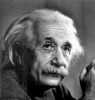 "The word God is for me nothing more than the expression and product of human weaknesses, the Bible a collection of honorable, but still primitive legends which are nevertheless pretty childish. No interpretation no matter how subtle can (for me) change this." -- Albert Einstein -- Written in 1954 to Jewish philosopher Erik Gutkind.
Re: What is spirit.
Post #54[Replying to post 52 by Kenisaw]
Are you a clinician? I'm not talking about ghosts . I'm talking about life I hope you are not suggesting spirituality and the centuries of religious traditions are some form of mental illness? are you pretending to be a modern physical chemical electrical sage ?
Oh sure dismiss the thousand year history of philosophy and theology with ever changing scientific discovery.
You know Newton Descartes Bacon were all believers.
Are you a clinician? I'm not talking about ghosts . I'm talking about life I hope you are not suggesting spirituality and the centuries of religious traditions are some form of mental illness? are you pretending to be a modern physical chemical electrical sage ?
Oh sure dismiss the thousand year history of philosophy and theology with ever changing scientific discovery.
You know Newton Descartes Bacon were all believers.
Last edited by dio9 on Mon Jul 31, 2017 6:50 pm, edited 1 time in total.
-
Tired of the Nonsense
- Site Supporter
- Posts: 5680
- Joined: Fri Oct 30, 2009 6:01 pm
- Location: USA
- Been thanked: 1 time
Re: What is spirit.
Post #55Do you deny that you believe in ghosts?dio9 wrote: [Replying to post 52 by Kenisaw]
I'm not talking about ghosts . I'm talking about life.
give me some references you know what you are talking about when you say schizophrenia? are you suggesting spirituality is some form of mental illness? I suggest you don't know what you are talking about. obviously you don't know what spirit is.
Yes, actually.dio9 wrote: are you suggesting spirituality is some form of mental illness?
Religious OCD: 'I'm going to hell'
By Elizabeth Landau, CNN
updated 7:33 AM EDT, Sat May 31, 2014
(CNN) -- When she was 12, Jennifer Traig's hands were red and raw from washing them so much. She'd start scrubbing a half an hour before dinner; when she was done, she'd hold her hands up like a surgeon until her family sat down to eat.
Jennifer Traig was obsessed with cleanliness and avoiding pork fumes when she was a teenager.
Her handwashing compulsions began at the time she was studying for her Bat Mitzvah. She was so worried about being exposed to pork fumes that she cleaned her shoes and barrettes in a washing machine.
"Like a lot of people with OCD, I tended to obsess about cleanliness," said Traig, now 42. "But because I was reading various Torah portions, I was obsessed with a biblical definition of cleanliness."
Family dinners were awkward for Tina Fariss Barbour, too, as an adolescent. She would concentrate so hard on praying for forgiveness that if anyone tried to interrupt her thoughts, she wouldn't respond.
"First I had to get rid of all my sins, ask forgiveness, do it in the right way, and then I had to pray for protection," said Barbour, now 50. "Or, if something bad happened to my family, it would be my fault because I had not prayed good enough."
The women come from different faith backgrounds: Barbour is Methodist and Traig is Jewish. But as children they believed fervently that they needed to conduct their own rituals and prayers, or else disaster would befall their families.
Both women say they suffered from a form of obsessive-compulsive disorder known as scrupulosity. A fear of sin or punishment from deities characterizes this condition, said Jonathan Abramowitz, professor and associate chairman of the department of psychology at the University of North Carolina, Chapel Hill.
Obsessive Compulsive Disorder, or OCD, involves unwanted thoughts ("obsessions") and accompanying behaviors called compulsions that patients use to reduce anxiety. In scrupulosity, the obsessions have a religious or moral underpinning.
Patients with scrupulosity often describe how they believe their thoughts are morally equivalent to actions, Abramowitz said. Psychologists call this phenomenon "thought-action fusion."
"Scrupulosity literally means 'fearing sin where there is none,' " Abramowitz and colleague Ryan Jacoby wrote in a recent article.
How common is this condition?
Scrupulosity is an understudied subcategory of OCD. Attempts at characterizing how many people might have this disorder, from the 1990s and early 2000s, suggested that somewhere between 5% and 33% of OCD patients have religious obsessions. Scientists are not sure what causes OCD, but they believe a combination of genetic and environmental factors may be at play.
In societies where religiosity is more stringent, the numbers are higher: 50% of OCD patients in Saudi Arabia and 60% in Egypt said they had religious obsessions, according to studies from the early 1990s.
A small number of people with scrupulosity are not religious at all, and a fear of moral transgression or inadvertently offending others weighs on their conscience, Abramowitz said.
OCD makes you think in black and white. There are no gray areas. Clean or not. Good or bad. There's nothing in between.
Tina Fariss Barbour
Psychologists do not believe that religion causes people to develop OCD. However, religion may influence whether someone with OCD experiences obsessions and compulsions related to religion, Abramowitz said.
A tendency to get anxious and difficulties with uncertainty may factor into the condition, Abramowitz said. And, he pointed out, the vast majority of religious people do not have OCD.
Many "scrupulous" people Abramowitz has met consider religion to be an important part of their lives, but they may avoid institutions such as churches, synagogues or mosques because it reminds them too much of their anxieties.
"They're walking around with this black cloud of 'I'm going to hell,' " Abramowitz said.
Such a cloud has been been present for centuries. The OCD History Website cites passages from the first century priest and essayist Plutarch and sixth century monk John Climacus that could be interpreted as descriptions of scrupulosity.
St. Ignatius of Loyola, founder of the Jesuits, who died in 1556, appears to have suffered from the condition, said William Van Ornum, professor of psychology at Marist College. Ignatius wrote about his fears about stepping on something that looked like a cross.
There have also been suggestions that Martin Luther experienced scrupulous obsessions, Van Ornum said.
Robert Waters, a retired Lutheran minister, runs an online support network called The Scrupe Group. He said it has about 1,000 members, including Christians of several denominations, Jews, and at least one Hindu and one Muslim. Waters, who has suffered from scrupulosity personally, offers pastoral advice, but also tries to help people overcome their distrust of their own judgment.
"I think that's really a major part of it: To get to the point where people form their own consciences and don't rely on other people's," he said.
Did I do it right?
Scrupulosity often involves a lot of checking, Abramowitz said. Patients experience distress around the idea that they may have done something wrong or improper, so they may consult the Bible or religious authority figures often to see if they're doing things right. Consulting people and books isn't pathological, but in scrupulosity the behavior of checking is excessive compared to other religious people.
Barbour often confessed bad thoughts to her parents or religious leaders. Feelings of guilt followed her for years.
Tina Fariss Barbour learned she had OCD at age 26. She was obsessed with prayer.
"OCD makes you think in black and white," she said. "There are no gray areas. Clean or not. Good or bad. There's nothing in between."
Barbour attended a religious school run by evangelical Christians. The altar calls, when the devout are asked to come forward and commit to Jesus Christ, heightened her anxieties about being good enough. She was also taught that if she had unforgiven sins, God could not hear her.
Her obsessions took a toll on schoolwork, too. Texts were difficult to read without reviewing the same passage over and over, a problem people with other forms of OCD experience.
Traig didn't have a complete Jewish education; she invented her own prayers to say three times a day, until a rabbi taught her the actual words. Rather than fearing sin, which has a distinct meaning in Christianity, Traig was worried she would be punished if she didn't practice her religion correctly.
"I couldn't have put my finger on what the punishment would be," she said. "Just a sense of doom."
When the space shuttle Challenger exploded in 1986, killing the crew of seven, Traig felt partially responsible.
Her OCD flared up around ages 12 to 13, and again from 16 to 17. With a Christian mother and a nonpracticing Jewish father, living in rural California, Traig didn't have many models of what Judaism could look like without constant anxiety about botching rituals.
Learning how to doubt in a healthy way
The form of cognitive behavioral therapy used with scrupulous patients is called exposure therapy. This involves the patient confronting what he or she fears: Namely, uncertainty.
Some people Abramowitz has worked with are anxious that they sometimes doubt their own belief in God. In therapy, they practice learning to live with the faith and uncertainty that normally surrounds religious beliefs.
"This is done by helping the patient to experience these types of uncertainties and learn that they, like any other religious person, can live with them comfortably," Abramowitz said.
Triggers of obsessive thoughts, such as a religious symbol or scriptural passage or even going to church, would be part of therapy.
"Faith is about being comfortable with your beliefs even if you can't have a 100% guarantee about things like hell, whether there is really a God, or what it means to be faithful enough," Abramowitz said. "You're taught to have faith, even though you cannot have scientific proof."
Keeping up religious traditions can be another source of anxiety.
Ultra-religious Orthodox Jews, for instance, follow strict rules about separating milk from meat, and some consider this tenet so sacred that they have separate refrigerators for meat and dairy. Some people with scrupulosity develop anxieties around this rule, going as far as to avoid the milk refrigerator altogether while carrying meat.
In exposure therapy, the patient might walk past the milk refrigerator while holding meat to confront her fear, Abramowitz said. That doesn't violate Jewish law, but confronts the fear of using the wrong refrigerator by mistake.
Some patients may also receive Selective Serotonin Reuptake Inhibitors, drugs that are also used to treat depression, according to the International OCD Foundation.
Treatment sessions are usually once a week, between 12 and 20 times, or five days a week for three weeks, Abramowitz said.
Members of the patient's faith community may be involved in the treatment, too.
Religious but without OCD
Overcoming scrupulosity does not need to mean giving up religion. Waters left the Lutheran church at age 19 in part because of his OCD, but returned in his mid-20s, and was inspired to go to seminary at age 31. He came to realize that faith is partly about letting go of the idea that any individual can control all circumstances or prevent every tragedy.
"The process of coming back to the church was as much a part of the recovery as the therapy was," he said.
Barbour got a diagnosis of OCD at age 26. She still slips into anxiety occasionally, but therapy has given her tools to fight back. Rather than trying to stop her obsessions, she imagines her thoughts flowing like a river, and takes deep breaths. She runs a blog called "Bringing Along OCD."
Traig did talk therapy, but not specifically for OCD. She overcame her thought and behavior patterns in college, when she had to live with others her own age and feared being socially ostracized. She wrote a book discussing her experiences called "Devil in the Details."
Today, she identifies with a blend of Conservative and Orthodox Judaism, and has a 3-year-old son and a 5-year-old daughter.
Her daughter can't read prayer books, but she'll announce "I have to go say my prayers!" and invent a chant.
Traig knows OCD has genetic links. She's also grateful that there's greater awareness and more treatment options for this condition than when she was a teen.
If her daughter's prayer antics ever turn obsessive, she said, "We're on that right away."
OCD makes you think in black and white. There are no gray areas. Clean or not. Good or bad. There's nothing in between.
Tina Fariss Barbour
http://www.cnn.com/2014/05/31/health/oc ... ?hpt=hp_t3
"The word God is for me nothing more than the expression and product of human weaknesses, the Bible a collection of honorable, but still primitive legends which are nevertheless pretty childish. No interpretation no matter how subtle can (for me) change this." -- Albert Einstein -- Written in 1954 to Jewish philosopher Erik Gutkind.Re: What is spirit.
Post #56[Replying to post 55 by Tired of the Nonsense]
That's not spirituality, what you described is compulsive obsessive disorder.
give me a break just because a person suffers from the compulsive disorder you blame that on spirit? pleas don't waste my time . I am done out.
That's not spirituality, what you described is compulsive obsessive disorder.
give me a break just because a person suffers from the compulsive disorder you blame that on spirit? pleas don't waste my time . I am done out.
-
Tired of the Nonsense
- Site Supporter
- Posts: 5680
- Joined: Fri Oct 30, 2009 6:01 pm
- Location: USA
- Been thanked: 1 time
Re: What is spirit.
Post #57OCD is extremely common among devout believers. My late delusional aunt was afflicted with it. It is the result of a lifetime of believing that God is watching your every move.dio9 wrote: [Replying to post 55 by Tired of the Nonsense]
That's not spirituality, what you described is compulsive obsessive disorder.
give me a break just because a person suffers from the compulsive disorder you blame that on spirit? pleas don't waste my time . I am done out.
Wikipedia
Psychosis
Psychosis is an abnormal condition of the mind that involves a "loss of contact with reality." People experiencing psychosis may exhibit personality changes and thought disorder. Depending on its severity, this may be accompanied by unusual or bizarre behavior, as well as difficulty with social interaction and impairment in carrying out daily life activities.
https://en.wikipedia.org/wiki/Psychosis
Is this the way non believers REALLY see Christians? Yes it largely is.
"The word God is for me nothing more than the expression and product of human weaknesses, the Bible a collection of honorable, but still primitive legends which are nevertheless pretty childish. No interpretation no matter how subtle can (for me) change this." -- Albert Einstein -- Written in 1954 to Jewish philosopher Erik Gutkind.-
Neatras

- Guru
- Posts: 1045
- Joined: Sat Dec 24, 2011 11:44 pm
- Location: Oklahoma, US
- Been thanked: 1 time
Post #58
I do like the description offered by QualiaSoup in the conclusion of his video on substance dualism.
[Youtube][/Youtube]
[Youtube][/Youtube]
We've seen many examples of theists making up the properties of "mind" in this thread alone. But it's about time these basic assumptions are tested and, if they should fail to be anything more than wishful thinking, be thrown out with the rest of the nonsense. It's okay, theists. You don't have to act like the authority on the subject. We're applying the scientific method now, so we'll have actual answers soon enough. Theology may have had the freedom to play with the idea of consciousness, treating it as a toy to inject as many religiously based presuppositions into as possible, but if you're not willing to substantiate your claims, it's time for the matured scientific enterprise to take the toy away and properly demonstrate its properties.As [Max] Velmans says, in the 17th century, splitting the universe into two fundamentally different substances -leaving a non-physical consciousness in the province of theology- was liberating for science, enabling investigation of the physical to proceed without interference from the church.
But today things are different. Modern science has reclaimed this subject matter, and is making progress with evidence-based insights into the phenomena we classify under the terms 'mind' and 'consciousness.'
Re: What is spirit.
Post #59[Replying to post 50 by Clownboat]
"Is this god behind psychopaths 'working' as you claim? I ask, because there is a very specific part that doesn't work and I have to wonder why a god failed them in this area."
Ignorance is bliss for anyone can pose all sorts of ridiculous questions.
"Is this god behind psychopaths 'working' as you claim? I ask, because there is a very specific part that doesn't work and I have to wonder why a god failed them in this area."
Ignorance is bliss for anyone can pose all sorts of ridiculous questions.
Re: What is spirit.
Post #60are you suggesting Jesus was schizophrenic?Kenisaw wrote:The clinical term for that is, if I'm not mistaken, schizophrenia.dio9 wrote: [Replying to post 48 by Clownboat]
I'm not talking about disembodied spirits , I'm talking about embodied spirit, spirit incarnate.
Jesus said the father is in me and I am in the father and I am in you and you are in me and we are all together, and the one spirit is more than the sum of parts.
Everything you are is physical, chemical, electrical. That's it.

