
.
After eight years debating here I have YET to encounter a defender of fundamentalism / literalism / traditionalism (or the Bible in general) who will openly, accurately, honestly answer fundamental questions about Christian beliefs " including the following (with truthful answers in bold font)
What verifiable evidence exists (beyond Bible tales and claims, opinions, testimonials and speculation) to substantiate that:
Jesus was anything more than human? None
Humans possess a soul? None
An afterlife exists? None
Miracles described in Bible tales actually occurred? None
Any of the claimed events such as floods, earthquakes, darkening sky, star stopping, Earth ceasing rotation, etc occurred as described? None
God intercedes in human affairs or life events? None
Bible writers were actually inspired by God? None
Why no answers? Could it be refusal to admit that in the absence of verifiable information, accepting the basic beliefs of Christianity must be based on "Take my (or his) word for it" and that doing so is not a rational basis for making decisions on matters of importance?
Why no straight answers?
Moderator: Moderators
-
Zzyzx
- Site Supporter
- Posts: 25141
- Joined: Sat Mar 10, 2007 10:38 pm
- Location: Bible Belt USA
- Has thanked: 55 times
- Been thanked: 93 times
Why no straight answers?
Post #1.
Non-Theist
ANY of the thousands of "gods" proposed, imagined, worshiped, loved, feared, and/or fought over by humans MAY exist -- awaiting verifiable evidence
Non-Theist
ANY of the thousands of "gods" proposed, imagined, worshiped, loved, feared, and/or fought over by humans MAY exist -- awaiting verifiable evidence
-
Volbrigade
- Banned

- Posts: 689
- Joined: Sun Jan 24, 2010 6:54 pm
Re: Why no straight answers?
Post #531[Replying to post 529 by rikuoamero]
You post serves to underscore mine, rik.
There are people for whom NO AMOUNT of inferential evidence -- which the only kind we are provided with, on either side; evidence, the conclusions one draws from dependent on one's preconceptions, preferences, and prejudices -- will be satisfactory to point them toward theism.
And when God presents them with the undeniable, empirical fact of His appearing: they will curse Him for it.
I don't accept your summation, btw.
A better one would be "for creatures to exercise free will -- a gift from God exclusive to men and angels -- there must an element of doubt. If there were overwhelming, immediate proof of God's existence, then we would be as the angels.
And we will be.
But this temporary spatial environment was produced specifically for the exercise of free will by creatures within it.
We have all the inferential evidence necessary to love and obey and worship God, of our own choice. We have everything we need to choose faith.
We have the evidence of the Creation; and we have the Scriptures.
More -- we have the lack of anything else. We can examine the claims of all false religions -- including the most impoverished, the secular-humanist-materialist ones -- and easily determine the paucity of their plausibility; the absurdity of their claims.
We are not without reason for our unbelief --
But we are without excuse."
You post serves to underscore mine, rik.
There are people for whom NO AMOUNT of inferential evidence -- which the only kind we are provided with, on either side; evidence, the conclusions one draws from dependent on one's preconceptions, preferences, and prejudices -- will be satisfactory to point them toward theism.
And when God presents them with the undeniable, empirical fact of His appearing: they will curse Him for it.
I don't accept your summation, btw.
A better one would be "for creatures to exercise free will -- a gift from God exclusive to men and angels -- there must an element of doubt. If there were overwhelming, immediate proof of God's existence, then we would be as the angels.
And we will be.
But this temporary spatial environment was produced specifically for the exercise of free will by creatures within it.
We have all the inferential evidence necessary to love and obey and worship God, of our own choice. We have everything we need to choose faith.
We have the evidence of the Creation; and we have the Scriptures.
More -- we have the lack of anything else. We can examine the claims of all false religions -- including the most impoverished, the secular-humanist-materialist ones -- and easily determine the paucity of their plausibility; the absurdity of their claims.
We are not without reason for our unbelief --
But we are without excuse."
-
Zzyzx
- Site Supporter
- Posts: 25141
- Joined: Sat Mar 10, 2007 10:38 pm
- Location: Bible Belt USA
- Has thanked: 55 times
- Been thanked: 93 times
Re: Why no straight answers?
Post #532.
Many of us are somewhere in the middle. I, for one, am open to communication from ANY of the thousands of proposed gods. None seem to be interested after three-quarters of a century. Mother Teresa's letters indicate that she experienced the same thing for fifty years or more.
I am not likely, however, to be convinced by TALES told by religion promoters.
Have religious beliefs produced anything comparable?
Theistic beliefs seem to often produce elitism, exclusivity, superiority notions, suspicion, divisiveness, conflict, violence and even warfare.
There are people on both ends of that continuum " those who refuse to believe and those who refuse to not believe.Volbrigade wrote: There are people for whom NO AMOUNT of inferential evidence -- which the only kind we are provided with, on either side; evidence, the conclusions one draws from dependent on one's preconceptions, preferences, and prejudices -- will be satisfactory to point them toward theism.
Many of us are somewhere in the middle. I, for one, am open to communication from ANY of the thousands of proposed gods. None seem to be interested after three-quarters of a century. Mother Teresa's letters indicate that she experienced the same thing for fifty years or more.
Any time a god is ready, I shouldn't be hard to find for a supernatural entity Knock on my door and it will be opened.Volbrigade wrote: And when God presents them with the undeniable, empirical fact of His appearing: they will curse Him for it.
I am not likely, however, to be convinced by TALES told by religion promoters.
An alternative " humans can make decisions regarding the thousands of gods promoted by religionists. Many, however, are coerced into accepting the gods popular in their culture and may be enticed by empty promises and threats of promoters of one of the world's 4000 religions.Volbrigade wrote: A better one would be "for creatures to exercise free will -- a gift from God exclusive to men and angels -- there must an element of doubt. If there were overwhelming, immediate proof of God's existence, then we would be as the angels.
Opinion and speculation presented as though factual have no place in honorable, reasoned debate.Volbrigade wrote: But this temporary spatial environment was produced specifically for the exercise of free will by creatures within it.
Kindly lay out verifiable evidence for all to consider.Volbrigade wrote: We have all the inferential evidence necessary to love and obey and worship God, of our own choice. We have everything we need to choose faith.
Some of the world's religions claim that their favorite God or gods created the universe. Many have tales written in books regarded as sacred (or scriptures) " works of men who cannot be shown to have had any special knowledge of gods.Volbrigade wrote: We have the evidence of the Creation; and we have the Scriptures.
Correction: During the past few centuries a great deal has been learned about the real world we inhabit. As knowledge increases the need for gods and supernatural explanations decreases. Storms, floods, droughts are now understood to be normal atmospheric processes (not action of angry gods). Diseases are now attributed to microorganisms (not punishment for sins). It is now known that the Sun and Stars do not orbit the Earth.Volbrigade wrote: More -- we have the lack of anything else.
Have religious beliefs produced anything comparable?
We do that here in debate. Some still maintain that their favorite religion is TRUE and that all others are false. However, they can present no more compelling, verifiable, disconnected evidence than other religions (usually consisting of ancient literature, testimonials, opinions, tall tales, empty promises and threats " for after you die).Volbrigade wrote: We can examine the claims of all false religions "
Religionists often use very flexible definitions as a form of word play. Perhaps that is understandable since there is no disputing that secular study of the real world produces results " modern medicine, transportation, communication, food production and distribution, etc.Volbrigade wrote: including the most impoverished, the secular-humanist-materialist ones --
Theistic beliefs seem to often produce elitism, exclusivity, superiority notions, suspicion, divisiveness, conflict, violence and even warfare.
Yes we do that. Some maintain that many long-dead bodies come back to life, that their favorite gods control a hypothetical afterlife where human souls spend eternity (or whatever).Volbrigade wrote: and easily determine the paucity of their plausibility; the absurdity of their claims.
Agreed. The God of the Gaps is shrinking and religion is declining as education and information become more available.Volbrigade wrote: We are not without reason for our unbelief "
We hear a lot of excuses in these debates " primarily excuses for lack of verifiable, disconnected evidence to support claims and stories.Volbrigade wrote: But we are without excuse."
.
Non-Theist
ANY of the thousands of "gods" proposed, imagined, worshiped, loved, feared, and/or fought over by humans MAY exist -- awaiting verifiable evidence
Non-Theist
ANY of the thousands of "gods" proposed, imagined, worshiped, loved, feared, and/or fought over by humans MAY exist -- awaiting verifiable evidence

Re: Why no straight answers?
Post #533That is not true, it is a misunderstanding of the facts. There is no evidence, inferential or otherwise (save scripture) for the theist view, the scientific view, on the other hand, provides a robust inferential framework.Volbrigade wrote: [Replying to post 529 by rikuoamero]
You post serves to underscore mine, rik.
There are people for whom NO AMOUNT of inferential evidence -- which the only kind we are provided with, on either side; evidence, the conclusions one draws from dependent on one's preconceptions, preferences, and prejudices -- will be satisfactory to point them toward theism.
Why would that be? Can you cite an "undeniable, empirical fact of His appearing?" Of course not. Empty prophesy is a waste of everyone's time.Volbrigade wrote: And when God presents them with the undeniable, empirical fact of His appearing: they will curse Him for it.
So what?Volbrigade wrote: I don't accept your summation, btw.
Now we go around in circles, how about playing the "Blue Danube" in the background?Volbrigade wrote: A better one would be "for creatures to exercise free will -- a gift from God exclusive to men and angels -- there must an element of doubt. If there were overwhelming, immediate proof of God's existence, then we would be as the angels.
Yet more foolishness.Volbrigade wrote: And we will be.
Any evidence, inferential or otherwise?Volbrigade wrote: But this temporary spatial environment was produced specifically for the exercise of free will by creatures within it.
Clearly that is not the case.Volbrigade wrote: We have all the inferential evidence necessary to love and obey and worship God, of our own choice. We have everything we need to choose faith.
Adding a god to the creation only furthers complicates an unknown and flies in the face of parsimony. As to fables like scripture, that is hardly evidence of naught but imagination, it has way to many easily detected errors and lies.Volbrigade wrote: We have the evidence of the Creation; and we have the Scriptures.
Once more we have the argument from ignorance mated to god of the gap. Not very convincing and talk about absurd claims ... what could be more absurd that the necessity to invoke the supernatural?Volbrigade wrote: More -- we have the lack of anything else. We can examine the claims of all false religions -- including the most impoverished, the secular-humanist-materialist ones -- and easily determine the paucity of their plausibility; the absurdity of their claims.
Really? Science has overwhelming and logical evidence, religion has only scripture steeped as it is in lies and retreaded prophesy and you have the nerve to suggest that science needs an excuse? Shame, shame, shame.
-
Volbrigade
- Banned
- Posts: 689
- Joined: Sun Jan 24, 2010 6:54 pm
Post #534
As I said, the only evidence we have on either side of the theist debate is inferential.
What is empirical is existence itself.
The truth about the hows and whys of that existence can only be inferred. What caused it?
The Bible presents an authoritative, coherent, consistent, compelling narrative as to the reasons and purpose of our existence.
Its veracity hinges on one truth: was the tomb empty that first Resurrection Sunday?
No other religion can come within lightyears of The Bible in terms of the qualities listed.
And the secular-material-humanist one, which I refer to as "Whateverism", is hopeless and irrelevant in terms of answering the "hows and whys" of this existence.
For confirmation of that, I need only ask any non-believer on this site to provide them.
Any takers?
What is empirical is existence itself.
The truth about the hows and whys of that existence can only be inferred. What caused it?
The Bible presents an authoritative, coherent, consistent, compelling narrative as to the reasons and purpose of our existence.
Its veracity hinges on one truth: was the tomb empty that first Resurrection Sunday?
No other religion can come within lightyears of The Bible in terms of the qualities listed.
And the secular-material-humanist one, which I refer to as "Whateverism", is hopeless and irrelevant in terms of answering the "hows and whys" of this existence.
For confirmation of that, I need only ask any non-believer on this site to provide them.
Any takers?
-
Zzyzx
- Site Supporter
- Posts: 25141
- Joined: Sat Mar 10, 2007 10:38 pm
- Location: Bible Belt USA
- Has thanked: 55 times
- Been thanked: 93 times
Post #535
.
Kindly observe that this thread is NOT about reasons and purpose of our existence. It must be tempting for those who cannot address the actual issues specified for debate to wander into the La La Land of why do we exist or how did life begin rather than addressing
Do reported sightings of the deceased alive assure that a resurrection occurred? (Consider Elvis sightings).
Opinion noted.Volbrigade wrote: The truth about the hows and whys of that existence can only be inferred. What caused it?
The Bible presents an authoritative, coherent, consistent, compelling narrative as to the reasons and purpose of our existence.
Kindly observe that this thread is NOT about reasons and purpose of our existence. It must be tempting for those who cannot address the actual issues specified for debate to wander into the La La Land of why do we exist or how did life begin rather than addressing
Care to give them a try? Or to say why there are no straight answers?Zzyzx wrote: What verifiable evidence exists (beyond Bible tales and claims, opinions, testimonials and speculation) to substantiate that:
Jesus was anything more than human? None
Humans possess a soul? None
An afterlife exists? None
Miracles described in Bible tales actually occurred? None
Any of the claimed events such as floods, earthquakes, darkening sky, star stopping, Earth ceasing rotation, etc occurred as described? None
God intercedes in human affairs or life events? None
Bible writers were actually inspired by God? None
Do empty tombs assure / suggest / indicate that the deceased came back to life and left?Volbrigade wrote: Its veracity hinges on one truth: was the tomb empty that first Resurrection Sunday?
Do reported sightings of the deceased alive assure that a resurrection occurred? (Consider Elvis sightings).
Is this based on sound knowledge of the world's 4000 present religions? Or is it wild speculation based on emotional assumption?Volbrigade wrote: No other religion can come within lightyears of The Bible in terms of the qualities listed.
These debates seem to indicate that knowledge and experience in the real world trumps mysticism in producing positive results " modern medicine, transportation, communication, food production and distribution, etc.Volbrigade wrote: And the secular-material-humanist one, which I refer to as "Whateverism", is hopeless and irrelevant in terms of answering the "hows and whys" of this existence.
The OP asks about verifiable evidence to support Bible tales " not La La Land.Volbrigade wrote: For confirmation of that, I need only ask any non-believer on this site to provide them.
Any takers?
.
Non-Theist
ANY of the thousands of "gods" proposed, imagined, worshiped, loved, feared, and/or fought over by humans MAY exist -- awaiting verifiable evidence
Non-Theist
ANY of the thousands of "gods" proposed, imagined, worshiped, loved, feared, and/or fought over by humans MAY exist -- awaiting verifiable evidence
-
anontheist

- Apprentice
- Posts: 116
- Joined: Tue Jul 13, 2004 6:56 pm
- Location: Contra Costa County, CA
- Contact:
Post #536
[Replying to post 533 by Volbrigade]
Hebrew Bible Contradictions
How many horseman?
2 Samuel 8:3+4 (700)
1 Chronicles 18:3+4 (7,000)
David purchases an Alter.
2 Samuel 24:18 - 25 (v.24) (50 Shekels of Silver)
1 Chronicles 21:18 - 26 (v.25) (600 Shekels of Gold)
The Pillars of the Temple
1 Kings 7:15, 21 (18 cubits high; 12 cubits round)
2 Chronicles 3:15, 17 (35 cubits high; 5 cubits)
Solomons horse stalls
1Kings 4:26 (40,000 Stalls)
2 Chronicles 9:25 (4,000 Stalls)
The age of King Ahaziah
2 Kings 8:26 (22 years old)
B. 2 Chronicles 22:2 (42 years old)
We don't know if the New Testament is true or correct, we don't know who wrote the Gospels, the originals were anonymous, the names were added to them by the church decades later; except for Paul, we don't know who wrote the other epistles, so, why do you believe it?The Bible presents an authoritative, coherent, consistent, compelling narrative as to the reasons and purpose of our existence.
Hebrew Bible Contradictions
How many horseman?
2 Samuel 8:3+4 (700)
1 Chronicles 18:3+4 (7,000)
David purchases an Alter.
2 Samuel 24:18 - 25 (v.24) (50 Shekels of Silver)
1 Chronicles 21:18 - 26 (v.25) (600 Shekels of Gold)
The Pillars of the Temple
1 Kings 7:15, 21 (18 cubits high; 12 cubits round)
2 Chronicles 3:15, 17 (35 cubits high; 5 cubits)
Solomons horse stalls
1Kings 4:26 (40,000 Stalls)
2 Chronicles 9:25 (4,000 Stalls)
The age of King Ahaziah
2 Kings 8:26 (22 years old)
B. 2 Chronicles 22:2 (42 years old)
I only want to believe what is true.
-
Volbrigade
- Banned
- Posts: 689
- Joined: Sun Jan 24, 2010 6:54 pm
Post #537
[Replying to post 534 by Zzyzx]
The question posed in this thread is "why no straight answers"?
It is a challenge to provide verifiable, empirical proof regarding articles of faith.
That is a self-cancelling contradiction. If there were analytical, substantive, photographic (video?) proof of the Resurrection, then it would no longer be an article of faith.
Moreover, the rules of the game are set up such that no "opinions" in regard to those things that are beyond empirical proof are allowed. Nor is any information from the text which asserts the articles of faith.
Very well.
So what is left to discuss?
Very little, under those terms.
I then choose to discuss WHY the items under consideration are valid articles of faith. As part of that exercise, a comparison with contrasting and/or opposing articles of faith is valid. I am simply turning the question around -- why no "straight answers" as to why we should believe something other than the Biblical account? If God did not create the cosmos, show me how He did not. If the man did not rise from the dead, show me how he didn't.
And, just to make it more interesting --
show me how it matters.
If what I believe is true -- that God created us for a reason; that we are eternal creatures existing in a temporary environment; and the central truth of that is that God became a man, and verified that by His resurrection --
then that is the most important thing in the world.
I take it as self-evident that any other proposition is secondary to that. With the modern secular-materialist one -- that matter invented itself in a random, mindless universe -- as being the least important. What difference does it make if that is true?
A straight answer, anyone?
If that challenge is too great, or considered "off topic" -- so be it.
You may even declare "victory" in the debate, if you like.
"Ha! I asked for empirical proof of Christianity -- and got none!"
A hollow victory, however. One without meaning.
Since we're discussing, as it were, matters of faith, that go beyond our knowledge of the world that is visible and measurable, then I think a consideration of faith itself is a valid addition to the discussion. It seems to be the currency of exchange in our reality. You can do nothing without it. Every moment of your existence you express your faith in the rules and order of the natural world which you inhabit. You cannot so much as tie your shoes without the faith that you are able to do so.
It is worth noting that we have a Creator who demands our FAITH in Him; and has carefully crafted an environment in which the choice -- the exercise of our free will -- is a 50-50; perfectly plausible either way.
That is my "straight answer".
My faith in Christ is justified, in every way. Including -- and increasingly -- in a scientific sense.
Is your faith justified, in whatever it is you believe?
Prove it. Straight answers.
And while you're at it:
prove that you are a good person. What is the evidence?
For anontheist:
There are a very few transcription issues in the Biblical text, such as you cite (numbers, amounts, etc). As would be expected in any manuscript that has been transcribed and translated as many times, and for as long, as the Scriptures have. They are well known, noted, and incidental. The do not affect any major doctrine or understanding.
I said "incidental", but indeed, that may not be the case. Often these things indicate a "remez", which the rabbis denote as an invitation to "dig deeper -- there is buried treasure here."
A classic example -- and they are boundless -- is the "molten sea" of 1 Kings 7:23, which is described as ten cubits in diameter, and 30 cubits in circumference -- mathematically inaccurate.
Ac careful analysis of the text, however, reveals a "hidden secret" -- which adjusts the measurements, and produces a circumference that is accurate to within 15 thousandths of an inch.
The question posed in this thread is "why no straight answers"?
It is a challenge to provide verifiable, empirical proof regarding articles of faith.
That is a self-cancelling contradiction. If there were analytical, substantive, photographic (video?) proof of the Resurrection, then it would no longer be an article of faith.
Moreover, the rules of the game are set up such that no "opinions" in regard to those things that are beyond empirical proof are allowed. Nor is any information from the text which asserts the articles of faith.
Very well.
So what is left to discuss?
Very little, under those terms.
I then choose to discuss WHY the items under consideration are valid articles of faith. As part of that exercise, a comparison with contrasting and/or opposing articles of faith is valid. I am simply turning the question around -- why no "straight answers" as to why we should believe something other than the Biblical account? If God did not create the cosmos, show me how He did not. If the man did not rise from the dead, show me how he didn't.
And, just to make it more interesting --
show me how it matters.
If what I believe is true -- that God created us for a reason; that we are eternal creatures existing in a temporary environment; and the central truth of that is that God became a man, and verified that by His resurrection --
then that is the most important thing in the world.
I take it as self-evident that any other proposition is secondary to that. With the modern secular-materialist one -- that matter invented itself in a random, mindless universe -- as being the least important. What difference does it make if that is true?
A straight answer, anyone?
If that challenge is too great, or considered "off topic" -- so be it.
You may even declare "victory" in the debate, if you like.
"Ha! I asked for empirical proof of Christianity -- and got none!"
A hollow victory, however. One without meaning.
Since we're discussing, as it were, matters of faith, that go beyond our knowledge of the world that is visible and measurable, then I think a consideration of faith itself is a valid addition to the discussion. It seems to be the currency of exchange in our reality. You can do nothing without it. Every moment of your existence you express your faith in the rules and order of the natural world which you inhabit. You cannot so much as tie your shoes without the faith that you are able to do so.
It is worth noting that we have a Creator who demands our FAITH in Him; and has carefully crafted an environment in which the choice -- the exercise of our free will -- is a 50-50; perfectly plausible either way.
That is my "straight answer".
My faith in Christ is justified, in every way. Including -- and increasingly -- in a scientific sense.
Is your faith justified, in whatever it is you believe?
Prove it. Straight answers.
And while you're at it:
prove that you are a good person. What is the evidence?
For anontheist:
There are a very few transcription issues in the Biblical text, such as you cite (numbers, amounts, etc). As would be expected in any manuscript that has been transcribed and translated as many times, and for as long, as the Scriptures have. They are well known, noted, and incidental. The do not affect any major doctrine or understanding.
I said "incidental", but indeed, that may not be the case. Often these things indicate a "remez", which the rabbis denote as an invitation to "dig deeper -- there is buried treasure here."
A classic example -- and they are boundless -- is the "molten sea" of 1 Kings 7:23, which is described as ten cubits in diameter, and 30 cubits in circumference -- mathematically inaccurate.
Ac careful analysis of the text, however, reveals a "hidden secret" -- which adjusts the measurements, and produces a circumference that is accurate to within 15 thousandths of an inch.
-
Tired of the Nonsense

- Site Supporter
- Posts: 5680
- Joined: Fri Oct 30, 2009 6:01 pm
- Location: USA
- Been thanked: 1 time
Post #538
[Replying to Volbrigade]
This is a Christian apologetics forum, and we are all here of our own volition. Presumably you have some case to make. If you have discovered that you cannot make your case based on valid proof (things other than it's true because I say so), perhaps you need to reevaluate what it is you think you believe.
Non believers don't subscribe to "faith." Non believers analyze the evidence at hand, and then prioritize it from most likely to least likely based on observation, experience and the physical evidence. That all living things die is observed to be an inevitable fact. Corpses that come back to life and then fly away rank very low on the chart of most likely to least likely, I am afraid. As do stories of hordes of dead people coming up out of their graves and wandering the streets (Matt.27:52-53), or the story of the entire planet Earth first arresting and then restarting it's rotation at a command from Joshua (Joshua 10:12-13). A claim which makes Santa and his team of flying reindeer seem almost reasonable by comparison.
I would also like to point out that since I am as aware of the concept of hell as you are, how certain must I be that no such place ever existed to begin with?
Christians believe that a corpse came back to life and flew away. This is roughly akin to believing that Santa Claus has a team of flying reindeer. How do grown adults convince themselves that believing in something that is apparently total nonsense is anything other than being unrepentantly gullible and then calling it a virtue?Volbrigade wrote: That is a self-cancelling contradiction. If there were analytical, substantive, photographic (video?) proof of the Resurrection, then it would no longer be an article of faith.
Our Christian faith is true because that's what we believe, because that's what we prefer to believe, and that's what we declare to be true. In other words, it's true because we say so. No further proof is necessary.Volbrigade wrote: Moreover, the rules of the game are set up such that no "opinions" in regard to those things that are beyond empirical proof are allowed. Nor is any information from the text which asserts the articles of faith.
Under those terms, you are right. But do not then attempt to evangelize or impose your beliefs on others. "It's true because we say so" is not an argument. Attempting to impose your insupportable beliefs on others is oppression. Oppressors have every reason to expect to be met with resistance. Just as adults who proclaim things which have every appearance of being total foolish nonsense and which they cannot support factually but only as an act of faith have every reason to expect to be mocked, contradicted and discredited.Volbrigade wrote: Very well.
So what is left to discuss?
Very little, under those terms.
This is a Christian apologetics forum, and we are all here of our own volition. Presumably you have some case to make. If you have discovered that you cannot make your case based on valid proof (things other than it's true because I say so), perhaps you need to reevaluate what it is you think you believe.
This is no different then asking to be shown that Santa didn't bring toys to all of the children of the world last Christmas. Or that Superman wasn't born on the planet Krypton. Because this is nothing less than simply making things up and then defying anyone to prove that they are not true.Volbrigade wrote: I then choose to discuss WHY the items under consideration are valid articles of faith. As part of that exercise, a comparison with contrasting and/or opposing articles of faith is valid. I am simply turning the question around -- why no "straight answers" as to why we should believe something other than the Biblical account? If God did not create the cosmos, show me how He did not. If the man did not rise from the dead, show me how he didn't.
Which god did that? Was it your god, or one of the many dozens of other gods that are believed in by others, or have been believed in by others in the past? And if you declare that of course it is YOUR god that is the one true god, then that must mean that all of those others, BILLIONS of people, were simply and entirely wrong. And they had no clue that they are, or were wrong. Why. Because they are gullible.. Because they are, or were, convinced that THEIR god was the one true god. And it was the most important thing in the world to them. And yet their unswerving faith was actually completely meaningless, because it was directed at a belief in a god who never existed to begin with, and a system of belief on faith alone which had no actual connection to anything valid or real. Which is basically just what can be expected to be the result of believing in total nonsense based on nothing more than faith for which no further proof is necessary.Volbrigade wrote: If what I believe is true -- that God created us for a reason; that we are eternal creatures existing in a temporary environment; and the central truth of that is that God became a man, and verified that by His resurrection --
then that is the most important thing in the world.
I take it as self-evident that any other proposition is secondary to that. With the modern secular-materialist one -- that matter invented itself in a random, mindless universe -- as being the least important. What difference does it make if that is true?
A straight answer, anyone?
We ask for empirical proof for the truth of Christianity and get none. Do you need empirical proof for the truth of science? Then start with that computer you are sitting at. Does it actually work? Are you in touch with people all over the world whom you have never met? What about your smart phone? Do you realize that between your computer and your smart phone you have access to the sum total of human knowledge at the press of a few keys? what about your TV? Does it actually work? In other words, does all of the marvelous technology that surrounds you actually work? That is empirical proof for the truth of science.Volbrigade wrote: "Ha! I asked for empirical proof of Christianity -- and got none!"
A hollow victory, however. One without meaning.
I have a certain amount of faith that the laws of physics are fixed and inviolate. Up to, at least, the point where they may require modification based on new and better evidence. Should that ever occur. Whatever is true, is true, you see. And that is the final Jeopardy answer.Volbrigade wrote: Since we're discussing, as it were, matters of faith, that go beyond our knowledge of the world that is visible and measurable, then I think a consideration of faith itself is a valid addition to the discussion. It seems to be the currency of exchange in our reality. You can do nothing without it. Every moment of your existence you express your faith in the rules and order of the natural world which you inhabit. You cannot so much as tie your shoes without the faith that you are able to do so.
Your faith is justified by your claims, which you justify through faith.Volbrigade wrote: It is worth noting that we have a Creator who demands our FAITH in Him; and has carefully crafted an environment in which the choice -- the exercare all that you can provide in the way of establishing that your beliefs and your faith is connected to anything valid and real. There is really no reason to suppose that others will be impressed by the thing you imagine to be true, one way or the other, is there?
That is my "straight answer".
My faith in Christ is justified, in every way. Including -- and increasingly -- in a scientific sense.
Non believers don't subscribe to "faith." Non believers analyze the evidence at hand, and then prioritize it from most likely to least likely based on observation, experience and the physical evidence. That all living things die is observed to be an inevitable fact. Corpses that come back to life and then fly away rank very low on the chart of most likely to least likely, I am afraid. As do stories of hordes of dead people coming up out of their graves and wandering the streets (Matt.27:52-53), or the story of the entire planet Earth first arresting and then restarting it's rotation at a command from Joshua (Joshua 10:12-13). A claim which makes Santa and his team of flying reindeer seem almost reasonable by comparison.
Good and bad are simply opinions, and opinions often differ. I am a non believer, and as a non believer I don't for a moment suppose that God ever existed to begin with. According to Christians not believing as they do means I am destined to dwell in hell for all eternity with all of the other "bad" people. Christians teach their children that devils and demons are real, and that these devils and demons are waiting to carry them off to this terrible place of torture and torment if they are not "good" people. And Christians believe that teaching this to their children is a good and necessary thing. A certain amount of disdain exists between those opposing opinions on reality, which seems unavoidable. But according to you these discussions are constructed such that, "the rules of the game are set up such that no "opinions" in regard to those things that are beyond empirical proof are allowed." Which is of course the very antithesis of what you believe. You believe that making it up and declaring it to be true is a perfectly valid act of faith, and that faith requires no physical proof.Volbrigade wrote: And while you're at it:
prove that you are a good person. What is the evidence?
I would also like to point out that since I am as aware of the concept of hell as you are, how certain must I be that no such place ever existed to begin with?
Since everything you believe is held to be true as an article of faith, no physical evidence required, how could anything ever be expected to affect any major doctrine or understanding of that faith? On that basis, even apparent textual and contradictions in doctrine would be invalid based on the faith that it is self evident that no such valid contradictions can possibly occur. Apparent contradictions are simply misunderstandings and misinterpretations of the text.Volbrigade wrote: For anontheist:
There are a very few transcription issues in the Biblical text, such as you cite (numbers, amounts, etc). As would be expected in any manuscript that has been transcribed and translated as many times, and for as long, as the Scriptures have. They are well known, noted, and incidental. The do not affect any major doctrine or understanding.
An opportunity to make even more stuff up and to then declare it to be true, as an article of faith. The doctrine of the perpetual virginity of Mary is an excellent example of "digging for buried treasure" and discovering a doctrine nowhere actually inherent in scripture. Although Christians do not universally subscribe to this belief. It was held on faith to be valid by Martin Luther himself, and the Catholic, Orthodox, Anglican and Lutheran churches subscribe to it. As do some Methodists.Volbrigade wrote: I said "incidental", but indeed, that may not be the case. Often these things indicate a "remez", which the rabbis denote as an invitation to "dig deeper -- there is buried treasure here."
Since pi is an irrational number, there can never be a completely correct answer for the circumference of a circle which has a diameter of 10 cubits. An approximate answer for the circumference of a circle 10 cubits in diameter however is 31.4159 cubits, an answer that can only get incrementally larger depending on how many decimal places one chooses to carry out the value of pi. 30 cubits is clearly not the right answer either however. 1 Kings 7:23 could be excused if it had simply rounded the circumference to 31 cubits I suppose. But it didn't.Volbrigade wrote: A classic example -- and they are boundless -- is the "molten sea" of 1 Kings 7:23, which is described as ten cubits in diameter, and 30 cubits in circumference -- mathematically inaccurate.
Ac careful analysis of the text, however, reveals a "hidden secret" -- which adjusts the measurements, and produces a circumference that is accurate to within 15 thousandths of an inch.
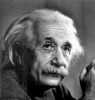 "The word God is for me nothing more than the expression and product of human weaknesses, the Bible a collection of honorable, but still primitive legends which are nevertheless pretty childish. No interpretation no matter how subtle can (for me) change this." -- Albert Einstein -- Written in 1954 to Jewish philosopher Erik Gutkind.
-
Zzyzx
- Site Supporter
- Posts: 25141
- Joined: Sat Mar 10, 2007 10:38 pm
- Location: Bible Belt USA
- Has thanked: 55 times
- Been thanked: 93 times
Post #539
.
Of course one is entitled to believe whatever they are told without asking for substantiation. That, however, does not appeal to me and many others.
What is there to prove about any of that?
Because someone makes claims that I do not accept does NOT obligate me to cite evidence or to provide alternative scenarios.
Notice that the OP says NOTHING about the claimed resurrection.Volbrigade wrote: The question posed in this thread is "why no straight answers"?
It is a challenge to provide verifiable, empirical proof regarding articles of faith.
That is a self-cancelling contradiction. If there were analytical, substantive, photographic (video?) proof of the Resurrection, then it would no longer be an article of faith.
Care to give any of those a try with straight answers and without dancing, diverting, playing word games?Zzyzx wrote: What verifiable evidence exists (beyond Bible tales and claims, opinions, testimonials and speculation) to substantiate that:
Jesus was anything more than human?
Humans possess a soul?
An afterlife exists?
Miracles described in Bible tales actually occurred?
Any of the claimed events such as floods, earthquakes, darkening sky, star stopping, Earth ceasing rotation, etc occurred as described?
God intercedes in human affairs or life events?
Bible writers were actually inspired by God?
Opinions are allowed " but are NOT evidence of anything.Volbrigade wrote: Moreover, the rules of the game are set up such that no "opinions" in regard to those things that are beyond empirical proof are allowed.
In reasoned discussion or debate a text CANNOT be used as proof that the text is truthful and accurate.Volbrigade wrote: Nor is any information from the text which asserts the articles of faith.
It is a common ploy by those who cannot substantiate their claims to demand an alternative explanation. That is a classic example of the logical fallacy Argumentum ad IgnorantiamVolbrigade wrote: I then choose to discuss WHY the items under consideration are valid articles of faith. As part of that exercise, a comparison with contrasting and/or opposing articles of faith is valid. I am simply turning the question around -- why no "straight answers" as to why we should believe something other than the Biblical account? If God did not create the cosmos, show me how He did not. If the man did not rise from the dead, show me how he didn't.
Bold addedThe argument to ignorance is a logical fallacy of irrelevance occurring when one claims that something is true only because it hasn't been proved false, or that something is false only because it has not been proved true. A claim's truth or falsity depends on supporting or refuting evidence to the claim, not the lack of support for a contrary or contradictory claim.
http://skepdic.com/ignorance.html
The operating term is IF which indicates the matter is hypothetical / speculation. Many Apologists ignore the IF and act as though their dogma is known to be true and accurate.Volbrigade wrote: If what I believe is true -- that God created us for a reason; that we are eternal creatures existing in a temporary environment; and the central truth of that is that God became a man, and verified that by His resurrection --
then that is the most important thing in the world.
Opinion noted.Volbrigade wrote: I take it as self-evident that any other proposition is secondary to that.
Knowledge of the origin of the universe is of no importance in decisions in my life in the real world. My decisions are not influenced by speculations about such things.Volbrigade wrote: With the modern secular-materialist one -- that matter invented itself in a random, mindless universe -- as being the least important. What difference does it make if that is true?
A straight answer, anyone?
Unlike those who may attempt to win for Jesus, winning / losing is not my objective. Instead, I present alternatives to religious propaganda that permeates our society " and challenge claims of knowledge about gods.Volbrigade wrote: If that challenge is too great, or considered "off topic" -- so be it.
You may even declare "victory" in the debate, if you like.
Notice that I asked for verifiable evidence to support CLAIMS of souls, afterlife, miracles, divinity, inspiration, etc.Volbrigade wrote: "Ha! I asked for empirical proof of Christianity -- and got none!"
Of course one is entitled to believe whatever they are told without asking for substantiation. That, however, does not appeal to me and many others.
Matters of faith seems to indicate Take my word for it (or his or this book) " because I can't show evidence in support.Volbrigade wrote: Since we're discussing, as it were, matters of faith, that go beyond our knowledge of the world that is visible and measurable, then I think a consideration of faith itself is a valid addition to the discussion.
Apologists often stretch the definition of faith to include nearly everything. If they wish to equate their religious faith with faith that the trash will be picked up on schedule, I have no objection. However, where many use the term faith I prefer confidence (which avoids the baggage of association with religion).Volbrigade wrote: It seems to be the currency of exchange in our reality. You can do nothing without it. Every moment of your existence you express your faith in the rules and order of the natural world which you inhabit. You cannot so much as tie your shoes without the faith that you are able to do so.
Correction: Some SPECULATE about having a creator " and often go to great lengths to justify their speculation (or faith or belief or religion).Volbrigade wrote: It is worth noting that we have a Creator who demands our FAITH in Him; and has carefully crafted an environment in which the choice -- the exercise of our free will -- is a 50-50; perfectly plausible either way.
Thanks for your efforts.Volbrigade wrote: That is my "straight answer".
Opinion noted.Volbrigade wrote: My faith in Christ is justified, in every way. Including -- and increasingly -- in a scientific sense.
I do not apply the terms faith and belief to myself. I have confidence in certain things " high levels of confidence in some cases (such as that the sun will become visible tomorrow morning atmospheric conditions permitting); moderate confidence in some cases (such as that the trash will be picked up on schedule); low confidence in other cases (such as that Apologists will understand what I write).Volbrigade wrote: Is your faith justified, in whatever it is you believe?
Prove it. Straight answers.
What is there to prove about any of that?
I make no claim to be a good person and do not seek approval of others. I answer only to myself.Volbrigade wrote: prove that you are a good person.
Evidence is required only of those who make claims. I do not believe your tales requires no evidence.Volbrigade wrote: What is the evidence?
Because someone makes claims that I do not accept does NOT obligate me to cite evidence or to provide alternative scenarios.
.
Non-Theist
ANY of the thousands of "gods" proposed, imagined, worshiped, loved, feared, and/or fought over by humans MAY exist -- awaiting verifiable evidence
Non-Theist
ANY of the thousands of "gods" proposed, imagined, worshiped, loved, feared, and/or fought over by humans MAY exist -- awaiting verifiable evidence
-
Volbrigade
- Banned
- Posts: 689
- Joined: Sun Jan 24, 2010 6:54 pm
Post #540
[Replying to post 537 by Tired of the Nonsense]
LOL -- for someone who is "Tired of the Nonsense", you sure perpetuated a lot of it in your post.

Since yours and the Snoring one's responses are fairly interchangeable, I'll address both simultaneously.
As is usually the case -- at least on this site; more colorful outcomes are de rigeuer on less moderated sites ( ) what happens in these discussions becomes a regression into formalism, and arguing about arguing. Not a search for truth, in any meaningful sense.
The only things unsubstantiated in my arguments are the characterizations of them -- e.g., "your faith is justified by your faith".
I will key on this as defining the core of the matter:
Let me rephrase it, for clarity:
"It makes absolutely no difference to me whether the universe is a some random cosmic flatulence; a mindless 'quantum fluctuation' which has produced an equally mindless dance of atoms of which my own illusory consciousness is but an ephemeral and equally illusory pattern within it --
or if it is the creative act of an eternal infinite Being who has intelligence, mind, and will; and a plan and a destiny for me that involves the utilization of my own free will, which is a gift from Him.
It's all the same to me. And makes no difference whatsoever in how I live my own little life."
Okay. Got it.
No wonder no one wants to address what they propose to believe in, if they insist on rejecting the truths expressed in Scripture. Or why it makes any difference if they believe... whatever it is -- or not.
It is because they, in a very real sense, have nothing worth talking about.
And that's where I leave the matter.
LOL -- for someone who is "Tired of the Nonsense", you sure perpetuated a lot of it in your post.
Since yours and the Snoring one's responses are fairly interchangeable, I'll address both simultaneously.
As is usually the case -- at least on this site; more colorful outcomes are de rigeuer on less moderated sites (
) what happens in these discussions becomes a regression into formalism, and arguing about arguing. Not a search for truth, in any meaningful sense.The only things unsubstantiated in my arguments are the characterizations of them -- e.g., "your faith is justified by your faith".
I will key on this as defining the core of the matter:
I just don't think you can point to a statement that better captures the divide between the theist and the non-theist.Knowledge of the origin of the universe is of no importance in decisions in my life in the real world. My decisions are not influenced by speculations about such things.
Let me rephrase it, for clarity:
"It makes absolutely no difference to me whether the universe is a some random cosmic flatulence; a mindless 'quantum fluctuation' which has produced an equally mindless dance of atoms of which my own illusory consciousness is but an ephemeral and equally illusory pattern within it --
or if it is the creative act of an eternal infinite Being who has intelligence, mind, and will; and a plan and a destiny for me that involves the utilization of my own free will, which is a gift from Him.
It's all the same to me. And makes no difference whatsoever in how I live my own little life."
Okay. Got it.
No wonder no one wants to address what they propose to believe in, if they insist on rejecting the truths expressed in Scripture. Or why it makes any difference if they believe... whatever it is -- or not.
It is because they, in a very real sense, have nothing worth talking about.
And that's where I leave the matter.

