
Fact: The universe began to exist out of nothing
---The conclusion of this lecture is that the universe has not existed forever. Rather, the universe, and time itself, had a beginning in the Big Bang, about 15 billion years ago. Source
---As a result of the Big Bang (the tremendous explosion which marked the beginning of our Universe), the universe is expanding and most of the galaxies within it are moving away from each other. Source
---The universe had a beginning. There was once nothing and now there is something. Source
Fact: The universe is fine tuned for life
---The laws of nature form a system that is extremely fine-tuned, and very little in physical law can be altered without destroying the possibility of the development of life as we know it. Were it not for a series of startling coincidences in the precise details of physical law, it seems, humans and similar life-forms would never have come into being. Source
---It is this extraordinary instance of apparent fine tuning, and others, which has brought the worlds most respected cosmologists, including Leonard Susskind, Alan Guth, Alexander Vilenkin, Brian Greene, Max Tegmark, & Andrei Linde, to recognize not only the legitimacy of the phenomenon, but the necessity to explain it. Source
Fact: Jesus was a historical figure and the New Testament relays semi-reliable information about him
---With respect to Jesus, we have numerous, independent accounts of his life in the sources lying behind the Gospels (and the writings of Paul) -- sources that originated in Jesus' native tongue Aramaic and that can be dated to within just a year or two of his life (before the religion moved to convert pagans in droves). Historical sources like that are is pretty astounding for an ancient figure of any kind. Moreover, we have relatively extensive writings from one first-century author, Paul, who acquired his information within a couple of years of Jesus' life and who actually knew, first hand, Jesus' closest disciple Peter and his own brother James. If Jesus did not exist, you would think his brother would know it......Whether we like it or not, Jesus certainly existed. Source
Fact: The tomb Jesus was buried in after his crucifixion and death was found empty
---The stolen body hypothesis posits that the body of Jesus Christ was stolen from his burial place. His tomb was found empty not because he was resurrected, but because the body had been hidden somewhere else by the apostles or unknown persons. Source
---An examination of both Pauline and gospel material leads to eight lines of evidence in support of the conclusion that Jesus's tomb was discovered empty: (1) Paul's testimony implies the historicity of the empty tomb, (2) the presence of the empty tomb pericope in the pre-Markan passion story supports its historicity, (3) the use of 'on the first day of the week' instead of 'on the third day' points to the primitiveness of the tradition, (4) the narrative is theologically unadorned and non-apologetic, (5) the discovery of the tomb by women is highly probable, (6) the investigation of the empty tomb by the disciples is historically probable, (7) it would have been impossible for the disciples to proclaim the resurrection in Jerusalem had the tomb not been empty, (8) the Jewish polemic presupposes the empty tomb. Source
And in light of all this I suspect there will still be nonbelievers posting in this thread who will continue to deny these 4, well established facts. For the sake of intellectual honesty (a virtue that is desperately needed on this forum) theists need to admit that these facts do not decisively prove God's existence. They only lend support to the proposition of God and the God hypothesis is only one of many explanations that accounts for these facts. In turn, atheists need to stop mimicking young earth creationists by denying these scientific and historical facts. There are many atheists and nontheists on this forum who do accept these facts without any reservations, but the ones that don't really need to start getting with program.
Question: Are the four items listed above facts? If so, how much credibility do they give the God hypothesis and Christian theism?
The Problem with NonTheists and Facts
Moderator: Moderators
-
FarWanderer

- Guru
- Posts: 1617
- Joined: Thu Jul 25, 2013 2:47 am
- Location: California
Re: The Problem with NonTheists and Facts
Post #51What do you mean creation ex nihilo is a scientific fact? And why is creation ex materia not viable?WinePusher wrote:WinePusher wrote:Fact: The universe began to exist out of nothingPerhaps. Creation ex nihilo is merely an extension of creation ex deo. Creation ex nihilo is a scientific fact while creation ex deo is not. Creation ex deo is an assumption that many theists, including myself, believe in but it cannot necessarily be proven while creation ex nihilo can. All we can say for certain is that creation ex materia is not a viable position to hold.FarWanderer wrote:Which means it didn't begin to exist. Verbs attached to "nothing" are events that did not happen. Unless by "nothing" you really mean something (like in the case of Lawrance Krauss).
I don't understand why theists insist on creation ex nihilo. Ex deo creation at least is logically coherent.
I'm more or less saying that the claims of magic in the Bible lend me a certain degree of skeptism about it in general. If in fact there was no tomb, I wouldn't be the least bit surprised.WinePusher wrote:WinePusher wrote:Fact: The tomb Jesus was buried in after his crucifixion and death was found emptyAgain, this isn't relevant. The question being asked is whether or not the tomb was empty. In my opinion it was. Does the fact of an empty tomb prove Jesus rose from the dead? Well, I would actually agree with you that it provides very weak evidence and that all natural explanations better explain the empty tomb than supernatural explanations. But, that doesn't change the fact that it was empty.FarWanderer wrote:I'm a lot more skeptical of this one, because it tries to establish magic. Magic that always seems to happen where impartial observers aren't.
I will always disbelieve claims of magic (aka miracles).
But again, I don't find it a compelling argument for Christianity even if true. Even if a bronze aged carpenter rose from the dead, it only informs me that resurrection is possible- not that there exists an omnipotent personal entity watching over us.
-
Tired of the Nonsense

- Site Supporter
- Posts: 5680
- Joined: Fri Oct 30, 2009 6:01 pm
- Location: USA
- Been thanked: 1 time
Re: The Problem with NonTheists and Facts
Post #52[Replying to WinePusher]
When I am in the middle of a discussion and I find that I am going to be busy with my real life for a time (I am fond of going on trips at a moments notice), I invariably alert my discussion partners of how long I can expect to be away, and when they can expect to see my next response. I don't leave anyone hanging for days at a time. That might convery the wrong impression.
You and I have tangled a number of times over the last four years. In every case you simply stopped responding. If I am "derailing" your thread, then I am doing it with exactly the same arguments I have been using these last four years. And I expect to keep on "derailing" your arguments for the foreseeable future using exactly the same argument each and every time. All you have to do to prevent this from occurring is convincingly overcome my argument. If that is too much to expect from you, then maybe you are on the wrong side of the argument.
You are of course attempting to now gloss over the point you were attempting to make originally. Which was that you have a life and that I clearly need to get a life of my own. And of course every one of us on this forum stands guilty of that charge to greater or lesser degree. In your case it is clearly true to a greater degree then me by a factor of double. Numbers don't lie. It is entertaining however that you should attempt to tar and feather me with an offense that you are clearly far more guilty of than I. I'm 65 and retired, so clearly I actually do have the luxury of spending all the time I want on this forum. And yet you have doubled me in the number of posts and have now suggested that I need to get a life. Don't YOU find that amusing?WinePusher wrote: Who said anything about post counts? You're clearly upset cause I haven't responded to your posts in this thread and I'm simply explaining why. I have a real life, and real life comes first before internet life. Why can't you understand this? A lot of us don't have the luxury to spend our every waking breath on this forum. This means that you won't get responses and rebuttals as quickly as you would like. Deal with it. I participate on this forum whenever I have free time and whenever I see a thread that peaks my interest, and 3277 posts over a 4 year period is rather moderate compared to some of the other 'records' I've seen.
I wouldn't say that I am "upset" over anything that occurs on this forum. I'm simply not emotionally invested in this process enough to allow any of it to upset me. I do admit to a certain amount of frustration however when I pay my discussion opponent the courtesy of responding to them in detail, only to have them evaporate from the discussion. An EXTREMELY common occurrence I might add. Also, I have conspicuously (some might even say boorishly) been riding the same argument over and over again since I became a member of this forum, and in point of fact a good deal longer then that. If my argument had ever "lost badly," you would not continuously be confronted with it. "Victory" in a debate occurs when two opposing arguments based on reason, logic and the facts at hand are slammed together, head to head, to see which one holds up, and which one crumbles. My argument has in fact proven itself to be irreproachable WITH OUT FAIL over the course of several decades now. Meanwhile you are still attempting to promote as plausible the story of a corpse which came back to life and flew away. It's your belief system and you're stuck with it.WinePusher wrote: As for being upset that you haven't responded to the posts in this thread, I believe that I can speak for the other nontheists on this issue that yes, a certain amount of frustration occurs when we have clearly pinned the theists down under an impenetrable net of fact, reason and logic, only to have the theist simply evaporate from the discussion. So, yes, we tend to take that as a distinct sign of acquiescence. It is in fact all we ever seem to get for our trouble.
There is no such thing as 'defeat' and 'victory' in debate. I find this type of win-lose attitude to be completely unproductive and immature.
"If you have to insist youve won an internet argument, youve probably lost badly.
You misuse scientific authors. And Ehrman's contention that the resurrection of Jesus is as historically valid as any other event in history completely overlooks the fact that there ARE NO OTHER supernatural events that are generally recognized as valid history. As a claimed historical "event" the resurrection of Jesus is entirely unique. And yet the resurrection of Jesus went entirely unrecorded AT THE TIME IT WAS SUPPOSE TO HAVE OCCURRED. The claim violates all common experience and observation, and the supposed event made not the tiniest ripple of impact when it was supposed to have occurred. We have every reason to doubt the claims, and no actual tangible evidence to support them. No amount of Biblical scholarship can serve to undermine and overcome these indisputable facts.WinePusher wrote: I find it astounding that you think someone like you has 'thoroughly disallowed' the works of eminent scholars such as Stephen Hawking, Bart Ehrman and the entire scientific and historical community. You probably missed it, but I listed sources below each one of those facts, and you along with a host of other people just chose to ignore it and carry on spreading misinformation.
I honestly admit that the tomb was empty. See how easy that was? Now, can you admit that the most likely reason that the tomb was empty is that it was a result of actions taken by the living, in this case the disciples of Jesus, and NOT the result of actions taken by the corpse? Because you have steadfastly refused to do so for the last four years now.WinePusher wrote: 1) This isn't the purpose of MY thread. Stop trying to derail it. The tomb was empty, and that's a fact. Until you accept this fact it will be impossible to debate the underlying causes of the empty tomb.
2) I have already said to Haven that natural explanations are prima facie more likely than supernatural explanations. But, I see no need in debating this with you any further until you can honestly admit that the tomb was empty.
Try me.WinePusher wrote: No, I'm actually willing to admit a number of things that run contrary to my position and harm my case. You won't. You'll keep denying whatever facts you don't like.
Sometimes a little nudge is necessary. Most of the time in discussions with believers even open taunting will not cause them to continue. But then if I found myself being bludgeoned right between the eyes with facts and logic I couldn't effectively refute, I would probably disengage from the discussion as well. THAT HAS NEVER ONCE HAPPENED TO ME. Because if it ever did, if it could be established in detail that I was wrong, then there would be no point in attempting to peddle an error.WinePusher wrote: Uh no. Haven't we gone over this already? I haven't failed to respond to anything. I was going to respond when I had the chance, over the upcoming weekend. I've had a lot on my plate this week and haven't had the time to sit down and write out a response to multiple debaters in this thread. But, I saw your little nonsense post about war and the battle between theists and atheists and fleeing and losing and being a coward and I just couldn't resist.
When I am in the middle of a discussion and I find that I am going to be busy with my real life for a time (I am fond of going on trips at a moments notice), I invariably alert my discussion partners of how long I can expect to be away, and when they can expect to see my next response. I don't leave anyone hanging for days at a time. That might convery the wrong impression.
I "derailed" your thread by very conspicuously addressing every one of your points, point by point. That is not "derailing your thread." That is overcoming your arguments.WinePusher wrote: And I can't say I appreciate you derailing my thread with all this nonsense. I guess you must not be tired of the nonsense anymore since you're single handily creating a bunch of nonsense here. You could have sent me a PM asking me to respond and I would have replied back by saying that I'd get to it over the weekend. That would be the civil and productive thing to do. But, you instead chose to ramble on about how you've won the war and how the Christians are fleeing the battlefield, etc etc etc. I cannot stress this enough: "If you have to insist youve won an internet argument, youve probably lost badly."
You and I have tangled a number of times over the last four years. In every case you simply stopped responding. If I am "derailing" your thread, then I am doing it with exactly the same arguments I have been using these last four years. And I expect to keep on "derailing" your arguments for the foreseeable future using exactly the same argument each and every time. All you have to do to prevent this from occurring is convincingly overcome my argument. If that is too much to expect from you, then maybe you are on the wrong side of the argument.
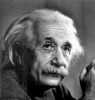 "The word God is for me nothing more than the expression and product of human weaknesses, the Bible a collection of honorable, but still primitive legends which are nevertheless pretty childish. No interpretation no matter how subtle can (for me) change this." -- Albert Einstein -- Written in 1954 to Jewish philosopher Erik Gutkind.
-
Danmark

- Site Supporter
- Posts: 12697
- Joined: Sun Sep 30, 2012 2:58 am
- Location: Seattle
- Been thanked: 1 time
Re: The Problem with NonTheists and Facts
Post #53WinePusher wrote: I've edited out your comments on fine tuning cause I feel like we've already beaten that topic to death in the other thread and it'll give me more time to focus on the other topics being raised here.
Yea sure, no problem. You're gonna need all the kind words you can get after the Broncos destroy the Seahawks.Danmark wrote:I appreciate the personal preamble [Thank you]
When I say nothing I am referring to a state of being where there is no space, time or matter (where there is no universe). You are suggesting creation ex materia (creation from pre-existing material) and modern physics has shown this position to be incorrect. There's no two ways about it. Modern physics has refuted this 'eternal universe' 'universe existing forever' claim. And remember, Lawrence Krauss is the atheist equivalent of William Lane Craig so I wouldn't base my entire argument on what he's written. Stephen Hawking (whom I have much more respect for) has also written plenty on this positive/negative energy relationship and my thoughts on this are as follows:Danmark wrote:but I addressed 1) and stated the opposite of what you write; my position is the universe 'has always been,' that it did not 'begin to exist out of nothing.' Even Krauss's book that has the title that appears to contradict my claim, says the same thing in that what physicists/cosmologists at his level call 'nothing' is actually 'something' and a far cry from what philosophers and laymen call nothing.
1. Physicists have virtually no understanding of how quantum mechanics work, so at this point Krauss' thesis concerning the cancellation of positive/negative energy is not coherent and untestable. Perhaps future scientific discoveries will vindicate Krauss.
2. Krauss' thesis has been criticized by many scientific philosophers due to the fact that the definition of nothingness he employs is fatally flawed. And this, of course, leads us to the philosophy vs. science debate where many scientists claim that philosophy is worthless and many philosophers claim that philosophy is a foundational intellectual and pragmatic pillar for science.
Uh, when did semi-reliable=not reliable? And yes, the Gospels contradict themselves on minor details about the tomb. Such miniscule errors would be expected. But what you miss is that all the Gospels agree with each other that the tomb was empty. You would be able to completely destroy my case if one of the canonical Gospels claimed the tomb wasn't empty, but it doesn't. There aren't any major discrepancies in the narrative so you focus only on these tiny, insignificant discrepancies.Danmark wrote:Re: 3 and 4, I agree the New Testament may be 'semi-reliable' which is to say it is not reliable. The gospel accounts contradict themselves on the details of the empty tomb, and the emptiness of the tomb does not preclude the surreptitious removal of the body.
 re: the Broncos. Should be a great game.
BTW, didn't you pick the 49ers over the Seahawks in the NFC title game.
One must distinguish between scientists and "scientific philosophers." The latter are not scientists, unless they are formally trained in a specific science.
I'm not sure where you got the idea that physicists "have virtually no understanding of how quantum mechanics work" since QM is exactly what theoretical physicists busy themselves with.
I maintain that if something is "semi reliable" it is "not reliable." If something is only semi reliable than it is not reliable because you don't know what parts may be reliable and what parts are not to be relied upon.
"semi-" is an ambiguous term that can refer to "one half" or to a "part".
Certainly if a building's foundation is only "semi-reliable" without more information, you don't want to build upon it.
Or . . . I suppose you might want to only "semi build" on it.
-
Danmark
- Site Supporter
- Posts: 12697
- Joined: Sun Sep 30, 2012 2:58 am
- Location: Seattle
- Been thanked: 1 time
Re: The Problem with NonTheists and Facts
Post #54I neglected to respond to this. Sorry.*WinePusher wrote: When I say nothing I am referring to a state of being where there is no space, time or matter (where there is no universe). You are suggesting creation ex materia (creation from pre-existing material) and modern physics has shown this position to be incorrect. There's no two ways about it. Modern physics has refuted this 'eternal universe' 'universe existing forever' claim. And remember, Lawrence Krauss is the atheist equivalent of William Lane Craig so I wouldn't base my entire argument on what he's written. Stephen Hawking (whom I have much more respect for) has also written plenty on this positive/negative energy relationship. . . .
I accept your definition of "nothing." That is precisely why I reject, rather than endorse what you have referred to as "creation ex materia." I am certainly not a theoretical physicist. I have read [mostly 20 years ago] several texts on QM, most of them for popular consumption and freely confess I do not understand it. When "Those guys" start talking about atoms existing in as many dimensions as they have electron shells, or positing that photons "think", I realize I am way beyond my limits. When concepts can only be expressed in mathematical symbols I am WAY outside my depth.
BUT, my ignorance having been confessed, my intuition has always told me the universe has always been, as I've previously stated. So I'm puzzled as to how you concluded I was suggesting the opposite.
It is for the very reason you mention, "creation ex materia," that I reject such notions.
In my simple language, given two choices, that the universe came from 'nothing,' OR that it has always been; the latter seems to me to be the infinitely preferable alternative, the only choice.
In other words, whether we are talking about 'god' or 'the universe' I agree that IT/HE has always been. I simply do not see the need to gratuitously interject either 'personality' or 'purpose' on to the universe, and thereby create a 'god.'
_______________________________
* My morning has been taken up with some pro bono legal work outside my field of expertise because my sister and 2 fellow owners of a condo are being bullied by the President of the HOA. Anyway, getting into this has been so entertaining because the deeper I dig, the more vulnerable this bully appears. Just TOO much fun. This may get me out of "semi"
retirement.

Re: The Problem with NonTheists and Facts
Post #55WinePusher wrote: Question: Are the four items listed above facts?[/ If so, how much credibility do they give the God hypothesis and Christian theism?
Christian theism is not supported by anything. Just because a man is claimed to have been divine 2000 years ago doesn't make it true.
All of those "facts" have other, more rational, explanations.
Thinking about God's opinions and thinking about your own opinions uses an identical thought process. - Tomas Rees
-
Danmark
- Site Supporter
- Posts: 12697
- Joined: Sun Sep 30, 2012 2:58 am
- Location: Seattle
- Been thanked: 1 time
Moron Time, Universe
Post #56Moron Time, Universe
This is the final paragraph from an article by Hawking:
The conclusion of this lecture is that the universe has not existed forever. Rather, the universe, and time itself, had a beginning in the Big Bang, about 15 billion years ago. The beginning of real time, would have been a singularity, at which the laws of physics would have broken down. Nevertheless, the way the universe began would have been determined by the laws of physics, if the universe satisfied the no boundary condition. This says that in the imaginary time direction, space-time is finite in extent, but doesn't have any boundary or edge. The predictions of the no boundary proposal seem to agree with observation. The no boundary hypothesis also predicts that the universe will eventually collapse again. However, the contracting phase, will not have the opposite arrow of time, to the expanding phase. So we will keep on getting older, and we won't return to our youth. Because time is not going to go backwards, I think I better stop now.
http://www.hawking.org.uk/the-beginning-of-time.html
Contrary to what I just wrote, Hawking is claiming that the universe had a beginning, in the 'Big Bang.' He also talks about 'imaginary' time and about the universe 'collapsing again' which was my understanding; that the universe has gone thru this cycle infinitely. As an amateur I see these cyclic collapses as an example that the universe has always been, but the form changes. I'm not sure how Hawking distinguishes this from having a beginning. Is each collapse and resultant 'big bang,' a new beginning, or an unending process?
This is the final paragraph from an article by Hawking:
The conclusion of this lecture is that the universe has not existed forever. Rather, the universe, and time itself, had a beginning in the Big Bang, about 15 billion years ago. The beginning of real time, would have been a singularity, at which the laws of physics would have broken down. Nevertheless, the way the universe began would have been determined by the laws of physics, if the universe satisfied the no boundary condition. This says that in the imaginary time direction, space-time is finite in extent, but doesn't have any boundary or edge. The predictions of the no boundary proposal seem to agree with observation. The no boundary hypothesis also predicts that the universe will eventually collapse again. However, the contracting phase, will not have the opposite arrow of time, to the expanding phase. So we will keep on getting older, and we won't return to our youth. Because time is not going to go backwards, I think I better stop now.
http://www.hawking.org.uk/the-beginning-of-time.html
Contrary to what I just wrote, Hawking is claiming that the universe had a beginning, in the 'Big Bang.' He also talks about 'imaginary' time and about the universe 'collapsing again' which was my understanding; that the universe has gone thru this cycle infinitely. As an amateur I see these cyclic collapses as an example that the universe has always been, but the form changes. I'm not sure how Hawking distinguishes this from having a beginning. Is each collapse and resultant 'big bang,' a new beginning, or an unending process?
-
WinePusher
Re: The Problem with NonTheists and Facts
Post #57WinePusher wrote:Who said anything about post counts? You're clearly upset cause I haven't responded to your posts in this thread and I'm simply explaining why. I have a real life, and real life comes first before internet life. Why can't you understand this? A lot of us don't have the luxury to spend our every waking breath on this forum. This means that you won't get responses and rebuttals as quickly as you would like. Deal with it. I participate on this forum whenever I have free time and whenever I see a thread that peaks my interest, and 3277 posts over a 4 year period is rather moderate compared to some of the other 'records' I've seen.
Where did I ever suggest that you need to get a life of your own? All I said was that I have a real life and the internet isn't on my top list of priorities. I honestly don't care about you and whether or not you have a life. I don't know anything about you. But again, you need to understand that users on this forum do have real lives and can't post according to your time schedule. You also need to understand that calling people losers and hurling invectives at Christians isn't conducive to debate. Instead of going on a typing out a long, inflammatory post about how you've won the war and how Christians are losers why didn't you just PM me and ask me to address your post? Honestly, what type of response to you expect to get when you write inflammatory things like that?Tired of the Nonsense wrote:You are of course attempting to now gloss over the point you were attempting to make originally. Which was that you have a life and that I clearly need to get a life of my own.
No, the only thing I find amusing is how you think that this forum is the equivalent of a war. I also find your win-lose approach to debates very amusing. And again, I never suggested you need to get a life. I don't care what you do. All I did was try to explain some very simple concepts to you.Tired of the Nonsense wrote:And of course every one of us on this forum stands guilty of that charge to greater or lesser degree. In your case it is clearly true to a greater degree then me by a factor of double. Numbers don't lie. It is entertaining however that you should attempt to tar and feather me with an offense that you are clearly far more guilty of than I. I'm 65 and retired, so clearly I actually do have the luxury of spending all the time I want on this forum. And yet you have doubled me in the number of posts and have now suggested that I need to get a life. Don't YOU find that amusing?
1) This isn't a battle or a war. It's an internet forum to share and exchange ideas.
2) People are not obligated to respond to certain posts or stay on the forum permanently.
3) Debate isn't about winning and losing. There are no winners and losers in a debate.
4) Many debaters on here, both theist and atheist, come and go.
5) People here have REAL lives (at least some of us do). Please take this into consideration before going on long victory speeches about how you've won the war.
Do you understand?
WinePusher wrote:I find it astounding that you think someone like you has 'thoroughly disallowed' the works of eminent scholars such as Stephen Hawking, Bart Ehrman and the entire scientific and historical community. You probably missed it, but I listed sources below each one of those facts, and you along with a host of other people just chose to ignore it and carry on spreading misinformation.
Oh? Just cause you say so? That's a terrible argument.Tired of the Nonsense wrote:You misuse scientific authors.
Yea, I already agreed with this multiple times. Do you want to continue fighting with straw men?Tired of the Nonsense wrote:And Ehrman's contention that the resurrection of Jesus is as historically valid as any other event in history completely overlooks the fact that there ARE NO OTHER supernatural events that are generally recognized as valid history.
See, you're derailing the thread again. The resurrection is not part of the topic. The empty tomb is. All we're trying to do in this thread to establish empty tomb. The explanation for why the tomb was empty is another topic that doesn't belong here.Tired of the Nonsense wrote:As a claimed historical "event" the resurrection of Jesus is entirely unique. And yet the resurrection of Jesus went entirely unrecorded AT THE TIME IT WAS SUPPOSE TO HAVE OCCURRED. The claim violates all common experience and observation, and the supposed event made not the tiniest ripple of impact when it was supposed to have occurred. We have every reason to doubt the claims, and no actual tangible evidence to support them. No amount of Biblical scholarship can serve to undermine and overcome these indisputable facts.
Yes, after 6 pages you reluctantly admit it. Glad to hear it.Tired of the Nonsense wrote:I honestly admit that the tomb was empty. See how easy that was?
Depends. As I've previously said, all natural explanations are prima facie more likely than supernatural explanations. But historically speaking, the natural explanation for the empty tomb (the stolen body hypothesis) creates more historical anomalies that it answers while the resurrection doesn't. Yes, the resurrection creates problems in the areas of science and ontology, but as a pure historical event it sufficiently explains the empty tomb.Tired of the Nonsense wrote:Now, can you admit that the most likely reason that the tomb was empty is that it was a result of actions taken by the living, in this case the disciples of Jesus, and NOT the result of actions taken by the corpse? Because you have steadfastly refused to do so for the last four years now.
WinePusher wrote:No, I'm actually willing to admit a number of things that run contrary to my position and harm my case. You won't. You'll keep denying whatever facts you don't like.
Yes, I'll retract what I said there since you admitted to the tomb being empty.Tired of the Nonsense wrote:Try me.
You see, I'm just not as emotionally attached and invested in this forum. If someone ignores my post I don't arrogantly assume that I'm the better debater or that I made a irrefutable point. I just don't care. I also don't care about debaters leaving and dropping off of the forum all together. It's just the internet so who cares?Tired of the Nonsense wrote:Sometimes a little nudge is necessary. Most of the time in discussions with believers even open taunting will not cause them to continue. But then if I found myself being bludgeoned right between the eyes with facts and logic I couldn't effectively refute, I would probably disengage from the discussion as well. THAT HAS NEVER ONCE HAPPENED TO ME. Because if it ever did, if it could be established in detail that I was wrong, then there would be no point in attempting to peddle an error.
Tired of the Nonsense wrote:When I am in the middle of a discussion and I find that I am going to be busy with my real life for a time (I am fond of going on trips at a moments notice), I invariably alert my discussion partners of how long I can expect to be away, and when they can expect to see my next response. I don't leave anyone hanging for days at a time. That might convery the wrong impression.
Yes, I do this from time to time myself depending on who it is. But like I said, I don't personally know anybody on this forum so I don't really feel the need to be courteous to random people over the internet. Many people I've debated with over the years have left me hanging multiple times and I don't complain about it or assume I'm the best.
-
Haven

- Guru
- Posts: 2023
- Joined: Sun Jan 12, 2014 8:23 pm
- Location: Great Barrington, MA
- Has thanked: 205 times
- Been thanked: 209 times
Re: The Problem with NonTheists and Facts
Post #58To those involved in the 'side debate' about post counts and internet war and whatnot: Kindness. It goes a long way.
With that said, I'd like to address historia, WinePusher, and everyone else on the theistic side of this debate. Thank you guys so much for participating, and though we don't see eye-to-eye, I'm very thankful to have the opportunity to discuss these issues with you.
First, I'd like to address some of the specific points raised by historia in their last post.
I don't dispute that a religious movement grew up around the supposed person of Jesus.
Still, I maintain that it was Paul, not Jesus, who was most instrumental in the development of present-day Christianity, and while the religion could well exist without a historical Jesus (Paul, by the way, never mentions Jesus as being a historical person; a purely spiritual Jesus would fit just as well into the Pauline narrative), it could not exist without a historical Paul. I'm not making the claim that Paul invented Jesus, only introducing it as one possibility to explain the story of Jesus and the birth of Christianity.
Other possibilities include, but aren't limited to, that Jesus was a construct based on the Essene Teacher of Righteousness, that he was created by first-century Galilean or Hellenized Jews as a kind of Messiah figure, or that he was a historical itinerant preacher who had myths and miracle claims attached to him in the decades and centuries following his death.
Given the limited evidence surrounding Jesus and early Christianity, I assign equal probability to all of these scenarios.
Why not note the absence of external (outside of the Christian canon) contemporaneous references to Jesus, his crucifixion, his resurrection, or any of the other events proposed by the Bible?
In contrast, we have no physical evidence establishing Jesus' existence, no writings from Jesus, and no evidence of Jesus playing a direct role in the development of Christianity.
At best, the Christian religion was founded by late first-century Hellenized Jews based, in part, on the teachings of a then deceased Jewish teacher named Jesus of Nazareth. At worst, members of a breakaway Jewish sect, based on the teachings of the Essenes, Pharisees, and Hellenized Jews, invented a Messiah figure (possibly based on the earlier Essene Teacher of Righteousness) and, drawing on unorthodox interpretations of Old Testament prophecies and cultural myths, attached miracle claims to him.
Given this, the existence of the Ebionites and other anti-Pauline Christians in no way disproves the hypothesis that Paul (or a group of first-century Greek Jews that included Paul) invented Jesus and the religion that would become Christianity.
The texts, however, do point to Paul as one of the, if not the, key leaders in the early church, and, as mentioned before, there is no evidence for the existence of Jesus or Christianity during Jesus' alleged lifetime. Because of these things, the idea that Paul was the founder of the faith remains plausible.
It's possible Paul converted to an already-existing Jewish sect, and it's possible he -- or someone very close to him -- created it. Either one is plausible, in light of the limited evidence available to us.
This is consistent with a "divine revelation" similar to those of Muhammad and Smith. It doesn't necessarily imply teaching from a human source.
The gospels -- given their anonymity, biases, and obvious mythical elements -- should not be treated as reliable documents. Any modern document with such characteristics would be immediately thrown out. Why apply a different standard to the gospels simply because of their age?
I stand corrected on the Gospel of Thomas, although I don't consider it a reliable attestation to Jesus.
The canonical gospels themselves seem dependent on earlier, no longer extant sources. Why, then, should we retain them as attestations while eliminating the later gnostics? Where do we draw the line? Some of the non-canonical gospels could have been written in the 90s CE, around the same time as John. Why, other than Christian bias, consider John, but not the non-canonicals, reliable?
The majority of Biblical scholars are indeed Christians.
See my above comments on the gospels and Paul's writings.
I'm not assuming he's lying, I'm merely expressing skepticism as to the veracity of his claims. Given what we have, it's just as likely that Paul's lying as that he's telling the truth (on his non-miraculous claims, of course).
How could he stop this (without, of course, giving away that Jesus was an invention)?
Not necessarily. If he had claimed to be a relative, people could have claimed he was unduly biased toward Jesus because of this. In my opinion, Paul being unrelated would make the story more compelling.
With that said, I'd like to address historia, WinePusher, and everyone else on the theistic side of this debate. Thank you guys so much for participating, and though we don't see eye-to-eye, I'm very thankful to have the opportunity to discuss these issues with you.
First, I'd like to address some of the specific points raised by historia in their last post.
That's actually not true. While most scholars accept a historical Jesus, many mainstream historians and Biblical studies academics who accept Jesus' existence reject as ahistorical or mythical the idea that Jesus had 12 disciples. Furthermore, a minority of scholars question Jesus' very existence, let alone any details about his life.[color=darkred]historia[/color] wrote: I don't disagree with what you wrote here, but let's flesh it out a bit further:
Most educated Christians understand that Jesus wasn't setting out to found a new 'religion', as such. But most educated Christians, as well as virtually all scholars, recognize that Jesus was an historical person who preached a message, gathered followers, identified twelve of them as his disciples, and in that way started a religious movement.
I don't dispute that a religious movement grew up around the supposed person of Jesus.
Still, I maintain that it was Paul, not Jesus, who was most instrumental in the development of present-day Christianity, and while the religion could well exist without a historical Jesus (Paul, by the way, never mentions Jesus as being a historical person; a purely spiritual Jesus would fit just as well into the Pauline narrative), it could not exist without a historical Paul. I'm not making the claim that Paul invented Jesus, only introducing it as one possibility to explain the story of Jesus and the birth of Christianity.
Other possibilities include, but aren't limited to, that Jesus was a construct based on the Essene Teacher of Righteousness, that he was created by first-century Galilean or Hellenized Jews as a kind of Messiah figure, or that he was a historical itinerant preacher who had myths and miracle claims attached to him in the decades and centuries following his death.
Given the limited evidence surrounding Jesus and early Christianity, I assign equal probability to all of these scenarios.
There is no evidence for this aside from Paul's writings, the pseudepigraphical "book of James," and the gospels. Why should these writings be taken at their word, especially when five of them (the four gospels and James) are known to be anonymous or pseudepigraphical? We don't know who wrote these writings or what, if any, sources they used in the process. Why assume them to be a priori reliable?[color=red]historia[/color] wrote:After his death, Jesus' disciples and his brother James continued that movement, which developed into a Jewish sect (similar to the Pharisees and Essenes), which Paul originally persecuted, but then later converted to.
Why not note the absence of external (outside of the Christian canon) contemporaneous references to Jesus, his crucifixion, his resurrection, or any of the other events proposed by the Bible?
I don't dispute this, and neither does any other non-Christian of which I know. Still, how is this relevant to the question of the historical Jesus? No one is disputing that Paul and other early Christian thinkers laid the foundations for what is today Christianity, the question is over whether this sect's central figure, Jesus of Nazareth, was real or mythical.[color=orange]historia[/color] wrote:Paul and many other Christian thinkers contributed to the early theology and practices of this sect, which over the centuries evolved into what we know of today as Christianity.
No, we can't. The question of Joseph Smith and L. Ron Hubbard's existence and roles in founding their respective religions is, historically speaking, certain. We have photographs and other relics establishing these mens' existence, as well as writings and testimonies from reliable witnesses establishing their roles in creating Mormonism and Scientology.[color=brown]historia[/color] wrote:In that way, we can speak of Jesus as the founder of Christianity in the same way Joseph Smith is the founder of Mormonism or L. Ron Hubbard is the founder of Scientology -- while recognizing that, as with all analogies, each situation is slightly different.
In contrast, we have no physical evidence establishing Jesus' existence, no writings from Jesus, and no evidence of Jesus playing a direct role in the development of Christianity.
At best, the Christian religion was founded by late first-century Hellenized Jews based, in part, on the teachings of a then deceased Jewish teacher named Jesus of Nazareth. At worst, members of a breakaway Jewish sect, based on the teachings of the Essenes, Pharisees, and Hellenized Jews, invented a Messiah figure (possibly based on the earlier Essene Teacher of Righteousness) and, drawing on unorthodox interpretations of Old Testament prophecies and cultural myths, attached miracle claims to him.
I never claimed these characters were exact parallels of Jesus, only that an analogy can be drawn between their historical statuses and that of Jesus. Don't press my analogy too far.[color=green]historia[/color] wrote: Mormons do not view Moroni as the "spiritual founder" (whatever that might mean) of their church, nor do Scientologists view Xenu in this way. Joseph Smith claimed to have a vision of an angel he called Moroni, and Hubbard invented a mythology that includes a figure named Xenu. Neither are "central figures" in either religion, and are not "revered" as such. Xenu is a particularly bad choice here, as he functions as the antagonist in Scientologist mythology. He's more like a satan figure.
My point was that, according to the textual evidence available to us, it seems to have been Paul, not Jesus, who played the largest role in creating the religion we today call Christianity. Paul may have drew on some of Jesus' ideas (if Jesus was indeed historical), but it was Paul that created early Christian doctrine, church structure, standard practice, and so on.[color=olive]historia[/color] wrote: Perhaps I wasn't clear above. My argument here is that it would be absurd to argue that Brigham Young was the "real" founder of Mormonism or that David Miscavige was the "real" founder of Scientology. Obviously, both men are important and influential second-generation leaders of those movements. But they are not the founders; that role properly belongs to Smith and Hubbard, respectively.
Why do you uncritically believe him? There are plenty of Christian leaders (I listed some in my previous post) who claimed to have once been atheists or anti-Christians, when in fact they were believers all along. Why is it not plausible for Paul to have invented his story about persecuting Christianity?[color=blue]historia[/color] wrote:Likewise, it would be absurd to argue that Paul is the "real" founder of the Christian movement. Paul is a classic second-generation leader who helped shape and oversee the growth of the movement. He tells us quite plainly that he persecuted the movement before converting to it.
Breakaway religious movements form all the time (see, for example, Protestantism, which broke away from the Catholic Church, even though both grew out of early canonical Christianity). Does the fact that Protestant churches exist disprove the idea that the Catholic church was the original predecessor of modern Christianity? Of course not.[color=darkblue]historia[/color] wrote:There were people in the movement, both in his day and in subsequent centuries (e.g., the Ebionites), who believed that Jesus was the messiah but didn't accept Paul's authority and teachings. How can you explain all of this if Paul was, in fact, the founder of the movement and that he "invented" Jesus? That makes no sense.
Given this, the existence of the Ebionites and other anti-Pauline Christians in no way disproves the hypothesis that Paul (or a group of first-century Greek Jews that included Paul) invented Jesus and the religion that would become Christianity.
Well, yes, but this also means that it's irrational for one to make strong claims about the existence of said ancient religious figures. If there is no solid evidence for Jesus, then how does it make sense to claim that he definitely existed?[color=indigo]historia[/color] wrote: Well, yeah, this tends to be true of modern religious movements. Unfortunately, it's not always the case for ancient ones, like Christianity. That's simply a function of the literacy levels and the expense of producing literary texts in the ancient world, as well as the cost of copying and preserving those texts down through the centuries to our own time.
The fact that no texts name Paul as the "founder" of "Christianity" doesn't mean that Paul (or a group closely connected to him) didn't invent the religion. Jesus, as the central figure of the faith, would of course be mentioned by religious writers as the founder (in the same way that the Qur'an mentions Allah, not Muhammad, as the founder of Islam). This is simply hagiography.[color=violet]historia[/color] wrote: How so? Virtually every Christian document we posses from the first century to the present, as well as pagan and Jewish sources hostile to Christianity, point to Jesus of Nazareth as the originator and founder of the movement. Can you furnish a text naming Paul or anyone else as the founder? If not, it would seem, then, that "all of the historical evidence," whatever you want to make of it, points to Jesus as the founder.
The texts, however, do point to Paul as one of the, if not the, key leaders in the early church, and, as mentioned before, there is no evidence for the existence of Jesus or Christianity during Jesus' alleged lifetime. Because of these things, the idea that Paul was the founder of the faith remains plausible.
It would mean that Joseph Smith didn't simply make up the story about the golden plates, which of course would give a tremendous boost to the veracity of Mormonism.[color=darkred]historia[/color] wrote: Your thinking here seems confused. Smith never claimed that Moroni was a person who lived in the 19th Century, and so no one imagines that he actually founded the Mormon Church rather than Smith. How then would an "historical Moroni" explain the emergence of Mormonism?
As I said earlier:[color=red]historia[/color] wrote: As I already mentioned above, the gospels say quite plainly that Jesus preached a message of the coming of the Kingdom of God, gathered followers, and Paul and Luke tell us he had brothers and disciples that continued the movement after his death. To say that there is "zero evidence that he was involved in Christianity," then, is absurd, or leaves us quibbling over labels like "Christianity."
- 1) I am skeptical of the accuracy of the gospel accounts
2) A fictional character is capable of having siblings, followers, and so on. They could just as easily be fictional or based on real figures.
The answer is no. Paul was the earliest known leader within Christianity, and -- even if he was not the inventor of Jesus (even if Jesus was historical) or the founder of the religion -- without his writings and influence on the early church, it's very doubtful it would have survived past the second century. Based on the limited evidence we have, Paul is just as essential to Christianity as L. Ron Hubbard is to Scientology.[color=orange]historia[/color] wrote:Look at the issue the other way around:
Would Mormonism exist without Joseph Smith? Nope, we would have no knowledge of the Book of Mormon, the peculiars of the Mormon faith, or even the movement itself if not for Smith. Likewise, Scientology would simply not exist without the writings and organization founded by L. Ron Hubbard.
But would Christianity exist if Paul never existed?
I've already addressed this above. I'll just reiterate that given the evidence, it is entirely plausible for Christianity to have emerged without a historical Jesus of Nazareth.[color=pink]historia[/color] wrote: Sure. As I already mentioned, the movement started before Paul. He says himself that he persecuted the sect before later converting to it. We know that some Christians in Paul's day and later (e.g., the Ebionites) did not accept Paul's authority and teachings, and continued to practice a non-Pauline form of Christianity as late as the 5th Century. Christianity today would look very different without Paul, to be sure, but it would not exist at all if not for Jesus of Nazareth.
Paul could have simply made up his conversion story. Without outside corroboration (and no, the anonymous Luke-Acts, written by a follower of Paul, doesn't count), how would we know?[color=brown]historia[/color] wrote: Okay, but the point here is that for Paul to convert to the Christian movement, that movement has to already exist. In that way, Paul cannot be the founder of the movement, in the same way Josh McDowell and Kirk Cameron didn't found Christianity either. That seems obvious, no?
It's possible Paul converted to an already-existing Jewish sect, and it's possible he -- or someone very close to him -- created it. Either one is plausible, in light of the limited evidence available to us.
[color=green]historia[/color] wrote: But Paul does not claim in 1 Cor. 15 that these traditions he received came from a revelation, as Muhammad or Smith claimed. These are clearly traditions he received from the Christians before him.
[color=green]1 Corinthians 15:1-8[/color] wrote:Now, brothers and sisters, I want to remind you of the gospel I preached to you, which you received and on which you have taken your stand. 2 By this gospel you are saved, if you hold firmly to the word I preached to you. Otherwise, you have believed in vain.
3 For what I received I passed on to you as of first importance[a]: that Christ died for our sins according to the Scriptures, 4 that he was buried, that he was raised on the third day according to the Scriptures, 5 and that he appeared to Cephas, and then to the Twelve. 6 After that, he appeared to more than five hundred of the brothers and sisters at the same time, most of whom are still living, though some have fallen asleep. 7 Then he appeared to James, then to all the apostles, 8 and last of all he appeared to me also, as to one abnormally born.
This is consistent with a "divine revelation" similar to those of Muhammad and Smith. It doesn't necessarily imply teaching from a human source.
[color=olive]historia[/color] wrote:
All historical sources are biased. That does not, in and of itself, discount them as independent attestations to a person or event. Many ancient documents likewise include legends and references to what we would today call "supernatural" events. That does not, in and of itself, discount the possibility that they also contain historical information, at least not in the minds of most historians. Your claim here, then, I think is simply misinformed.
The gospels -- given their anonymity, biases, and obvious mythical elements -- should not be treated as reliable documents. Any modern document with such characteristics would be immediately thrown out. Why apply a different standard to the gospels simply because of their age?
[color=blue]historia[/color] wrote:
Actually, a fair number of scholars consider Thomas to be an early text and therefore constitutes our seventh early independent attestation to Jesus of Nazareth. Forgot about that one, thanks for reminding me. Many of the second century gospels are not considered independent as they seem dependent upon the canonical gospels.
I stand corrected on the Gospel of Thomas, although I don't consider it a reliable attestation to Jesus.
The canonical gospels themselves seem dependent on earlier, no longer extant sources. Why, then, should we retain them as attestations while eliminating the later gnostics? Where do we draw the line? Some of the non-canonical gospels could have been written in the 90s CE, around the same time as John. Why, other than Christian bias, consider John, but not the non-canonicals, reliable?
[color=darkblue]historia[/color] wrote:
Including Jewish scholars like Geza Vermes and an agnostic like Ehrman? Plus the untold numbers of non-Christian scholars of ancient history and related fields who believe Jesus was an historical figure? It seems to me the folks on this side of the issue are quite diverse, whereas the so-called Mythicists are almost all anti-Christian atheists. Funny that.
The majority of Biblical scholars are indeed Christians.
[color=indigo]historia[/color] wrote:
The gospels also record that Jesus had brothers and one was named James. Or do you mean evidence of Paul meeting them? Why should we expect there to be?
See my above comments on the gospels and Paul's writings.
[color=violet]historia[/color] wrote:
Why should we assume that he's lying?
I'm not assuming he's lying, I'm merely expressing skepticism as to the veracity of his claims. Given what we have, it's just as likely that Paul's lying as that he's telling the truth (on his non-miraculous claims, of course).
[color=red]historia[/color] wrote:
But I thought you said that Paul invented Jesus? Or rather you argued that this was just as likely as the claim that Jesus existed. Why would Paul allow other people to claim to be related to the figure he invented?
How could he stop this (without, of course, giving away that Jesus was an invention)?
[color=darkred]historia[/color] wrote:Why couldn't Paul also claim he was the brother or early disciple of Jesus? Clearly, by not claiming this, he was at a disadvantage, and the chief reason his authority was doubted.
Not necessarily. If he had claimed to be a relative, people could have claimed he was unduly biased toward Jesus because of this. In my opinion, Paul being unrelated would make the story more compelling.
Last edited by Haven on Sat Jan 25, 2014 1:43 am, edited 2 times in total.
Haven
“Reserve your right to think.†- Hypatia
“A wise man… proportions his belief to the evidence†- David Hume
“Reserve your right to think.†- Hypatia
“A wise man… proportions his belief to the evidence†- David Hume
-
Haven
- Guru
- Posts: 2023
- Joined: Sun Jan 12, 2014 8:23 pm
- Location: Great Barrington, MA
- Has thanked: 205 times
- Been thanked: 209 times
Post #59
So the fact that you don't personally know someone means they aren't worthy or civility of basic human respect? Not only does that go against the rules of this forum, it goes against the rules of essential human decency. That kind of attitude is, in my opinion, one of the biggest things wrong with the world today.[color=darkred]WinePusher[/color] wrote: Yes, I do this from time to time myself depending on who it is. But like I said, I don't personally know anybody on this forum so I don't really feel the need to be courteous to random people over the internet.
Haven
“Reserve your right to think.†- Hypatia
“A wise man… proportions his belief to the evidence†- David Hume
“Reserve your right to think.†- Hypatia
“A wise man… proportions his belief to the evidence†- David Hume
-
WinePusher
Post #60
Uh no? Of course everyone is worthy of civility and basic human respect. If I met you or Tired of the Nonsense in real life of course I would be polite and cordial towards you. So please don't misconstrue my words. The fact that I don't know you means that I'm not going to spend a whole lot of my time courteously telling you my posting schedule.Haven wrote:So the fact that you don't personally know someone means they aren't worthy or civility of basic human respect?[color=darkred]WinePusher[/color] wrote: Yes, I do this from time to time myself depending on who it is. But like I said, I don't personally know anybody on this forum so I don't really feel the need to be courteous to random people over the internet.
Where's the forum rule that says I have to respond to posts in a certain period of time and tell my debating partner when I'm going to respond?Haven wrote:Not only does that go against the rules of this forum,
Haven wrote:it goes against the rules of essential human decency. That kind of attitude is, in my opinion, one of the biggest things wrong with the world today.
 Well personally I think world hunger and genocide are one of the biggest things wrong with the world today. Not being courtesy and polite to people over the internet doesn't even make the top 100 list of things wrong with the world.
