
How important should reason be in religious thinking?
Should we believe Holy Books over reason or does reason indicate truth/falsity?
Importance of reason
Moderator: Moderators
-
Wootah

- Savant
- Posts: 9571
- Joined: Wed Nov 24, 2010 1:16 am
- Has thanked: 235 times
- Been thanked: 122 times
Importance of reason
Post #1Proverbs 18:17 The one who states his case first seems right, until the other comes and examines him.
Member Notes: viewtopic.php?t=33826
"Why is everyone so quick to reason God might be petty. Now that is creating God in our own image ."
."
Member Notes: viewtopic.php?t=33826
"Why is everyone so quick to reason God might be petty. Now that is creating God in our own image
."
Re: Importance of reason
Post #51To me it seems more accurate to claim that one has rejected a particular conception of God, which in turn has led to disinterest in any religions perceived to be associated with that particular conception of God.marco wrote:...It is sufficient to accept that religion involves the worship of God. When one dismisses this worship, one discards religion too...
I see that you have rejected a particular conception of God (a conception of God that may or may not have anything to do with how God is perceived within different facets of these varying religions today).marco wrote:...If one finds the Abrahamic religions are founded on reverence to a human artefact, Yahweh, then it is fitting to reject them all without examining the footnotes...
From the standpoint of mathematics, it all depends on what prior knowledge you have (or do not have) regarding the full contents of the grab bag. If you start out knowing nothing of the bag's overall contents, then simply pulling one bill (whether counterfeit or genuine) from the bag gives you no special insight into the remaining contents.marco wrote:...If you find one counterfeit bill then the others DO become suspect. The use of the words "vulnerable to" doesn't trouble logic; rather they introduce a wise precaution.
Last edited by EduChris on Sat Jul 08, 2017 11:44 am, edited 2 times in total.
I am a work in process; I do not claim absolute knowledge or absolute certainty; I simply present the best working hypothesis I have at the moment, always pending new information and further insight.
α β γ δ ε ζ η θ ι κ λ μ ν ξ ο π � σ ς τ υ φ χ ψ ω - Α Β Γ Δ Ε Ζ Η Θ Ι Κ Λ Μ � Ξ Ο ΠΡ Σ Τ Υ Φ Χ Ψ Ω
α β γ δ ε ζ η θ ι κ λ μ ν ξ ο π � σ ς τ υ φ χ ψ ω - Α Β Γ Δ Ε Ζ Η Θ Ι Κ Λ Μ � Ξ Ο ΠΡ Σ Τ Υ Φ Χ Ψ Ω
Re: Importance of reason
Post #52People who break the speed limit unintentionally can't use their lack of intentionality as an excuse to avoid paying the fine. Similarly, fallacies of logic occur regularly, despite the intentionality (or lack thereof) of the perpetrator. To break the principle of charity, it is sufficient that you failed to reasonably account for the language I used and the qualifications I gave.Justin108 wrote:...The thing about the Principle of Charity is that in order to accuse me of breaking it, you need to know whether or not I truly considered your argument and sought to understand it. Since you cannot possibly know my intentions nor know whether or not I truly sought to understand your argument or not, your accusation that I broke this principle is nothing but speculation on your side. It's a baseless accusation...
For the vast majority of our beliefs and decisions, there is no real "battle" to be won (either in favor of the head or the heart). We make most decisions on "auto-pilot," and only investigate a matter if we have some particular motivation. For example, we simply accept the Holocaust, the Bubonic Plague, Chernobyl, etc, because the received wisdom on such matters is part of our culture and tradition. We accept most things on the authority of others. We do this because we are social creatures who want to fit in with our neighbors. It is only when we find ourselves nudged out of our normal patterns that we begin to seriously deliberate. Given that few of us are experts in the various academic fields, our deliberations typically lead us to authorities more knowledgeable than ourselves; we evaluate the evidence and arguments of specialists, and we decide with whom we will cast our lot. Given that it is possible to find "experts" at virtually any level of scholarly achievement and rigor, and given that scholarly opinion is rarely unanimous, we keep investigating until we find an authority whom we both understand and with whom we feel satisfied. To the extent that a particular event/issue enjoys greater academic support, the easier it will be to find satisfactory and trusted authorities; in such cases, we will only disagree with the scholarly consensus if we are highly motivated to do so. Our desire for social acceptance typically wins out over any competing desire to buck the consensus.Justin108 wrote:...How many exceptions do I need to come up with before "most always" becomes "sometimes"? See if you said "our hearts sometimes win out over our heads; we all sometimes seem to believe whatever we most deeply want to believe", I would not have objected to it. But the fact that you declared that this is the case "most always" is where you're just simply wrong...
I do not claim that we most often or usually believe totally unreasonable things; I do claim that whatever it is that we believe, most often we have arrived at that belief more by way of the heart than the head. I think you are forcing a greater dichotomy between heart and head than is warranted. There is no need to suppose that "what we most deeply want to believe" is concomitantly irrational, especially given that our social nature entails a corresponding desire to fit in with the beliefs of our neighbors.Justin108 wrote:...The Holocaust example is one of probably thousands of exceptions I can come up with to the "most always" of your argument. All I would need to do is substitute "Holocaust" with just about anything negative...How many more examples do I need to come up with to demonstrate that your claim of we all "most always" seem to believe whatever we most deeply want to believe is simply not true?...
I am a work in process; I do not claim absolute knowledge or absolute certainty; I simply present the best working hypothesis I have at the moment, always pending new information and further insight.
α β γ δ ε ζ η θ ι κ λ μ ν ξ ο π � σ ς τ υ φ χ ψ ω - Α Β Γ Δ Ε Ζ Η Θ Ι Κ Λ Μ � Ξ Ο ΠΡ Σ Τ Υ Φ Χ Ψ Ω
α β γ δ ε ζ η θ ι κ λ μ ν ξ ο π � σ ς τ υ φ χ ψ ω - Α Β Γ Δ Ε Ζ Η Θ Ι Κ Λ Μ � Ξ Ο ΠΡ Σ Τ Υ Φ Χ Ψ Ω

Re: Importance of reason
Post #53That viewpoint will do. We can restrict our attention to the worshipful kind of religion.EduChris wrote:
To me it seems more accurate to claim that one has rejected a particular conception of God, which in turn has led to disinterest in any religions perceived to be associated with that particular conception of God.
Yes, the man-being with human frailties depicted in the OT, sometimes called Yahweh, is too close to nomadic conceptions (I think) to be a proper god. It is hard to hear him asking Sarah: "And what are you giggling at?" and accept he built the Solar System, calculating elliptical orbits all by himself, without Arab help.EduChris wrote:
I see that you have rejected a particular conception of God
Mathematics has little to do with it, but I suppose you are invoking the god of Conditional Probability. True, certain information about the bag's contents would alter probabilities but there is no way of calculating probabilities in this situation. We draw a fake bill from the bag; we are therefore suspicious of the others. Not to be is just foolish.EduChris wrote:
From the standpoint of mathematics, it all depends on what prior knowledge you have (or do not have) regarding the full contents of the grab bag. If you start out knowing nothing of the bag's overall contents, then simply pulling one bill (whether counterfeit or genuine) from the bag gives you no special insight into the remaining contents.

Re: Importance of reason
Post #54The Principle of Charity is a methodological presumption made in seeking to understand a point of view whereby we seek to understand that view in its strongest, most persuasive form before subjecting the view to evaluation.EduChris wrote: People who break the speed limit unintentionally can't use their lack of intentionality as an excuse to avoid paying the fine. Similarly, fallacies of logic occur regularly, despite the intentionality (or lack thereof) of the perpetrator. To break the principle of charity, it is sufficient that you failed to reasonably account for the language I used and the qualifications I gave.
http://philosophy.lander.edu/oriental/charity.html
Unless I failed to seek to understand your argument, you cannot accuse me of breaking the principle of charity.
Cool. Do you have any support for any of this pseudo-psychology or is all of this your personal opinion on the matter?EduChris wrote: For the vast majority of our beliefs and decisions, there is no real "battle" to be won (either in favor of the head or the heart). We make most decisions on "auto-pilot," and only investigate a matter if we have some particular motivation. For example, we simply accept the Holocaust, the Bubonic Plague, Chernobyl, etc, because the received wisdom on such matters is part of our culture and tradition. We accept most things on the authority of others. We do this because we are social creatures who want to fit in with our neighbors. It is only when we find ourselves nudged out of our normal patterns that we begin to seriously deliberate. Given that few of us are experts in the various academic fields, our deliberations typically lead us to authorities more knowledgeable than ourselves; we evaluate the evidence and arguments of specialists, and we decide with whom we will cast our lot. Given that it is possible to find "experts" at virtually any level of scholarly achievement and rigor, and given that scholarly opinion is rarely unanimous, we keep investigating until we find an authority whom we both understand and with whom we feel satisfied. To the extent that a particular event/issue enjoys greater academic support, the easier it will be to find satisfactory and trusted authorities; in such cases, we will only disagree with the scholarly consensus if we are highly motivated to do so. Our desire for social acceptance typically wins out over any competing desire to buck the consensus.
Again, do you have any support for this or is this just your opinion?EduChris wrote: I do not claim that we most often or usually believe totally unreasonable things; I do claim that whatever it is that we believe, most often we have arrived at that belief more by way of the heart than the head.
I never suggested it is concomitantly irrational, merely that there are so many exceptions to your rule that your use of the word "most always" is blatantly wrong.EduChris wrote: I think you are forcing a greater dichotomy between heart and head than is warranted. There is no need to suppose that "what we most deeply want to believe" is concomitantly irrational
First you claim we believe what our hearts desire and now you claim we believe what our neighbors believe? Which is it?EduChris wrote:especially given that our social nature entails a corresponding desire to fit in with the beliefs of our neighbors.
Re: Importance of reason
Post #55That is one interpretation, out of a very many different interpretations. Once we've found an interpretation we're happy with, we're all too likely to stop investigating other interpretations.marco wrote:...the man-being with human frailties depicted in the OT, sometimes called Yahweh, is too close to nomadic conceptions (I think) to be a proper god...
Always good to be wary. However, I wouldn't throw the whole bag away on account of the one (or even the many) counterfeit bills I draw out of the bag.marco wrote:...We draw a fake bill from the bag; we are therefore suspicious of the others. Not to be is just foolish.
I am a work in process; I do not claim absolute knowledge or absolute certainty; I simply present the best working hypothesis I have at the moment, always pending new information and further insight.
α β γ δ ε ζ η θ ι κ λ μ ν ξ ο π � σ ς τ υ φ χ ψ ω - Α Β Γ Δ Ε Ζ Η Θ Ι Κ Λ Μ � Ξ Ο ΠΡ Σ Τ Υ Φ Χ Ψ Ω
α β γ δ ε ζ η θ ι κ λ μ ν ξ ο π � σ ς τ υ φ χ ψ ω - Α Β Γ Δ Ε Ζ Η Θ Ι Κ Λ Μ � Ξ Ο ΠΡ Σ Τ Υ Φ Χ Ψ Ω
Re: Importance of reason
Post #56Did you "seek a sympathetic understanding of the new idea or ideas"? Did you "assume for the moment the new ideas are true even though our initial reaction is to disagree"? Did you "seek to tolerate ambiguity for the larger aim of understanding ideas which might prove useful and helpful"? Did you place emphasis on "seeking to understand rather than on seeking contradictions or difficulties"? Did you "seek to understand the ideas in their most persuasive form and actively attempt to resolve contradictions"? Had you done these things, you (and the others) would not have been so quick to grab for your "reductio ad absudum" arguments.Justin108 wrote:...Unless I failed to seek to understand your argument, you cannot accuse me of breaking the principle of charity...
See How do we really make decisions?. From this article, "We like to think that our beliefs, judgements and opinions are based on solid reasoning. But we may have to think again...we actually have two systems of thinking...the deliberate, logical part of your mind...is slow...and is extremely lazy...then there is another system in your mind that is intuitive, fast and automatic. This fast way of thinking is incredibly powerful, but totally hidden. It is so powerful, it is actually responsible for most of the things that you say, do, think and believe...This system is your hidden auto-pilot...Our thinking is riddled with systematic mistakes known to psychologists as cognitive biases. And they affect everything we do...they affect our beliefs, our opinions, and our decisions, and we have no idea it is happening...your logical, slow mind is a master at inventing a cover story. Most of the beliefs or opinions you have come from an automatic response. But then your logical mind invents a reason why you think or believe something...these biases are so deep rooted in our evolutionary past, they may be impossible to change..."Justin108 wrote:...Do you have any support for any of this pseudo-psychology or is all of this your personal opinion on the matter?
Why would you assume we have to choose between the two? Why not accept that both might be true?Justin108 wrote:...First you claim we believe what our hearts desire and now you claim we believe what our neighbors believe? Which is it?
As social creatures, we want and desire to fit in with our neighbors; we instinctively want to believe as they believe and act as they act, so as to fit in with the herd.
I am a work in process; I do not claim absolute knowledge or absolute certainty; I simply present the best working hypothesis I have at the moment, always pending new information and further insight.
α β γ δ ε ζ η θ ι κ λ μ ν ξ ο π � σ ς τ υ φ χ ψ ω - Α Β Γ Δ Ε Ζ Η Θ Ι Κ Λ Μ � Ξ Ο ΠΡ Σ Τ Υ Φ Χ Ψ Ω
α β γ δ ε ζ η θ ι κ λ μ ν ξ ο π � σ ς τ υ φ χ ψ ω - Α Β Γ Δ Ε Ζ Η Θ Ι Κ Λ Μ � Ξ Ο ΠΡ Σ Τ Υ Φ Χ Ψ Ω
-
Tired of the Nonsense

- Site Supporter
- Posts: 5680
- Joined: Fri Oct 30, 2009 6:01 pm
- Location: USA
- Been thanked: 1 time
Re: Importance of reason
Post #57EduChris wrote:That is one interpretation, out of a very many different interpretations. Once we've found an interpretation we're happy with, we're all too likely to stop investigating other interpretations.marco wrote:...the man-being with human frailties depicted in the OT, sometimes called Yahweh, is too close to nomadic conceptions (I think) to be a proper god...
Always good to be wary. However, I wouldn't throw the whole bag away on account of the one (or even the many) counterfeit bills I draw out of the bag.marco wrote:...We draw a fake bill from the bag; we are therefore suspicious of the others. Not to be is just foolish.
What if you had spent your life taking the bills out of the bag and examining them carefully? And over the course of years each and every bill had revealed itself to be a phony without exception? At some point you might consider it reasonable to conclude that the entire bag was apparently worthless. And so it is with Christian claims. After years of study, and I am 68 years old, what I have concluded is that Christian claims are consistently foundationless. Christian claims are in fact an interlocking network of baseless assertion and foundationless assumptions, none of which can be established to be founded on solid undeniable fact.EduChris wrote: Always good to be wary. However, I wouldn't throw the whole bag away on account of the one (or even the many) counterfeit bills I draw out of the bag.
Christianity is founded on the claim that the corpse of Jesus not only returned to life after several days, but that his reanimated corpse subsequently bodily flew off up into the sky. And this is frankly a pretty silly thing to believe. It's not much different in fact from believing that Santa has a team of flying reindeer. The only possible saving grace for subscribing to such beliefs would be that the evidence for their truth is overwhelming. And of course the evidence for the truth of Santa and his team of flying reindeer is not only NOT overwhelming, it is childish. Something only a child would subscribe to.
So what of the evidence for the truth of the flying reanimated corpse of Jesus? Is the "evidence" for the truth of this story overwhelming? In fact the "evidence" for the truth of this story is very much like your hypothetical bag of cash in which the bills, upon examination, unrelentingly prove to be phony. Not a single Christian claim stands up to scrutiny. NOT ONE! To the best of my knowledge I have been to the bottom of that bag of Christian claims. I have heard them all. They appear to be little more than the childlike rumors concocted by childlike ancient people. The claims are ALL counterfeit. The bag can be safely discarded. Because we are now in the 21st century, and we are standing in the open doorway that leads to the true answers to the mysteries of the universe. Answers which have nothing to do with demons and deities.

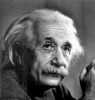 "The word God is for me nothing more than the expression and product of human weaknesses, the Bible a collection of honorable, but still primitive legends which are nevertheless pretty childish. No interpretation no matter how subtle can (for me) change this." -- Albert Einstein -- Written in 1954 to Jewish philosopher Erik Gutkind.
Re: Importance of reason
Post #58YeahEduChris wrote: Did you "seek a sympathetic understanding of the new idea or ideas"? Did you "assume for the moment the new ideas are true even though our initial reaction is to disagree"? Did you "seek to tolerate ambiguity for the larger aim of understanding ideas which might prove useful and helpful"? Did you place emphasis on "seeking to understand rather than on seeking contradictions or difficulties"? Did you "seek to understand the ideas in their most persuasive form and actively attempt to resolve contradictions"?
So if we find your argument to be absurd, then by default it means we didn't sincerely consider it?EduChris wrote: Had you done these things, you (and the others) would not have been so quick to grab for your "reductio ad absudum" arguments.
Ok what part of any of this states that we most always believe what we want to believe?EduChris wrote: See How do we really make decisions?. From this article, "We like to think that our beliefs, judgements and opinions are based on solid reasoning. But we may have to think again...we actually have two systems of thinking...the deliberate, logical part of your mind...is slow...and is extremely lazy...then there is another system in your mind that is intuitive, fast and automatic. This fast way of thinking is incredibly powerful, but totally hidden. It is so powerful, it is actually responsible for most of the things that you say, do, think and believe...This system is your hidden auto-pilot...Our thinking is riddled with systematic mistakes known to psychologists as cognitive biases. And they affect everything we do...they affect our beliefs, our opinions, and our decisions, and we have no idea it is happening...your logical, slow mind is a master at inventing a cover story. Most of the beliefs or opinions you have come from an automatic response. But then your logical mind invents a reason why you think or believe something...these biases are so deep rooted in our evolutionary past, they may be impossible to change..."
What about the instances where our neighbors believe something we do not wish to be true? In that instance, we logically only believe either what we want to be true or what our neighbors believe. Which do we choose then?
Re: Importance of reason
Post #59The various "bills" in our hypothetical "bag" represent various interpretations of and within multiple religions. In that context, "throwing out the whole bag" refers to rejecting out of hand all interpretations of all religions"all because a single one of those bills turned out to be counterfeit.Tired of the Nonsense wrote:...What if you had spent your life taking the bills out of the bag and examining them carefully? And over the course of years each and every bill had revealed itself to be a phony without exception? At some point you might consider it reasonable to conclude that the entire bag was apparently worthless. And so it is with Christian claims...
Your response (and the response of the majority of non-theists on this forum) is akin to pulling a single counterfeit bill out of the bag, and looking at that same bill over and over until you have become disgusted enough to throw out the entire bag, unexamined contents and all.
While I appreciate the depth of emotion in your response, ultimately this forum encourages actual arguments rather than personal testimonials. With respect to your claims, for example, simply brushing aside 2000 years of Christian tradition as if it were mere "childish fantasy" fails to account for the vast array of reputable scholarship (people far more expert than you and I in the fields of history, archaeology, language, culture, philosophy, etc) that can be found in defense of various aspects and interpretations of Christian tradition. Yes, there are scholars on your side as well; the point is, however, that a flippant or dismissive attitude (on either side) fails to account for the strength and scholarly rigor of both sides. On this forum, actual arguments will continue to be more productive than sweeping generalizations and emotional diatribes.Tired of the Nonsense wrote:...After years of study...I have concluded...that Christian claims are consistently foundationless...not much different ...from believing that Santa has a team of flying reindeer....Something only a child would subscribe to...Christian claims....appear to be little more than the childlike rumors concocted by childlike ancient people...
I am a work in process; I do not claim absolute knowledge or absolute certainty; I simply present the best working hypothesis I have at the moment, always pending new information and further insight.
α β γ δ ε ζ η θ ι κ λ μ ν ξ ο π � σ ς τ υ φ χ ψ ω - Α Β Γ Δ Ε Ζ Η Θ Ι Κ Λ Μ � Ξ Ο ΠΡ Σ Τ Υ Φ Χ Ψ Ω
α β γ δ ε ζ η θ ι κ λ μ ν ξ ο π � σ ς τ υ φ χ ψ ω - Α Β Γ Δ Ε Ζ Η Θ Ι Κ Λ Μ � Ξ Ο ΠΡ Σ Τ Υ Φ Χ Ψ Ω
Re: Importance of reason
Post #60It means that I don't see any evidence that you actually did any of the things you claimed to have done.Justin108 wrote:YeahEduChris wrote: Did you "seek a sympathetic understanding of the new idea or ideas"? Did you "assume for the moment the new ideas are true even though our initial reaction is to disagree"? Did you "seek to tolerate ambiguity for the larger aim of understanding ideas which might prove useful and helpful"? Did you place emphasis on "seeking to understand rather than on seeking contradictions or difficulties"? Did you "seek to understand the ideas in their most persuasive form and actively attempt to resolve contradictions"?
So if we find your argument to be absurd, then by default it means we didn't sincerely consider it?EduChris wrote: Had you done these things, you (and the others) would not have been so quick to grab for your "reductio ad absudum" arguments.
From the article, it is not our logic but rather our intuition which is "responsible for most of the things that [we] say, do, think and believe...Most of the time, our fast, intuitive mind is in control, efficiently taking charge of all the thousands of decisions we make each day...and we have no idea it is happening...these biases are so deep rooted in our evolutionary past, they may be impossible to change...we are irrational in all kinds of ways."Justin108 wrote:Ok what part of any of this states that we most always believe what we want to believe?EduChris wrote: See How do we really make decisions?. From this article, "We like to think that our beliefs, judgements and opinions are based on solid reasoning. But we may have to think again...we actually have two systems of thinking...the deliberate, logical part of your mind...is slow...and is extremely lazy...then there is another system in your mind that is intuitive, fast and automatic. This fast way of thinking is incredibly powerful, but totally hidden. It is so powerful, it is actually responsible for most of the things that you say, do, think and believe...This system is your hidden auto-pilot...Our thinking is riddled with systematic mistakes known to psychologists as cognitive biases. And they affect everything we do...they affect our beliefs, our opinions, and our decisions, and we have no idea it is happening...your logical, slow mind is a master at inventing a cover story. Most of the beliefs or opinions you have come from an automatic response. But then your logical mind invents a reason why you think or believe something...these biases are so deep rooted in our evolutionary past, they may be impossible to change..."
See also, You End Up Believing What You Want to Believe: You bias your interpretation of evidence toward what you desire. Moreover, the effects of confirmation bias are "stronger for emotionally charged issues and for deeply entrenched beliefs."
In the case of competing desires, what do you think will happen? We desire to fit in, yet we also desire to adopt an unpopular viewpoint. Will the stronger desire win out? Will the weaker desire win out? Or will we take refuge in a new "subculture" of people whose views more closely align with our own?Justin108 wrote:What about the instances where our neighbors believe something we do not wish to be true? In that instance, we logically only believe either what we want to be true or what our neighbors believe. Which do we choose then?
I am a work in process; I do not claim absolute knowledge or absolute certainty; I simply present the best working hypothesis I have at the moment, always pending new information and further insight.
α β γ δ ε ζ η θ ι κ λ μ ν ξ ο π � σ ς τ υ φ χ ψ ω - Α Β Γ Δ Ε Ζ Η Θ Ι Κ Λ Μ � Ξ Ο ΠΡ Σ Τ Υ Φ Χ Ψ Ω
α β γ δ ε ζ η θ ι κ λ μ ν ξ ο π � σ ς τ υ φ χ ψ ω - Α Β Γ Δ Ε Ζ Η Θ Ι Κ Λ Μ � Ξ Ο ΠΡ Σ Τ Υ Φ Χ Ψ Ω

