
Fact: The universe began to exist out of nothing
---The conclusion of this lecture is that the universe has not existed forever. Rather, the universe, and time itself, had a beginning in the Big Bang, about 15 billion years ago. Source
---As a result of the Big Bang (the tremendous explosion which marked the beginning of our Universe), the universe is expanding and most of the galaxies within it are moving away from each other. Source
---The universe had a beginning. There was once nothing and now there is something. Source
Fact: The universe is fine tuned for life
---The laws of nature form a system that is extremely fine-tuned, and very little in physical law can be altered without destroying the possibility of the development of life as we know it. Were it not for a series of startling coincidences in the precise details of physical law, it seems, humans and similar life-forms would never have come into being. Source
---It is this extraordinary instance of apparent fine tuning, and others, which has brought the worlds most respected cosmologists, including Leonard Susskind, Alan Guth, Alexander Vilenkin, Brian Greene, Max Tegmark, & Andrei Linde, to recognize not only the legitimacy of the phenomenon, but the necessity to explain it. Source
Fact: Jesus was a historical figure and the New Testament relays semi-reliable information about him
---With respect to Jesus, we have numerous, independent accounts of his life in the sources lying behind the Gospels (and the writings of Paul) -- sources that originated in Jesus' native tongue Aramaic and that can be dated to within just a year or two of his life (before the religion moved to convert pagans in droves). Historical sources like that are is pretty astounding for an ancient figure of any kind. Moreover, we have relatively extensive writings from one first-century author, Paul, who acquired his information within a couple of years of Jesus' life and who actually knew, first hand, Jesus' closest disciple Peter and his own brother James. If Jesus did not exist, you would think his brother would know it......Whether we like it or not, Jesus certainly existed. Source
Fact: The tomb Jesus was buried in after his crucifixion and death was found empty
---The stolen body hypothesis posits that the body of Jesus Christ was stolen from his burial place. His tomb was found empty not because he was resurrected, but because the body had been hidden somewhere else by the apostles or unknown persons. Source
---An examination of both Pauline and gospel material leads to eight lines of evidence in support of the conclusion that Jesus's tomb was discovered empty: (1) Paul's testimony implies the historicity of the empty tomb, (2) the presence of the empty tomb pericope in the pre-Markan passion story supports its historicity, (3) the use of 'on the first day of the week' instead of 'on the third day' points to the primitiveness of the tradition, (4) the narrative is theologically unadorned and non-apologetic, (5) the discovery of the tomb by women is highly probable, (6) the investigation of the empty tomb by the disciples is historically probable, (7) it would have been impossible for the disciples to proclaim the resurrection in Jerusalem had the tomb not been empty, (8) the Jewish polemic presupposes the empty tomb. Source
And in light of all this I suspect there will still be nonbelievers posting in this thread who will continue to deny these 4, well established facts. For the sake of intellectual honesty (a virtue that is desperately needed on this forum) theists need to admit that these facts do not decisively prove God's existence. They only lend support to the proposition of God and the God hypothesis is only one of many explanations that accounts for these facts. In turn, atheists need to stop mimicking young earth creationists by denying these scientific and historical facts. There are many atheists and nontheists on this forum who do accept these facts without any reservations, but the ones that don't really need to start getting with program.
Question: Are the four items listed above facts? If so, how much credibility do they give the God hypothesis and Christian theism?
The Problem with NonTheists and Facts
Moderator: Moderators
-
Danmark

- Site Supporter
- Posts: 12697
- Joined: Sun Sep 30, 2012 2:58 am
- Location: Seattle
- Been thanked: 1 time
Re: The Problem with NonTheists and Facts
Post #21Do the 'facts' get more or less solid after this initial assumption that is mainly agreed to by theists?WinePusher wrote: Fact: The universe began to exist out of nothing
Most theists think only one thing is eternal, their particular god. For reasons we don't need to speculate on they insist a speculative or imaginary X has existed forever with no beginning, yet they deny this quality to the universe that we not only know exists, but have every reason to believe always has.
-
Danmark
- Site Supporter
- Posts: 12697
- Joined: Sun Sep 30, 2012 2:58 am
- Location: Seattle
- Been thanked: 1 time
Re: The Problem with NonTheists and Facts
Post #22Yes, or something like that is my understanding of the theory. Also that this might be a cyclic occurrence, or simply more than one explosion and the the universe may be a lot older than the 14 billion years since the last 'big bang.'dianaiad wrote:WinePusher wrote:WinePusher wrote:Fact: The universe began to exist out of nothing[/color]The intellectually honest position is that the universe began to exist out of nothing. That much we do know for certain. What is unclear is what caused the universe to begin to exist. Christians say God, nonbelievers like Lawrence Krauss appeal to quantum mechanics.Haven wrote:I'm not aware of any non-theist, except Richard Carrier, who claims this. The vast majority of non-theists, myself included, stick with the intellectually honest position that we simply do not know what, if anything, caused the universe to begin to exist (if it did indeed begin to exist).
Just as a point of clarification (and I hate to do this right now, because I"m going to disappear for a few days and, though I'll be able to read your response, I might not be able to respond in kind)....doesn't the Big Bang theory posit that the universe began, not out of 'nothing,' but out of a 'singularity?' It is my understanding that this singularity was very much "something,' as in, everything packed down into a teeny weeny incredibly small space. Our universe began as an explosion of that singularity.
...
http://www.theguardian.com/science/2006 ... n.universe
In any event, given the possibility that it came from nothing, or that it has always been, the latter makes infinitely more sense to me.

-
Jax Agnesson

- Guru
- Posts: 1819
- Joined: Mon Mar 12, 2012 11:54 am
- Location: UK
Re: The Problem with NonTheists and Facts
Post #23WinePusher wrote:
Fact: The universe began to exist out of nothing
Not a 'fact': a conjecture, supported by some idealists, rejected by some idealists and by almost all non-idealists. The Universe that we know of started from some state or condition or sequence of events that we do not know of.
It may have arisen from fluctuations in a quantum vacuum. It is ok, I think, to refer to that as 'nothing' very loosely speaking; but it is definitely not the 'nothing' of philosophy: as Dr Krauss makes very clear.
Or it could have been backwards-time generated by some uber-geek after watching 'The Matrix'. That's not very likely; it's not even possible, IMO. But then neither is it possible for God, or anyone else, to create something by acting on nothing and turning that nothing into something. IOW, Creatio ex nihilo in the philosophical sense is completely incoherent.
Fact: The universe is fine tuned for life
A potentially misleading formulation of something that (I think) is a 'fact'. The twenty or so fundamental constants, whose values determine the nature of our universe, would (if they could be different) would very probably give rise to a Universe in which life as we know it could not develop.
Not a 'fact'. There seem to have been a lot of prophets and messiahs wandering about Palestine around that time, and it is not unlikely that one of them was called something like 'Yehoshua' or 'Issa' or some such. Nor is it unlikely that this Jesus got crucified for sedition or riot or something. These things are quite likely, but "Jesus was a historical figure and the New Testament relays semi-reliable information about him." does not quite qualify as a 'fact'. Although I would agree that " .. the New Testament relays semi-reliable information about Jesus, who may have been a historical figure."] would qualify as a fact, I think.
Fact: Jesus was a historical figure and the New Testament relays semi-reliable information about him.
Not a 'fact'. There are some stories to this effect, but they are mutually contradictory, and sometimes internally contradictory,, and laced with impossible magical events (eg Matthew's account of dead 'saints' wandering about Jerusalem. There is no other record, Jewish, Roman or any other, of this highly noteworthy event. It never took place.) There is no tomb. The whole 'empty tomb' account story might be true, or some bits of it might be true. This doesn't qualify as 'fact' in my book!
Fact: The tomb Jesus was buried in after his crucifixion and death was found empty
Question: Are the four items listed above facts? If so, how much credibility do they give the God hypothesis and Christian theism?
I count
One well-established, albeit misleadingly-named 'fact': (the fine-tuning)
One piece of philosophical nonsense: (creation ex nihilo)
And two not-unreasonable, not-impossible folk historic 'claims': that there was a preacher called Jesus (or some equivalent) in Roman occupied Palestine, and that after his execution his corpse vanished in unexplained circumstances.
I do not see that the one well-established fact adds anything to the God hypothesis.
I think the 'creation ex nihilo' is just plain wrong; so much so that it actually diminishes the strength (such as it is) of the Deistic God-hypothesis.
I do not think that the the two Jesus-related stories, even if true, would indicate that he was in any sense identical to the hypothesised Creator-God.
-
orthodox skeptic
- Apprentice
- Posts: 150
- Joined: Mon Jun 18, 2012 10:18 am
- Location: NJ
Re: The Problem with NonTheists and Facts
Post #24[Replying to post 1 by WinePusher]
Just citing the conclusions reached by three eminent philosophers, Kant, Hume and Kierkergaard destroys your conclusion that a theistic creation is factual.
Their arguments widely accepted by modern Philosophers and religious scholars emphatically avers... "It is impossible to construct any unassailable proof for the existence or no-existence of god.
On a less academic level, the agnostic/skeptic logically reasons , "I can't prove or disprove the existence of god...and neither can you!"
Just citing the conclusions reached by three eminent philosophers, Kant, Hume and Kierkergaard destroys your conclusion that a theistic creation is factual.
Their arguments widely accepted by modern Philosophers and religious scholars emphatically avers... "It is impossible to construct any unassailable proof for the existence or no-existence of god.
On a less academic level, the agnostic/skeptic logically reasons , "I can't prove or disprove the existence of god...and neither can you!"
-
Jax Agnesson
- Guru
- Posts: 1819
- Joined: Mon Mar 12, 2012 11:54 am
- Location: UK
Re: The Problem with NonTheists and Facts
Post #25[Replying to post 24 by orthodox skeptic]
I don't think WP is claiming to offer 'proof' here. He is making four 'factual' claims, and asking whether they help the Christian-God hypothesis.
That doesn't amount to an attempted 'proof'. WP's a lot smarter than that!
I don't think WP is claiming to offer 'proof' here. He is making four 'factual' claims, and asking whether they help the Christian-God hypothesis.
That doesn't amount to an attempted 'proof'. WP's a lot smarter than that!
-
Tired of the Nonsense

- Site Supporter
- Posts: 5680
- Joined: Fri Oct 30, 2009 6:01 pm
- Location: USA
- Been thanked: 1 time
Re: The Problem with NonTheists and Facts
Post #26[Replying to WinePusher]
Imagine a state in which there is absolutely no variation of any kind. White is a compilation of all the colors, so imagine this as a state of white, if that helps you to envision it. No up, no down, no side to side, no front to back and no passage of time. Nothing but a state of white. Nothing at all. No variation of any kind. What exactly is your definition of "nothing?" Because at a singularity all things have become one. Not even time and space exist, and there is absolute sameness. Theoretically at least. Because our current state of physics breaks down at the singularity.
from the time when he was supposed to have lived. Jesus made ZERO impact on history while he was alive. The very first recorded indication that Jesus even actually existed occurs roughly a quarter of a century after he was, according to the same information, executed. This information indicates that Jesus was not only resurrected from the dead, but that his reanimated corpse subsequently flew away, up into the clouds. Since this claim violates all common observation and experience with the dead, as well as natural law (Physics), it is clearly NOT semi-reliable information. It does in fact correspond in every real way to myth and make believe. No other "event" in the historical record is predicated on the accepted occurrence of a supernatural event.
WinePusher wrote:
Fact: The universe began to exist out of nothing
Imagine a state in which there is absolutely no variation of any kind. White is a compilation of all the colors, so imagine this as a state of white, if that helps you to envision it. No up, no down, no side to side, no front to back and no passage of time. Nothing but a state of white. Nothing at all. No variation of any kind. What exactly is your definition of "nothing?" Because at a singularity all things have become one. Not even time and space exist, and there is absolute sameness. Theoretically at least. Because our current state of physics breaks down at the singularity.
It is often said that everything has a beginning. This is in fact a statement without any substantiation. The "fact" is, we observe NO DISCREET BEGINNINGS AT ALL. What we actually observe through all of our experience is that everything which occurs is predicated on some earlier cause. WITHOUT FAIL! To assume that the beginning of our universe represents an entirely discreet beginning is exactly the same as you asserting that you yourself had a discreet beginning. While it may be true that you represent an entirely unique entity, nothing exactly like you ever existed before you, nor will anything exactly like you ever exist again, you are NOT the product of a completely discreet beginning. You are the product of material contributed by your parents. Material which existed long before your parents existed. And every particle of your body in it's current configuration has existed for billions of years at least! The discreet individual that is you DID have a beginning, but as an act of birth, not something which suddenly came into being from nothing. Everything we observe indicates that an earlier cause is always required WITHOUT FAIL. There is every reason therefore to suppose that the universe was BORN, is the result of a cause that existed prior to the big bang, and that the universe did not just spontaneously begin to exist without a prior cause.WinePusher wrote:
The universe had a beginning. There was once nothing and now there is something.
The universe that we exist in allows for the existence of life. I don't know what type of a universe you would expect to find life in, but I would personally begin by looking for a universe that allows for the existence of life. If we existed in a universe where life was impossible, now THAT would be a miracle.WinePusher wrote:
Fact: The universe is fine tuned for life
Fact: Absolutely NO information concerning Jesus exists whatsoever which is derivedWinePusher wrote:
Fact: Jesus was a historical figure and the New Testament relays semi-reliable information about him
from the time when he was supposed to have lived. Jesus made ZERO impact on history while he was alive. The very first recorded indication that Jesus even actually existed occurs roughly a quarter of a century after he was, according to the same information, executed. This information indicates that Jesus was not only resurrected from the dead, but that his reanimated corpse subsequently flew away, up into the clouds. Since this claim violates all common observation and experience with the dead, as well as natural law (Physics), it is clearly NOT semi-reliable information. It does in fact correspond in every real way to myth and make believe. No other "event" in the historical record is predicated on the accepted occurrence of a supernatural event.
Fact: The body of Jesus was giving over to HIS DISCIPLES after his death. Fact: Gospel Matthew indicates that the chief priests of the nation believed that a plot existed amongst the disciples of Jesus to move his body and to then proclaim, FALSELY, that Jesus had been resurrected from the dead. Fact: The NEXT DAY the priests and their guards took possession of a CLOSED TOMB. Fact: The tomb proved to be empty on Sunday, the following day. Fact: The obvious conclusion is that THE TOMB WAS ALREADY EMPTY when the priests and guard took possession of it, and NOT that the corpse came back to life and wandered off on it's own.WinePusher wrote:
Fact: The tomb Jesus was buried in after his crucifixion and death was found empty.
Paul was not personally present to witness ANY OF THIS! Paul's personal claim to religious authority is that, at a time when he was gravely ill and while being tended to and prayed over by a Christian man, that he, Paul, had a face to face with a man who had been dead for several years. Under what normal circumstances would this be considered valid testimony?WinePusher wrote:
---The stolen body hypothesis posits that the body of Jesus Christ was stolen from his burial place. His tomb was found empty not because he was resurrected, but because the body had been hidden somewhere else by the apostles or unknown persons. Source
---An examination of both Pauline and gospel material leads to eight lines of evidence in support of the conclusion that Jesus's tomb was discovered empty: (1) Paul's testimony implies the historicity of the empty tomb,
Fact: The tomb was discovered to be empty and the disciples did begin to spread the rumor of the risen Jesus, just as the priests suspected they intended to do.WinePusher wrote:
(2) the presence of the empty tomb pericope in the pre-Markan passion story supports its historicity,
That you should find this especially significant enough to mention and to be used as proof that a corpse became reanimated and flew away points only to your desperation. It's known as "grasping at straws."WinePusher wrote:
3) the use of 'on the first day of the week' instead of 'on the third day' points to the primitiveness of the tradition.
The narrative was written by true believers, agreed.WinePusher wrote:
(4) the narrative is theologically unadorned and non-apologetic,
According to Gospel Mark chapter 16, the women went out to the tomb at first light on Sunday morning for the pressing and immediate imperative of adding their spices to the 100 pounds that the corpse had already been coated in, knowing full well that they had ABSOLUTELY NO CHANCE of reaching the body because of the large boulder that closed off the tomb, based on the forlorn hope that perhaps some nice men who just happened to be hanging around a graveyard at night would kindly consent to move the boulder for them. Or perhaps they thought that the nice guards, who had been placed at the sealed tomb for the precise reason of not allowing any access, would kindly violate their direct orders and open the tomb so that the women could slather more ointment on the already heavily coated body of Jesus. In your world this is what is considered to be "highly probable."WinePusher wrote:
(5) the discovery of the tomb by women is highly probable.
A fact not lost on the disciples. The tomb was empty because the Jewish priests locked the barn door AFTER the horse was already gone.WinePusher wrote:
(6) the investigation of the empty tomb by the disciples is historically probable, (7) it would have been impossible for the disciples to proclaim the resurrection in Jerusalem had the tomb not been empty.
Historically the Jewish population denied that any such resurrection of Jesus ever took place. The Jewish population of Jerusalem overwhelmingly concluded that the story was a hoax concocted by the followers of Jesus. It remains the obvious conclusion to this day.WinePusher wrote:
(8) the Jewish polemic presupposes the empty tomb.
In the light of "all this" there will still be those that will reach the conclusion that the most likely answer to an empty grave and a missing corpse is that it is overwhelmingly more likely to have been the result of actions taken by the living then it is to have been the result of actions taken BY THE CORPSE! In the name of "intellectual honesty" which do YOU consider to be the most likely? If you actually had any "intellectual honesty" you would answer this question truthfully. But you will refuse, and that in itself will tell us everything we need to know concerning your personal relationship with "intellectual honesty."WinePusher wrote:
And in light of all this I suspect there will still be nonbelievers posting in this thread who will continue to deny these 4, well established facts. For the sake of intellectual honesty (a virtue that is desperately needed on this forum) theists need to admit that these facts do not decisively prove God's existence. They only lend support to the proposition of God and the God hypothesis is only one of many explanations that accounts for these facts. In turn, atheists need to stop mimicking young earth creationists by denying these scientific and historical facts. There are many atheists and nontheists on this forum who do accept these facts without any reservations, but the ones that don't really need to start getting with program.
Exactly the same as any other system of superstition and make believe.WinePusher wrote:
Question: Are the four items listed above facts? If so, how much credibility do they give the God hypothesis and Christian theism?
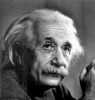 "The word God is for me nothing more than the expression and product of human weaknesses, the Bible a collection of honorable, but still primitive legends which are nevertheless pretty childish. No interpretation no matter how subtle can (for me) change this." -- Albert Einstein -- Written in 1954 to Jewish philosopher Erik Gutkind.
-
Divine Insight

- Savant
- Posts: 18070
- Joined: Thu Jun 28, 2012 10:59 pm
- Location: Here & Now
- Been thanked: 19 times
Re: The Problem with NonTheists and Facts
Post #27No, not a single solitary one of them is an established fact.WinePusher wrote: Question: Are the four items listed above facts?
The only one that even remotely qualifies as a potential fact is the second one you've mentioned:
Fact: The universe is fine tuned for life.
And personally I don't even buy into this one on pure scientific grounds, forget about theism entirely.
This whole argument is actually pretty bogus. It's based on an extremely faulty picture. The physicists have put together a mathematical model of the universe, and then ask, "What would happen if we changed one of the fundamental constants and nothing else?"
Well, duh? The mathematical model would collapse. And thus the universe it described would be meaningless and also collapse in the sense of not being workable.
But does that have anything to do with reality?

Possibly not. It could be that it's actually impossible to change a single parameter of the universe without affecting the others. In fact, I personally suspect that this is most likely the case.
In fact, if you stop and think about it our very laws of physics are nothing more than mathematical statements of the relationships between quantitative values.
In other other words, if a parameter of the universe were to be changed, then so too would the laws of physics change. For example F=ma might no longer hold as a quantitative law.
Yet, look what the physicists are doing. They are saying that if one parameter is changed and all else remains the same including the laws of physics then the universe would crash. But actually that's highly unlikely to even be the case anyway.
It's also true that if you change more than one parameter at a time it may very well be possible to re-tune the universe in infinitely many ways and still have a universe that does something interesting.
For example, it is often said that if the strength of gravity were changed just a little bit, then the universe would either collapse in on itself, or it would expand so rapidly that nothing would have a chance to form.
But what if you changed TWO parameters. What if you made gravity a little stronger, but then changed the values of mass to be a little lighter. Then you could potentially balance everything out to where you still have a universe where interesting things happen. You have more gravity, but less mass.
Or you might be able to do it the other way around. Make massive objects heavier, and then turn down the gravity. That might still work out ok.
In other words, if you are willing to change several parameters at once, it may be possible to create infinitely many universes, all of which are interesting and could produce complex objects, but each of them having totally different values for their constants.
In short, it's actually wrong to think that the "Fine-tuned" hypothesis is actually saying that there is only ONE WAY that the universe could be. That's actually quite wrong.
In fact, I personally don't even buy into the "fined-tuned" hypothesis at all.
So no, I do not accept that it is a "fact" that the universe is fined tuned for life.
I also disagree that any actual scientist beliefs that the universe began from "nothing". Even Lawrence Krauss confesses that he requires quantum fields to preexist the universe.
So no one is claiming that the universe started from "nothing", so that's not a fact either.
And there is no such thing as a "fact" associated with Jesus. For all we know he could have been a totally fictional character. And even if some guy named Jesus did exist, rebel against the religious leaders of his own culture, and was crucified for his rebellious attitude, it is still highly questionable whether any rumors that may have sparked can be even remotely dependable.
So, no, there are no "facts" associated with Jesus to be sure.
[center]
Spiritual Growth - A person's continual assessment
of how well they believe they are doing
relative to what they believe a personal God expects of them.
[/center]
Spiritual Growth - A person's continual assessment
of how well they believe they are doing
relative to what they believe a personal God expects of them.
[/center]
-
Danmark
- Site Supporter
- Posts: 12697
- Joined: Sun Sep 30, 2012 2:58 am
- Location: Seattle
- Been thanked: 1 time
Re: The Problem with NonTheists and Facts
Post #28Correct. An additional reason why the apparent 'fine tuning' of the universe is a bogus argument is relatively short time the Earth will be hospitable to life.Divine Insight wrote: No, not a single solitary one of them is an established fact.
The only one that even remotely qualifies as a potential fact is the second one you've mentioned:
Fact: The universe is fine tuned for life.
And personally I don't even buy into this one on pure scientific grounds, forget about theism entirely. . . .
http://en.wikipedia.org/wiki/Future_of_the_Earth
And one more reason:
Seahawks beat 49ers 23-17, win NFC title

-
Tired of the Nonsense
- Site Supporter
- Posts: 5680
- Joined: Fri Oct 30, 2009 6:01 pm
- Location: USA
- Been thanked: 1 time
Re: The Problem with NonTheists and Facts
Post #29[Replying to Danmark]
Being a Northern Californian AND a long time Niners season ticket holder, I see nothing about this at all! 
Danmark wrote: Seahawks beat 49ers 23-17, win NFC title
Being a Northern Californian AND a long time Niners season ticket holder, I see nothing
about this at all! "The word God is for me nothing more than the expression and product of human weaknesses, the Bible a collection of honorable, but still primitive legends which are nevertheless pretty childish. No interpretation no matter how subtle can (for me) change this." -- Albert Einstein -- Written in 1954 to Jewish philosopher Erik Gutkind.-
Nilloc James

- Site Supporter
- Posts: 1696
- Joined: Mon Dec 29, 2008 1:53 am
- Location: Canada
Post #30
What do you think of this example? When electromagnetic force and the weak nuclear force were viewed as seperate, any question about adusting on and not the other wold seem a valid question. But, now that we know they are linked, it seems pointless to ask "what happens if we change a and not b". Of course it falls apart - we've inserted ahuge contradiction A=not A.ossibly not. It could be that it's actually impossible to change a single parameter of the universe without affecting the others. In fact, I personally suspect that this is most likely the case.
The more we unify, the more obvious it is that the laws cannot be manipulated in the sense the fine tuning argument depends on.

