
This is really a question for Christians, but since it doesn't assume the validity of the Bible, I think it belongs here rather than in the Theology, Doctrine, and Dogma section.
There have been multiple canons of Scripture. Books have been accepted and rejected for various reasons throughout Christian history. Books have lied about their authorship. Passages have been added and removed. Books were written in different times and different places by different authors and for different reasons.
So how can I have confidence in any particular verse, chapter, or book, that what I am reading is the inspired work of the Holy Spirit, and not the work of a man, no matter how pious?
What method ought I use to reliably determine what is and is not the Word of God? Has someone already done this for me, and if so, how can I tell if they didn't make a mistake?
How can we determine which parts of Scripture are true?
Moderator: Moderators
-
historia

- Prodigy
- Posts: 3026
- Joined: Wed May 04, 2011 6:41 pm
- Has thanked: 299 times
- Been thanked: 470 times
Post #261
Not necessarily. We know that there were a large number of literary works produced in the ancient world -- by all kinds of people, not just Christians -- that have not survived to the present day. In fact, the extant sources are clearly but a fraction of what was written. So it is not surprising at all that Luke was familiar with sources that are otherwise unknown to us.Tired of the Nonsense wrote:And so, many other accounts indicated in Gospel Luke should be in evidence, should they not?historia wrote:
The two-source hypothesis (positing the existence of Q) exists to explain the double tradition in Matthew and Luke. The fact that we have nearly identical text between Matthew and Luke, and more specifically the features of those similarities, is clearly evidence for a text like Q. Even if you want to posit an alternate theory, such as the Farrer hypothesis, dismissing Q as mere "assumption," "speculation" and "wish fulfillment" seem irresponsible.
Further, we know from Luke that, at the time he wrote his gospel, "many [had] undertaken to draw up an account" of Jesus' life (Luke 1:1). Yet the only extant gospels today that could possibly pre-date Luke are Mark and Matthew -- and two hardly counts as "many." So there must have been several other (no longer extant) texts in circulation at that time.
Let me see if I understand your argument here: Biblical scholars simply assumed that an early source must have been written, and so invented Q on a whim just to fulfill that desire? To be honest, I thought that was just a bit of rhetoric on your part. But you seem to take this quite literally.
And, low and behold, there many other accounts are right there in front of us. They are generally known as the Apocrypha, . . . But surely these works must have been based on even earlier written accounts? Is that not a fair supposition? It only makes sense, after all. And what actual physical evidence do we have for all of these various and varied early written accounts? Well, we DO have a fair amount of supposition by Christian scholars that very early accounts MUST have been written of course, not to mention your personal assertion that "there must have been several other (no longer extant) texts in circulation at that time." And of course we do have copies of the Apocrypha, those works of pure ancient fulla bulla to examine.
Any hypothesis based on nothing more than assumptions of what must have happened is of course dubious. But that is precisely not what we have with the two document hypothesis.
But then, declaring something to be an assumption simply because we have no examples of it, and no real evidence that it ever existed to begin with, would apparently be "irresponsible," and "an exaggeration" on my part.
Q is nothing more than the observations that (1) Matthew and Luke have nearly identical material not in Mark and (2) that Luke was not dependent on Matthew, as a careful analysis of Luke and Matthew shows. From those two premises, the conclusion that Matthew and Luke must have used a common, but otherwise unknown, source (= Q) necessarily follows.
That is a sound, logical argument from evidence, not assumptions or wish-fulfillment. So dismissing that hypothesis as such is, in fact, irresponsible, and, judging by your arguments to date nothing more than exaggerations and rhetoric.
-
historia
- Prodigy
- Posts: 3026
- Joined: Wed May 04, 2011 6:41 pm
- Has thanked: 299 times
- Been thanked: 470 times
Post #262
I agree that you should have pointed this out earlier, as this is actually a reasonable argument.Tired of the Nonsense wrote:
I should have pointed out that Gospel Luke contains a good deal of material also found in Gospel Mark, as well as material found in Gospel Matthew but not Mark. And then material original only to Gospel Luke. Gospel Matthew itself largely IS the Gospel Mark, with new material original to itself woven in. It is this borrowing of material that lend the first three Gospels the title of "Synoptic" Gospels. The obvious solution to the question of borrowing of material is that Mark, being independent of influence from the other Gospels, was the first to have been written rather than the old tradition which placed Gospel Matthew first. This is now the overwhelmingly prevalent opinion. Gospel Matthew, which relies so heavily on material taken from Gospel Mark, was written second. Gospel Luke, which relies on information taken from both Gospels Mark And Matthew, was clearly written third. No wishful thinking is required to reach this obvious conclusion.
This is the Farrer hypothesis I mentioned above. I suppose it's "obvious" if you are unfamiliar with the details here, as it cannot easily explain why Luke omits so much of Matthew's unique material, or why Luke appears to preserve more primitive forms of the shared material than Matthew, or why Luke always prefers Mark's order over Matthew.
But it's a respectable position nonetheless. This stands in sharp contrast to your original argument that Q was constructed from a conspiracy of biblical scholars, as you explain in more detail here:
This is simply wrong, and easily disproven from the very example you gave:Tired of the Nonsense wrote:
You are quite correct. NO ONE supposes that the Apocrypha must surely have been derived from original earlier sources. Coincidentally, NO ONE is attempting to assert or establish that the Apocrypha are true and accurate versions of the story of Jesus, complete with accurate verbatim quotations from Jesus himself. That was my point! The quelle argument is self serving wish fulfillment in that this unfounded assumption only extends to the documents Christians have declared to be genuine.
The complete text of Thomas only exists today in a manuscript written in Coptic sometime in the 4th Century. A careful examination of the text has led scholars to hypothesize that it is actually a translation of an earlier Greek text (of which other fragments survive) probably written in the 2nd Century. Many scholars further hypothesize, again based on a careful examination of the text, that this second century text incorporated still earlier material that dates to the middle of the first century.
The Gospel of Thomas for example, which some scholars believe predate the four canonical Gospels (Scholars have proposed a date as early as 40 AD or as late as 140 AD; http://en.wikipedia.org/wiki/Gospel_of_Thomas ). Is the Gospel of Thomas a candidate for an example of a Quelle document?
So here we have an example of biblical scholars concluding that this gospel was "derived from original earlier sources." It is also regularly used as a source in historical Jesus research, and thus is thought to contain some "true and accurate versions of the story of Jesus, complete with accurate verbatim quotations from Jesus himself."
And clearly Thomas is not a canonical gospel. So your assertion that biblical scholars are only willing to extend these argument to the "documents Christians have declared to be genuine" is refuted.
-
Tired of the Nonsense

- Site Supporter
- Posts: 5680
- Joined: Fri Oct 30, 2009 6:01 pm
- Location: USA
- Been thanked: 1 time
Post #263
[Replying to historia]
The Q document is pure Christian mythology, and nothing more. Christian mythology is made up of the many and varied things that Christians have simply made up, declared to be true, and then incorporated into their belief system.
****
Q source
From Wikipedia, the free encyclopedia
The Q source (also Q document, Q Gospel, Q Sayings Gospel, or Q from German: Quelle, meaning "source") is a hypothetical written collection of sayings (logia) of Jesus defined as the "common" material found in the Gospels of Matthew and Luke but not in their other written source, the Gospel of Mark. According to this hypothesis, this material was drawn from the Oral Tradition of the Early Church.
Along with Markan priority, Q was hypothesized by 1900, and it is one of the foundations of most modern gospel scholarship. B H. Streeter formulated a widely accepted view of Q: that it was a written document (not an oral tradition) composed in Greek; that almost all of its contents appear in Matthew, in Luke, or in both; and that Luke more often preserves the original order of the text than Matthew. In the two-source hypothesis, Matthew and Luke both used Mark and Q as sources. Some scholars have postulated that Q is actually a plurality of sources, some written and some oral.[5] Others have attempted to determine the stages in which Q was composed.[6]
The existence of Q has been questioned.[6] The omission of what should have been a highly treasured dominical document from all the early Church catalogs, and from mention by the fathers of the early Church, might be seen as a great conundrum of modern Biblical scholarship.[7] However, copying Q might have been seen as unnecessary as it was preserved in the gospels that were considered canonical. Hence, it was preferable to copy Gospels of Matthew and Luke, where the sayings of Jesus from Q were rephrased to avoid misunderstandings, and to fit their own situations and their understanding of what Jesus had really meant.[8] Despite challenges, the two source hypothesis retains wide support.
http://en.wikipedia.org/wiki/Q_source
****
RELIGIOUS TOLLERANCE.ORG
Christian scriptures
The Gospel of Q; All sides to the controversy
Overview:
There is a widespread belief among post-Christians, liberal Christians, some mainline Christians, and secularists that the authors of the Gospels of Matthew and Luke:
Were not named "Matthew" and "Luke."
Were not eye witnesses to Jesus' ministry in Palestine.
Relied on a growing oral tradition of the early Christian movements concerning Jesus' teachings.
Copied much of their material from a pre-existing document.
The German researchers who pioneered in this work called this lost document "Quelle" which means "source". This is usually abbreviated as "Q" as in the "Gospel of Q."
The Gospel of Q remains a hypothetical document. No intact copy has ever been found. No reference to the document in early Christian writings has survived. Its existence is inferred from an analysis of the text of Matthew and Luke. Much of the content of Matthew and Luke were derived from the Gospel of Mark. But there were also many passages which appear to have come from Q.
Many theologians and religious historians believe that Q's text can be reconstructed by analyzing passages that Matthew and Luke have in common.
If the Gospel of Q exists, it might best be regarded as a reconstructed Gospel. Many believe that it was written much earlier than the four canonical gospels in the Christian Scriptures (New Testament): Mark, Matthew, Luke and John. It may have been the first of the 40 or so Gospels that were written and used by the early Christian movements.
The Gospel of Q is different from the four canonical gospels in that it does not extensively describe events in the life of Jesus. Rather, it is largely a collection of sayings -- similar to the Gospel of Thomas. Q does not mention events like Jesus' virgin birth, his selection of 12 disciples, crucifixion, resurrection, ascension to heaven, etc. It represents those parts of Jesus' teachings that his followers remembered and recorded about 20 years after his death. "He is presented as "a charismatic teacher, a healer, a simple man filled with the spirit of God. Jesus is also a sage, the personification of Wisdom, cast in the tradition of King Solomon."1
If the Gospel of Q did exist, then it is extremely important to religious liberals. It may contain the earliest descriptions of beliefs, behaviors and expectations of one group of Jesus' followers. Many liberals are convinced that the canonical Gospels contain extensive material that is not historical, including descriptions of non-existent events in Jesus' life, words that he did not say, teachings that he did not make, and actions that he did not take. Having access to a document written decades before the canonical gospels may allow liberal theologians to separate what they regard as fact from fiction in the Christian Scripture's descriptions of the life of Jesus.
To most religious conservatives, the Gospel of Q is a non-issue. As Eta Linnemann comments, it doesn't exist and:
"...is nothing but fantasy....Such totally subjective arrangements, depending on dubious suggestions about the historical background, amount to novelistic trifling with early Christian origins." 2
To those who believe that God inspired the authors of the Bible to write error-free text, it matters not one iota whether some of the Gospel content was derived from an earlier document. The Holy Spirit has guaranteed that the books chosen to be in Bible are all inerrant -- at least in their autograph copies: the copies hand-written by their authors.
****
Q - The Hypothetical Gospel
To explain a textual puzzle, scholars hypothesize a lost document - Q. It is known as the secret sayings gospel.
Elaine H. Pagels:
The Harrington Spear Paine Foundation Professor of Religion Princeton University
Today there are people who talk about Q as though it's a gospel. Q, as I see it, is not a gospel, it's a hypothesis. When scholars first began to study the gospels of the New Testament, literally, they discovered that Matthew and Luke both used Mark as the core, sort of the basic story line that they tell. Because Mark is completely incorporated - 16 chapters - into both Matthew and Luke. But they both also used other sayings, parables, and stories and so forth. And scholars observed that there's a part of the sayings in Matthew that are exactly identical with sayings in Luke. In fact they're identical in Greek. Now think -- Jesus spoke Aramaic. So if you were translating Aramaic, and if I were translating Aramaic, they'd come out different, these translations. So you would only have Jesus speaking identical sayings in Greek if you had a written translation in Greek of his sayings. And so scholars suggested that there must have been, besides Mark, something else written down that would have been a list of the sayings of Jesus, translated into Greek. And they called that "Quelle" which means source in German. And they call it for short, "Q." Nobody ever has found this source written. We can reconstruct it because we guess that there was such a written source, but nobody has seen it, and it certainly in my mind is not a gospel. It's a very good and well-founded hypothesis.
If it isn't gospel then what is it?
It was a source of the sayings of Jesus, and it's another picture of Jesus. For example, whoever collected the sayings of Q wasn't interested in the death of Jesus, wasn't interested in the resurrection of Jesus. They thought the importance of Jesus was what he said, what he preached. Now other people thought, "it's not enough to have the sayings of Jesus. You have to tell about his death and his crucifixion and his resurrection, that's the important thing." Now somebody put that all together and we call it Matthew, and we call it Mark, and we call it Luke. But originally these are probably rather distinct pictures.
http://www.pbs.org/wgbh/pages/frontline ... tical.html
****
Do I really need to keep going?
It was nineteen hundred years before the idea of an independent secret totally hitherto-fore unknown source "necessarily followed" anything. The only thing that "necessarily follows" is that the author of Gospel Matthew had a copy of Mark, and the author of Gospel Luke had a copy of them both. I already addressed this in a posting to you, #254.
Declaring that the Q document exists because Christian theologians have declared it to be so is really no different from Christians declaring that the entire Bible is the inerrant "Word of God," because they declare it to be so. There are many ways to address the obvious inherent facetiousness of these sort of claims, but the easiest and most direct way to make the point is to again compare them to the stuff that the bull left out in the pasture. Truth is not made by declaration, it is derived from facts and physical evidence. The physical evidence for the existence of the Q document is zero. It's a cow patty of an argument.
historia wrote: The two-source hypothesis (positing the existence of Q) exists to explain the double tradition in Matthew and Luke. The fact that we have nearly identical text between Matthew and Luke, and more specifically the features of those similarities, is clearly evidence for a text like Q. Even if you want to posit an alternate theory, such as the Farrer hypothesis, dismissing Q as mere "assumption," "speculation" and "wish fulfillment" seem irresponsible.
Further, we know from Luke that, at the time he wrote his gospel, "many [had] undertaken to draw up an account" of Jesus' life (Luke 1:1). Yet the only extant gospels today that could possibly pre-date Luke are Mark and Matthew -- and two hardly counts as "many." So there must have been several other (no longer extant) texts in circulation at that time.
Tired of the Nonsense wrote: And so, many other accounts indicated in Gospel Luke should be in evidence, should they not?
You noted that that Gospel Luke indicates that "many [had] undertaken to draw up an account" of Jesus' life (Luke 1:1)." And I pointed out that in fact we DO have many accounts of the life of Jesus. They are collectively known as the Apocrypha, and they are collectively comparable to the stuff that the bull left out in the pasture.historia wrote: Not necessarily. We know that there were a large number of literary works produced in the ancient world -- by all kinds of people, not just Christians -- that have not survived to the present day. In fact, the extant sources are clearly but a fraction of what was written. So it is not surprising at all that Luke was familiar with sources that are otherwise unknown to us.
historia wrote: Let me see if I understand your argument here: Biblical scholars simply assumed that an early source must have been written, and so invented Q on a whim just to fulfill that desire? To be honest, I thought that was just a bit of rhetoric on your part. But you seem to take this quite literally.
The Q document is pure Christian mythology, and nothing more. Christian mythology is made up of the many and varied things that Christians have simply made up, declared to be true, and then incorporated into their belief system.
****
Q source
From Wikipedia, the free encyclopedia
The Q source (also Q document, Q Gospel, Q Sayings Gospel, or Q from German: Quelle, meaning "source") is a hypothetical written collection of sayings (logia) of Jesus defined as the "common" material found in the Gospels of Matthew and Luke but not in their other written source, the Gospel of Mark. According to this hypothesis, this material was drawn from the Oral Tradition of the Early Church.
Along with Markan priority, Q was hypothesized by 1900, and it is one of the foundations of most modern gospel scholarship. B H. Streeter formulated a widely accepted view of Q: that it was a written document (not an oral tradition) composed in Greek; that almost all of its contents appear in Matthew, in Luke, or in both; and that Luke more often preserves the original order of the text than Matthew. In the two-source hypothesis, Matthew and Luke both used Mark and Q as sources. Some scholars have postulated that Q is actually a plurality of sources, some written and some oral.[5] Others have attempted to determine the stages in which Q was composed.[6]
The existence of Q has been questioned.[6] The omission of what should have been a highly treasured dominical document from all the early Church catalogs, and from mention by the fathers of the early Church, might be seen as a great conundrum of modern Biblical scholarship.[7] However, copying Q might have been seen as unnecessary as it was preserved in the gospels that were considered canonical. Hence, it was preferable to copy Gospels of Matthew and Luke, where the sayings of Jesus from Q were rephrased to avoid misunderstandings, and to fit their own situations and their understanding of what Jesus had really meant.[8] Despite challenges, the two source hypothesis retains wide support.
http://en.wikipedia.org/wiki/Q_source
****
RELIGIOUS TOLLERANCE.ORG
Christian scriptures
The Gospel of Q; All sides to the controversy
Overview:
There is a widespread belief among post-Christians, liberal Christians, some mainline Christians, and secularists that the authors of the Gospels of Matthew and Luke:
Were not named "Matthew" and "Luke."
Were not eye witnesses to Jesus' ministry in Palestine.
Relied on a growing oral tradition of the early Christian movements concerning Jesus' teachings.
Copied much of their material from a pre-existing document.
The German researchers who pioneered in this work called this lost document "Quelle" which means "source". This is usually abbreviated as "Q" as in the "Gospel of Q."
The Gospel of Q remains a hypothetical document. No intact copy has ever been found. No reference to the document in early Christian writings has survived. Its existence is inferred from an analysis of the text of Matthew and Luke. Much of the content of Matthew and Luke were derived from the Gospel of Mark. But there were also many passages which appear to have come from Q.
Many theologians and religious historians believe that Q's text can be reconstructed by analyzing passages that Matthew and Luke have in common.
If the Gospel of Q exists, it might best be regarded as a reconstructed Gospel. Many believe that it was written much earlier than the four canonical gospels in the Christian Scriptures (New Testament): Mark, Matthew, Luke and John. It may have been the first of the 40 or so Gospels that were written and used by the early Christian movements.
The Gospel of Q is different from the four canonical gospels in that it does not extensively describe events in the life of Jesus. Rather, it is largely a collection of sayings -- similar to the Gospel of Thomas. Q does not mention events like Jesus' virgin birth, his selection of 12 disciples, crucifixion, resurrection, ascension to heaven, etc. It represents those parts of Jesus' teachings that his followers remembered and recorded about 20 years after his death. "He is presented as "a charismatic teacher, a healer, a simple man filled with the spirit of God. Jesus is also a sage, the personification of Wisdom, cast in the tradition of King Solomon."1
If the Gospel of Q did exist, then it is extremely important to religious liberals. It may contain the earliest descriptions of beliefs, behaviors and expectations of one group of Jesus' followers. Many liberals are convinced that the canonical Gospels contain extensive material that is not historical, including descriptions of non-existent events in Jesus' life, words that he did not say, teachings that he did not make, and actions that he did not take. Having access to a document written decades before the canonical gospels may allow liberal theologians to separate what they regard as fact from fiction in the Christian Scripture's descriptions of the life of Jesus.
To most religious conservatives, the Gospel of Q is a non-issue. As Eta Linnemann comments, it doesn't exist and:
"...is nothing but fantasy....Such totally subjective arrangements, depending on dubious suggestions about the historical background, amount to novelistic trifling with early Christian origins." 2
To those who believe that God inspired the authors of the Bible to write error-free text, it matters not one iota whether some of the Gospel content was derived from an earlier document. The Holy Spirit has guaranteed that the books chosen to be in Bible are all inerrant -- at least in their autograph copies: the copies hand-written by their authors.
****
Q - The Hypothetical Gospel
To explain a textual puzzle, scholars hypothesize a lost document - Q. It is known as the secret sayings gospel.
Elaine H. Pagels:
The Harrington Spear Paine Foundation Professor of Religion Princeton University
Today there are people who talk about Q as though it's a gospel. Q, as I see it, is not a gospel, it's a hypothesis. When scholars first began to study the gospels of the New Testament, literally, they discovered that Matthew and Luke both used Mark as the core, sort of the basic story line that they tell. Because Mark is completely incorporated - 16 chapters - into both Matthew and Luke. But they both also used other sayings, parables, and stories and so forth. And scholars observed that there's a part of the sayings in Matthew that are exactly identical with sayings in Luke. In fact they're identical in Greek. Now think -- Jesus spoke Aramaic. So if you were translating Aramaic, and if I were translating Aramaic, they'd come out different, these translations. So you would only have Jesus speaking identical sayings in Greek if you had a written translation in Greek of his sayings. And so scholars suggested that there must have been, besides Mark, something else written down that would have been a list of the sayings of Jesus, translated into Greek. And they called that "Quelle" which means source in German. And they call it for short, "Q." Nobody ever has found this source written. We can reconstruct it because we guess that there was such a written source, but nobody has seen it, and it certainly in my mind is not a gospel. It's a very good and well-founded hypothesis.
If it isn't gospel then what is it?
It was a source of the sayings of Jesus, and it's another picture of Jesus. For example, whoever collected the sayings of Q wasn't interested in the death of Jesus, wasn't interested in the resurrection of Jesus. They thought the importance of Jesus was what he said, what he preached. Now other people thought, "it's not enough to have the sayings of Jesus. You have to tell about his death and his crucifixion and his resurrection, that's the important thing." Now somebody put that all together and we call it Matthew, and we call it Mark, and we call it Luke. But originally these are probably rather distinct pictures.
http://www.pbs.org/wgbh/pages/frontline ... tical.html
****
Do I really need to keep going?
historia wrote: Any hypothesis based on nothing more than assumptions of what must have happened is of course dubious. But that is precisely not what we have with the two document hypothesis.
Q is nothing more than the observations that (1) Matthew and Luke have nearly identical material not in Mark and (2) that Luke was not dependent on Matthew, as a careful analysis of Luke and Matthew shows. From those two premises, the conclusion that Matthew and Luke must have used a common, but otherwise unknown, source (= Q) necessarily follows.
That is a sound, logical argument from evidence, not assumptions or wish-fulfillment. So dismissing that hypothesis as such is, in fact, irresponsible, and, judging by your arguments to date nothing more than exaggerations and rhetoric.
It was nineteen hundred years before the idea of an independent secret totally hitherto-fore unknown source "necessarily followed" anything. The only thing that "necessarily follows" is that the author of Gospel Matthew had a copy of Mark, and the author of Gospel Luke had a copy of them both. I already addressed this in a posting to you, #254.
Declaring that the Q document exists because Christian theologians have declared it to be so is really no different from Christians declaring that the entire Bible is the inerrant "Word of God," because they declare it to be so. There are many ways to address the obvious inherent facetiousness of these sort of claims, but the easiest and most direct way to make the point is to again compare them to the stuff that the bull left out in the pasture. Truth is not made by declaration, it is derived from facts and physical evidence. The physical evidence for the existence of the Q document is zero. It's a cow patty of an argument.
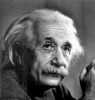 "The word God is for me nothing more than the expression and product of human weaknesses, the Bible a collection of honorable, but still primitive legends which are nevertheless pretty childish. No interpretation no matter how subtle can (for me) change this." -- Albert Einstein -- Written in 1954 to Jewish philosopher Erik Gutkind.
-
Tired of the Nonsense
- Site Supporter
- Posts: 5680
- Joined: Fri Oct 30, 2009 6:01 pm
- Location: USA
- Been thanked: 1 time
Post #264
[Replying to post 261 by historia]
Gospel of Thomas
From Wikipedia, the free encyclopedia
Date of composition
Richard Valantasis writes:
Assigning a date to the Gospel of Thomas is very complex because it is difficult to know precisely to what a date is being assigned. Scholars have proposed a date as early as 40 AD or as late as 140 AD, depending upon whether the Gospel of Thomas is identified with the original core of sayings, or with the author's published text, or with the Greek or Coptic texts, or with parallels in other literature.[27]
Valantasis and other scholars argue that it is difficult to date Thomas because, as a collection of logia without a narrative framework, individual sayings could have been added to it gradually over time.[28] (However, Valantasis does date Thomas to 100 " 110 AD, with some of the material certainly coming from the first stratum which is dated to 30 " 60 AD.
http://en.wikipedia.org/wiki/Gospel_of_Thomas
***
According to scholars, the original Gospel of Thomas, was initially written in Greek, most likely in Syria (possibly at Edessa: click on map) between the liberal date of 50 CE - and the conservative date of 100 CE . The Coptic version, found at Nag Hammadi is the only complete text that we have and was transcribed circa 340 AD. The variations between the Greek Fragments of which only three were found (and these are of various dates it seems) and compared to the Coptic text indicate that The Gospel of Thomas was changed a number of times prior to both the Greek and the Coptic texts and certainly means that we may never be able to discern what the original text actually said.
http://www.gnostic.org/gospel_thomas/go ... _about.htm
***
I'm not making this stuff up off of the top of my head. I am rather opposed to that sort of tactic, actually. But there is a good deal of support for an early dating of Gospel Thomas. I am not personally taking a stand on it one way or the other.
historia wrote: The complete text of Thomas only exists today in a manuscript written in Coptic sometime in the 4th Century. A careful examination of the text has led scholars to hypothesize that it is actually a translation of an earlier Greek text (of which other fragments survive) probably written in the 2nd Century. Many scholars further hypothesize, again based on a careful examination of the text, that this second century text incorporated still earlier material that dates to the middle of the first century.
So here we have an example of biblical scholars concluding that this gospel was "derived from original earlier sources." It is also regularly used as a source in historical Jesus research, and thus is thought to contain some "true and accurate versions of the story of Jesus, complete with accurate verbatim quotations from Jesus himself."
And clearly Thomas is not a canonical gospel. So your assertion that biblical scholars are only willing to extend these argument to the "documents Christians have declared to be genuine" is refuted.
Gospel of Thomas
From Wikipedia, the free encyclopedia
Date of composition
Richard Valantasis writes:
Assigning a date to the Gospel of Thomas is very complex because it is difficult to know precisely to what a date is being assigned. Scholars have proposed a date as early as 40 AD or as late as 140 AD, depending upon whether the Gospel of Thomas is identified with the original core of sayings, or with the author's published text, or with the Greek or Coptic texts, or with parallels in other literature.[27]
Valantasis and other scholars argue that it is difficult to date Thomas because, as a collection of logia without a narrative framework, individual sayings could have been added to it gradually over time.[28] (However, Valantasis does date Thomas to 100 " 110 AD, with some of the material certainly coming from the first stratum which is dated to 30 " 60 AD.
http://en.wikipedia.org/wiki/Gospel_of_Thomas
***
According to scholars, the original Gospel of Thomas, was initially written in Greek, most likely in Syria (possibly at Edessa: click on map) between the liberal date of 50 CE - and the conservative date of 100 CE . The Coptic version, found at Nag Hammadi is the only complete text that we have and was transcribed circa 340 AD. The variations between the Greek Fragments of which only three were found (and these are of various dates it seems) and compared to the Coptic text indicate that The Gospel of Thomas was changed a number of times prior to both the Greek and the Coptic texts and certainly means that we may never be able to discern what the original text actually said.
http://www.gnostic.org/gospel_thomas/go ... _about.htm
***
I'm not making this stuff up off of the top of my head. I am rather opposed to that sort of tactic, actually. But there is a good deal of support for an early dating of Gospel Thomas. I am not personally taking a stand on it one way or the other.
"The word God is for me nothing more than the expression and product of human weaknesses, the Bible a collection of honorable, but still primitive legends which are nevertheless pretty childish. No interpretation no matter how subtle can (for me) change this." -- Albert Einstein -- Written in 1954 to Jewish philosopher Erik Gutkind.-
historia
- Prodigy
- Posts: 3026
- Joined: Wed May 04, 2011 6:41 pm
- Has thanked: 299 times
- Been thanked: 470 times
Post #265
Which is a poor argument, since, with possible rare exceptions (e.g., the Gospel of Thomas), all of those apochryphal gospels post-date Luke. And so when Luke says that "many" had already written accounts at the time he was writing, he must be referring to other, no longer extant, sources.Tired of the Nonsense wrote:You noted that that Gospel Luke indicates that "many [had] undertaken to draw up an account" of Jesus' life (Luke 1:1)." And I pointed out that in fact we DO have many accounts of the life of Jesus. They are collectively known as the Apocrypha, and they are collectively comparable to the stuff that the bull left out in the pasture.historia wrote:
We know that there were a large number of literary works produced in the ancient world -- by all kinds of people, not just Christians -- that have not survived to the present day. In fact, the extant sources are clearly but a fraction of what was written. So it is not surprising at all that Luke was familiar with sources that are otherwise unknown to us.
I suppose you do, as none of the texts you cited in any way shape or form say that Q is "mythology." It is a hypothetical document derived from a careful, critical examination of the texts of Matthew and Luke. That is very different from "mythology."Tired of the Nonsense wrote:The Q document is pure Christian mythology, and nothing more. Christian mythology is made up of the many and varied things that Christians have simply made up, declared to be true, and then incorporated into their belief system.historia wrote:
Let me see if I understand your argument here: Biblical scholars simply assumed that an early source must have been written, and so invented Q on a whim just to fulfill that desire? To be honest, I thought that was just a bit of rhetoric on your part. But you seem to take this quite literally.
[snip a bunch of basic explanation of what Q is]
Do I really need to keep going?
Have you actually read any scholarly books or articles on the two document hypothesis? Perhaps the works of John Kloppenborg? Have you considered the evidence he cites in support of the theory?
It was also nineteen hundred years before the idea of Mark being the first gospel was postulated. And yet you accept that hypothesis based on little more than the fact that this is the scholarly consensus.Tired of the Nonsense wrote:It was nineteen hundred years before the idea of an independent secret totally hitherto-fore unknown source "necessarily followed" anything.historia wrote:
Any hypothesis based on nothing more than assumptions of what must have happened is of course dubious. But that is precisely not what we have with the two document hypothesis.
Q is nothing more than the observations that (1) Matthew and Luke have nearly identical material not in Mark and (2) that Luke was not dependent on Matthew, as a careful analysis of Luke and Matthew shows. From those two premises, the conclusion that Matthew and Luke must have used a common, but otherwise unknown, source (= Q) necessarily follows.
That is a sound, logical argument from evidence, not assumptions or wish-fulfillment. So dismissing that hypothesis as such is, in fact, irresponsible, and, judging by your arguments to date nothing more than exaggerations and rhetoric.
The two document hypothesis is based on the exact same evidence and arguments as Markan priority -- a careful examination of the literary dependence between the Synoptics -- and yet you arrogantly dismiss it as little more than 'assumption', 'presupposition' and 'wish-fulfillment.' If that is case, then so is Markan priority. You can't have it both ways.
Which isn't to say that either theory is necessarily true. But clearly your acceptance of Markan priority and rejection of Q is simply a preference on your part. Why is that?
Your ability to point to alternate theories does little to establish that such theories actually account for the data better than the two document hypothesis. If you want to actually defend the Farrer hypothesis, I'm all ears. But I suspect you don't.Tired of the Nonsense wrote:
The only thing that "necessarily follows" is that the author of Gospel Matthew had a copy of Mark, and the author of Gospel Luke had a copy of them both. I already addressed this in a posting to you, #254.
I can do the same thing you're doing here, citing the 'traditional' hypothesis that Matthew was written first and Luke and Mark derived their gospels from Matthew, further claiming that this "obviously" explains the Synoptic problem. I can also get on my high horse claiming that Markan priority is just a 'myth' built on the 'assumptions' and 'presuppositions' of secular and atheist scholars hell-bent on disproving the eyewitness nature of the gospels. Such claims are easy to make. And in this one paragraph I've provided as much evidence to support those assertions as you have yours, which is to say, none at all.
Except that no one here is making the claim that the "Q document exists because Christian theologians have declared it to be so."Tired of the Nonsense wrote:
Declaring that the Q document exists because Christian theologians have declared it to be so is really no different from Christians declaring that the entire Bible is the inerrant "Word of God," because they declare it to be so.
Rather, you made the claim that Q was proposed by biblical scholars only because they assumed a text must exist. I pointed out that the two document hypothesis is based on a careful and critical examination of the existing texts, which is to say on evidence. Even a cursory glance at the relevant scholarly literature shows this to be the case. And as such, you really ought to tone down your egregious and counter-factual rhetoric.
That's my argument.
-
historia
- Prodigy
- Posts: 3026
- Joined: Wed May 04, 2011 6:41 pm
- Has thanked: 299 times
- Been thanked: 470 times
Post #266
Okay, but how does this address my argument?Tired of the Nonsense wrote:[clip basic information on Thomas]historia wrote:
The complete text of Thomas only exists today in a manuscript written in Coptic sometime in the 4th Century. A careful examination of the text has led scholars to hypothesize that it is actually a translation of an earlier Greek text (of which other fragments survive) probably written in the 2nd Century. Many scholars further hypothesize, again based on a careful examination of the text, that this second century text incorporated still earlier material that dates to the middle of the first century.
So here we have an example of biblical scholars concluding that this gospel was "derived from original earlier sources." It is also regularly used as a source in historical Jesus research, and thus is thought to contain some "true and accurate versions of the story of Jesus, complete with accurate verbatim quotations from Jesus himself."
And clearly Thomas is not a canonical gospel. So your assertion that biblical scholars are only willing to extend these argument to the "documents Christians have declared to be genuine" is refuted.
I'm not making this stuff up off of the top of my head. I am rather opposed to that sort of tactic, actually. But there is a good deal of support for an early dating of Gospel Thomas. I am not personally taking a stand on it one way or the other.
Again, to recap: You put forward the argument that biblical scholars only postulate earlier (and more historically accurate) sources for the canonical gospels rather than non-canonical, apocryphal gospels, and that this reflects nothing more than bias on their part. You cited Thomas specifically as an example of a non-canonical text.
I then pointed out that biblical scholars do, in fact, postulate earlier sources for Thomas (which today exists only as a late Coptic text) and many claim that it, in fact, preserves independent, accurate sayings of Jesus.
This manifestly refutes your argument. Either you disagree with my argument or concede I've made a good point. Quoting Wikipedia articles adds nothing to the matter.
And I agree that there is a "good deal of support" for dating Thomas this way, even if you and I don't necessarily agree with that conclusion. Just as there is a "good deal of support" for Markan priority. And a "good deal of support" for Q and the two document hypothesis, even if not everyone necessarily agrees with that conclusion.
So let's put all this talk of 'myth' and 'wish-fulfillment' and 'cow patties' aside. That's the stuff of internet atheist anti-apologetics, and not worth our time.
-
Tired of the Nonsense
- Site Supporter
- Posts: 5680
- Joined: Fri Oct 30, 2009 6:01 pm
- Location: USA
- Been thanked: 1 time
Post #267
[Replying to historia]
By some counts there were as many as 50 non-canonical Gospels in circulation by the early third century. And this doesn't include the various "Acts of" and "Epistles of." Many of these works still exist today, wholly or in fragments, and many are known only through references to them contained in other works. When each of them was first written is simply a matter of conjecture. But the comment in Gospel Luke that other accounts were being written absolutely conincides with the historical evidence.
historia wrote: Which is a poor argument, since, with possible rare exceptions (e.g., the Gospel of Thomas), all of those apochryphal gospels post-date Luke. And so when Luke says that "many" had already written accounts at the time he was writing, he must be referring to other, no longer extant, sources.
By some counts there were as many as 50 non-canonical Gospels in circulation by the early third century. And this doesn't include the various "Acts of" and "Epistles of." Many of these works still exist today, wholly or in fragments, and many are known only through references to them contained in other works. When each of them was first written is simply a matter of conjecture. But the comment in Gospel Luke that other accounts were being written absolutely conincides with the historical evidence.
We should simply cut to the chase here. You seem to take a good deal of pride in your historical expertise. Is it your opinion that the one time existence of the Q document is a thoroughly established historical fact, which is and should be, accepted as established historical fact by the majority of modern secular historians? Accordingly, is it also your opinion, as an expert historian yourself, that the resurrection of Jesus from the dead is also a well established historical fact, which is, AND SHOULD BE, accepted as established historical fact by the majority of modern secular historians?historia wrote: I suppose you do, as none of the texts you cited in any way shape or form say that Q is "mythology." It is a hypothetical document derived from a careful, critical examination of the texts of Matthew and Luke. That is very different from "mythology."
"The word God is for me nothing more than the expression and product of human weaknesses, the Bible a collection of honorable, but still primitive legends which are nevertheless pretty childish. No interpretation no matter how subtle can (for me) change this." -- Albert Einstein -- Written in 1954 to Jewish philosopher Erik Gutkind.Post #268
[Replying to post 266 by Tired of the Nonsense]
TOTN seems to have realized that historia defeated him, so he is moving the goal posts. He now demands that historia prove that all scholars agree with him about Q and that even secular historians be shown proof that Jesus rose from the dead.
Yet at the same time he indulges in the wishful thinking that the texts earlier than Luke include some apocryphal gospels, but he does not admit the scholarly theory that Q was among what preceded Luke. Having it both ways!
TOTN seems to have realized that historia defeated him, so he is moving the goal posts. He now demands that historia prove that all scholars agree with him about Q and that even secular historians be shown proof that Jesus rose from the dead.
Yet at the same time he indulges in the wishful thinking that the texts earlier than Luke include some apocryphal gospels, but he does not admit the scholarly theory that Q was among what preceded Luke. Having it both ways!
Post #269
I'm no scholar. I'm only going by what has been presented in this thread.
I have seen zero evidence for this Q thing you guys are talking about. I have seen it presented fairly well that such a singular document was possible. But none if the evidence presented in this thread indicates that it is a strong possibility.
The passing off of that which is within the realm of possibility as that which is probable is an unreasonable way to evaluate or present evidence.
Q sounds totally possible. I'm waiting to see something conclusive regarding it that makes it's non existence seem unlikely. Possibility is not by itself indicative of probability.
I can't imagine given what has been presented here how I would be justified in having any opinion about the existence of this document, much less factoring that existence into evaluations of the documents we do have.
I have seen zero evidence for this Q thing you guys are talking about. I have seen it presented fairly well that such a singular document was possible. But none if the evidence presented in this thread indicates that it is a strong possibility.
The passing off of that which is within the realm of possibility as that which is probable is an unreasonable way to evaluate or present evidence.
Q sounds totally possible. I'm waiting to see something conclusive regarding it that makes it's non existence seem unlikely. Possibility is not by itself indicative of probability.
I can't imagine given what has been presented here how I would be justified in having any opinion about the existence of this document, much less factoring that existence into evaluations of the documents we do have.
-
Zzyzx
- Site Supporter
- Posts: 25141
- Joined: Sat Mar 10, 2007 10:38 pm
- Location: Bible Belt USA
- Has thanked: 55 times
- Been thanked: 93 times
Post #270
.
This should probably be a Warning " and may be upgraded to such by another Moderator
The entire post is focused on personal comments regarding other debaters and is "cheerleading" that contributes little or nothing to debate .
It would be advisable to learn to debate ideas rather than personalities and to present evidence rather than opinions.
Rules
C&A Guidelines
______________
Moderator interventions do not count as a strike against any posters. They are given at the discretion of a moderator when he or she feels that some sort of intervention is required.
Moderator InterventionKorah wrote: TOTN seems to have realized that historia defeated him, so he is moving the goal posts. He now demands that historia prove that all scholars agree with him about Q and that even secular historians be shown proof that Jesus rose from the dead.
Yet at the same time he indulges in the wishful thinking that the texts earlier than Luke include some apocryphal gospels, but he does not admit the scholarly theory that Q was among what preceded Luke. Having it both ways!
This should probably be a Warning " and may be upgraded to such by another Moderator
The entire post is focused on personal comments regarding other debaters and is "cheerleading" that contributes little or nothing to debate .
It would be advisable to learn to debate ideas rather than personalities and to present evidence rather than opinions.
Rules
C&A Guidelines
______________
Moderator interventions do not count as a strike against any posters. They are given at the discretion of a moderator when he or she feels that some sort of intervention is required.
.
Non-Theist
ANY of the thousands of "gods" proposed, imagined, worshiped, loved, feared, and/or fought over by humans MAY exist -- awaiting verifiable evidence
Non-Theist
ANY of the thousands of "gods" proposed, imagined, worshiped, loved, feared, and/or fought over by humans MAY exist -- awaiting verifiable evidence

