
This thread is inspired by a question Divine Insight asked recently, questioning just why we should consider faith virtuous.
Theists talk of faith as if being faithful is some kind of great virtue. Something that is so crucial to our well being. Sure, the bible tells us this, but really why is faith so virtuous? Why is it so important to a god?
I especially ask this from a non-theist perspective, why should anyone see faith as virtuous? As something desirable?
Just how virtuous is faith really?
Moderator: Moderators
-
OnceConvinced

- Savant
- Posts: 8969
- Joined: Tue Aug 07, 2007 10:22 pm
- Location: New Zealand
- Has thanked: 50 times
- Been thanked: 67 times
- Contact:
Just how virtuous is faith really?
Post #1Society and its morals evolve and will continue to evolve. The bible however remains the same and just requires more and more apologetics and claims of "metaphors" and "symbolism" to justify it.
Prayer is like rubbing an old bottle and hoping that a genie will pop out and grant you three wishes.
There is much about this world that is mind boggling and impressive, but I see no need whatsoever to put it down to magical super powered beings.
Check out my website: Recker's World

-
OnceConvinced
- Savant
- Posts: 8969
- Joined: Tue Aug 07, 2007 10:22 pm
- Location: New Zealand
- Has thanked: 50 times
- Been thanked: 67 times
- Contact:
Post #3
tam wrote: Perhaps you should define faith first?
I believe there is more than one definition out there, even among the self-professed faithful.
Peace!
Well I guess there's no harm in talking about each different type. Or whatever you believe faith means. Perhaps if one states what they believe it to be and then explain how it is virtuous, that should work.
Society and its morals evolve and will continue to evolve. The bible however remains the same and just requires more and more apologetics and claims of "metaphors" and "symbolism" to justify it.
Prayer is like rubbing an old bottle and hoping that a genie will pop out and grant you three wishes.
There is much about this world that is mind boggling and impressive, but I see no need whatsoever to put it down to magical super powered beings.
Check out my website: Recker's World
-
Tired of the Nonsense

- Site Supporter
- Posts: 5680
- Joined: Fri Oct 30, 2009 6:01 pm
- Location: USA
- Been thanked: 1 time
Re: Just how virtuous is faith really?
Post #4OnceConvinced wrote: This thread is inspired by a question Divine Insight asked recently, questioning just why we should consider faith virtuous.
Theists talk of faith as if being faithful is some kind of great virtue. Something that is so crucial to our well being. Sure, the bible tells us this, but really why is faith so virtuous? Why is it so important to a god?
I especially ask this from a non-theist perspective, why should anyone see faith as virtuous? As something desirable?
I notice that while faith is considered to be a virtue, and people frequently name their daughter's Faith in honor of this great virtue, no one ever seems to name one of their children Gullible. The definition of faith is to place one's complete trust in something. Faith is simply a person exhibiting trust, as is gullibility. But no one wants a daughter named Gullible, in much the same way they would not name their daughter "Naive," or "Easy."
"These are my daughters, Gullible, Naive and Easy." Just how "virtuous" would THAT be?
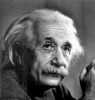 "The word God is for me nothing more than the expression and product of human weaknesses, the Bible a collection of honorable, but still primitive legends which are nevertheless pretty childish. No interpretation no matter how subtle can (for me) change this." -- Albert Einstein -- Written in 1954 to Jewish philosopher Erik Gutkind.
-
Inigo Montoya
- Guru
- Posts: 1333
- Joined: Tue Jan 22, 2013 8:45 pm
Post #5
Pretending to know things you don't know, in some ways, and in light of the opposition, might be seen in some way as brave. I see it rather as reckless and irrational, but holding fast despite the odds and persecution to an idea might be generously called brave. Which is a desirable virtue usually, bravery.
That's all I got.
That's all I got.
-
benchwarmer
- Prodigy
- Posts: 2511
- Joined: Mon Jun 06, 2016 8:40 am
- Has thanked: 2347 times
- Been thanked: 962 times
Re: Just how virtuous is faith really?
Post #6[Replying to post 1 by OnceConvinced]
My simple definition first of faith: To believe in something without having proof and/or to have hope that something is true until proven otherwise.
A personal example: I have faith that my wife will love me for the rest of her life.
I think it can be virtuous in that it can show you have a positive outlook. You choose to believe in something good even if it can't be proven to be true.
Obviously this is not exhaustive, but there you go.
My simple definition first of faith: To believe in something without having proof and/or to have hope that something is true until proven otherwise.
A personal example: I have faith that my wife will love me for the rest of her life.
I think it can be virtuous in that it can show you have a positive outlook. You choose to believe in something good even if it can't be proven to be true.
Obviously this is not exhaustive, but there you go.
-
Tired of the Nonsense
- Site Supporter
- Posts: 5680
- Joined: Fri Oct 30, 2009 6:01 pm
- Location: USA
- Been thanked: 1 time
Re: Just how virtuous is faith really?
Post #7Mark Twain actually had the perfect response to the question of faith, but it slipped my mind earlier.OnceConvinced wrote: This thread is inspired by a question Divine Insight asked recently, questioning just why we should consider faith virtuous.
Theists talk of faith as if being faithful is some kind of great virtue. Something that is so crucial to our well being. Sure, the bible tells us this, but really why is faith so virtuous? Why is it so important to a god?
I especially ask this from a non-theist perspective, why should anyone see faith as virtuous? As something desirable?
"Faith is believing what you know aint so." -- Mark Twain
"The word God is for me nothing more than the expression and product of human weaknesses, the Bible a collection of honorable, but still primitive legends which are nevertheless pretty childish. No interpretation no matter how subtle can (for me) change this." -- Albert Einstein -- Written in 1954 to Jewish philosopher Erik Gutkind.-
theStudent

- Guru
- Posts: 1566
- Joined: Fri May 20, 2016 6:32 pm
- Been thanked: 2 times
Re: Just how virtuous is faith really?
Post #8The Bible faith, or the Christian faith is defined at Hebrews 11:1OnceConvinced wrote: This thread is inspired by a question Divine Insight asked recently, questioning just why we should consider faith virtuous.
Theists talk of faith as if being faithful is some kind of great virtue. Something that is so crucial to our well being. Sure, the bible tells us this, but really why is faith so virtuous? Why is it so important to a god?
I especially ask this from a non-theist perspective, why should anyone see faith as virtuous? As something desirable?
Hebrews 11:1
This faith is believing in things that we cannot see, and things we hope for.Faith is the assured expectation of what is hoped for, the evident demonstration of realities that are not seen.
For example we cannot see what cannot be seen with the physical eye, nor have what we hope for become a reality - a promise made by someone, for example.
However, this faith is based firmly on evidence we see around us and confidence in what we hope for.
I'll like to illustrate it.
What we cannot see..
We have confidence in the laws that govern the universe, such as gravity.
We have faith that if we use a magnet to retrieve a metallic object, we likely will succeed.
We have faith that if we make a kite, an there is a good wind, our kite will likely fly.
What we hope for...
We accept employment, expecting that we will get paid.
We plant crops with the assurance that the seeds will sprout.
This is an informed faith, because it is based on evidence.
Faith in a creator - God - is the same. It is based on evidence of his existence, and trust in his promises, which are considered reliable.
John 8:32
. . .the truth will set you free.
. . .the truth will set you free.
-
Zzyzx
- Site Supporter
- Posts: 25140
- Joined: Sat Mar 10, 2007 10:38 pm
- Location: Bible Belt USA
- Has thanked: 54 times
- Been thanked: 93 times
Re: Just how virtuous is faith really?
Post #9.
Would that be unverifiable ancient tales, testimonials, opinions, folklore, religious tradition, conjecture about invisible / undetectable / supernatural entities?
Is there anything more substantial than that level of "evidence"?
Kindly present said evidence.theStudent wrote: This is an informed faith, because it is based on evidence.
Would that be unverifiable ancient tales, testimonials, opinions, folklore, religious tradition, conjecture about invisible / undetectable / supernatural entities?
Is there anything more substantial than that level of "evidence"?
.
Non-Theist
ANY of the thousands of "gods" proposed, imagined, worshiped, loved, feared, and/or fought over by humans MAY exist -- awaiting verifiable evidence
Non-Theist
ANY of the thousands of "gods" proposed, imagined, worshiped, loved, feared, and/or fought over by humans MAY exist -- awaiting verifiable evidence
-
Divine Insight
- Savant
- Posts: 18070
- Joined: Thu Jun 28, 2012 10:59 pm
- Location: Here & Now
- Been thanked: 19 times
Post #10
I would agree. But that's hardly an excuse to avoid answering the topic. One could always offer their own ideas of what faith means to them and then expound on why they feel that is a "virtue". Assuming they support the idea that faith is a virtue.tam wrote: Perhaps you should define faith first?
I believe there is more than one definition out there, even among the self-professed faithful.
Peace!
Others have already offered definitions such as theStudent:
By this definition I believe that even as an agnostic I have far greater faith than any Christians I have ever met.theStudent wrote: This faith is believing in things that we cannot see, and things we hope for..
I have faith that if there is a God it's far more intelligent and moral than described by Hebrew folklore (i.e. the Bible)
Christians typically merely have faith that the Biblical God will actually be able to explain why the Bible isn't as immoral as it literally appears to be. But as an agnostic I have far more faith than this. I have faith that if a God actually exists it will simply dismiss the Bible as something it did not direct men to write in the first place.

I also have far more faith in Jesus than most Christians do. Christian seem to be extremely confused over what it takes to be accepted into Kingdom of God (or Heaven). They also seem to take the most pessimistic view possible assuming that they may not even potentially qualify themselves. They seem to actually fear having confidence that their entrance to heaven is assured. Like as if this itself would be some sort of sin of arrogance or something.
I have no problem at all with this. I have far more faith in Jesus than they appear to have, and I'm agnostic. I don't even claim that Jesus is the Son of God or has any power to grant anyone eternal life in some imagined heavenly paradise. None the less, even as an agnostic I have FAITH, that IF Jesus actually is a righteous divine deity who has the power to reward people with eternal life in a heavenly paradise, then my entrance into heaven is absolutely guaranteed by Jesus himself. At least if the Gospels rumors about him can be trusted to be truthful.
If Christianity is true, then my entrance into eternal paradise is guaranteed. You might think that I would be thrilled about this, but actually I'm not, because in order for Christianity to be true this would mean that other poor souls would end up in everlasting punishment, and I have no reason to be thrilled about that.
It would be extremely selfish of me to be thrilled solely because of my own divine fate with total disregard for the fate of other poor souls. So, I confess that I don't even care to have faith in Christianity overall. At least not by the Biblical definition of faith that theStudent gave. Why would I hope that so many poor souls go to eternal hell?

So no, I not only would not have faith in Christianity as a whole but I would actually have faith (hope) that it's as false as can be.
And this is true even if my own destiny would be eternal paradise. That doesn't offset other souls going to hell.
So as an agnostic I have FAITH that IF there exists a God it's far more likely to be as described by Buddhism.
So even as an agnostic I have far greater "Faith" in a God then even the Christians do. I have "faith" that if a God exists God is far better than described by ancient Hebrew barbarians.
I seriously can't understand why Christians are so hell-bent on demanding that if a God exists it would be like the one described by ancient Hebrew folklore. There are simply far better pictures of God to place our faith (hope) in.
Is faith a virtue?
I don't know.
Isn't that the same as asking, "Is hope a virtue?"
How about optimistic thinking? Is that a virtue? And if so, then wouldn't it be more virtuous to place our faith in Buddhism which is far more optimistic than Christianity?
In Christianity only FEW make it into heaven leaving the vast majority of souls to burn forever in hell. How could that be "optimistic" even for people who think they are heaven-bound? This still wouldn't be very optimistic for the rest of humanity. What about our friends and loved ones? Where are they going to end up?
[center]
Spiritual Growth - A person's continual assessment
of how well they believe they are doing
relative to what they believe a personal God expects of them.
[/center]
Spiritual Growth - A person's continual assessment
of how well they believe they are doing
relative to what they believe a personal God expects of them.
[/center]

