
Before I begin the actual argument, a few terms/concepts must be addressed. One of those concepts involves possible world semantics. What is a possible world (PW)?
A PW is a set of circumstances or any proposition that could be true, or could be falseor a set of circumstances or any proposition that could be necessarily true, or necessarily false.
Example: Barack Obama is the President of the United States.
If this statement is true, then there is a possible world at which Barack Obama is President of the United States. However, since Barack Obama could very well NOT be the President of the U.S., then it follows that there is a possible world at which Barack Obama isnt President of the U.S.
So, in essence, there is a possible world (set of circumstances) at which Barack Obama is the President of the U.S. (and vice versa). In other words, its possible.
That being said; lets turn our attention to the difference between contingent truths, and necessary truths. Contingent truths are circumstances or propositions that could be true, but could also be equally false (such as the example above).
Necessary truths are truths that are either true or false REGARDLESS of the circumstances. So in essence, necessary truths are true in ALL POSSIBLE WORLDS. Good examples of necessary truths are mathematical truths, such as 2+2=4 <--- this is true in all possible circumstances and can never be false under any circumstance.
Next, Id like to turn the attention to the definition of God. God, at least as defined by Christian theism, is a maximally great being (MGB). By maximally great, we mean that God is omniscient (all-knowing), omnipotent (all-powerful), omnipresent (present everywhere at any given time), and omnibenevolent (the ultimate source of goodness)an ultimately, such a being is necessary in its existence (such a being cannot fail/cease to exist).
The four "omni's"that you see above, those are what we'd called "great making properties." A person is considered "great" based on accomplishments, power, influence, character, etc.
Being a maximally great being, all of those great-making properties are maxed out to the degree at which there isn't anything left to add. It is virtually impossible to think of a "greater being" than one that is all-knowing, all powerful, present everywhere, and the ultimate source of goodness.
Now, the Modal Ontological Argument makes a case that it is possible for such a being to actually exist. In other words; there is a possible world at which a MGB exists.
On to the argument..
1. It is possible that a maximally great being exists
2. If it is possible that a maximally great being exists, then a maximally great being exists in some possible world.
3. If a maximally great being exists in some possible world, then it exists in every possible world.
4. If a maximally great being exists in every possible world, then it exists in the actual world (our world).
5. If a maximally great being exists in the actual world, then a maximally great being exists.
6. Therefore, a maximally great being exists.
Of course, most of you will agree that it is possible for a MGB to exist. The problem is, once you admit that it is possible for a MGB to exist, you are essentially saying It is possible for a necessary being to exist.
Well, if it is possible for a necessary being to exist, then it follows that such a being must ACTUALLY exist. Why? Because a proposition cannot be possibly necessarily true, but actually false (because if the proposition is actually false, then it was never possibly necessarily true).
Again, most of you admit that it is possible for God to exist. Well, if it is possible for God to exist, then God must actually exist, because Gods existence would be one of necessity, and no necessary truth can be possibly true, but actually false.
And under the same token, if it is possible for God to NOT exist, then it is impossible for God to exist. So, Gods existence is either necessarily true, or necessarily false. And again for the third time, at some point in each and every one of your lives, youve admitted that it is possible for God to exist.
Therefore, God must exist. And as I close this argument, just for the record, it will take more than you people putting your hand over your ears and shouting The argument is not valid or whatever you like to say when a theist bring forth an argument.
You actually have to address the argument (1-5), and explain why any of the premises are false. But I dont think that you can, can you?
The Modal Ontological Argument
Moderator: Moderators
-
For_The_Kingdom
- Guru
- Posts: 1915
- Joined: Thu May 05, 2016 3:29 pm
-
Divine Insight
- Savant
- Posts: 18070
- Joined: Thu Jun 28, 2012 10:59 pm
- Location: Here & Now
- Been thanked: 19 times
Re: The Modal Ontological Argument
Post #21Being an agnostic the argument is basically irrelevant for me. I don't deny the potential existence of a "maximally great being" (whatever that might even mean). I do question the validity of your logical reasoning however.For_The_Kingdom wrote: Of course, most of you will agree that it is possible for a MGB to exist. The problem is, once you admit that it is possible for a MGB to exist, you are essentially saying It is possible for a necessary being to exist.
But that's totally unimportant to the point that I would like to make. Even if we allow that an MGB must exists, it absolutely could not be the God described in the Bible because the God described in the Bible is far from a maximally great being.
The God of the Bible has many failures in his creation and if we go with Christianity he even had to "sacrifice" his only begotten Son to accomplish something. Therefore he could never qualify as a "Maximally Great Being".
So if there exists a MGB then the religion to be most likely true would be Buddhism anyway. It's the only religion that is compatible with the ideal of a "Maximally Great Being".
Therefore if your Modal Ontological Argument has any merit, then Buddhism must be true and Christianity, Islam and Judaism must necessarily be false.
[center]
Spiritual Growth - A person's continual assessment
of how well they believe they are doing
relative to what they believe a personal God expects of them.
[/center]
Spiritual Growth - A person's continual assessment
of how well they believe they are doing
relative to what they believe a personal God expects of them.
[/center]
-
liamconnor
- Prodigy
- Posts: 3170
- Joined: Sun May 31, 2015 1:18 pm
Post #22
Willum wrote: I call MGBs, All-Powerful Entities (APEs).
I would like to call your attention to the Marvel Comic Book "Beyonder," who was an APE, but tucked himself into another Universe because he wanted to, and was still an APE. So, with #3 safely out of the way, we can talk about #1.
Only a fool would assume #1 was possible. That would be an Entity that could do anything, anywhere, anytime.
Premise 1: The only possible need for such a creature would be to describe the erroneous or impossible characteristics of something like the Judeo-Christian God. Since this God, or any other you can name doesn't need infinite powers except to do impossible things required for the particular religion to make sense, you don't need such an APE to exist unless you have the religion.
So unless there is a reasonable need for an APE, there is no basis to assume it exists. Hope is not a valid reason.
APEs do not describe anything. There is nothing in the Universe that would change without one, and since matter is neither created nor destroyed, we need no APE to create anything.
Premise 2: Something capable of doing anything, anytime anywhere would require infinite amounts of potential energy to do it, and would have to be located wherever it needed it done. Since energy has mass, it would have to have significant mass everywhere. By E=mc2, we don't find any unexplained mass, therefor, no APE.
So, logically we do not require an APE. Scientifically we do not require an APE. Religiously, it is only required to explain why inconsistencies in religious claims do not match reality.
V/R
Only a fool would assume #1 was possible. That would be an Entity that could do anything, anywhere, anytime.
I am surprised this wasn't censored. You just called a good number of people here fools and some of the greatest minds of history: i.e. Galileo, Newton, Einstein.
Theism has been held by an overwhelming number of intelligent people, I think you need to give reasons for this accusation of foolishness rather than just mud-sling.
-
Tired of the Nonsense

- Site Supporter
- Posts: 5680
- Joined: Fri Oct 30, 2009 6:01 pm
- Location: USA
- Been thanked: 1 time
Post #23
Sorry to bust your bubble, but Einstein was an atheist. As were most of the great minds of the 20th century. It's true that most of the great thinkers of the past were believers, but none of them knew about quantum mechanics.liamconnor wrote:Willum wrote: I call MGBs, All-Powerful Entities (APEs).
I would like to call your attention to the Marvel Comic Book "Beyonder," who was an APE, but tucked himself into another Universe because he wanted to, and was still an APE. So, with #3 safely out of the way, we can talk about #1.
Only a fool would assume #1 was possible. That would be an Entity that could do anything, anywhere, anytime.
Premise 1: The only possible need for such a creature would be to describe the erroneous or impossible characteristics of something like the Judeo-Christian God. Since this God, or any other you can name doesn't need infinite powers except to do impossible things required for the particular religion to make sense, you don't need such an APE to exist unless you have the religion.
So unless there is a reasonable need for an APE, there is no basis to assume it exists. Hope is not a valid reason.
APEs do not describe anything. There is nothing in the Universe that would change without one, and since matter is neither created nor destroyed, we need no APE to create anything.
Premise 2: Something capable of doing anything, anytime anywhere would require infinite amounts of potential energy to do it, and would have to be located wherever it needed it done. Since energy has mass, it would have to have significant mass everywhere. By E=mc2, we don't find any unexplained mass, therefor, no APE.
So, logically we do not require an APE. Scientifically we do not require an APE. Religiously, it is only required to explain why inconsistencies in religious claims do not match reality.
V/ROnly a fool would assume #1 was possible. That would be an Entity that could do anything, anywhere, anytime.
I am surprised this wasn't censored. You just called a good number of people here fools and some of the greatest minds of history: i.e. Galileo, Newton, Einstein.
Theism has been held by an overwhelming number of intelligent people, I think you need to give reasons for this accusation of foolishness rather than just mud-sling.
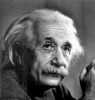 "The word God is for me nothing more than the expression and product of human weaknesses, the Bible a collection of honorable, but still primitive legends which are nevertheless pretty childish. No interpretation no matter how subtle can (for me) change this." -- Albert Einstein -- Written in 1954 to Jewish philosopher Erik Gutkind.
-
Kenisaw
- Guru
- Posts: 2117
- Joined: Fri Oct 16, 2015 2:41 pm
- Location: St Louis, MO, USA
- Has thanked: 18 times
- Been thanked: 61 times
Post #24
Is like to point out to everyone the flaws in this logic. First, being able to imagine something does not make it possible. I can imagine an unstoppable force and an immovable object meeting. Does that make it possible? Obviously not. Being able to imagine someone doesn't make it possible. (We could also, for that matter, imagine an infinite number of MGBs, which is absurd).For_The_Kingdom wrote:
The MGB, as defined in the argument, violates no laws of logic...a MGB is conceivable...we can imagine that such a being exist...so if we can imagine it, it is possible...and all possible necessary truths must be actually true.
The second problem is the jump from possible to "possible necessary" in his thought process. It's sneaky if one isn't paying attention, but nowhere has it been presented that a MGB is necessary. It's an added assumption in the middle of the process. Why is an MGB necessary? It's not. Kingdom may THINK it is, but there's no evidentiary standard that supports thinking that...
Actually to be accurate most people admit that it cannot be stated with 100% certainty that gods and leprechauns and wizards and ghosts and souls and devils named Olaf do not exist. There's no need to change that after the false logic presentation made in the OP.All point #1 states is that it is possible for a MGB to exist. Will you not admit that the existence of God (MGB) is possible? Again, most of you had no problem admitting that point prior to the argument. So I am going to go ahead and predict that now, suddenly, there will be many attempts to prove that it isn't possible for God to exist now.
No. Neither is necessary.Right, but you are comparing an alleged contingent existence (UFO) to an alleged necessary existence (MGB).PghPanther wrote: Point #3 is an assumption that you cannot make............just because a UFO exists in some possible world doesn't mean it exists in all possible worlds.
Apples and oranges.
-
Bust Nak
- Savant
- Posts: 9874
- Joined: Mon Feb 27, 2012 6:03 am
- Location: Planet Earth
- Has thanked: 189 times
- Been thanked: 267 times
Re: The Modal Ontological Argument
Post #25I don't see why you would need to mess around with "possible worlds," not with the definition of God you provided here:For_The_Kingdom wrote: Id like to turn the attention to the definition of God. God, at least as defined by Christian theism... such a being is necessary in its existence (such a being cannot fail/cease to exist).
1) God cannot fail to exist.
2) Therefore God exists.
Wow that was easy to prove! The argument amounts to taking your audience round the park to hide the question begging nature of the premise. You cannot define something into existence.
-
rikuoamero

- Under Probation
- Posts: 6707
- Joined: Tue Jul 28, 2015 2:06 pm
- Been thanked: 4 times
Re: The Modal Ontological Argument
Post #26[Replying to post 21 by Divine Insight]
People here have probably been wondering - it's page 3, and where's Rikuo? He's always been on top of Kingdom's posts. (If no-one has, then I shall go eat some humble pie later).
For the most part, I wanted to ignore this thread. It reminds me far too much of William Lane Craig, to the point I had a slight suspicion that it WAS WLC behind the handle of Kingdom.
Anyway, the other reason I disagree with the modal ontological argument is that the theists' ultimate goal (in this case, proving the existence of the Christian God) cannot be borne out by using it. Oh sure, Kingdom may SAY he's not putting a name to the being...but we have his history on this site to look back on. What is the possibility that Kingdom will allow the modal ontological argument to be used for any other god, accept that someone else can come in and use it as a successful argument for their god?
Not to mention, as DI points out, the Christian God does not meet the requirements of maximally perfect being, or APE as another user put it.
Not to mention he apparently had trouble once with iron based chariots.The God of the Bible has many failures in his creation and if we go with Christianity he even had to "sacrifice" his only begotten Son to accomplish something.
People here have probably been wondering - it's page 3, and where's Rikuo? He's always been on top of Kingdom's posts. (If no-one has, then I shall go eat some humble pie later).
For the most part, I wanted to ignore this thread. It reminds me far too much of William Lane Craig, to the point I had a slight suspicion that it WAS WLC behind the handle of Kingdom.
Anyway, the other reason I disagree with the modal ontological argument is that the theists' ultimate goal (in this case, proving the existence of the Christian God) cannot be borne out by using it. Oh sure, Kingdom may SAY he's not putting a name to the being...but we have his history on this site to look back on. What is the possibility that Kingdom will allow the modal ontological argument to be used for any other god, accept that someone else can come in and use it as a successful argument for their god?
Not to mention, as DI points out, the Christian God does not meet the requirements of maximally perfect being, or APE as another user put it.

Your life is your own. Rise up and live it - Richard Rahl, Sword of Truth Book 6 "Faith of the Fallen"
I condemn all gods who dare demand my fealty, who won't look me in the face so's I know who it is I gotta fealty to. -- JoeyKnotHead
Some force seems to restrict me from buying into the apparent nonsense that others find so easy to buy into. Having no religious or supernatural beliefs of my own, I just call that force reason. -- Tired of the Nonsense
-
rikuoamero
- Under Probation
- Posts: 6707
- Joined: Tue Jul 28, 2015 2:06 pm
- Been thanked: 4 times
Post #27
[Replying to post 22 by liamconnor]
I myself am a very intelligent person, but I act foolish and stupid most of the time.
No-one is not a fool 100% of the time. Newton gave us the theory of gravity, but he was also an alchemist who believed one could turn lead into gold. I call that foolish.You just called a good number of people here fools and some of the greatest minds of history: i.e. Galileo, Newton, Einstein.
I myself am a very intelligent person, but I act foolish and stupid most of the time.
Your life is your own. Rise up and live it - Richard Rahl, Sword of Truth Book 6 "Faith of the Fallen"
I condemn all gods who dare demand my fealty, who won't look me in the face so's I know who it is I gotta fealty to. -- JoeyKnotHead
Some force seems to restrict me from buying into the apparent nonsense that others find so easy to buy into. Having no religious or supernatural beliefs of my own, I just call that force reason. -- Tired of the Nonsense
-
Willum

- Savant
- Posts: 9017
- Joined: Sat Aug 02, 2014 2:14 pm
- Location: Yahweh's Burial Place
- Has thanked: 35 times
- Been thanked: 82 times
Post #28
Great insights "Furrowed Brow," you never disappoint.
[Replying to liamconnor]
Actually I just called the great minds after Newton fools.
Galileo was threatened with death if he didn't believe this foolishness.
Newton's greatest failure was trying to incorporate what he "knew" about God into physics. Otherwise he likely would have discovered Relativity, as the next logical step in mechanics.
And Einstein didn't believe that hornswaggle at all.
So really, I am calling anyone who ever learned about the conservation of matter and energy and Newtonian mechanics and still makes this assumption about an APE a fool. Let's be clear. Anyone who was unfortunately indoctrinated from birth, like Newton, has a pass.
Galileo, pass, he fought the good fight, and didn't believe his share.
Newton, pass, he was necessary for mankind to overcome this foolishness.
Einstein, didn't believe in this foolishness.
...and this is being inconsiderate of their accomplishments.
The real question, and I see no one has made an attempt to defend is this:
Other than explaining how this impossible unnecessary God can exist-is there any other reason to assume there is any kind of APE?
Anything?
Any reason?
[Replying to liamconnor]
Actually I just called the great minds after Newton fools.
Galileo was threatened with death if he didn't believe this foolishness.
Newton's greatest failure was trying to incorporate what he "knew" about God into physics. Otherwise he likely would have discovered Relativity, as the next logical step in mechanics.
And Einstein didn't believe that hornswaggle at all.
So really, I am calling anyone who ever learned about the conservation of matter and energy and Newtonian mechanics and still makes this assumption about an APE a fool. Let's be clear. Anyone who was unfortunately indoctrinated from birth, like Newton, has a pass.
Galileo, pass, he fought the good fight, and didn't believe his share.
Newton, pass, he was necessary for mankind to overcome this foolishness.
Einstein, didn't believe in this foolishness.
...and this is being inconsiderate of their accomplishments.
The real question, and I see no one has made an attempt to defend is this:
Other than explaining how this impossible unnecessary God can exist-is there any other reason to assume there is any kind of APE?
Anything?
Any reason?
-
Bust Nak
- Savant
- Posts: 9874
- Joined: Mon Feb 27, 2012 6:03 am
- Location: Planet Earth
- Has thanked: 189 times
- Been thanked: 267 times
Re: The Modal Ontological Argument
Post #29Now a few words against the counter-arguments offered here.
1) If one can imagine something then it follows that it is possible, at least when we are talking about modal logic. The question is when one say he can imagine X, is he mistakenly imagining something else thinking it was X? For example, someone might say he can imagine a square circle, it's just a circle with four corners; but we can conclude that he cannot have actually imagine such a thing since it is logically impossible. Imaginable and possible means the same thing in the context of modal logic.
2) If something possibly exists, then it follows trivially that it exists in some possible world(s). They are logically equivalent and accepted as an axiom of modal logic.
In short, the argument is more valid then you think, and if you accept premise 1 then the conclusion follows necessarily. The problem lies with premise 1, not the steps it took to the conclusion. Be more careful what you grant your opponent. Do you really accept that God is a necessarily being?
1) If one can imagine something then it follows that it is possible, at least when we are talking about modal logic. The question is when one say he can imagine X, is he mistakenly imagining something else thinking it was X? For example, someone might say he can imagine a square circle, it's just a circle with four corners; but we can conclude that he cannot have actually imagine such a thing since it is logically impossible. Imaginable and possible means the same thing in the context of modal logic.
2) If something possibly exists, then it follows trivially that it exists in some possible world(s). They are logically equivalent and accepted as an axiom of modal logic.
In short, the argument is more valid then you think, and if you accept premise 1 then the conclusion follows necessarily. The problem lies with premise 1, not the steps it took to the conclusion. Be more careful what you grant your opponent. Do you really accept that God is a necessarily being?
Last edited by Bust Nak on Fri Jun 10, 2016 6:42 am, edited 1 time in total.
-
rikuoamero
- Under Probation
- Posts: 6707
- Joined: Tue Jul 28, 2015 2:06 pm
- Been thanked: 4 times
Re: The Modal Ontological Argument
Post #30[Replying to post 29 by Bust Nak]
No I don't if by God you mean the entity talked about by the bible. The claim is made that that entity is necessary but I don't accept it. The person (s) making the claim have yet to provide a convincing argument or more importantly evidence that their entity is necessary. It is just assumed.
No I don't if by God you mean the entity talked about by the bible. The claim is made that that entity is necessary but I don't accept it. The person (s) making the claim have yet to provide a convincing argument or more importantly evidence that their entity is necessary. It is just assumed.
Your life is your own. Rise up and live it - Richard Rahl, Sword of Truth Book 6 "Faith of the Fallen"
I condemn all gods who dare demand my fealty, who won't look me in the face so's I know who it is I gotta fealty to. -- JoeyKnotHead
Some force seems to restrict me from buying into the apparent nonsense that others find so easy to buy into. Having no religious or supernatural beliefs of my own, I just call that force reason. -- Tired of the Nonsense

