
Does God cause evil?
Some assert that God causes no evil. Is there cause to believe this is true. Can this position be supported. Is the character described in the bible incapable of evil?
I would assert that a position that claims God created everything would make him the original cause of evil. That God cannot escape being the cause of evil since he created any and all situations in which evil would arise.
Does God cause evil?
Moderator: Moderators
-
DanieltheDragon
- Savant
- Posts: 6224
- Joined: Mon Jun 17, 2013 1:37 pm
- Location: Charlotte
- Been thanked: 1 time
Does God cause evil?
Post #1Post 1: Wed Apr 01, 2015 10:48 am Otseng has been banned
Otseng has been banned for having multiple accounts and impersonating a moderator.
Otseng has been banned for having multiple accounts and impersonating a moderator.
-
Youkilledkenny
- Sage
- Posts: 819
- Joined: Wed Jan 28, 2015 6:51 am
Re: Opportunities
Post #191[Replying to post 190 by ttruscott]
But God is always excused of his actions.
That's called sugar coating, of course.HIS pointing out hell as the end for some people has nothing to do with encouraging them to repent
Of course he commands everything. He's an arrogant bully in that regard.they are condemned already
But God is always excused of his actions.
Perhaps you should tell your brothers and sisters this...?Fear to get worshippers as a calumny, a strawdog with no bite, with no reality in the Christian system.
Post #192
[Replying to post 181 by Tired of the Nonsense]
I find your post is offering stereotypes of Christians. For example, saying that Christians go on the idea that "everyone knows its true, so it must be true." Far from it. Maybe some unreflective Christians, those who base their faith on an anti-intellectual foundation go that way.However, there is theology, the intellectual side of faith, which is far more sophisticated than simply making the claim you came up with.
True, free will challenges the idea of an omnipotent God. That's why I have said, in many previous posts, that divine omnipotence is a major theological mistake. I hold with omniscience, provided one understands I mean God knows the future for what it is, the realm of possibilities, not decided matters of fact. I have also pointed out that dropping omnipotence does not seriously diminish or reduce God. Rather, it grants God higher status. God is the ideal model of power, power over powers, participating in the free self-decisions of others. It takes far more talent to rule a democracy than a dictatorship.
While maybe certain Christians argue free will is a gift of God, I do not share that view. I believe free will is a necessity for God. God's goal is to provide beauty. Beauty requires complexity, and complexity makes for freedom.
Claiming that science has done away with God is a totally bogus. The question of God is not a scientific question. Physics, chemistry, astronomy, and the like will never solve it, are not equipped to do so. There question of God is more like a matter in math or logic than science. All the scientists can do is tell us what kind of universe we have got--and that's it. That's their job. If they find we have got a different universe than we thought, that simply means God created in a different way than we thought--and that's it. Science is neutral on the question of God. And the same holds for the other big questions of life. Science is not equipped to deal with questions of meaning, value, significance.
Saying that taking God out of the equation makes for free will as a natural state, also requires qualification. Often, when God is taken out, a dogmatic scientific determinism is put in God's place. Hence, there is no freedom. And I don't see how freedom would be possible without God. I view God as a transcendental imagination. Hence, God introduces possibilities for genuine novelty. With no God, no transcendental imagination, we would simply be at the mercy of teh tyranny of the given, the past. We would have no freedom, no choice, but to repeat the past.
I find your post is offering stereotypes of Christians. For example, saying that Christians go on the idea that "everyone knows its true, so it must be true." Far from it. Maybe some unreflective Christians, those who base their faith on an anti-intellectual foundation go that way.However, there is theology, the intellectual side of faith, which is far more sophisticated than simply making the claim you came up with.
True, free will challenges the idea of an omnipotent God. That's why I have said, in many previous posts, that divine omnipotence is a major theological mistake. I hold with omniscience, provided one understands I mean God knows the future for what it is, the realm of possibilities, not decided matters of fact. I have also pointed out that dropping omnipotence does not seriously diminish or reduce God. Rather, it grants God higher status. God is the ideal model of power, power over powers, participating in the free self-decisions of others. It takes far more talent to rule a democracy than a dictatorship.
While maybe certain Christians argue free will is a gift of God, I do not share that view. I believe free will is a necessity for God. God's goal is to provide beauty. Beauty requires complexity, and complexity makes for freedom.
Claiming that science has done away with God is a totally bogus. The question of God is not a scientific question. Physics, chemistry, astronomy, and the like will never solve it, are not equipped to do so. There question of God is more like a matter in math or logic than science. All the scientists can do is tell us what kind of universe we have got--and that's it. That's their job. If they find we have got a different universe than we thought, that simply means God created in a different way than we thought--and that's it. Science is neutral on the question of God. And the same holds for the other big questions of life. Science is not equipped to deal with questions of meaning, value, significance.
Saying that taking God out of the equation makes for free will as a natural state, also requires qualification. Often, when God is taken out, a dogmatic scientific determinism is put in God's place. Hence, there is no freedom. And I don't see how freedom would be possible without God. I view God as a transcendental imagination. Hence, God introduces possibilities for genuine novelty. With no God, no transcendental imagination, we would simply be at the mercy of teh tyranny of the given, the past. We would have no freedom, no choice, but to repeat the past.
Re: The Word of GOD.
Post #193[Replying to post 182 by Tired of the Nonsense]
I find you post is setting up caricatures of Christians and also scientists as well as o nonbelievers What you say about Christians often does hold for unreflective ones true. However, it's a very different case if you are dealing with well-educated, reflective Christians.
Your whole argument about the Bible seems very akin to what anti-intellectual, fundamentalaistic ideology claims: Either the Bible is inerrant or it is worthless. As I pointe out in a previous post, this kind of thinking is irrational, neurotic. Reality is a shade of grey. The Bible is a combination of both fact and myth. And It can be very difficult to separate the two. And as far as myths go, they always have a basis in fact and therefore should be seriously considered, not thrown out the window. Reading the Bible with discretion is no more cherry picking than reading about the history of the Old West with discretion. History is merely gossip, but it's all we've got. True, we cannot know definitely the human, historical Jesus, and so can only speculate; but, by the same token, it's true we can't know the human, historical Washington or Napoleon, either.
It is a gross over-exaggeration to say science has explained it all by natural laws. In point of fact, science is able to address only a tiny portion of reality. Scientific "laws" are but abstractions, to start with. Hence, they miss much of the concrete and therefore are nowhere near a complete account of reality. Furthermore, the best of scientists will tell you that there is a considerable dimension of speculation in science. Science does not deal in absolute truth based on absolute proof. Science deals in probabilities of an assumption being true or no.
I find you post is setting up caricatures of Christians and also scientists as well as o nonbelievers What you say about Christians often does hold for unreflective ones true. However, it's a very different case if you are dealing with well-educated, reflective Christians.
Your whole argument about the Bible seems very akin to what anti-intellectual, fundamentalaistic ideology claims: Either the Bible is inerrant or it is worthless. As I pointe out in a previous post, this kind of thinking is irrational, neurotic. Reality is a shade of grey. The Bible is a combination of both fact and myth. And It can be very difficult to separate the two. And as far as myths go, they always have a basis in fact and therefore should be seriously considered, not thrown out the window. Reading the Bible with discretion is no more cherry picking than reading about the history of the Old West with discretion. History is merely gossip, but it's all we've got. True, we cannot know definitely the human, historical Jesus, and so can only speculate; but, by the same token, it's true we can't know the human, historical Washington or Napoleon, either.
It is a gross over-exaggeration to say science has explained it all by natural laws. In point of fact, science is able to address only a tiny portion of reality. Scientific "laws" are but abstractions, to start with. Hence, they miss much of the concrete and therefore are nowhere near a complete account of reality. Furthermore, the best of scientists will tell you that there is a considerable dimension of speculation in science. Science does not deal in absolute truth based on absolute proof. Science deals in probabilities of an assumption being true or no.
-
Zzyzx
- Site Supporter
- Posts: 25141
- Joined: Sat Mar 10, 2007 10:38 pm
- Location: Bible Belt USA
- Has thanked: 55 times
- Been thanked: 93 times
Re: The Word of GOD.
Post #194.
By what means can one rationally distinguish between myth and fact regarding the 'resurrection', 'divinity' of Jesus, 'miracles', god tales? If a distinction cannot be made rationally, is it not most prudent to reserve judgment / decision?hoghead1 wrote: Reality is a shade of grey. The Bible is a combination of both fact and myth. And It can be very difficult to separate the two.
Why should one seriously consider myths other than one's favorites? What is to be gained by 'seriously considering' the myth of Paul Bunyan', for example?hoghead1 wrote: And as far as myths go, they always have a basis in fact and therefore should be seriously considered, not thrown out the window.
.
Non-Theist
ANY of the thousands of "gods" proposed, imagined, worshiped, loved, feared, and/or fought over by humans MAY exist -- awaiting verifiable evidence
Non-Theist
ANY of the thousands of "gods" proposed, imagined, worshiped, loved, feared, and/or fought over by humans MAY exist -- awaiting verifiable evidence
Re: The Word of GOD.
Post #195[Replying to post 194 by Zzyzx]
In many cases, it can be very difficult to distinguish what's myth and what's fact. Did the Resurrection really happen? There is really no way to scientifically investigate this. Science is neutral on the subject. Just because someone reports an unusual experience does not mean it is all wrong or necessarily right. The universe is not only strange, it is stranger than you can imagine. Many scientists hold with the notion now that there could be other dimensions of space. If so, then one could take off one's pants over one's head, as Dr. Sheldon cooper recently pointed out. ( I'm a fan of the show. ) Now that's pretty incredible to think about. So you have to bring all the intellectual equipment you can and then decide for yourself. For example, I look to process metaphysics. And on that basis, yes, I can see how it makes sense to assume Jesus was God. I don't believe in a natural-supernatural dichotomy. I do believe that "paranormal events" do happen and that they are manifestations of deeper operations in the natural order than we are ordinarily aware of. For example, I hold telepathy is a valid idea, though that doesn't mean I automatically believe every report, every claim to have experienced it. However, I do think telepathy is a valid idea, because I view reality as relational, which I believe is definitely the direction modern science has pointed us in. Everything is related to everything else, to put it loosely. We are all interconnected, items in each other's internal constitutions, to some greater or lesser extent. Hence, if I have such-and-such experience or feeling now, I wouldn't be surprised if someone way distant experienced it.
Why examine a myth such as Paul Bunyan? Because it tunes you into a deeper understanding of our culture. Myths do not come out of nowhere. They are based on fact and often symbolically represent values and experiences that are buried deep in out subconscious minds.
In many cases, it can be very difficult to distinguish what's myth and what's fact. Did the Resurrection really happen? There is really no way to scientifically investigate this. Science is neutral on the subject. Just because someone reports an unusual experience does not mean it is all wrong or necessarily right. The universe is not only strange, it is stranger than you can imagine. Many scientists hold with the notion now that there could be other dimensions of space. If so, then one could take off one's pants over one's head, as Dr. Sheldon cooper recently pointed out. ( I'm a fan of the show. ) Now that's pretty incredible to think about. So you have to bring all the intellectual equipment you can and then decide for yourself. For example, I look to process metaphysics. And on that basis, yes, I can see how it makes sense to assume Jesus was God. I don't believe in a natural-supernatural dichotomy. I do believe that "paranormal events" do happen and that they are manifestations of deeper operations in the natural order than we are ordinarily aware of. For example, I hold telepathy is a valid idea, though that doesn't mean I automatically believe every report, every claim to have experienced it. However, I do think telepathy is a valid idea, because I view reality as relational, which I believe is definitely the direction modern science has pointed us in. Everything is related to everything else, to put it loosely. We are all interconnected, items in each other's internal constitutions, to some greater or lesser extent. Hence, if I have such-and-such experience or feeling now, I wouldn't be surprised if someone way distant experienced it.
Why examine a myth such as Paul Bunyan? Because it tunes you into a deeper understanding of our culture. Myths do not come out of nowhere. They are based on fact and often symbolically represent values and experiences that are buried deep in out subconscious minds.
-
Tired of the Nonsense

- Site Supporter
- Posts: 5680
- Joined: Fri Oct 30, 2009 6:01 pm
- Location: USA
- Been thanked: 1 time
Re: The Word of GOD.
Post #196[Replying to post 193 by hoghead1]
Notice how the major religions are concentrated. Within these spheres of religious belief the overwhelming majority believe the same thing, so "everyone knows it's true." For the overwhelming majority of people in the world, the truth is whatever they were indoctrinated to believe in from their earliest memory.

Does it seem to you that Muslims do not emphatically believe that they have a well developed intellectual foundation for their beliefs? Buddhism is certainly renowned for it's well organized and highly intellectual philosophy. And Hinduism is 4,000 years old. It hasn't lasted this long without having a very strong and well organized intellectual foundation. Well organized intellectual foundations are no protection from being completely and utterly WRONG, as it turns out. And peoples thousands of years ago simply did not have the technology to study the universe and discover what the factual evidence has to tell us. For much of human history religion served to seemingly provide answers to the big questions concerning existence. Not surprisingly, people around the world reached different conclusions. But you see, ancient people had no means to gather and understand the hard evidence, so they made up answers. And they largely got it wrong. Wrong may be interesting, but wrong is not really useful. If one really intends to gather factual truths, then whatever that truth proves to be must be accepted at face value. Conclusions which prove to be wrong are valueless, and must be left behind.
Science is not in the business of disproving religion. Science is in the business of discovering what is true, and how the universe actually works. It should really come as no surprise that the advancement of genuine knowledge is proving to be a knife in the heart for ancient superstition based religious beliefs. Outdated beliefs need to be put behind us so that we can move on.
Religious people of course insist that existence is all the proof of God that is needed. Science however consistently shows that everything which occurs does so for entirely natural reasons. No God required. The universe really does exist though, because we are part of it. God on the other hand cannot be shown to have ever been anything other than imaginary right from the start.
There is no such thing as genuine "dogmatic scientific determinism." Every cause has the potential to produce multiple and even unpredictable effects. Dogma is the necessary handmaiden of religion, not science. Dogma is the enemy of scientific investigation. Things are a certain way, this is true. In a sense once that "way" is discovered, it becomes a type of dogma by default. As best as we can tell the laws of physics are fixed. Which, if true, makes them a type of dogmatism. Because we do not have the means to change physical laws. But we can always keep searching for explanations for why things work out as they do. Quantum mechanics is the term for the way that energy, which is what the universe is composed of, interacts with itself. Quantum mechanics is the mechanism of change, and it is the nature of quantum mechanics to forever surprise us.
People who do not learn from the past are fated to repeat past mistakes. People who prefer to make up their own reality learn nothing.
https://history.hanover.edu/courses/exc ... oleon.html
"If we mean to continue our struggles, (and it is to by hoped we shall not relinquish our claims) we must do it upon an entire new plan. We must have a permanent force, not a force that is constantly fluctuating [14] and sliding from under us as a pedestal of ice would do from a statue in a summers day, involving us in expence that baffles all calculation"an expence which no funds are equal to." We must at the same time contrive ways and means to aid our Taxes by Loans, and put our finances upon a more certain and stable footing than they are at present." (George Washington, Oct. 1780)
http://oll.libertyfund.org/titles/washi ... -1780-1782
The main difference of course is that we actually DO have examples of what Napoleon and Washington were thinking... written in their own hand. The picture of Jesus that has been constructed over the ages is based entirely on stories written by others, of words placed into his mouth by others, separated from other documents that were written to represent the intentions of Jesus, and then collected into a book of 27 offical "doctrinal" documents which were approved by still others, long after Jesus was dead. But we have nothing of the actual thoughts and words of Jesus. A very shortsighted omission for a man reputed to have been the bearer of a gift of such important value to all of humankind. But then, God, not being omnipotent, is subject to being shortsighted. Apparently.
hoghead1 wrote: I find your post is offering stereotypes of Christians. For example, saying that Christians go on the idea that "everyone knows its true, so it must be true." Far from it. Maybe some unreflective Christians, those who base their faith on an anti-intellectual foundation go that way.However, there is theology, the intellectual side of faith, which is far more sophisticated than simply making the claim you came up with.
Notice how the major religions are concentrated. Within these spheres of religious belief the overwhelming majority believe the same thing, so "everyone knows it's true." For the overwhelming majority of people in the world, the truth is whatever they were indoctrinated to believe in from their earliest memory.
Does it seem to you that Muslims do not emphatically believe that they have a well developed intellectual foundation for their beliefs? Buddhism is certainly renowned for it's well organized and highly intellectual philosophy. And Hinduism is 4,000 years old. It hasn't lasted this long without having a very strong and well organized intellectual foundation. Well organized intellectual foundations are no protection from being completely and utterly WRONG, as it turns out. And peoples thousands of years ago simply did not have the technology to study the universe and discover what the factual evidence has to tell us. For much of human history religion served to seemingly provide answers to the big questions concerning existence. Not surprisingly, people around the world reached different conclusions. But you see, ancient people had no means to gather and understand the hard evidence, so they made up answers. And they largely got it wrong. Wrong may be interesting, but wrong is not really useful. If one really intends to gather factual truths, then whatever that truth proves to be must be accepted at face value. Conclusions which prove to be wrong are valueless, and must be left behind.
Science is not in the business of disproving religion. Science is in the business of discovering what is true, and how the universe actually works. It should really come as no surprise that the advancement of genuine knowledge is proving to be a knife in the heart for ancient superstition based religious beliefs. Outdated beliefs need to be put behind us so that we can move on.
If God is not omnipotent, then he may have a goal for how he would prefer things to turn out, but no certain means to make it happen. God could not have sent Jesus to earth with a plan for redemption of the human race, because without the powers of omnipotence and omniscience, God had no power to direct the course of events, and no real idea how things would turn out. All claims of prophecy and the entire Book of Revelation are simply empty claims. God is merely an observer. For which I agree, everyday practical experience indicates this is true. God does not intervene. And a God who does not intervene can in no way be differentiated from a God who never existed to begin with.hoghead1 wrote: True, free will challenges the idea of an omnipotent God. That's why I have said, in many previous posts, that divine omnipotence is a major theological mistake. I hold with omniscience, provided one understands I mean God knows the future for what it is, the realm of possibilities, not decided matters of fact. I have also pointed out that dropping omnipotence does not seriously diminish or reduce God. Rather, it grants God higher status. God is the ideal model of power, power over powers, participating in the free self-decisions of others. It takes far more talent to rule a democracy than a dictatorship.
Religious people of course insist that existence is all the proof of God that is needed. Science however consistently shows that everything which occurs does so for entirely natural reasons. No God required. The universe really does exist though, because we are part of it. God on the other hand cannot be shown to have ever been anything other than imaginary right from the start.
If no God exists then free will is a natural condition.hoghead1 wrote: While maybe certain Christians argue free will is a gift of God, I do not share that view. I believe free will is a necessity for God. God's goal is to provide beauty. Beauty requires complexity, and complexity makes for freedom.
Science is not in the business of "doing away with God," and could not succeed in "doing away with God" if that WAS it's goal. Science is merely establishing, not by intent but by observation, that the universe works on it's own for entirely natural reasons. No God is required. Humans must decide the things that serve to give them meaning. Some people believe that make believe is necessary to give their lives meaning. Others however get along just fine WITHOUT subscribing to make believe. So clearly make believe is NOT a necessary ingredient, but more of an illusion. Like Dumbo's magic feather.hoghead1 wrote: Claiming that science has done away with God is a totally bogus. The question of God is not a scientific question. Physics, chemistry, astronomy, and the like will never solve it, are not equipped to do so. There question of God is more like a matter in math or logic than science. All the scientists can do is tell us what kind of universe we have got--and that's it. That's their job. If they find we have got a different universe than we thought, that simply means God created in a different way than we thought--and that's it. Science is neutral on the question of God. And the same holds for the other big questions of life. Science is not equipped to deal with questions of meaning, value, significance.
hoghead1 wrote: Saying that taking God out of the equation makes for free will as a natural state, also requires qualification. Often, when God is taken out, a dogmatic scientific determinism is put in God's place. Hence, there is no freedom. And I don't see how freedom would be possible without God. I view God as a transcendental imagination. Hence, God introduces possibilities for genuine novelty. With no God, no transcendental imagination, we would simply be at the mercy of the tyranny of the given, the past.
There is no such thing as genuine "dogmatic scientific determinism." Every cause has the potential to produce multiple and even unpredictable effects. Dogma is the necessary handmaiden of religion, not science. Dogma is the enemy of scientific investigation. Things are a certain way, this is true. In a sense once that "way" is discovered, it becomes a type of dogma by default. As best as we can tell the laws of physics are fixed. Which, if true, makes them a type of dogmatism. Because we do not have the means to change physical laws. But we can always keep searching for explanations for why things work out as they do. Quantum mechanics is the term for the way that energy, which is what the universe is composed of, interacts with itself. Quantum mechanics is the mechanism of change, and it is the nature of quantum mechanics to forever surprise us.
hoghead1 wrote: We would have no freedom, no choice, but to repeat the past.
People who do not learn from the past are fated to repeat past mistakes. People who prefer to make up their own reality learn nothing.
Even the most well educated Christian is stuck with defending what is written in the Bible. And the Bible is a convoluted self contradictory mess, complete with claims that are perfectly silly. Because the Bible was written by various ancient individuals who had no actual knowledge of the true workings of the universe. Since the Bible cannot be taken literally, it must be chopped into pieces; disregarding those portions which are clearly too ridiculous or contradictory to be true, while attempting to hold on to the portions that a given individual finds necessary to sustain their prefered belief. Which leads to individuals like you, who have reached the conclusion that God cannot be omnipotent. The problem for you however, is that the Bible was written with the belief that God IS omnipotent. It cannot really be chopped into pieces and reassembled to your liking in a way that other Christians are going to find acceptable. Denying God's omnipotence places into doubt whether you can truly be considered a Christian at all, at least by the standards of the majority of Christians. And this is why Christianity is composed of more than 40,000 competing concepts of what it is to be a "true" Christian.hoghead1 wrote: I find you post is setting up caricatures of Christians and also scientists as well as o nonbelievers What you say about Christians often does hold for unreflective ones true. However, it's a very different case if you are dealing with well-educated, reflective Christians.
True. Either the Bible is inerrant, or it is flawed and unreliable. At least as a guide for how to live our lives. The Bible is a great and interesting source of cultural anthropology. But why should we attempt to live our lives today according to the delusions developed by ignorant superstitious ancient people? For thousands of years people have been attempting to live their lives according to the concepts established by these ancient ignorant people. Look at the conflict that has resulted. I am suggesting that it is long past time for a new start. First step must be, out with the old. The second step must be, in with the truth. But truth has always been the sticky part. So how do we proceed? My suggestion is, ahead slow, with a strong mindset towards skepticism. Watch out for "fake news," and "alternative facts." These are things which until recently were been labeled with words beginning with "B" and "S," and for which things can proceed to get deep quickly.hoghead1 wrote: Your whole argument about the Bible seems very akin to what anti-intellectual, fundamentalaistic ideology claims: Either the Bible is inerrant or it is worthless. As I pointe out in a previous post, this kind of thinking is irrational, neurotic. Reality is a shade of grey. The Bible is a combination of both fact and myth. And It can be very difficult to separate the two. And as far as myths go, they always have a basis in fact and therefore should be seriously considered, not thrown out the window. Reading the Bible with discretion is no more cherry picking than reading about the history of the Old West with discretion. History is merely gossip, but it's all we've got.
"My policy is to govern men as the great number wish to be governed. That, I think, is the way to recognise the sovereignty of the people." (Napoleon, July 4, 1800)hoghead1 wrote: True, we cannot know definitely the human, historical Jesus, and so can only speculate; but, by the same token, it's true we can't know the human, historical Washington or Napoleon, either.
https://history.hanover.edu/courses/exc ... oleon.html
"If we mean to continue our struggles, (and it is to by hoped we shall not relinquish our claims) we must do it upon an entire new plan. We must have a permanent force, not a force that is constantly fluctuating [14] and sliding from under us as a pedestal of ice would do from a statue in a summers day, involving us in expence that baffles all calculation"an expence which no funds are equal to." We must at the same time contrive ways and means to aid our Taxes by Loans, and put our finances upon a more certain and stable footing than they are at present." (George Washington, Oct. 1780)
http://oll.libertyfund.org/titles/washi ... -1780-1782
The main difference of course is that we actually DO have examples of what Napoleon and Washington were thinking... written in their own hand. The picture of Jesus that has been constructed over the ages is based entirely on stories written by others, of words placed into his mouth by others, separated from other documents that were written to represent the intentions of Jesus, and then collected into a book of 27 offical "doctrinal" documents which were approved by still others, long after Jesus was dead. But we have nothing of the actual thoughts and words of Jesus. A very shortsighted omission for a man reputed to have been the bearer of a gift of such important value to all of humankind. But then, God, not being omnipotent, is subject to being shortsighted. Apparently.
It's an over exaggeration to suggest that science is claiming to have explained it all. Science is an ongoing work in progress. May it always be a work in progress. Science simply follows the empirical evidence wherever that evidence leads. The problem for believers, is that direction does not serve to confirm their cherished beliefs. As a result Christians have begun an ever more strident attack on science by using the very technology that science is responsible for creating. And so we have the spectacle of individuals who believe in corpses that come back to life and fly away, and who have been claiming fruitlessly for thousands of years that a man who died 2,000 years ago will return soon to usher in their end of times death wish, denying the truth of the principles of science which gave them their computers and smartphones. Because above all else, humans are comically ridiculous. Which explains why a thorough examination of the Bible reveals it to be comically ridiculous.hoghead1 wrote: It is a gross over-exaggeration to say science has explained it all by natural laws. In point of fact, science is able to address only a tiny portion of reality. Scientific "laws" are but abstractions, to start with. Hence, they miss much of the concrete and therefore are nowhere near a complete account of reality. Furthermore, the best of scientists will tell you that there is a considerable dimension of speculation in science. Science does not deal in absolute truth based on absolute proof. Science deals in probabilities of an assumption being true or no.
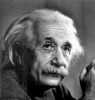 "The word God is for me nothing more than the expression and product of human weaknesses, the Bible a collection of honorable, but still primitive legends which are nevertheless pretty childish. No interpretation no matter how subtle can (for me) change this." -- Albert Einstein -- Written in 1954 to Jewish philosopher Erik Gutkind.
-
ttruscott

- Site Supporter
- Posts: 11064
- Joined: Tue Jan 31, 2012 5:09 pm
- Location: West Coast of Canada
- Been thanked: 3 times
Re: The Word of GOD.
Post #197How naive. Or, rather, how very handy until it is time to scorn Christians for having 30,000 (?) different sects and not being able to find a unifying principle... of course if one could count doctrinal differences not just denominational names:Tired of the Nonsense wrote:Notice how the major religions are concentrated. Within these spheres of religious belief the overwhelming majority believe the same thing, so "everyone knows it's true." For the overwhelming majority of people in the world, the truth is whatever they were indoctrinated to believe in from their earliest memory.
The sources suggest Christian denominations can be divided into 6 major ecclesiastico-cultural mega-blocs: Independents, Protestants, Marginals, Orthodox, Roman Catholics and Anglicans.
https://theway21stcentury.wordpress.com ... worldwide/
PCE Theology as I see it...
We had an existence with a free will in Sheol before the creation of the physical universe. Here we chose to be able to become holy or to be eternally evil in YHWH's sight. Then the physical universe was created and all sinners were sent to earth.
This theology debunks the need to base Christianity upon the blasphemy of creating us in Adam's sin.
We had an existence with a free will in Sheol before the creation of the physical universe. Here we chose to be able to become holy or to be eternally evil in YHWH's sight. Then the physical universe was created and all sinners were sent to earth.
This theology debunks the need to base Christianity upon the blasphemy of creating us in Adam's sin.
-
Tired of the Nonsense
- Site Supporter
- Posts: 5680
- Joined: Fri Oct 30, 2009 6:01 pm
- Location: USA
- Been thanked: 1 time
Re: The Word of GOD.
Post #198THE WAY?ttruscott wrote:How naive. Or, rather, how very handy until it is time to scorn Christians for having 30,000 (?) different sects and not being able to find a unifying principle... of course if one could count doctrinal differences not just denominational names:Tired of the Nonsense wrote:Notice how the major religions are concentrated. Within these spheres of religious belief the overwhelming majority believe the same thing, so "everyone knows it's true." For the overwhelming majority of people in the world, the truth is whatever they were indoctrinated to believe in from their earliest memory.The sources suggest Christian denominations can be divided into 6 major ecclesiastico-cultural mega-blocs: Independents, Protestants, Marginals, Orthodox, Roman Catholics and Anglicans.
https://theway21stcentury.wordpress.com ... worldwide/
FOLLOWING JESUS IN THE 21ST CENTURY
HOW MANY CHRISTIAN DENOMINATIONS WORLDWIDE?
The Center for the Study of Global Christianity at Gordon-Conwell Theological Seminary estimated 34,000 denominations in 2000, rising to an estimated 43,000 in 2012. These numbers have exploded from 1,600 in the year 1900.
https://theway21stcentury.wordpress.com ... worldwide/
I took my figure of 40,000 from this reference. The article goes on to suggest that 43,000 different denominations worldwide should not be taken to mean 43,000 different beliefs in Jesus. My personal experience however indicates that doctrinal differences can vary significantly even within the same denominations. So the true number of variations on the theme of Christianity is almost certainly in the millions.
It's also true that members of each individual "mega-bloc" considers members of the other five blocs to be varying degrees of heretic. So there is that to consider. Over the course of years in discussions with Christians of various different denominations it has become clear that, first, there are actually very few "true" Christians in the world. And second, a "true" Christian is clearly represented by whomever I happen to be in a discussion with at any given time.
"The word God is for me nothing more than the expression and product of human weaknesses, the Bible a collection of honorable, but still primitive legends which are nevertheless pretty childish. No interpretation no matter how subtle can (for me) change this." -- Albert Einstein -- Written in 1954 to Jewish philosopher Erik Gutkind.-
William

- Savant
- Posts: 16490
- Joined: Tue Jul 31, 2012 8:11 pm
- Location: Te Waipounamu
- Has thanked: 1037 times
- Been thanked: 1950 times
- Contact:
Re: The Word of GOD.
Post #199Tired of the Nonsense wrote: [Replying to post 180 by William]
Tired of the Nonsense wrote: And this is the heart of the problem. You acknowledge that the Bible is not trustworthy, and then declare your ability to know and cherry pick the "good bits" from the bad bits.William wrote: That is not a 'problem.'That has got to be one of the weirdest statements I have read in a while.Not a problem for you, because it makes you exceptional. Claiming that you personally possess the ability to discern what is true from what is false in the Bible or in life is a problem for everyone else.
Tired of the Nonsense wrote: Which is no different from making up a version which suits you.William wrote: It suits me for the same reason as the method I use for choosing my friends. I have no problem with those friends.Well I consider friendship to be the greatest of relationship that there is. Over the course of my life, the friends I have chosen are still friends and their changes are not significant enough to have made me consider dropping them as friends. In my younger years, yes - some 'friends' turned out to be not so friendly at all, which has much to do with learning to do the choosing wisely.You will find that over the course of your life your friends have a tendancy to change. Concepts and beliefs also have a tendency to change over the course of one's life. As they reasonably should.
Tired of the Nonsense wrote: That is not my problem. I have no interest in validating my position with anyone but myself. I get to choose and that is my authority.Nope. Just to test my own ideas. Before this forum, I was mostly active on a skeptics forum for years and in all that time they failed to convince me that their positions were the best ones to adopt in relation to mine.Is that why you joined a forum dedicated to testing religious concepts?
I joined this forum mainly to interact with Christians and see if they could show me any holes in my theories and to share what I know. Same reason I join any message boards. There is always something to learn, some to add or subtract...
This particular message board is well designed and functional and allows for tolerance in all sorts of beliefs and non beliefs to be presented.
William wrote: I also get the opportunity to share what I have found, but don't try to force anyone to adopt it for themselves or otherwise try to convince people to take my position.Doesn't stop people from trying though...No one on a religious debate forum is in any position to "force" anyone into anything.
I thrive on that as part of a reason for existing on this planet.Are you still in the process of learning and accepting new ideas?
Do you have any of these "reason, logic and the facts" that you think should make me discard my subjective experience and adopt your position?Or are you one of those "My mind is made up, so don't bother trying to confuse me with reason, logic and the facts," types?
William wrote: I am not a Christian and do not support Christendom nor do I see it as a product of what Jesus spoke of.Agreed.Many Christians take the position that Christianity as it is generally practiced is a perversion of what Jesus said and stood for.
I can't say because you have not defined who these Christians are, or what they are saying about it, or for that matter, what YOU think Jesus said and stood for.And they are under the illusion that they know what Jesus actually said and actually stood for.
I said this to another member recently.Jesus did not have the foresight of putting his own thoughts down in writing however, so everyone is forced to subscribe to a version of Jesus that is really only the opinion of someone else.
Re, Jesus - it is not important whether he actually existed, any more than it is important that Mui existed.
What is important is the data.
That is my position on things which resonate with me and things which don't. Jesus is just one source of such data which resonates with me.
I can only surmise that what you are expressing here is that you find nothing in the data re Jesus which resonates with you.But you see, the true historical Jesus (Yeshua) cannot be recovered. So we are left with fundamentalists, who declare the words of the Bible to be inerrant because they say so, the cherry picking variety, like yourself, and the variety that see no purpose in accepting the contradicting and untrustworthy ancient superstitious claims made by the Bible, and have chosen to seek the truth elsewhere. Like myself.
The bible has its good insights, but ya have to pick them out.
William wrote: I decide for myself what the good bits are. What Christians think the good bits are is entirely up to their particular belief systems.I view it like a beautiful but shattered vase which I can piece together to get some idea of what beauty can be seen therein.More than 40,000 denominations of Christian, all cherry picking the bits which appeal to them personally.
Or, like that old parable of the blind folk and the elephant in the room. Each one thinks they know and can accurately describe the whole just by feeling the part.
This can work to make a satisfying world view, obviously. It will not serve you well in a debate, I am afraid.
Don't be afraid. There is nothing to fear. I think debating as something along the lines of self stroking the ego than anything constructive or ultimately beneficial. It is a game of one-up-man-ship/'my position is better than yours' and in all my years of observing atheists and theists wrestling and wrangling, I have yet to see anything in the process which amounts to more than two sides of the same coin, an endless looped argument. Nothing significantly world-changing.
Because "I know the Bible says that but I do not personally choose to believe it," is inevitably a failed argument, if you are attempting to in any way argue from the Bible.
It isn't really a question of belief. It is a question of what resonates and what does not, and as I said, the bible is not the source of all such knowledge.
Tired of the Nonsense wrote: One could scarcely make a legitimate claim to be a Christian at all, if they do not accept the story of the risen Jesus as necessarily true. And yet the very nature of the claim is preposterous.William wrote: Actually I don't think it is preposterous as a literal event (and the same goes for the miracles attributed to Jesus) if a species far older than humanity and exceedingly more scientifically advanced, were involved in the events. I don't claim that is what happened, but do acknowledge that it could be the case and does not contradict the known laws of physics in relation to the universe.I don't think that is the case. but in relation to what we now know of the universe, evolution, intelligence, etc - some things can be surmised as possible. Like I said, I don't claim that it is the case, just that it is possible.Of course it is always possible to make up a scenario that explains the claims.
I don't see how that fits with known physics. The reason astronauts on the moon can jump long distances etc isn't because they came from a different planet.Which is why we have the back story that Superman was sent to earth when the planet Krypton exploded. And how, now being under the influence of Earth's yellow star Sol, rather than Krypton's red star, have given Superman super powers.
When I mentioned far more advanced species I wasn't speaking about so-called supernatural powers, but scientific ones.
It is a quaint version of the story. I have read far better data which delves far deeper into these concepts.But of course comic book mythology is not to be taken seriously, you say? Then how about this back story. The God Elohim lives on a planet that orbits the star Kolab with his many wives. Centuries ago the two eldest sons of Elohim, Jesus (Jehovah) and Lucifer (Satan), began a contest for the hearts and minds of the spirit people of Earth. The winner will become the ruling god of Earth. According to Mormon theology. Joseph Smith was a master cherry picker, you see.
I would say that if there is truth to the ideas such stories present, they are also relevant truths transmitted to the minds of those who can only understand them in relation to the general knowledge-base of the times. Such stories are more likely to increase in complexity than fade from the minds of human beings and become forgotten.And thus is everything explained.
This is why metaphor and parables are useful. It is data. Data in itself should not be confused for 'truth' or 'lies'.
Wikipedia
Mormon Cosmology
Mormon cosmology is the description of the history, evolution, and destiny of the physical and metaphysical universe according to Mormonism, which includes the doctrines taught by leaders and theologians of The Church of Jesus Christ of Latter-day Saints (LDS Church), Mormon fundamentalism, the Restoration Church of Jesus Christ, and other Brighamite denominations within the Latter Day Saint movement. Mormon cosmology draws from Biblical cosmology, but has many unique elements provided by movement founder Joseph Smith. These views are not generally shared by adherents of other Latter Day Saint movement denominations who do not self-identify as "Mormons", such as the Community of Christ.
According to Mormon cosmology, there was a pre-existence, or a pre-mortal life, in which human spirits were literal children of heavenly parents. Although their spirits were created, the essential "intelligence" of these spirits is considered eternal, and without beginning. During this pre-mortal life, two plans were said to have been presented, one championed by God the Father, and another presented by Lucifer (Satan) that would have involved loss of moral agency. When Lucifer's plan was not accepted, he is said to have rebelled against God and been cast out of heaven, taking "the third part" of the hosts of heaven with him to the earth, thus becoming the tempters.
According to the plan of salvation as described by God the Father, Jehovah (the premortal Jesus) created the earth, under the direction of God the Father, as a place where humanity would be tested. After the resurrection, all men and women"except the spirits that followed Lucifer and the sons of perdition"would be assigned one of three degrees of glory. Within the highest degree, the celestial kingdom, there are three further divisions, and those in the highest of these celestial divisions would become gods and goddesses through a process called "exaltation" or "eternal progression". The doctrine of eternal progression was succinctly summarized by LDS Church leader Lorenzo Snow: "As man now is, God once was: As God now is, man may be." According to Smith's King Follett discourse, God the Father himself once passed through mortality as Jesus did, but how, when, or where that took place is unclear. The prevailing view among Mormons is that God once lived on a planet with his own higher god.
According to Mormon scripture, the Earth's creation was not ex nihilo, but organized from existing matter. The Earth is just one of many inhabited worlds, and there are many governing heavenly bodies, including the planet or star Kolob, which is said to be nearest the throne of God.
https://en.wikipedia.org/wiki/Mormon_cosmologyYou think? Seems to me like it is formatted doctrine. Cherry-picking would be more along the lines of taking bits that fit with other bits cherry-picked from other sources and seeing if anything therein can be seen within the data.Cherry picking at it's finest.
There is no requirement to organize doctrine from data.
Tired of the Nonsense wrote: The story is derived from a book which is simply not trustworthy.William wrote: The story may have derived from eye-witness accounts, handed down, even elaborated on. There is no compulsion on my part to believe the stories true or false. They are simply stories and do nothing whatsoever to take away or enhance my own idea of what GOD is, and how I relate with that.
"Eyewitness accounts" of a corpse that returned to life and then subsequently physically flew off up into the sky which were derived ONLY from rumors being spread by the followers of the dead man after his execution. These stories MAY be true in the same way that the Mormon version of cosmic reality MAY be true. Or stories of flying reindeer MAY be true. All that is required is a lifetime of indoctrination, a willingness to believe, and abject childlike gullibility.
You conflate and are obviously enchanted with your bias over things which I think there is no compulsion on my part to believe said stories true or false. They are simply stories and do nothing whatsoever to take away or enhance my own idea of what GOD is, and how I relate with that.
Conflating Santa's and his flying critters with things which may well be 'tricks of illusion from highly advanced species' is a stretch. For one thing, the compulsion to sell Santa as merchandise was not hidden behind metaphor and parable. Something compelled those who witnessed such unearthly events to stick to their stories even at the threat of torture and death. Without that, the world we currently live in could well be far, far worse than it is.
I keep an open mind. There is certainly no hurry or reason to make definite conclusions one way or the other. There is no compulsion for me to make my mind up.
Tired of the Nonsense wrote: Belief in such claims rely on closing one's eyes and simply believing on faith. Which Christians have made into a virtue. But this is the 21st century, and modern educated people in growing numbers are finding that abject childlike gullibility is no longer possible. Or even desirable.William wrote: Religious stories, perhaps. Political ones, no. Childlike gullibility is alive and kicking in today's day and age. Belief in political promises and even scientific righteousness is very desirable. People do like to fill in the gaps left over with something else to put their faith into.As I said, this kind of thing is not only operating within the religious sectors of human society.Childlike gullibility has been alive and well in every era. That does not mean that it is intellectually desirable however, even though many Christians consider it a virtue. The reality is that not all humans have the same capacity for deep independent thought. The capacity for deep independent thought is often NOT considered a virtue by Christians. Certainly not by the Christian clergy. Gullibility however, is prized.
William wrote: To clarify. What I said was that the bible does not claim to be the word of GOD. In the bible, Jesus is the one who claims to be the word of GOD.No, not faith. Data. I treat it as data. There is nothing to put 'faith' in.You have to make a leap of faith to assume this is true. In the Bible it is claimed by others that Jesus claimed to be the word of God. Jesus left no claims of his own written in his own hand, however.
But you see, people who like to pick and choose those things that they personally prefer to believe to be true often accept claims made by anonymous others years after Jesus was dead as being the undeniable words of Christ. Christianity is in fact constructed on a vast network of assumptions which are only sustained by appeal to other assumptions. But when one attempts to determine the foundation of solid fact, one discovers that there IS no foundation of solid fact. Simply empty claims constructed on more empty claims. All revolving around a story which by it's very nature is silly and unbelievable. Enter blind faith and abject gullibility, which are necessary ingredients to belief.
You still don't get it. I am not interested in belief or non belief about the stories. It is data. When someone claims 'the bible is the word of GOD' I can claim 'no - the bible clearly identifies that the word of GOD is Jesus.'
What 'the word of GOD' actually means is another subject entirely, and one which can be identified through resonance.
This of course totally depends upon the individuals idea of GOD, and if there is no idea of GOD, there will be no resonance. There will be no 'Word of GOD.'
William wrote: What I have discovered is that there are many sources outside of Christianity which have the same kind of message as Jesus in relation to the best way a human being can behave. The best way a human being can behave, is the word of GOD. That is what I get from the whole title.Sure it is and it is meant to convey treating others positively.Notice the way that the golden rule covers everything. The best manner in which a human can behave is to treat others in a manner that they themselves would wish to be treated. "Thou shalt love thy neighbour as thyself." (Matt. 22:39) It's the very same idea.
William wrote: The 'Golden Rule' oft mentioned on this board, is the word of GOD, understood in its intent.The idea of GOD is also older than the bible.The concept of the golden rule is older than the Bible.
"No man is an island."Without a concept of the golden rule, societies simply would not function.
The concept of the golden rule is a natural HUMAN outgrowth of the recognition that working together in cooperative societies have HUGE survival advantages for everyone.
Why stop at 'survival'? Some people are surviving in great luxury while others are surviving in destitution. All are part of the same society although there are invisible boundaries which have been conceptualized in order to show the first class from every other class.
While this is arguably functional, especially in relation to non-intelligent design theories of evolution where the strong subvert the weak, it also conveys that some folk are not working within the constructs of the golden rule, but have utilized their superior intelligence to take advantage of the gullible.
William wrote: Words are sounds, and not just as vibrations in the air. The voice of your individual thoughts are sounds within your head. You hear them.Well you went off on a tangent and cared not to get the gist of what 'hearing' signifies in the greater context. The sound of my externalized voice in no different from that of the internal. It is just heard differently.NO, you do not "hear them." Hearing involves very fine movements by the components of your ear responding to vibrations in the air. Sounds ARE simply vibrations in the air. The thoughts in your brain are not "heard." They are thoughts. Defining sounds that you hear as being the same thing as the thoughts in your brain is simply another example of cherry picking that which you prefer to believe because it seems to make sense to you. It's nothing less than make believe. Which is what people have largely done over the centuries. But we have science now, you see. And science has already punctured and laid to rest many of these sorts of ancient assumptions.
William wrote: Where did you get this idea about me from? The voice in your head?Yes, we all do. The thoughts can be visual as well. It is just a phrase. Like "Listen (or don't listen) to your thoughts."There is no "voice in my head." I have thoughts.
Are you suggesting that thoughts are made into symbols and sounds through externalizing the internal?Because I speak English as my native language, and because the symbols of the written words visible on my monitor correspond to a language that I understand, I am able to change the symbols into thoughts. When I read the things you have written, I am reading your thoughts on a given subject. Which I then compare with my own thoughts on that subject. Deaf people who cannot hear sounds at all are perfectly capable of accomplishing exactly the same task.
I prefer to think of it as an activity of both the external and the internal and see no particular difference which would define the two as separate and unrelated.
No point in going off on a tangent about it though as far as I can tell. The gist of what I said should be adequate.
No point in going off on a tangent about it though as far as I can tell. The gist of what I said should be adequate.I compare the various thoughts, and reach a conclusion. There is no voice in my head, although I do normally think in English. But my thoughts are not sounds. People who are completely conversant in more than one language, often think in more than one language. Or so I have been told.
William wrote: What has that got to do with me or my position shared? You assume much about me, but have no excuse not to know what it is that I think.Then at least go by that.I can only know what you choose to tell me.
There really is no excuse in today's technological world for that to be any problem.But I have been involved in thousands of discussions over the years, and certain patterns of belief have become obvious to me. And of course there is the ongoing problem of remembering exactly what a particular individual has told me.
There are ways in which to deal with that so there is no conflating one personality with any other.If I misremember what someone has said that they chose to believe, that is the result of having too many things in my head to keep them all straight all of the time.
As long as it is only 'the best you can' and not simply laziness. The best way around it is simply not label people, but that is easier said than done.And not a degradation of my brain due to age. Hopefully. But then, if my mind is becoming faulty I would almost certainly be the last to recognize it. So I can only do the best I can.
Since that is the case, the best option is to factor than in and avoid labeling others altogether. The labels themselves support bias and judging from bias is faulty.My best option in a conversation with any individual is to go back and review what has already transpired. And I do that. Sometimes. But not every time. And so I make mistakes. But I do actually have a life away from the forum, and my time is limited.
Tired of the Nonsense wrote: There are others who believe just as you do. And hundreds of millions who hold competing beliefs, some comparatively close to your beliefs, and others significantly different.William wrote: So? I could say the same of you, but see no logical reason to bring that into the conversation.And they are in both theist and atheist positions.There are two types of people on this forum. Believers and non believers.
The idea is to refrain from belief altogether. I accept that there might well be scientific explanations which can show how a supposed corpse can be made to appear to come back to life and appear and disappear and fly off out into the sky until it disappears behind a curtain of cloud.Believers attempt to reach hard and fast conclusions. It's known as dogma. Non believers tend to attempt to avoid reaching hard and fast conclusions and rate probability from most likely to least likely. For example, I view the probability of the story of a corpse coming back to life and then flying off up into the sky as least likely to be valid. On the other hand, I view the science that has produced working technology as most like to be valid.
Such science would be way more advanced than any we presently understand. At least today we can place aside superstition and explanations of so-called supernatural stuff. We don't watch an entertaining magician and think that their tricks of illusion are anything but scientifically explainable IF we knew how they did it, do we? No, we do not. We except that there is no 'supernatural' explanation necessary and keep it simple in that context. We understand that there will be great complexity in relation to finding out how the illusion was carried out - perhaps even far too much complexity for us to work it out, but we don't say "angels or demons did it" anymore.
When I read the stories of the ancients, I think 'science and highly advanced entities/species.' I do not think "GOD". In relation to my own idea of GOD, these things are simply aspects of that. GOD does not stop at some possible ET/inter-dimensional species playing at being GOD to less advanced species.In any discussion both sides have reached conclusions, for varying reasons of validity. Science has very concise empirical reasons for reaching the conclusions that it has. Believers have reached conclusions that are nearly as varied as the billions of people that hold them. That was my purpose in bringing it up.
William wrote: You are predisposed to be calling me a real Christian? What business is it of mine what label you so choose to stick onto me? That is your opinion and it has no relevance to anything to do with who I am and how I self identify.Not being a Christian myself I find that I am not qualified to determine who is a "real" Christian or not. Most Christians I find are perfectly happy to make that determination about others when requested.
How does that answer my question? Other than to say that you made a mistake in labeling me in the first place, as you now admit you are unqualified to do so.
Should I take that as some kind of apology?
William wrote: Your seem to be focused on the negatives and wish others to do the same. Many who do this, come across as being bitter.Being saved as opposed to being deleted...Most Christians suppose that they are freely offering an eternity of salvation, and are puzzled when they encounter resistance.
I interpret expression of bitterness to being that which is expressed bitterly. I don't care as to why someone is doing so. My focus is on that they are doing so.They interpret this resistance as bitterness.
I don't see how expressing bitterness towards a child who is being 'foolish' is the appropriate response of a grown adult.Non believers on the other hand are simply reacting to what they perceive as childish foolishness.
I disagree that this is at all necessary. I also see condescending in Christian expression as well (example...the last line of this postMany non believers often consider the possibility of conversing with a believer as an exercise in dealing with a child. And they prefer not to bother. Those non believers who do choose to converse with believers often, unfortunately, take on a condescending tone. Which often comes across as bitterness. I attempt to not be condescending in my tone, but in any attempt at detailed explanation as to why these ancient beliefs are nothing more than childlike ignorance and superstition, a certain amount of condescension becomes inevitable.). I can only suppose that the positions themselves are at fault, due to the self-justification of the action as being 'inevitable'.
When one is stupid, then yes, best keep it simple. Otherwise, there is complexity to deal with as a natural occurrence of being within this universe.When the negatives overwhelm the positives it is time to walk away. There is nothing useful in the Bible which cannot just as effectively be accomplishing by following the golden rule. When faced with a convoluted self contradictory philosophy that only results in hundreds of millions of competing interpretations, it's time to make things simple by going back to basics. The golden rule is basic to people simply getting along. Remember K-I-S-S. (Keep It Simple Stupid)
The data is data and when one complicates it so that one believes that a single book contains all the data one requires to have a successful life, then problems are naturally going to arise. Calling a book 'the word of GOD' is naturally going to create such problems and complicate things because of the need to have to LIE about stuff (an example of this can be seen in a recent attempt at communicating this with another member - starting at this post
Do I take umbrage and blame their idea of GOD? Nope. Their idea of GOD does not mean that GOD is the problem or that there is no GOD outside of their own idea of GOD. Yes - they do show that their idea of GOD is a LIE, but that bathwater can be thrown out. The baby remains.
William wrote: Agreed. Intelligent design is still viable as far as I am concerned, and nothing about science has shown me anything but that. All the costumes and masks dressing that up to be some sky-daddy, can safety and confidently be put to rest.My idea of what GOD is begins at the First Source. FS has always existed and was never 'created'.Who "intelligently designed" God? And if that was not necessary, then intelligent design must not be necessary. Unless one cherry picks necessity.
Creation comes from First Source Intelligence. That is what is meant by 'intelligent design'.
I consider this particular universe to be a product of another which was created prior to this one. I explain this in more detail here.
William wrote: I am here to learn what I need to. It is part of my journey. Anyone who has issues with my position is free to do all they want to try and convince me that their position is the best one to adopt. So far, they fail in that regard. My subjective experience of life trumps their protests and their particular interpretation of what science has to show, is debatable.Learning presumes that one is attempting to gain in knowledge and therefore what one has learned is the truth. And this opens the question of just how one is going to go about separating out fact from fiction. Because fact is a finite set of information, while fiction is infinite in it's possibilities. So how do we separate fact from fiction?
In relation to the facts about the physical properties of the universe and what can be done with these, science is the tool for the job. We can separate science from science fiction in relation to where we are as a species regarding science.
Other 'facts or fiction' relate to philosophical concepts, by and large will prove themselves to me or not, when my body dies.
For now, such concepts remain possibilities, rather than fact or fiction.
Science has no say in the matter.
What has that to do with anything I have said?The laws of physics represent the highest state of confidence that we have attained in understanding the universe we live in. The laws of physics are derived from much observation and experimentation resulting in achieving exactly the same result repeatedly and without fail. The application of these laws have led to working computers, smart phone and all of the other technological marvels of our rapidly changing technological world. If the laws of physics are NOT inviolate as we now believe them to be, we are in the embarrassing position of having no idea why our technology works at all!
I would say though, that while these wonderful devices of science have been created, a lot of suffering has been caused through that. The sheer amount of waste and pollution associated with this progress in manifesting scientific knowledge has come at a cost because the main motivation is greed-based rather than more for sensible motivation, which of itself tends to show scientists in a less than righteous light - so if one wan'ts to take care of not confusing fact with fiction, one need to keep such things in mind while defending the virtues of science and technology. Otherwise it tends to be a case of 'pot calling kettle black' aka 'hypocrisy'.
To be sure.Ancient people worked on a different theory of how the universe works. Since they did not yet possess enough technology to acquire the information needed to explain the natural phenomenon going on around them, lightning, thunder, earthquakes and the like, they made up answers. They presupposed solutions for question which they otherwise had no means to answer.
There is obvious intelligence in how biological evolution unfolds. The argument is rather shallow on the part of those who claim otherwise.Presupposition can simply be another word for make believe, can it not?
If one presupposes that humans, and the universe we exist in must have been created by an intelligent designer whom one not only presuppose exists, but whom one presupposes exists without the need for such a creation Himself, one has simple added an extra layer of presupposition which is not obvious at all.
But it really shouldn't be of any major concern to anyone who chooses to believe it is all just a mindless process of chaotic accident, tha others see things differently.
Many who do this refuse to acknowledge the intelligence of what they are looking at, re the evidence.Because it was simply made up, which is, as I have just pointed out, what presupposition is all about. There is another way of looking at the universe however. It's called the empirical method, and it involves investigating the physical evidence for what the physical evidence has to tell us.
I see no particular need to abandon the idea of intelligent design based on the evidence thus far.The empirical method entails close observation, much experimentation and direct experience, resulting in detailed conclusions that allow for the same results to be reached repeatedly. It requires that the results, when discovered, be accepted at face value even to the extent of completely abandoning centuries of make believe.
I see no particular need to abandon the idea of intelligent design based on the evidence thus far. All that marvelous technology and whats still to come, is the result of intelligent design.This sort of research has also led us rather inextricably to the conclusion that EVERYTHING THAT OCCURS DOES SO FOR NATURAL REASONS which can be understood and even utilized for our advantage. The general term for this deeper understanding of the basis for how the physical universe operates is called quantum mechanics. Does the empirical method have credibility? Well, does that computer you are sitting at actually work? Do we have operating smart phones and all of the other modern technological marvels of this modern technological age? They are all based on an working understanding of quantum mechanics. They were NOT rendered extant by make believe.
I am not at all sure why you are saying this to me. Perhaps you are presupposing that you understand my idea of GOD and are working from that position/platform?So, where were all of these modern marvels in Jesus' time? The laws of quantum physics are exactly the same today as they were 2,000 years ago... or millions of years ago for that matter. However, by in large the ancients used a different method for reaching conclusions then the empirical method. They presupposed! What ancient peoples did not understand they simply made up reasons for. Gods and goddesses, elves, fairies, and the like. Whatever served to answer questions for which no obvious answer was readily at hand. This was the old "make it up and declare it to be true" method of reaching a conclusion. It really had no practical value, other than to create the illusion of providing an answer, even though that answer had no connection to anything valid and true. Sadly, many people today still operate this way, applying made up solutions to questions they don't otherwise understand. Which is a shame, because the actual answers are most often readily available now, so make believe is no longer necessary. We have learned, through much trial and error, that the empirical method for accumulating genuine knowledge far surpasses the old "make it up and declare it to be true" presupposition method. So, I don't "presuppose" that there is no deity. I simply see no point in arbitrarily making up the existence of an invisible Being with infinite powers where no such Being is obvious. In fact, the existence of an infinitely powerful invisible Being that possesses the power to manipulate the laws of physics at will contradicts everything we believe that we know about how the universe works. This is the inevitable face off between make believe and knowledge you see. Which do you suppose is going to win out over time?
The way I see it, human beings are most likely going to discover a way in which they can extend their lives indefinitely and those who can afford that will be the beneficiaries of that technology.
This will in turn do away with all need to make presuppositions about possible afterlife's and the notion of GOD in relation to that, will also fade.
In a million years (or however long it takes) human beings will be nothing like they are at present and their technology will be unbelievable in comparison with today's. All perfectly within the parameters of the physics of this universe.
It is likely that those humans will discover less advanced species of intelligent beings on some planet and will perhaps even attempt to be largely invisible teachers of those beings and in doing so provide a kind of shortcut in that species development towards becoming technological.
In doing so, it is likely that the species will create stories and make presuppositions about the future humans, calling them 'gods' and attributing all sorts of things to those 'gods' be they true or false or just besides the point.
In that, the future humans will get a graphically real example of something they can identify with and understand in context related to their own evolution from stone-age to space-age and the penny would drop, so to speak, only - well - I can sit here NOW in the comfort of my easy-chair in front of my computer and work it out before it happens, at least as a likelihood, should human beings actually get a sufficient foothold into this universe to eventually make it so.
Thus, the old myths and legends of the ancient peoples may have a base in truth in relation to the idea that we have - as a species, been somewhat influenced by some (or even perhaps a few different) more advanced species.
The point being, it is not at all out of the question.
William wrote: There are many sources from which I derive my thinking. You are contriving that the bible is the only source of data in which I get my information from.I call 'liar liar' on that comment from you. Feel free to withdraw it or show where this is the actual case.You have already implied that there are voices in your head which drive your thoughts.
I prefer to believe nothing one way or the other as all the evidence is still not in and is unlikely to be in before my body dies.How is this any different from "make it up and declare it to be true?" Because this is the same method humans have been using since before the dawn of history. What other sources do you find valid? And are you certain that you are not presupposing answers that serve to conform to that which you prefer to believe?
What I have chosen to do is to keep my mind open as to possibilities and see no harm in choosing to do so.
Each to their own on that count.
Tired of the Nonsense wrote: It is flawed and not trustworthy. You are forced to contrive a system of belief that makes sense to you personally from an untrustworthy source by picking and choosing those things you have concluded are the "good bits," from those things that seem to be clearly illogical or contradictory.William wrote: There is nothing wrong with doing that with anything.If you are implying that my thoughts and ideas re GOD, ET etc are 'nonsense', you need to clearly show how and why.There is nothing wrong with it if you don't mind mind ending up subscribing to nonsense.
Like I said. "If you are implying that my thoughts and ideas re GOD, ET etc are 'nonsense', you need to clearly show how and why." Otherwise I see no reason to delete such concepts from being part of my short life.My opinion is that life is to short to subscribe to nonsense.
I prefer to get as close to factual truth as I possibly can before my life is over. Not that it matters, ultimately. Because dead is dead. Still, there is always the possibility that something I said or wrote may influence someone to advance the course of human knowledge in some way. I can always hope.
Well if you die before me and discover that you still exist, I wonder (if you are able) if you might keep an eye out for when I depart from this mortal realm and give me a hug and a knowing smile of appreciation, and maybe even a high fiver.
Apart from that, I too think my words and actions etc can be left as a record of data for others to access and contemplate. I am not concerned whether death is the end of 'me' or not. It has no bearing on how I live my life and what I choose to be interested in.
Tired of the Nonsense wrote: And that is the very definition of contrived.William wrote: No. It is the definition of using common sense.I regard that as simply opinion.The concept of an invisible uncreated creator Being that creates entire universes out of a word is the very definition of contrived, since it is based on absolutely NO physical evidence whatsoever. But the term "make believe" actually gets closer to the concept. Cherry picking information from a book that you have already agreed is not trustworthy is contrived to the extreme.
Besides which, I have at no time said - or even attempted to say, HOW such a creator creates, but creating universes out of a 'simple word' seems to me to be simple metaphor. I have read data on the process mind you, from various sources, and there is nothing simple in those descriptions whatsoever.
But here you are, still conflating me with believers in the bible, even after I have told you that you are mistaken. What's with that?
Tired of the Nonsense wrote: I often refer to this method as "making it up as one goes along."William wrote: Such is the nature of the human experience. Always question. Always hold on to that which has proven itself to be good. Connect the dots. Assume nothing, including that GOD does not exist, or is some sky daddy, or is male, or is myth etc et al.Preaching to the converted there ToTN. You have discarded the biblical idea of GOD as surplus to requirement and have neglected to ponder on the possibility that there are far better ideas of GOD which continue to evolve outside of Christendom or for that matter, outside of organised religion."Always question." I agree. Humans are fallible, and are always subject to being wrong. So we should always be ready to challenge our conclusions. On the other hand, if we don't build on the conclusions that we have reached, we can never advance in knowledge. By the same token, we must be ready to discard old conclusions once it becomes obvious that that they are not valid if we do wish to advance in knowledge. No matter how beloved or admired the earlier conclusion is or once was.
I acknowledge that this is your choice. I draw the line at anyone making such choice to thus somehow having the right to tell me I should make it my choice as well, or even imply that if not, I am therefore their inferior.
William wrote: Keep the subject open for consideration. Be an individual. Be responsible for your choices. Don't be a victim to circumstances. Don't jump to conclusions. Remember that you know next to nothing and that on occasion one just has to make things up as one goes along. Find the position that does not allow for hypocrisy by keeping an eye open for hypocrisy. Live your life as if it is your own.You are going to die and that will be the end of you. You believe that this will 'hold up' when the event happens. Perhaps they will indeed. Perhaps even, for some it does and for others it doesn't. Who really, truly knows? I have not discovered such a person to exist.I am here, on this forum, listening to you. I have kept the subject open for consideration. It has been a good many years since I have seen an argument that I have not already thoroughly considered however. The conclusions that I have currently reached consistently hold up.
What I have is my subjective experience. It matters not to me what type of theist or atheist thinks about that. They are best served focusing honestly on their own subjective experience and if they disagree with me and mine, it really means stuff all in the grand scheme of things...although I acknowledge that it at least appears that they are quite adamant that I should adopt their position. The smile on my face will not go to waste, nor will the quiet chuckle to myself (in my headroom)...perhaps that is what true sovereignty is about? But whatever! I like me and I like how I think! I like my subjective experience of my life, warts and all! I have good friends, and a few talents which assist with the enjoyment of my short life hereabouts. How could anyone begrudge me that or find it somehow inferior to their own position?
William wrote: I know of not a single other person who believes the exact same as I do, nor do I think being content or happy is a problem or shouldn't be the case just because the world is not.Given that there are more than 40,000 different denominations of Christian, this is hardly surprising.William wrote: It works for me, so who am I to spurn it for something that only brings discontent and unhappiness? I am better than that. Why would anyone have a problem with another being content and happy or make a criticism that this is somehow "remaining in a comforting cocoon"? Are you not happy and content? If so, is it because you live in a "comforting cocoon" Why imply that I am not being real about reality, and what gives you the right to do so? Your assumptions about me? Hardly.What has that got to do with me? I am content and happy in my reality - for the most part. There are aspects of it which are not something someone should be happy and content about, but the truth is, I am unable to fix the world and its problems so am at least content and happy not be be unduly causing discontent and unhappiness into that world, and if that means making sure that those who are doing so are not going to make a victim out of me, then that is sufficient.I am neither discontent nor unhappy. But if the search for contentment and happiness is one's goal, then they should settle on whatever serves to make them contented and happy. The search for the truth however is not predicted on making anyone content or happy. It's predicated on understanding how things actually are and how they work. Discovering that serves to make some people content and happy. But it's not for everyone. Because many people prefer illusion. And the truth often has no relationship to anyone's prefered illusion.
Sometimes reality needs to be dealt with in that way.
Just because I have one does not mean to say that I need BE one.
William wrote: So far, I have yet to experience anything remotely like serious criticism. I don't count derision and personal slights as 'serious criticism'. I challenge others on points to do with their positions. I don't stoop to telling them they are living in some belief bubble, should adopt my position or that they should become atheists.Only in that an advanced science from an advanced species may have been involved. But it does not affect me one way or the other as to its authenticity. It does not add or subtract anything from my contentment and happiness.Is it your belief that the story of the corpse of Jesus returning to life and then flying away is at least "potentially" true?
Obviously it is different for you, but that is your journey.
Like you say, you have but a short life to experience here. How we each use it is up to us as individuals.Because if you suspect that it might be true, I have much very serious criticism of that notion to present you with. But otherwise your decision to spurn Christian dogma leaves you free to adjust your notions of reality to accommodate whatever it is that serves to please you. I base my own notions of reality on current scientific evidence. That is ever changing I agree. But I am ready to embrace change when it becomes clear that a new concept is better grounded in fact than the old one was.


Re: The Word of GOD.
Post #200[Replying to post 196 by Tired of the Nonsense]
Again, I find your post is offering many stereotypes. You start off by saying that everyone believes the same thing. That is not quite true. Many people stereotype Christianity, as well as other religions, as monolithic, just one way. Christianity, however, has always been a pluralistic religion, a rich tapestry of diverse approaches that often conflict, hence, the great schisms and debates. Later, you contradict yourself and say there are 40,000 Christian sects. I don't know how you came up with that figure, but it certainly does show Christianity is pluralistic. So no, everyone does not believe the same thing. Uniformities, yes, but ere still is considerable diversity.
As I explained before, the fact that God is not omnipotent does not men God is helpless and can't bring about anything. Rather, it means God is the ideal model of power, power over powers, participating in the free self-decisions of others. The universe is more like a democracy than anything else.
The Bible does not claim that God is omnipotent. Rather, a major, if not the major theme of Scripture, is that things happen which greatly disappoint God, that creatures can and do disobey God's will. The Bible also stresses personal responsibility, which is impossible if God were a cosmic dictator that has then predetermined everything. True, English translations sometimes put in the word "omnipotent" into Scripture, but that is a most misleading translation.
True, well-developed intellectual traditions are not inerrant, in religion or in science either. Religions have been known to be wrong and the same is true of every other field. However, the point I was making in my previous post is that there has been a strong critical, analytical, intellectual side to Christianity, which you are grossly overlooking in your stereotype of Christians as people of just blind faith.
Religious people insist that existence is proof for God? What does that claim mean? There is a long, well-developed philosophical; tradition of proofs for the existence of God, from the ontological argument to the quest for meaningfulness. Where do you address any of these? Where is your rational rebuttal?
Science shows there is no need for God? How? You yourself admit that the question of God is not an appropriate question for science, in the fist place. Science is neutral on this topic, as I said previously.
Natural laws explain everything, I hear you saying. Well, I seriously doubt that they do. These so-called laws are just approximations of reality, abstract, leave out much, have no room for freedom. Just saying that we should learn from the past, a you did, does not address my point about a transcendental imagination being necessary for us to have freedom. Plus, there is great debate over what these laws actually are.
Religious people are attacking science? Oh, really? True, fundamentalaistic Christian groups still attack evolution. However, that is largely in the Bible Belt in American. Today, there is systematic theology, the goal of which is to integrate Christian faith with major fields such as science, rather than fighting against science. Furthermore, you failed to address the fat that in many classic cases of the seeming battle between science and religion, it was actually a battle between science and science. Galileo got in trouble with the church because what he said contradicted both Aristotle and Ptolemy, who were considered The True Science. And that's a telling warning about the dangers of religion adopting a particular scientific approach. As you yourself said , well-organized intellectual traditions can be wrong, and that is certainly true of science. WE have to recognize we are all fallible. If you want to throw the other guy out the window because he has been proven wrong on key points, you have also to be prepared to throw yourself out as well. Both sides need to accept they have strengths and also weaknesses, and try to fix these up, not throw each other out the window.
Yes, there were and are sects who believe the end of the world is at hand. However, they are generally in a tiny minority. There are many interpretations of the Book of Revelations and more than one theory of the Second Coming.
The Resurrection is a fairy tale? How do you know that? There is scientifically no way to explore this issue one way or the other. Science is not equipped to know what happens beyond the grave. So again, we are dealing with something that is not a scientific question, to begin with.
As I said before, your position, which you reinforced in this post, that either the Bible is inerrant or worthless, is irrational. Reality is a shade of grey. The same criticisms you levy against Scripture could also me made of really any knowledge we have of history. The fact we have first-person accounts does not mean they are inerrant. Caesar wrote up his Gallic Wars, true. However, there is no doubt he intended this as a puff piece about himself and therefore we must read his claims with discretion, take some things with a grain of salt. Same goes for Napoleon or any other historical figure. Do you believe everything you read? I sure don't. But that doesn't mean we shold throw it all out, either.
[/center]
Again, I find your post is offering many stereotypes. You start off by saying that everyone believes the same thing. That is not quite true. Many people stereotype Christianity, as well as other religions, as monolithic, just one way. Christianity, however, has always been a pluralistic religion, a rich tapestry of diverse approaches that often conflict, hence, the great schisms and debates. Later, you contradict yourself and say there are 40,000 Christian sects. I don't know how you came up with that figure, but it certainly does show Christianity is pluralistic. So no, everyone does not believe the same thing. Uniformities, yes, but ere still is considerable diversity.
As I explained before, the fact that God is not omnipotent does not men God is helpless and can't bring about anything. Rather, it means God is the ideal model of power, power over powers, participating in the free self-decisions of others. The universe is more like a democracy than anything else.
The Bible does not claim that God is omnipotent. Rather, a major, if not the major theme of Scripture, is that things happen which greatly disappoint God, that creatures can and do disobey God's will. The Bible also stresses personal responsibility, which is impossible if God were a cosmic dictator that has then predetermined everything. True, English translations sometimes put in the word "omnipotent" into Scripture, but that is a most misleading translation.
True, well-developed intellectual traditions are not inerrant, in religion or in science either. Religions have been known to be wrong and the same is true of every other field. However, the point I was making in my previous post is that there has been a strong critical, analytical, intellectual side to Christianity, which you are grossly overlooking in your stereotype of Christians as people of just blind faith.
Religious people insist that existence is proof for God? What does that claim mean? There is a long, well-developed philosophical; tradition of proofs for the existence of God, from the ontological argument to the quest for meaningfulness. Where do you address any of these? Where is your rational rebuttal?
Science shows there is no need for God? How? You yourself admit that the question of God is not an appropriate question for science, in the fist place. Science is neutral on this topic, as I said previously.
Natural laws explain everything, I hear you saying. Well, I seriously doubt that they do. These so-called laws are just approximations of reality, abstract, leave out much, have no room for freedom. Just saying that we should learn from the past, a you did, does not address my point about a transcendental imagination being necessary for us to have freedom. Plus, there is great debate over what these laws actually are.
Religious people are attacking science? Oh, really? True, fundamentalaistic Christian groups still attack evolution. However, that is largely in the Bible Belt in American. Today, there is systematic theology, the goal of which is to integrate Christian faith with major fields such as science, rather than fighting against science. Furthermore, you failed to address the fat that in many classic cases of the seeming battle between science and religion, it was actually a battle between science and science. Galileo got in trouble with the church because what he said contradicted both Aristotle and Ptolemy, who were considered The True Science. And that's a telling warning about the dangers of religion adopting a particular scientific approach. As you yourself said , well-organized intellectual traditions can be wrong, and that is certainly true of science. WE have to recognize we are all fallible. If you want to throw the other guy out the window because he has been proven wrong on key points, you have also to be prepared to throw yourself out as well. Both sides need to accept they have strengths and also weaknesses, and try to fix these up, not throw each other out the window.
Yes, there were and are sects who believe the end of the world is at hand. However, they are generally in a tiny minority. There are many interpretations of the Book of Revelations and more than one theory of the Second Coming.
The Resurrection is a fairy tale? How do you know that? There is scientifically no way to explore this issue one way or the other. Science is not equipped to know what happens beyond the grave. So again, we are dealing with something that is not a scientific question, to begin with.
As I said before, your position, which you reinforced in this post, that either the Bible is inerrant or worthless, is irrational. Reality is a shade of grey. The same criticisms you levy against Scripture could also me made of really any knowledge we have of history. The fact we have first-person accounts does not mean they are inerrant. Caesar wrote up his Gallic Wars, true. However, there is no doubt he intended this as a puff piece about himself and therefore we must read his claims with discretion, take some things with a grain of salt. Same goes for Napoleon or any other historical figure. Do you believe everything you read? I sure don't. But that doesn't mean we shold throw it all out, either.
[/center]

