
Why is it that in every field of human knowledge, a belief is only respected when it has been established that it's true, but when it comes to religion, we have to respect it even when it's not true?
In the field of history, the belief that the Holocaust never happened is NOT respected. Because that belief is false.
In the field of astronomy, the belief that the moon is made of cheese is NOT respected. Because that belief is false.
So why do the beliefs that Mary was a virgin, or that Jesus came back from the dead, or that Mohammed rode a flying horse, or that Balaal had a talking donkey have to be respected even if they are false?
If I said "Believing the Halocaust didn't happen is as absurd as believing in Peter Pan", nobody would chide me for being disrespectful of a holocaust denier's beliefs.
If I said "Believing the moon is made out of cheese is as absurd as believing in the Tooth Fairy" nobody would chide me for being disresepctful to a moon-made-out-of cheese person's beliefs.
So why do I get scolded for making comparisons between the Talking Donkey and the Gingerbread Man, or the Virgin Birth and the Three Little Piggies?
Is it because people are very emotionally attached to beliefs in talking donkeys and virgin births, and I should be mindful of not hurting their feelings? If that's the case, then what if a holocaust denier is very emotionally attached to his beliefs? Should I refrain from expressing my sincere opinion that his beliefs are absurd, to safeguard his feelings?
Is it because beliefs in talking donkeys and virgin births are held by millions whereas holocaust deniers and people who believe the moon is made of cheese are thankfully very rare? By that token, should I have been respectful of the typical white american's belief about race relations in the 19th century, because those unjustified and inexcusable beliefs were the beliefs of the majority?
Why is there a double standard? Why is belief that Elvis is still alive cause for imediate social ostratization, but belief in the virgin birth respected even by those who don't share that belief?
It seems to me that in all aspects of human discourse, this parameter is used: If a belief is justified, it's respected. If it isn't justified, it is not respected. Why aren't religious claims subject to that same standard?
If I compare the Bible to the Three Little Piggies, the only valid rebuke is that the Bible is a more literarily interesting work of fiction than the Three Little Piggies. Of course, if I compared the Bible to, say, Shakespeare, the inverse would be true, and if anything, I could be accused of insulting Shakespeare.
IF the talking donkey and the virgin birth actually happened, then comparing them to fictional events that didn't happen, is indeed disrespectful. But if the talking donkey and the virgin birth are fictional, how is it disrespectful to compare them to other fictional stories? How is comparing fiction to fiction disrespectful?
Can we agree that there is no universal requirement for respecting somebody's mathematical, scientific, historical, geographical, beliefs if they are unjustified?
Can we agree that while I do have to be respectful to a person who believes 2+2=5, it is perfectly socially acceptable to be disrespectful of the belief itself?
So why can't the same apply to religion? Why is it not ok to say to a Muslim "I respect you as a person, but in my opinion your belief in Mohammed's flying horse is as absurd as a child's belief in Santa's flying reindeer".
Respecting religious beliefs
Moderator: Moderators
-
atheist buddy
- Sage
- Posts: 524
- Joined: Sun Aug 24, 2014 10:01 am
-
dianaiad

- Site Supporter
- Posts: 10220
- Joined: Sun Oct 24, 2010 12:30 pm
- Location: Southern California
Re: Respecting religious beliefs
Post #11Just as an aside....I wanted to get a passport a little less than a year ago, but couldn't, because the authorities insisted that I not wear a a hat.Freddy_Scissorhands wrote:I think you missed the point of the sieve-photo-thing.Unhand Me Sir wrote:
Your error is the similar to that of the Pastafarian who wanted to have his passport photo taken with a sieve on his head, thinking it was the same as wearing a turban or hijab. It isn't.
The point there was simply to show how problematic it is, to allow certain behavior that we would otherwise not allow, just because it's done under the protection of religion.
See, there is a rule about passboard-pictures: You are not supposed to wear anything on your head. All of your head/face needs to be entirely visible. This is a very simple rule, and EVERYBODY has to obey to them...
And then, of course, you have religous people who will tell you that, sure, everybody has to obey these rules... except for them! Because they don't want to obey it because they believe that their god doesn't want it!
But sorry, do we really want to do that? Do we really want to start playing "Whos realigion do we want to respect" when it comes to rules that simply everybody shoud obey?
Because if we do, then suddenly somebody will start claiming that their god wants them to wear something silly on their head that clearly doesn't fit the rules... and you have to allow it, just because apparently religous believes trump regulations.
THAT was the point of the pastafarian-sieve-action.
The problem, of course, is that at the time I was very, very bald, and couldn't wear a wig.
Now here's the thing; I wasn't bald for long. My hair grew back, and it is absolutely certain that I would not appear in public, certainly not outside the USA, bald. I'm not going to shave my head to make myself look like my passport photos.
I could go get my passport now, of course, with my current Ronald McDonald hairdo, but I'm told that those curls will go away too, so that in a year my passport will look like I'm wearing a wig.
Why in the name of all that is logical would the passport folks want a picture of someone dressed (or undressed) in a way that s/he never would be in public?
If a man always wears a turban or a yarmulke, how 'truthful' would a passport photo of that man be, showing him without one?
As to the 'Pastifarian,' I'd let him wear the sieve, but only if he ALWAYS wore the sieve in all aspects of his daily life: at the office, on Disneyland rides, at his religious meetings, fishing, being a tourist...you know, everywhere.
In that case, of course, the passport photo could just be of the sieve. His face need not appear.
-
atheist buddy
- Sage
- Posts: 524
- Joined: Sun Aug 24, 2014 10:01 am
Re: Respecting religious beliefs
Post #12You are making a secular argument based on common sense. I happen to disagree with it, and we can discuss it on its merits.dianaiad wrote:Just as an aside....I wanted to get a passport a little less than a year ago, but couldn't, because the authorities insisted that I not wear a a hat.Freddy_Scissorhands wrote:I think you missed the point of the sieve-photo-thing.Unhand Me Sir wrote:
Your error is the similar to that of the Pastafarian who wanted to have his passport photo taken with a sieve on his head, thinking it was the same as wearing a turban or hijab. It isn't.
The point there was simply to show how problematic it is, to allow certain behavior that we would otherwise not allow, just because it's done under the protection of religion.
See, there is a rule about passboard-pictures: You are not supposed to wear anything on your head. All of your head/face needs to be entirely visible. This is a very simple rule, and EVERYBODY has to obey to them...
And then, of course, you have religous people who will tell you that, sure, everybody has to obey these rules... except for them! Because they don't want to obey it because they believe that their god doesn't want it!
But sorry, do we really want to do that? Do we really want to start playing "Whos realigion do we want to respect" when it comes to rules that simply everybody shoud obey?
Because if we do, then suddenly somebody will start claiming that their god wants them to wear something silly on their head that clearly doesn't fit the rules... and you have to allow it, just because apparently religous believes trump regulations.
THAT was the point of the pastafarian-sieve-action.
The problem, of course, is that at the time I was very, very bald, and couldn't wear a wig.
Now here's the thing; I wasn't bald for long. My hair grew back, and it is absolutely certain that I would not appear in public, certainly not outside the USA, bald. I'm not going to shave my head to make myself look like my passport photos.
I could go get my passport now, of course, with my current Ronald McDonald hairdo, but I'm told that those curls will go away too, so that in a year my passport will look like I'm wearing a wig.
Why in the name of all that is logical would the passport folks want a picture of someone dressed (or undressed) in a way that s/he never would be in public?
If a man always wears a turban or a yarmulke, how 'truthful' would a passport photo of that man be, showing him without one?
As to the 'Pastifarian,' I'd let him wear the sieve, but only if he ALWAYS wore the sieve in all aspects of his daily life: at the office, on Disneyland rides, at his religious meetings, fishing, being a tourist...you know, everywhere.
In that case, of course, the passport photo could just be of the sieve. His face need not appear.
But before we do, its important that we point out that your argument is not what is proposed by the religious.
They are not saying "the secular rule that no headgear should not be worn in passport photos, needs to be improved. It makes more sense to take the pic with the every-day appearance of the person'. Thats not what they are saying. They are not contesting the validity of the rule. They agree with the rule but expect an exception to the rule on the basis of their belief in the magical powers of their headgear.
So that's my first point.
My second point is that your common sense secular proposition actually fails on its merits, for several reasons.
First, what if a hipster claimed he always wore dark sunglasses, including indoors. Would that be a valid reason to wear them in his passport photo? Of course not.
Why not? Because the hipster who always wears shades can be asked to remove his glasses at the airport. He has absolutely no right to ask that his sense of fashion take priority over airport security.
Similarly, you can ask a sikh to take off his turbant. The sikh has no right to ask that his religious belief be taken more seriously than a hipster's sense of fashion.
Secondly, if we enact a rule whereby we photograph people for passports with whatever look we THINK best reflects his everyday appearance, then we open the door to all sorts of subterfuge and criminal activity. A wanted man trying to escape capture, known by the fbi as a white man with blue eyes and short blond hair, could wear huge sunglasses and a massive turbant covering his ears, claim that this is how he always looks, and thereby elude capture defeating the purpose of airport security in the first place.
So, no, I'm sorry but your argument fails on all levels. The religious have no right to demand exceptions to the rules based on thier religion, and the rule to forbid headgear makes sense because its much easier for an airport officer to ask a passenger to remove whatever headgear he is wearing that day, to match the unencumbered appearance on the passport, than to ask the person to put on gear that he may or may not have with him, to match whatever estravagant gear he was wearing the day he was photographed.
"No headgear" is a perfectly good rule, a neutral foundational starting point that anybody going through security can comply with, more easily than the alternative.
Special cases such as people who are temporarily bold such as yourself (for medical reasons I assume, and I hope you're ok) are the exceptions that confirm the rule.
-
dianaiad
- Site Supporter
- Posts: 10220
- Joined: Sun Oct 24, 2010 12:30 pm
- Location: Southern California
Re: Respecting religious beliefs
Post #13First, that's "the exception proves the rule, not 'confirms' it,' and "prove,' in the sense that it 'proves a rule,' does not mean 'confirm,' but rather 'test.' As in...if this exception is valid, how good can the rule be?atheist buddy wrote:
[quote="[url=http://debatingchristianity.com/forumYou are making a secular argument based on common sense. I happen to disagree with it, and we can discuss it on its merits.
But before we do, its important that we point out that your argument is not what is proposed by the religious.
They are not saying "the secular rule that no headgear should not be worn in passport photos, needs to be improved. It makes more sense to take the pic with the every-day appearance of the person'. Thats not what they are saying. They are not contesting the validity of the rule. They agree with the rule but expect an exception to the rule on the basis of their belief in the magical powers of their headgear.
So that's my first point.
My second point is that your common sense secular proposition actually fails on its merits, for several reasons.
First, what if a hipster claimed he always wore dark sunglasses, including indoors. Would that be a valid reason to wear them in his passport photo? Of course not.
Why not? Because the hipster who always wears shades can be asked to remove his glasses at the airport. He has absolutely no right to ask that his sense of fashion take priority over airport security.
Similarly, you can ask a sikh to take off his turbant. The sikh has no right to ask that his religious belief be taken more seriously than a hipster's sense of fashion.
Secondly, if we enact a rule whereby we photograph people for passports with whatever look we THINK best reflects his everyday appearance, then we open the door to all sorts of subterfuge and criminal activity. A wanted man trying to escape capture, known by the fbi as a white man with blue eyes and short blond hair, could wear huge sunglasses and a massive turbant covering his ears, claim that this is how he always looks, and thereby elude capture defeating the purpose of airport security in the first place.
So, no, I'm sorry but your argument fails on all levels. The religious have no right to demand exceptions to the rules based on thier religion, and the rule to forbid headgear makes sense because its much easier for an airport officer to ask a passenger to remove whatever headgear he is wearing that day, to match the unencumbered appearance on the passport, than to ask the person to put on gear that he may or may not have with him, to match whatever estravagant gear he was wearing the day he was photographed.
"No headgear" is a perfectly good rule, a neutral foundational starting point that anybody going through security can comply with, more easily than the alternative.
Special cases such as people who are temporarily bold such as yourself (for medical reasons I assume, and I hope you're ok) are the exceptions that confirm the rule.
Second, "no headgear' is a 'perfectly good rule' for an ID picture unless the only place someone appears without headgear is in the ID photo. THAT, I submit, is so totally lacking in common sense as to be ludicrous.
This is where the religious folks who object are correct; even for that Pastifarian, IMO. If one's religious beliefs, well documented and established, constrain one to wear headgear ALL THE TIME, then it's not only a violation against religious beliefs to take a picture without the headgear, it makes no sense.
And if the 'hipster' can prove that he indeed does wear dark glasses ALL the time, for specific reasons having to do with his cultural heritage and beliefs, then yeah, he should be allowed to wear them in the photo.
(looking at what I just wrote)
oh, hey....if anybody tries to call me 'politically correct' over the above sentiments, I may just reach through the aether and hit him.
Just sayin'.
....and I'm doing fine, thank you.

-
Tired of the Nonsense

- Site Supporter
- Posts: 5680
- Joined: Fri Oct 30, 2009 6:01 pm
- Location: USA
- Been thanked: 1 time
Re: Respecting religious beliefs
Post #14[Replying to post 8 by Realworldjack]
Consider your proposition for a moment. How does human biology work? Well, it most definitely DOES NOT work on the principle of asexual reproduction. Truly virgin females do not become pregnant, according to all observation and experience. "But, if there is a God, who created us out of nothing, along with the universe, do you think it would be possible that He is not bound by the laws of the universe?" Now notice the word "if" that you have included into your statement. "If" your invisible friend actually exists, and "if" your invisible friend can do anything, then pretty much anything you can make up and declare to be true COULD be true, couldn't it? A whole new realm of possibilities, one not constrained by the observable laws and limitations of the observable world, has now been opened up. Nothing new here. We even have a ready name this realm. It's known as "the imagination," where no physical limitations on reality exist. And yet in the physical world your incursion into imaginationland has had absolutely no effect on the fact that humans cannot and do not procreate by asexual reproduction, according to all observation and experience. All you have really done is provide an excellent example of the difference between make believe and observable fact.
atheist buddy wrote: that's not how human biology works
Realworldjack wrote: I absolutely agree with you on that statement, without a doubt. But, if there is a God, who created us out of nothing, along with the universe, do you think it would be possible that He is not bound by the laws of the universe? In other words, could it be that the Creator intervened, and by passed the laws as we know them, and this would have been a miraculous event? A miracle is defined, "as an act of God."
Consider your proposition for a moment. How does human biology work? Well, it most definitely DOES NOT work on the principle of asexual reproduction. Truly virgin females do not become pregnant, according to all observation and experience. "But, if there is a God, who created us out of nothing, along with the universe, do you think it would be possible that He is not bound by the laws of the universe?" Now notice the word "if" that you have included into your statement. "If" your invisible friend actually exists, and "if" your invisible friend can do anything, then pretty much anything you can make up and declare to be true COULD be true, couldn't it? A whole new realm of possibilities, one not constrained by the observable laws and limitations of the observable world, has now been opened up. Nothing new here. We even have a ready name this realm. It's known as "the imagination," where no physical limitations on reality exist. And yet in the physical world your incursion into imaginationland has had absolutely no effect on the fact that humans cannot and do not procreate by asexual reproduction, according to all observation and experience. All you have really done is provide an excellent example of the difference between make believe and observable fact.
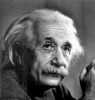 "The word God is for me nothing more than the expression and product of human weaknesses, the Bible a collection of honorable, but still primitive legends which are nevertheless pretty childish. No interpretation no matter how subtle can (for me) change this." -- Albert Einstein -- Written in 1954 to Jewish philosopher Erik Gutkind.
-
dianaiad
- Site Supporter
- Posts: 10220
- Joined: Sun Oct 24, 2010 12:30 pm
- Location: Southern California
Post #15
As a general comment to the OP:
It is not necessary to respect beliefs you do not share.
It IS, however, wise to realize that people actually do have those beliefs, and those beliefs are a vital, even central, part of their lives, and there is a big difference between disagreement, disbelief....and determined and deliberate insult for the purpose of inflaming and upsetting the believers.
For instance, your comparison of religion to holocaust denial wasn't really intended to promote civil conversation, was it?
If your aim is to have a reasonable and civil conversation with a mother about the behavior of her children, for instance, one does not begin it by telling her that they are imps from hell, spoiled rotten, liars, thieves and small animal torturers, even if they are.
One could imagine the reaction of the mother (and other relatives) to having those children described that way.
Now the position I THINK you are taking here is...why can't I say anything I want to about a belief system, and describe those beliefs in any way I wish, using the very worst adjectives I can come up with? After all, I'm not talking about the believers, am I? Just their beliefs."
Try that with the mother. See just how willing she is to listen to you after you describe her children in such a manner...even if you honestly think you are correct ABOUT those kids.
Now consider this: vilifying beliefs with the sort of language I've seen in here lately is not going to get a conversation going with the believers. They will figure...and quite rightly...that you think that people who believe things that you describe in this way are just as bad as the beliefs are. After all, how COULD good people believe such horrific things as you describe?
If they are all that horrific.
They, quite understandably, figure that vilification of the belief is actually vilification of the believers. It's hard not to figure this, when those beliefs are so much a part of the moral and life fabric of the believers.
Because of this, the worst thing I ever say about a belief is 'it's not logical.'
Even when I privately think that it is beyond ridiculous. After all, my own beliefs are considered ludicrous by others. Many others. Oh, most others, come to think of it. I don't care.
But I will not be willing to discuss, with any sort of civility , my beliefs with people who hold them in the contempt that you and others have shown by the language you use to describe them. Why should I? Why should anybody?
Ultimately, then, I guess the choice is yours. you need to figure out what your goal is.
If it is to have a reasonable and civil discussion with believers about their beliefs, dial it back. Disagree with those beliefs by all means. Let them know, in language that isn't QUITE so off-putting, that those beliefs seem silly to you.
But remember that they are precious to others, and vilifying them is attacking the believer. Really, it is. They are human, WILL take offense, and all hope of reasonable discourse is gone.
If, however, your goal is to inflame, get approval for your wit from those who already agree with you and be remembered as a jerk, a troublemaker and a troll by those who don't, be as nasty as you want. I suppose, if this is how you wish to be remembered, then the way to get there is to be as disrespectful of beliefs as you want to, using any sort of language you wish.
It is not necessary to respect beliefs you do not share.
It IS, however, wise to realize that people actually do have those beliefs, and those beliefs are a vital, even central, part of their lives, and there is a big difference between disagreement, disbelief....and determined and deliberate insult for the purpose of inflaming and upsetting the believers.
For instance, your comparison of religion to holocaust denial wasn't really intended to promote civil conversation, was it?
If your aim is to have a reasonable and civil conversation with a mother about the behavior of her children, for instance, one does not begin it by telling her that they are imps from hell, spoiled rotten, liars, thieves and small animal torturers, even if they are.
One could imagine the reaction of the mother (and other relatives) to having those children described that way.
Now the position I THINK you are taking here is...why can't I say anything I want to about a belief system, and describe those beliefs in any way I wish, using the very worst adjectives I can come up with? After all, I'm not talking about the believers, am I? Just their beliefs."
Try that with the mother. See just how willing she is to listen to you after you describe her children in such a manner...even if you honestly think you are correct ABOUT those kids.
Now consider this: vilifying beliefs with the sort of language I've seen in here lately is not going to get a conversation going with the believers. They will figure...and quite rightly...that you think that people who believe things that you describe in this way are just as bad as the beliefs are. After all, how COULD good people believe such horrific things as you describe?
If they are all that horrific.
They, quite understandably, figure that vilification of the belief is actually vilification of the believers. It's hard not to figure this, when those beliefs are so much a part of the moral and life fabric of the believers.
Because of this, the worst thing I ever say about a belief is 'it's not logical.'
Even when I privately think that it is beyond ridiculous. After all, my own beliefs are considered ludicrous by others. Many others. Oh, most others, come to think of it. I don't care.
But I will not be willing to discuss, with any sort of civility , my beliefs with people who hold them in the contempt that you and others have shown by the language you use to describe them. Why should I? Why should anybody?
Ultimately, then, I guess the choice is yours. you need to figure out what your goal is.
If it is to have a reasonable and civil discussion with believers about their beliefs, dial it back. Disagree with those beliefs by all means. Let them know, in language that isn't QUITE so off-putting, that those beliefs seem silly to you.
But remember that they are precious to others, and vilifying them is attacking the believer. Really, it is. They are human, WILL take offense, and all hope of reasonable discourse is gone.
If, however, your goal is to inflame, get approval for your wit from those who already agree with you and be remembered as a jerk, a troublemaker and a troll by those who don't, be as nasty as you want. I suppose, if this is how you wish to be remembered, then the way to get there is to be as disrespectful of beliefs as you want to, using any sort of language you wish.
-
Unhand Me Sir
- Student
- Posts: 53
- Joined: Fri Oct 03, 2014 8:18 am
Post #16
[Replying to post 15 by dianaiad]
Are you saying that because you had a hallucination that your invisible Sky Fairy was telling you to or did you read it in your big book of fairy tales?
(Excellent post by the way )
)
Are you saying that because you had a hallucination that your invisible Sky Fairy was telling you to or did you read it in your big book of fairy tales?
(Excellent post by the way
)-
Danmark

- Site Supporter
- Posts: 12697
- Joined: Sun Sep 30, 2012 2:58 am
- Location: Seattle
- Been thanked: 1 time
Post #17
Interesting. Certainly you are correct that a direct, honest and candid approach is not always the best way to initiate a conversation. I know you were using your example for rhetorical purposes, but let's suppose her children really are "imps from hell, spoiled rotten, liars, thieves and small animal torturers" and child molesters? I don't know that one's purpose would be to have a civil conversation, assuming the mother was responsible for her children's behavior. I've heard people in stores quietly, politely ask children who are running wild, bumping into people to slow down, only to hear mother tell them to shut up and mind their own business.dianaiad wrote: As a general comment to the OP:
It is not necessary to respect beliefs you do not share.
It IS, however, wise to realize that people actually do have those beliefs, and those beliefs are a vital, even central, part of their lives, and there is a big difference between disagreement, disbelief....and determined and deliberate insult for the purpose of inflaming and upsetting the believers.
For instance, your comparison of religion to holocaust denial wasn't really intended to promote civil conversation, was it?
If your aim is to have a reasonable and civil conversation with a mother about the behavior of her children, for instance, one does not begin it by telling her that they are imps from hell, spoiled rotten, liars, thieves and small animal torturers, even if they are.
I'm not at all sure I should be quietly respectful of the beliefs OR the people who, because of their religion, believe those who don't share their beliefs should be executed, or use religious beliefs to deny others equal treatment. Religious beliefs have real consequences when acted upon by real people.
http://www.pewglobal.org/2010/12/02/mus ... hezbollah/About eight-in-ten Muslims in Egypt and Pakistan (82% each) endorse the stoning of people who commit adultery; 70% of Muslims in Jordan and 56% of Nigerian Muslims share this view. Muslims in Pakistan and Egypt are also the most supportive of whippings and cutting off of hands for crimes like theft and robbery; 82% in Pakistan and 77% in Egypt favor making this type of punishment the law in their countries, as do 65% of Muslims in Nigeria and 58% in Jordan.
When asked about the death penalty for those who leave the Muslim religion, at least three-quarters of Muslims in Jordan (86%), Egypt (84%) and Pakistan (76%) say they would favor making it the law; in Nigeria, 51% of Muslims favor and 46% oppose it.
These percentages vary wildly from country to country, so I do not want to paint all Muslims with the same brush, but still....
Sam Harris claimed "78% of British Muslims think that the Danish cartoonist should have been prosecuted." http://www.realclearpolitics.com/video/ ... thing.html
This was during a conversation where Ben Affeck was demonstrating he did not know what he was talking about while claiming only a tiny percentage of Muslims held such beliefs.
-
atheist buddy
- Sage
- Posts: 524
- Joined: Sun Aug 24, 2014 10:01 am
Re: Respecting religious beliefs
Post #18Wow. WOW. "Do not act as if unbelievers are being persecuted, while believers are getting away with murder".Realworldjack wrote:So, please do not act as if unbelievers are being persecuted, while believers are getting away with murder.
It's remarkable how your statement perfectly describes the exact opposite of reality.
Believers are MOST DEFINITELY getting away with murder.
It's estimated by human rights groups that 5000 honor killings happen each year.
Believers are literally getting away with murder. Not figuratively. Literally.
And that's right now.
If you look back at history it's even worse. Inquisition, Stalinism, North Korea, Ireland, Crusades, you name it.
This is a thought experiment I like to propose:
Imagine there is a time/space machine which automatically teleports you to a major city at a random time in the past. Once you get there, you have to go to the center of the city square and yell out "I used to agree with the dogmatic beliefs of the majority, but not anymore. Now I find those beliefs laughable. Going forward, I will discuss by newfound skepticism with your children".
Here is the game: If you survive saying that, you win. If you get incarcerated, beaten, burned at the stake, tortured, beheaded, hanged or disemboweled, you lose.
Would you be ok with your children getting into that time machine and playing that game?
What's my point? Throughout most of the world and most of history, disagreeing with the dogmatic beliefs of the majority (Christianity, Islam, Stalinism, Kim Jung Un veneration, Holiness of Japanese Emperor, holines of Pharaoh, Judaism, Voodoo, Hinduism, ecc) was and still is the most dangerous social behavior a human being could engage in.
If you are a mass murderer who killed people at least once a month for the last 10 years, it's not very reassuring if you tell me "What? I didn't kill anybody in this neighborhood in the last 7 days. I'm a changed man. There's nothing to fear".
Similarly, dogmatic people throughout the world and throughout history have systematically murderered, tortured and persecuted those who didn't believe in their dogma (either because they were skeptics or because they believed a different dogma). Now, very recently and for the first time, in very isolated pockets of civilization such as America and Europe, there is an exception to the rule that has been applied for the last 6000 years throughout the globe. And you expect me relax, and enjoy the fact that I'm not being persecuted right this minute?
Sure. IF an entity that could bend the natural laws existed, then the natural laws could be bent.Now as far as you saying,
that's not how human biology works
I absolutely agree with you on that statement, without a doubt. But, if there is a God, who created us out of nothing, along with the universe, do you think it would be possible that He is not bound by the laws of the universe?
Is there any reason to believe that such an entity exists or that such bendings of natural law ever happen? NO.
Think about it. You're saying "That which is impossible could be possible if we assume that that which isn't true, is true".
You know that an argument is bunk when it can be used to justify laughable propositions just as well as it can be used to justify your religious belief.
You can say "Virgin births are impossible, but they could happen if an entity (Yahweh) that can make the impossible possible existed".
But in the exact same way you can say "Mohammed riding a flying white horse to heaven is impossible, but it could happen if an entity (Allah) that can make the impossible possible existed"
In the exact same way you could say "Delivering gifts to millions of children in a single night on a sleigh pulled by flying reindeer is impossible, but it could happen if an entity (Santa) that can make the impossible possible existed".
I do NOT mean to compare your religious beliefs to Islam or to Santa. I just wish to point out within the narrow scope of my argument, that your position regarding the virgin birth is untenable, in that the very same argument you use to justify it, can also be used to justify equally succesfully the existence of Mohammed's flying horse or Santa's flying reindeer.
Again, I want to reiterate that I am in no way comparing your religious beliefs to Islam or to Santa. I believe that I have the right to if I want to, but I am nonetheless not doing it. I am just making a very narrow point about how your argument is not valid because it can be used to justify patently false things just as well as it can be used to justify your belief.
-
dianaiad
- Site Supporter
- Posts: 10220
- Joined: Sun Oct 24, 2010 12:30 pm
- Location: Southern California
Post #19
dianaiad wrote:I wasn't suggesting being indirect, dishonest or less than candid approach. I am suggesting that less inflammatory adjectives be used to express one's direct, honest and candid opinion.Danmark wrote:Interesting. Certainly you are correct that a direct, honest and candid approach is not always the best way to initiate a conversation.dianaiad wrote: As a general comment to the OP:
It is not necessary to respect beliefs you do not share.
It IS, however, wise to realize that people actually do have those beliefs, and those beliefs are a vital, even central, part of their lives, and there is a big difference between disagreement, disbelief....and determined and deliberate insult for the purpose of inflaming and upsetting the believers.
For instance, your comparison of religion to holocaust denial wasn't really intended to promote civil conversation, was it?
If your aim is to have a reasonable and civil conversation with a mother about the behavior of her children, for instance, one does not begin it by telling her that they are imps from hell, spoiled rotten, liars, thieves and small animal torturers, even if they are.
It is possible.
Ah, but we aren't talking about people who are vilifying a belief to those who actually DO go out and behead others, for instance. Nor, to be quite honest and blunt, are those who are being, er, creatively honest in their criticism actually going after Islam.Danmark wrote:I know you were using your example for rhetorical purposes, but let's suppose her children really are "imps from hell, spoiled rotten, liars, thieves and small animal torturers" and child molesters? I don't know that one's purpose would be to have a civil conversation, assuming the mother was responsible for her children's behavior. I've heard people in stores quietly, politely ask children who are running wild, bumping into people to slow down, only to hear mother tell them to shut up and mind their own business.
I'm not at all sure I should be quietly respectful of the beliefs OR the people who, because of their religion, believe those who don't share their beliefs should be executed, or use religious beliefs to deny others equal treatment. Religious beliefs have real consequences when acted upon by real people.http://www.pewglobal.org/2010/12/02/mus ... hezbollah/About eight-in-ten Muslims in Egypt and Pakistan (82% each) endorse the stoning of people who commit adultery; 70% of Muslims in Jordan and 56% of Nigerian Muslims share this view. Muslims in Pakistan and Egypt are also the most supportive of whippings and cutting off of hands for crimes like theft and robbery; 82% in Pakistan and 77% in Egypt favor making this type of punishment the law in their countries, as do 65% of Muslims in Nigeria and 58% in Jordan.
When asked about the death penalty for those who leave the Muslim religion, at least three-quarters of Muslims in Jordan (86%), Egypt (84%) and Pakistan (76%) say they would favor making it the law; in Nigeria, 51% of Muslims favor and 46% oppose it.
These percentages vary wildly from country to country, so I do not want to paint all Muslims with the same brush, but still....
Sam Harris claimed "78% of British Muslims think that the Danish cartoonist should have been prosecuted." http://www.realclearpolitics.com/video/ ... thing.html
This was during a conversation where Ben Affeck was demonstrating he did not know what he was talking about while claiming only a tiny percentage of Muslims held such beliefs.
We are, I do think, talking about vilifying beliefs in over the top and really nasty rhetorical language to people who simply post in a forum. Not jihadists. Not terrorists. not folks who honestly believe that the death penalty is appropriate for apostasy.
As to your telling children to stop running around in a grocery store?
Were I their mother, I, too, would have told you to shut up and mind your own business. I've been around awhile, and I notice that mothers (as did I) get rather upset when someone else tries to tell their kids what to do, unless that 'other' has a store employee badge on.
I get far better results if, when I see children running wild in a store, I offer to push the cart for mom, or help her in some other way, so that she can handle her own kids. I've BEEN shopping with a passle of youngun's...and it ain't easy. I am not a bit willing, when I'm attempting to shop AND keep my kids out of trouble AND figure out my budget AND deal with all that one has to deal with in such situations for some busy body know it all to tell my kids to stop, or to tell ME to control them better.
I have honestly never seen 'kids run wild in a store' where mom wasn't harried out of her mind, and didn't appreciate a hand...on her terms.
As well, please acquit me and the other posters on this forum of wishing to murder wholesale, of wanting to promote the death penalty for all sorts, and for generally being extremist jihadists in a religion we don't actually believe in.
That sort of thing is a bit off putting, y'know?
-
atheist buddy
- Sage
- Posts: 524
- Joined: Sun Aug 24, 2014 10:01 am
Re: Respecting religious beliefs
Post #20If the only place where somebody appeared without headgear were in the passport photo, you'd be absolutely right that the rule would make no sense.dianaiad wrote: "no headgear' is a 'perfectly good rule' for an ID picture unless the only place someone appears without headgear is in the ID photo.
Thankfully, that is the complete and utter diametrical opposite of reality. There are two places where someone will appear without any headgear: The passport photo, and the face to face encounter with the immigration official at the airport.
That is the point, isn't it? You want to remove all concealment from the head in one, so that it can be properly compared with the other. You want to compare apples with apples.
Im sorry but the logic of forbidding concealment in passport photos is unimpeachable.
We've already established that it definitely makes sense, because nobody wears headgear "ALL THE TIME". They will not wear headgear while taking a passport photo AND while meeting the immigration officer.This is where the religious folks who object are correct; even for that Pastifarian, IMO. If one's religious beliefs, well documented and established, constrain one to wear headgear ALL THE TIME, then it's not only a violation against religious beliefs to take a picture without the headgear, it makes no sense.
See, this last thing you wrote, and the part above about well documented and established religious beliefs, is where we disagree.And if the 'hipster' can prove that he indeed does wear dark glasses ALL the time, for specific reasons having to do with his cultural heritage and beliefs, then yeah, he should be allowed to wear them in the photo.
Here you're saying that there is a rule about the physical safety of the public, but that religion, cultural heritage and beliefs should take precedence to that secular rule about everyone's safety, and that those who do not have certain beliefs and cultural heritage (like myself) should be subjected to certain restrictions to our freedom that some religious people are exonerated from.
That is morally indefensible. Either we ALL get to ignore the "no headgear" rule, or none of us do. You don't get to be treated better than me because of your religion. Period.
What you're saying is that some secular rules, no matter how important, must give precedence to religious beliefs. If that were true, the secular rule that murder is wrong, should give precedence to the muslim tradition of "honor killings" whereby a rape victim is killed by her father. Hey, honor killings are part of a "well documented and established religion, and happen for a specific reason having to do with cultural heritage and belief". If your argument that secular rules need not apply when they conflict with religion, then it's logically irrefutable that you are in favor of granting a special exeption to laws against murder to those who perform honor killings.
I'm assuming you are against honor killings, but since approval of honor killings logically follows from your previous argument, then your argument is flawed.

