
Again, I rarely wander over to the sciences and more rarely set up an argument. Not my forte.
But I recall reading that a famous atheist became a theist (not a Christian) because of the problem of abiogenesis.
Now, as I understand the term, it refers to the theory that life can come from non-life.
In simplistic terms, a rock can, over time, produce (on its own, nothing added to it; the development happens "within") cells.
Question:
Do I understand the term "abiogenesis"?
Based on my (or your corrected version's) definition, has it been reproduced by scientists?
Abiogenesis
Moderator: Moderators
-
Neatras

- Guru
- Posts: 1045
- Joined: Sat Dec 24, 2011 11:44 pm
- Location: Oklahoma, US
- Been thanked: 1 time
Post #11
liamconnor, I hope that the discussion fostered under this topic hasn't dissuaded you from pursuing the matter further. It's an amazing world of scientific discovery, with more happening every day. I urge you to set aside feelings that you're not smart enough to become more educated on the topic of abiogenesis. There are so many resources out there that can offer you anything you need to know about our current understanding.
theStudent highlights what happens when you try to pull all of science into a simplistic approach, even when it is not contextually applicable. His method for deciding on truth is not indicative of how real science operates, so the sooner you set aside any kind of similar thoughts, the more easily you'll be capable of processing the immense amount of data collected by scientists.
theStudent highlights what happens when you try to pull all of science into a simplistic approach, even when it is not contextually applicable. His method for deciding on truth is not indicative of how real science operates, so the sooner you set aside any kind of similar thoughts, the more easily you'll be capable of processing the immense amount of data collected by scientists.
-
theStudent

- Guru
- Posts: 1566
- Joined: Fri May 20, 2016 6:32 pm
- Been thanked: 2 times
Post #12
I don't see why anyone would think that someone would be afraid of the truth, unless that's the way they themselves are feeling.
In my opinion, no one can change the truth, so why be afraid of it?
If scientists were to find a truthful answer to why and how life started, why we are here, why we suffer and die, is there life after death. Or if they do find an answer to life's problems - stop sicknesses, aging, and death, the inevitable end of earth, bring back the dead. How would that impact negatively on anyone?
The only way any negative impact can occur, is if they don't know what love is and can't show it, so the person dreads living in such a dreadful hatefilled world.
But wait... That would mean scientists never solved the problem.
I believe it's not Christians who are afraid of the truth, but those opposed to God who are unable to see what's actually driving them in the opposite direction.
Their fear the very truth they are being puppeteered to reject.
In my opinion, no one can change the truth, so why be afraid of it?
If scientists were to find a truthful answer to why and how life started, why we are here, why we suffer and die, is there life after death. Or if they do find an answer to life's problems - stop sicknesses, aging, and death, the inevitable end of earth, bring back the dead. How would that impact negatively on anyone?
The only way any negative impact can occur, is if they don't know what love is and can't show it, so the person dreads living in such a dreadful hatefilled world.
But wait... That would mean scientists never solved the problem.
I believe it's not Christians who are afraid of the truth, but those opposed to God who are unable to see what's actually driving them in the opposite direction.
Their fear the very truth they are being puppeteered to reject.
John 8:32
. . .the truth will set you free.
. . .the truth will set you free.
-
theStudent
- Guru
- Posts: 1566
- Joined: Fri May 20, 2016 6:32 pm
- Been thanked: 2 times
Post #13
Wow. Neatras certainly knows a lot about what theology doesn't do.Theology conducts no experiments, priests do no controlled tests, most of them don't even bother using data for making their exaggerated claims.
Depending on which idea/term of theology he is referring to, he may be right.
However, theology is broad, and to besides, whomever thinks it is fair to say that men of theology make no investigation, even if they are wrong, they can judge for themselves.
The evidence however, does not agree with that broad claim.
Augustine of Hippo defined the Latin equivalent, theologia, as "reasoning or discussion concerning the Deity"; Richard Hooker defined "theology" in English as "the science of things divine". The term can, however, be used for a variety of different disciplines or fields of study. Theologians use various forms of analysis and argument (philosophical, ethnographic, historical, spiritual and others) to help understand, explain, test, critique, defend or promote any of myriad religious topics.
However, speaking for true Christianity, it's members are always making investigations, teting, analyzing, using sound judgment, and reason, so that they build their knowledge, and faith on solid evidence. It not a leap of faith, like the one I referred to earlier. Evidence is far from a claim.
Returning to the OP...
Here is another problem scientists would have to address in solving the mystery.
British astronomer Sir Fred Hoyle has spent decades studying the universe and life in it, even espousing that life on earth arrived from outer space.
Lecturing at the California Institute of Technology, he discussed the order of amino acids in proteins.
Hoyle added:The big problem in biology, isnt so much the rather crude fact that a protein consists of a chain of amino acids linked together in a certain way, but that the explicit ordering of the amino acids endows the chain with remarkable properties . . . If amino acids were linked at random, there would be a vast number of arrangements that would be useless in serving the purposes of a living cell. When you consider that a typical enzyme has a chain of perhaps 200 links and that there are 20 possibilities for each link, its easy to see that the number of useless arrangements is enormous, more than the number of atoms in all the galaxies visible in the largest telescopes. This is for one enzyme, and there are upwards of 2000 of them, mainly serving very different purposes. So how did the situation get to where we find it to be?
Rather than accept the fantastically small probability of life having arisen through the blind forces of nature, it seemed better to suppose that the origin of life was a deliberate intellectual act.
John 8:32
. . .the truth will set you free.
. . .the truth will set you free.
-
Divine Insight
- Savant
- Posts: 18070
- Joined: Thu Jun 28, 2012 10:59 pm
- Location: Here & Now
- Been thanked: 19 times
Post #14
I can't see the point you are trying to make in this post.theStudent wrote: I don't see why anyone would think that someone would be afraid of the truth, unless that's the way they themselves are feeling.
In my opinion, no one can change the truth, so why be afraid of it?
If scientists were to find a truthful answer to why and how life started, why we are here, why we suffer and die, is there life after death. Or if they do find an answer to life's problems - stop sicknesses, aging, and death, the inevitable end of earth, bring back the dead. How would that impact negatively on anyone?
The only way any negative impact can occur, is if they don't know what love is and can't show it, so the person dreads living in such a dreadful hatefilled world.
But wait... That would mean scientists never solved the problem.
I believe it's not Christians who are afraid of the truth, but those opposed to God who are unable to see what's actually driving them in the opposite direction.
Their fear the very truth they are being puppeteered to reject.
What does science have to do with understanding love?
And more importantly why would anyone need to believe in a God in order to love anyone?
In fact, people who claim to need a God in order to love someone are only suggesting that they have no understanding of love themselves.
Christianity is an extremely self-contradictory religion. It tries to claim that God desperately seeks to be "loved" by us and even demands that we must love him with all our heart, mind and soul. Yet it simultaneously tries to demand that without God we aren't even capable of love on our own. That's an oxymoron.
This actually exposes the religion to necessarily be a false man-made cult.
How can a God command, and demand that we love him with all our heart, mind, and soul, yet not allow that love can emanate direct from us alone in the first place?
This religious mythology proves its own fallacy without any room for doubt.
No scientific knowledge or understanding of the physical world is even required to see that this religion is nothing more than an ancient hoax.
[center]
Spiritual Growth - A person's continual assessment
of how well they believe they are doing
relative to what they believe a personal God expects of them.
[/center]
Spiritual Growth - A person's continual assessment
of how well they believe they are doing
relative to what they believe a personal God expects of them.
[/center]
-
Tired of the Nonsense

- Site Supporter
- Posts: 5680
- Joined: Fri Oct 30, 2009 6:01 pm
- Location: USA
- Been thanked: 1 time
Post #15
[Replying to theStudent]
The other two questions you posed however, why we are here and why we suffer and die are philosophical questions. There is no scientific answer for why we are here, other than to suggest that we are here because we are possible. The universe, being ambivalent to us, is under no obligation to provide any of us with some special meaning of it all. Our intelligence gives us a huge survival edge. With that intelligence came questioning sentient minds. Both a blessing and a curse.
It should be pointed out that life is a struggle for all living creatures. In an evolutionary sense, struggle serves to increase and strengthen the survival abilities of the entire species. Humans, having learned ways to control our environment, actually have it pretty easy compared to most creatures. Except for dogs and cats who have learned to hitch a free ride off of the humans.
Most non believers that I know did not consider 1997's attempt by the Heaven's Gate group to reach the comet Hale-Bopp by committing suicide as a tragedy so much as the recognition that the group immediately became the odds on favorites to be the 1997 recipient of the Darwin Award for removing their genes from humankind's gene pool.
The question of the exact process of transitioning from non living material to something that exhibits the traits of living material is the holy grail of biology. Biologists fully believe they they will understand the exact process at some point. At which time believers will have to fold up their tents and re-position themselves atop yet another grey area. Or, as with evolution, simply deny that the answer is valid.theStudent wrote: I don't see why anyone would think that someone would be afraid of the truth, unless that's the way they themselves are feeling.
In my opinion, no one can change the truth, so why be afraid of it?
If scientists were to find a truthful answer to why and how life started, why we are here, why we suffer and die, is there life after death. Or if they do find an answer to life's problems - stop sicknesses, aging, and death, the inevitable end of earth, bring back the dead. How would that impact negatively on anyone?
The other two questions you posed however, why we are here and why we suffer and die are philosophical questions. There is no scientific answer for why we are here, other than to suggest that we are here because we are possible. The universe, being ambivalent to us, is under no obligation to provide any of us with some special meaning of it all. Our intelligence gives us a huge survival edge. With that intelligence came questioning sentient minds. Both a blessing and a curse.
It should be pointed out that life is a struggle for all living creatures. In an evolutionary sense, struggle serves to increase and strengthen the survival abilities of the entire species. Humans, having learned ways to control our environment, actually have it pretty easy compared to most creatures. Except for dogs and cats who have learned to hitch a free ride off of the humans.
The difference between believers and scientists, is that scientists attempt to find physical truths which are derived from the observation and examination of physical phenomenon. Believers derive comfort from declaring to be true those things which serve to give them emotional comfort. The practical application of this is that scientists observe and study natural phenomena such as comets. Believers commit suicide in an attempt to interface with comets.theStudent wrote: I believe it's not Christians who are afraid of the truth, but those opposed to God who are unable to see what's actually driving them in the opposite direction.
Their fear the very truth they are being puppeteered to reject.
Most non believers that I know did not consider 1997's attempt by the Heaven's Gate group to reach the comet Hale-Bopp by committing suicide as a tragedy so much as the recognition that the group immediately became the odds on favorites to be the 1997 recipient of the Darwin Award for removing their genes from humankind's gene pool.
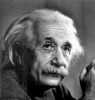 "The word God is for me nothing more than the expression and product of human weaknesses, the Bible a collection of honorable, but still primitive legends which are nevertheless pretty childish. No interpretation no matter how subtle can (for me) change this." -- Albert Einstein -- Written in 1954 to Jewish philosopher Erik Gutkind.
-
PghPanther
- Guru
- Posts: 1242
- Joined: Mon Feb 18, 2013 8:18 pm
- Location: Parts Unknown
Post #16
theStudent wrote: I don't see why anyone would think that someone would be afraid of the truth, unless that's the way they themselves are feeling.
In my opinion, no one can change the truth, so why be afraid of it?
If scientists were to find a truthful answer to why and how life started, why we are here, why we suffer and die, is there life after death. Or if they do find an answer to life's problems - stop sicknesses, aging, and death, the inevitable end of earth, bring back the dead. How would that impact negatively on anyone?
The only way any negative impact can occur, is if they don't know what love is and can't show it, so the person dreads living in such a dreadful hatefilled world.
But wait... That would mean scientists never solved the problem.
I believe it's not Christians who are afraid of the truth, but those opposed to God who are unable to see what's actually driving them in the opposite direction.
Their fear the very truth they are being puppeteered to reject.
Hold on for a minute........before you start throwing the word truth around to justify what you state above......realize you are comparing apples and oranges here.
Truth to the secular scientific world view is "provisional" meaning it is validated or earned through the scientific method of consistent and predictable working models in reality. This provisional truth is subject to revision or even rejection if better data and working models are established in the future. Furthermore there is no authority to override this provisional process unless that authority demonstrates their validity through that process as well.
Truth as you refer to it (Christianity) is a proclaimed "absolute truth" meaning it cannot be revised or rejected ever.....if one is to hold on to this world view. It is established on the ground of a proclaimed absolute authority that cannot be challenged or invalidated regardless of what reality may dictate otherwise.
Based on what I've just defined above......you post is simply preaching from a proclaimed authority.
But think about this some time............................how could existential truth ever be absolute?
After all even your so called God may claim he's the alpha and omega and be nothing more but a programmed entity to think and act like that from yet another higher source............God will never know the absolute truth of his being in your world view because there is no provisional process to determine any of it.
So don't go throwing around how secular science is afraid of the "real truth" when you will never know that........and neither does your God either.
-
Kenisaw
- Guru
- Posts: 2117
- Joined: Fri Oct 16, 2015 2:41 pm
- Location: St Louis, MO, USA
- Has thanked: 18 times
- Been thanked: 61 times
Post #17
Source for this? Or are you going to once again pass it off as yours...theStudent wrote: Returning to the OP...
Here is another problem scientists would have to address in solving the mystery.
British astronomer Sir Fred Hoyle has spent decades studying the universe and life in it, even espousing that life on earth arrived from outer space.
Lecturing at the California Institute of Technology, he discussed the order of amino acids in proteins.Hoyle added:The big problem in biology, isnt so much the rather crude fact that a protein consists of a chain of amino acids linked together in a certain way, but that the explicit ordering of the amino acids endows the chain with remarkable properties . . . If amino acids were linked at random, there would be a vast number of arrangements that would be useless in serving the purposes of a living cell. When you consider that a typical enzyme has a chain of perhaps 200 links and that there are 20 possibilities for each link, its easy to see that the number of useless arrangements is enormous, more than the number of atoms in all the galaxies visible in the largest telescopes. This is for one enzyme, and there are upwards of 2000 of them, mainly serving very different purposes. So how did the situation get to where we find it to be?Rather than accept the fantastically small probability of life having arisen through the blind forces of nature, it seemed better to suppose that the origin of life was a deliberate intellectual act.
Hoyle was a very smart man, even if he did often go against the consensus on scientific matters. But he was not a biologist or chemist, and his attempt to discuss enzyme formation was rather sloppy, according to Ian Musgrave in Lies, Damned Lies, Statistics, and Probability of Abiogenesis Calculations:
"These people, including Fred, have committed one or more of the following errors.
-They calculate the probability of the formation of a "modern" protein, or even a complete bacterium with all "modern" proteins, by random events. This is not the abiogenesis theory at all.
-They assume that there is a fixed number of proteins, with fixed sequences for each protein, that are required for life.
-They calculate the probability of sequential trials, rather than simultaneous trials.
-They misunderstand what is meant by a probability calculation.
-They underestimate the number of functional enzymes/ribozymes present in a group of random sequences."
-
theStudent
- Guru
- Posts: 1566
- Joined: Fri May 20, 2016 6:32 pm
- Been thanked: 2 times
Post #18
The point I was trying to make is that if scientists discovered truthful answers to life's problems, and failed to find the answer to life's biggest problem, imo - lovelessness, then the world would still be a dreadful place to live, at least for me. That would mean that they really hadn't solved the problems.Divine Insight wrote:I can't see the point you are trying to make in this post.
What does science have to do with understanding love?
That's a good question. The simple answer is, God is love. That's why humans have a measure of it, and yearn for it.Divine Insight wrote:And more importantly why would anyone need to believe in a God in order to love anyone?
In fact, all you have to do, is do a quick check on songs about love, and the need for, and lack of it, and you would find that it is one of the things in life, most sought after. And it seems to be elusive.
Moreover, it is evident that love is displayed in far greater measure, by those who believe in God, than those who don't.
How many of us are willing to sacrifice time, effort, and resources, to offer help, by means of comforting words, physical assistance, and financial aid?
Yet that is what some 8.5 million people in some 236 lands, who believe in God, and worship him, do every year non-stop, and they never retire. The only think that stops them is death, or sickness.
Divine Insight wrote:In fact, people who claim to need a God in order to love someone are only suggesting that they have no understanding of love themselves.
Yet, when I ask you about love, you are silent, as though it's a secret. That must be love then.
I know that I would, not have known what love is, unless I learned what it is. I wasn't born knowing it. Not everyone can teach it either.
In fact, many families grow up without it. And many people, find it - sometimes later in life.
The Christianity I know about, doesn't teach that God is desperate for love. I think you're confused with the love sick-puppy.Divine Insight wrote:Christianity is an extremely self-contradictory religion. It tries to claim that God desperately seeks to be "loved" by us and even demands that we must love him with all our heart, mind and soul. Yet it simultaneously tries to demand that without God we aren't even capable of love on our own. That's an oxymoron.
It however, teaches that as the source of life, he rightly deserves love and respect.
It teaches, also, that as humans made in the image of the source of life and love, that we are capable of displaying love.
However, as I mentioned before, to demonstrate the surpassing love mentioned in the Bible, we must be connected, to that energy/force - his spirit.
Think of it like all living things on earth.
Pluck a leaf, or flower from a plant, and put it on your dresser. Now watch it grow and flourish.
Do the same with the plant. Uproot it.
Cut your hair. Leave it on the floor week after week, and measure it. See how long it has grown.
It's the same with connection to, or disconnection from God's spirit.
Whatever love is there begins to follow, as it were, the same course of things affected by entropy. It decays, not instantly, but gradually. And dependant on the environment we are in, it will be either a slow gradualism, or a quick one.
Like when you take ice from the freezer. You can put it in the fridge, in a cool room, or next to the fireplace. The end result may be the same, but the time lapse is different.
No one here, including you, DI, have been able to show this.Divine Insight wrote:This actually exposes the religion to necessarily be a false man-made cult.
All claims, and no evidence, is all we ever get.
That's a good point - reasonable.Divine Insight wrote:How can a God command, and demand that we love him with all our heart, mind, and soul, yet not allow that love can emanate direct from us alone in the first place?
I hope you understand what I said above.
Having the capability to love, means that we have the ability to display love.
We can either choose to, or nor. So really, our displaying love, is a matter of choice.
There is however, the saying, "If you don't use it, you will lose it." - not the capability to show love, which means there is still a measure of it.
Examples:
Using the frozen ice example... When the ice melts, it's still there, but it has lost it's form.
Actually, this is a perfect example to demonstrate what I mean. At least I think so.
Before we got the ice - it was water. So let us call the water state, a measure of love.
In it's frozen state, let's say that that measure of love intensified. But when the ice gradually melted, that our love decreasing.
However, that measure doesn't measure up to the love I referred to, that is displayed by those who not only believe in a God, but serve him.
In this way the spirit of God intensifies their love, and keeps it solid - like the ice in the freezer.
You owe God one - for that illustration.

There is however, an addition.
Think of the melted water. Will it stay there forever. No. Gradually, it too, will change it's form, as it vaporizes.
That's what will happen to our measure of love if we turn completely away from the source.
Cut entirely from God's spirit, will result in inability to show love, because that love becomes somthing else - bitterness and hate.
That state is not one that any human can detect though. That's something only God knows.
It's like this example:
Stop eating and drinking. What happens after a few days? We can't eat and drink, because we die.
What religious mythology are you speaking of?Divine Insight wrote:This religious mythology proves its own fallacy without any room for doubt.
No scientific knowledge or understanding of the physical world is even required to see that this religion is nothing more than an ancient hoax.
And yet another claim with no evidence.
There should be an idiom for this by now. I just can't find one.
Here is a substitute...
Norwegian mathematician Atle Selberg
The thing is, it's very dangerous to have a fixed idea. A person with a fixed idea will always find some way of convincing himself in the end that he is right.
John 8:32
. . .the truth will set you free.
. . .the truth will set you free.
-
theStudent
- Guru
- Posts: 1566
- Joined: Fri May 20, 2016 6:32 pm
- Been thanked: 2 times
Post #19
[Replying to post 17 by Kenisaw]
Sorry.
It was a lecture.
The information is in a book.
You're free to ignore it.
Sorry.
It was a lecture.
The information is in a book.
You're free to ignore it.
John 8:32
. . .the truth will set you free.
. . .the truth will set you free.
-
Divine Insight
- Savant
- Posts: 18070
- Joined: Thu Jun 28, 2012 10:59 pm
- Location: Here & Now
- Been thanked: 19 times
Post #20
You can hardly blame science for the fact that humans don't implement the solutions that science offers.theStudent wrote:The point I was trying to make is that if scientists discovered truthful answers to life's problems, and failed to find the answer to life's biggest problem, imo - lovelessness, then the world would still be a dreadful place to live, at least for me. That would mean that they really hadn't solved the problems.Divine Insight wrote:I can't see the point you are trying to make in this post.
What does science have to do with understanding love?
Also you need to make a distinction between science and technology. Science is the discovery and understanding that allows us to create new technologies, but science had no control how we use those technologies.
Science already tells us that overpopulation leads to excess pollution. Have we done anything to curb human population growth. No we haven't.
Science tells us that we continually pollute the atmosphere by burning fossil fuels. Science has even give us the knowledge of technologies to create alternative sources of energy. Have we bothered to listen to what science tells us? No.
In fact, science even tells us how to raise healthy loving children (so science has given us the answer for creating loving societies contrary to your claim that it hasn't). Yet we are acting on the knowledge that science has given us. Instead, too many people are determined to hide their heads in the proven ignorance of immoral religious dogmas.
Secularists are trying to educated people on the knowledge of science. But many of them prefer to continue to support religious superstitions instead. They often deny the truth of evolution, and sometimes even things like climate change.
Science does have the answers. Unfortunately too many people simply aren't interested in truth.
It hasn't been elusive for me. Therefore I can only conclude that this is your personal perspective on things.theStudent wrote:That's a good question. The simple answer is, God is love. That's why humans have a measure of it, and yearn for it.Divine Insight wrote:And more importantly why would anyone need to believe in a God in order to love anyone?
In fact, all you have to do, is do a quick check on songs about love, and the need for, and lack of it, and you would find that it is one of the things in life, most sought after. And it seems to be elusive.
If there were any truth to this why would you then claim that love seems to be elusive? There are far more religious people in the world than non-religious people.theStudent wrote: Moreover, it is evident that love is displayed in far greater measure, by those who believe in God, than those who don't.
Sorry, but if religious people were more willing to offer help to others than non-religious people then there shouldn't be anyone left on the entire planet who still needs help. Because once again, the vast majority of people on planet Earth are religious.theStudent wrote: How many of us are willing to sacrifice time, effort, and resources, to offer help, by means of comforting words, physical assistance, and financial aid?
Yet that is what some 8.5 million people in some 236 lands, who believe in God, and worship him, do every year non-stop, and they never retire. The only think that stops them is death, or sickness.
Clearly your arguments here aren't well thought out.
I don't recall you asking me about love? Moreover, if you did I would need to know your definition of love before I could answer you in terms of what you think love means.theStudent wrote:Divine Insight wrote:In fact, people who claim to need a God in order to love someone are only suggesting that they have no understanding of love themselves.
Yet, when I ask you about love, you are silent, as though it's a secret. That must be love then.
I feel just the opposite. As far as I can remember love has always been a natural part of who I am. I've experienced love from my earliest possible memories. Not only experiencing it in others expressing love for me, but by my natural love for others.theStudent wrote: I know that I would, not have known what love is, unless I learned what it is. I wasn't born knowing it. Not everyone can teach it either.
In fact, many families grow up without it. And many people, find it - sometimes later in life.
In fact, I can't even imagine having to teach someone to love. That would seem to be a superficial intellectual understanding of a concept based entirely on logic.
Is that was love is to you? A logical understanding of something? And if so, then how could you possibly say that love isn't within the reach of science? If it needs to be taught as an intellectual understanding then it's well within the reach of science.
Are you kidding me? Christianity teaches in their Bible that their God is a jealous God who will take extreme temper tantrums if people refuse to love him. If you refuse to love the Christian God he will unleash his anger and wrath upon you and condemn you to everlasting punishment.theStudent wrote:The Christianity I know about, doesn't teach that God is desperate for love. I think you're confused with the love sick-puppy.Divine Insight wrote:Christianity is an extremely self-contradictory religion. It tries to claim that God desperately seeks to be "loved" by us and even demands that we must love him with all our heart, mind and soul. Yet it simultaneously tries to demand that without God we aren't even capable of love on our own. That's an oxymoron.
No, the Bible teaches that God is jealous and wrathful and will hurt anyone who refuses to love and worship him according to very specific rules.theStudent wrote: It however, teaches that as the source of life, he rightly deserves love and respect.
This contradicts your previous claims that we need to be taught how to love. Did someone need to teach God how to love? Be careful now. You have just claimed that we are made in the image of God.theStudent wrote: It teaches, also, that as humans made in the image of the source of life and love, that we are capable of displaying love.
If we were created in the image of that God then that connection would be innate within us and it wouldn't need to be proselytized by evangelists asking us for tithes.theStudent wrote: However, as I mentioned before, to demonstrate the surpassing love mentioned in the Bible, we must be connected, to that energy/force - his spirit.

The problem is that the Biblical God has already confessed to being a jealous God in dire need of being worshiped lest he'll unleash his hateful wrath on people.theStudent wrote: Think of it like all living things on earth.
Pluck a leaf, or flower from a plant, and put it on your dresser. Now watch it grow and flourish.
Do the same with the plant. Uproot it.
Cut your hair. Leave it on the floor week after week, and measure it. See how long it has grown.
It's the same with connection to, or disconnection from God's spirit.
Whatever love is there begins to follow, as it were, the same course of things affected by entropy. It decays, not instantly, but gradually. And dependant on the environment we are in, it will be either a slow gradualism, or a quick one.
Like when you take ice from the freezer. You can put it in the fridge, in a cool room, or next to the fireplace. The end result may be the same, but the time lapse is different.
So you'll have to find a better religion if you want to speak to me about a supposedly loving God. Hebrew mythology simply won't do. It's too barbaric and already has a self-confessed hate-filled wrathful God.
I've proven that Hebrew mythology is necessarily false countless times on these forums. The fact that you refuse to acknowledge this doesn't make it go away.theStudent wrote:No one here, including you, DI, have been able to show this.Divine Insight wrote:This actually exposes the religion to necessarily be a false man-made cult.
All claims, and no evidence, is all we ever get.
I've been overflowing with love my entire life. For over 67 years thus far. This doesn't change the fact that Hebrew mythology is provably false.theStudent wrote:That's a good point - reasonable.Divine Insight wrote:How can a God command, and demand that we love him with all our heart, mind, and soul, yet not allow that love can emanate direct from us alone in the first place?
I hope you understand what I said above.
Having the capability to love, means that we have the ability to display love.
We can either choose to, or nor. So really, our displaying love, is a matter of choice.
There is however, the saying, "If you don't use it, you will lose it." - not the capability to show love, which means there is still a measure of it.
And that illustration doesn't fix the extreme self-contradictions of Hebrew mythology. Nor does it support that Hebrew mythology has anything to do with any God.theStudent wrote: Examples:
Using the frozen ice example... When the ice melts, it's still there, but it has lost it's form.
Actually, this is a perfect example to demonstrate what I mean. At least I think so.
Before we got the ice - it was water. So let us call the water state, a measure of love.
In it's frozen state, let's say that that measure of love intensified. But when the ice gradually melted, that our love decreasing.
However, that measure doesn't measure up to the love I referred to, that is displayed by those who not only believe in a God, but serve him.
In this way the spirit of God intensifies their love, and keeps it solid - like the ice in the freezer.
You owe God one - for that illustration.
And everything you have just stated is nothing more than empty words.theStudent wrote: There is however, an addition.
Think of the melted water. Will it stay there forever. No. Gradually, it too, will change it's form, as it vaporizes.
That's what will happen to our measure of love if we turn completely away from the source.
Cut entirely from God's spirit, will result in inability to show love, because that love becomes somthing else - bitterness and hate.
That state is not one that any human can detect though. That's something only God knows.
I've been filled with love for over 67 years of my life. I've been pointing out the fallacy of the Hebrew God for at least 47 of those years. Therefore I must necessarily be the source of my own love. Because based on your theories I should have dried up a long time ago and become an empty shell of a human who is totally incapable of love.
So I'm living proof that your religious hypotheses are clearly false.
Exactly. Therefore based on your sermon above I should have been dead a very long time ago. But I'm not. So clearly your sermon is nothing but empty words that have no validity in the real world.theStudent wrote: It's like this example:
Stop eating and drinking. What happens after a few days? We can't eat and drink, because we die.
I'm speaking of the Hebrew Abrahamic myths, Judaism, Christianity and Islam. These are all the same basic myth just with added twisted as they evolved.theStudent wrote:What religious mythology are you speaking of?Divine Insight wrote:This religious mythology proves its own fallacy without any room for doubt.
No scientific knowledge or understanding of the physical world is even required to see that this religion is nothing more than an ancient hoax.
And yet another claim with no evidence.
There should be an idiom for this by now. I just can't find one.
And I've already given undeniable evidence. I've proven that the Bible cannot be true anymore than it can be true that there exists a rational solution to the square root of 2. In fact, I even used precisely the same method of proof. A proof by contradiction.
So we can be 100% certainly without any doubt at all that these Abrahamic religions are a man-made hoax. There is no room for doubt.
Just look at the single story of the Great Flood. This Biblical God necessarily needs to be omniscient, knowing the future. Without this ability the entire mythology falls apart like a house of cards. Yet the story of the Great Flood demands that this God could not possibly have known that this was going to happen. It's says right in the story that God was sorry that he had ever created mankind when he had to drown them out in this flood. Yet, if he was truly omniscient and has a Master Plan, there's no way he should have been surprised or disappointed by this. To the contrary, an omniscient God who has a Master Plan should have been thrilled that things were going along just as he had planned.
So the Bible is dead in the water right there. <---- funny how that saying works out so perfectly because I wasting even thinking of the FLOOD when I typed that.
Yet it's true. The Bible's dead in the water right there at the story of the Great Flood.
Proof positive that the Bible is false.
[center]
Spiritual Growth - A person's continual assessment
of how well they believe they are doing
relative to what they believe a personal God expects of them.
[/center]
Spiritual Growth - A person's continual assessment
of how well they believe they are doing
relative to what they believe a personal God expects of them.
[/center]

