
Fact: The universe began to exist out of nothing
---The conclusion of this lecture is that the universe has not existed forever. Rather, the universe, and time itself, had a beginning in the Big Bang, about 15 billion years ago. Source
---As a result of the Big Bang (the tremendous explosion which marked the beginning of our Universe), the universe is expanding and most of the galaxies within it are moving away from each other. Source
---The universe had a beginning. There was once nothing and now there is something. Source
Fact: The universe is fine tuned for life
---The laws of nature form a system that is extremely fine-tuned, and very little in physical law can be altered without destroying the possibility of the development of life as we know it. Were it not for a series of startling coincidences in the precise details of physical law, it seems, humans and similar life-forms would never have come into being. Source
---It is this extraordinary instance of apparent fine tuning, and others, which has brought the worlds most respected cosmologists, including Leonard Susskind, Alan Guth, Alexander Vilenkin, Brian Greene, Max Tegmark, & Andrei Linde, to recognize not only the legitimacy of the phenomenon, but the necessity to explain it. Source
Fact: Jesus was a historical figure and the New Testament relays semi-reliable information about him
---With respect to Jesus, we have numerous, independent accounts of his life in the sources lying behind the Gospels (and the writings of Paul) -- sources that originated in Jesus' native tongue Aramaic and that can be dated to within just a year or two of his life (before the religion moved to convert pagans in droves). Historical sources like that are is pretty astounding for an ancient figure of any kind. Moreover, we have relatively extensive writings from one first-century author, Paul, who acquired his information within a couple of years of Jesus' life and who actually knew, first hand, Jesus' closest disciple Peter and his own brother James. If Jesus did not exist, you would think his brother would know it......Whether we like it or not, Jesus certainly existed. Source
Fact: The tomb Jesus was buried in after his crucifixion and death was found empty
---The stolen body hypothesis posits that the body of Jesus Christ was stolen from his burial place. His tomb was found empty not because he was resurrected, but because the body had been hidden somewhere else by the apostles or unknown persons. Source
---An examination of both Pauline and gospel material leads to eight lines of evidence in support of the conclusion that Jesus's tomb was discovered empty: (1) Paul's testimony implies the historicity of the empty tomb, (2) the presence of the empty tomb pericope in the pre-Markan passion story supports its historicity, (3) the use of 'on the first day of the week' instead of 'on the third day' points to the primitiveness of the tradition, (4) the narrative is theologically unadorned and non-apologetic, (5) the discovery of the tomb by women is highly probable, (6) the investigation of the empty tomb by the disciples is historically probable, (7) it would have been impossible for the disciples to proclaim the resurrection in Jerusalem had the tomb not been empty, (8) the Jewish polemic presupposes the empty tomb. Source
And in light of all this I suspect there will still be nonbelievers posting in this thread who will continue to deny these 4, well established facts. For the sake of intellectual honesty (a virtue that is desperately needed on this forum) theists need to admit that these facts do not decisively prove God's existence. They only lend support to the proposition of God and the God hypothesis is only one of many explanations that accounts for these facts. In turn, atheists need to stop mimicking young earth creationists by denying these scientific and historical facts. There are many atheists and nontheists on this forum who do accept these facts without any reservations, but the ones that don't really need to start getting with program.
Question: Are the four items listed above facts? If so, how much credibility do they give the God hypothesis and Christian theism?
The Problem with NonTheists and Facts
Moderator: Moderators
-
Haven

- Guru
- Posts: 2023
- Joined: Sun Jan 12, 2014 8:23 pm
- Location: Great Barrington, MA
- Has thanked: 205 times
- Been thanked: 209 times
Post #61
As I've said before -- creatio ex nihilo is logically incoherent (and hence metaphysically impossible) because it is literally synonymous with not creating at all.[color=blue]WinePusher[/color] wrote: . . . creatio ex nihilo . . .
"Nothing" is not a thing that can be acted upon, it's simply a linguistic term that denotes the absence of all things. "Causing nothing to become something" is synonymous with "Not causing anything to become something," which reduces to "not causing anything," i.e., "not creating."
This is absolutely fatal to the doctrine of creatio ex nihilo.
By the way, this will be my last post on here for a while. The semester is getting into full swing, and I have a full load of courses, as well as research duties, grant proposals, and a dissertation design to complete. I'll be back around spring break (March 1st). I'm sorry to cut out like this.
Haven
“Reserve your right to think.†- Hypatia
“A wise man… proportions his belief to the evidence†- David Hume
“Reserve your right to think.†- Hypatia
“A wise man… proportions his belief to the evidence†- David Hume
-
Tired of the Nonsense

- Site Supporter
- Posts: 5680
- Joined: Fri Oct 30, 2009 6:01 pm
- Location: USA
- Been thanked: 1 time
Re: The Problem with NonTheists and Facts
Post #62[Replying to WinePusher]
Let's just cut through the pointless extraneous stuff and go right to the heart of the matter.
What "historical anomalies" are you speaking of? Would that be the standard Christian contention that Jesus' disciples were uniformly all to "distraught" and "discombobulated," all 120 of them (Acts 1: 15), to have taken such an action? The disciples could not possibly have made such a move according to commonly accepted Christian mythology, and therefore it is useless to even pursue such a foolish and totally preposterous line of reasoning. The only "reasonable" conclusion therefore is that the corpse must have come back to life, and ultimately flew away. This despite the fact that all four Gospels unanimously indicate that the disciples of Jesus moved immediately and decisively to gain possession of the body of Jesus. The disciples were in fact the last individuals to be clearly in control of the body of Jesus, and that they had every legal right to choose where the final resting place for the body of Jesus would be. And what would you call the story of a corpse that comes back to life and flies away if not an historical anomaly? Commonplace? Only in a world of delusion could such a thing be considered to be even remotely plausible, much less commonplace. But I am "derailing the string" yet again, am I not? Because this is NOT the track and therefore not the specific train of thought that you were hoping to coerce everyone else into to riding. Bad Tired, bad Tired!
Let's just cut through the pointless extraneous stuff and go right to the heart of the matter.
WinePusher wrote: See, you're derailing the thread again. The resurrection is not part of the topic. The empty tomb is. All we're trying to do in this thread to establish empty tomb. The explanation for why the tomb was empty is another topic that doesn't belong here.
Tired of the Nonsense wrote: I honestly admit that the tomb was empty. See how easy that was?
You really are living in a world of delusion. Not only have I never denied the empty tomb, it is in fact integral to my argument. Since there is near unanimous agreement that the so called apocrypha are nothing but works of total fiction and make believe, then the four canonical Gospels represent the only possible source of information that exists concerning the life and death of Jesus. Such as they are. Because let's be honest, portions of the Gospels defy reason. But all four Gospels unanimously do indicate that Joseph's new tomb, the place where Jesus was taken by his followers directly after his execution, was discovered to be open and empty on Sunday morning. It's a perfectly plausible part of the story in fact, and as such MAY even be true. And the obvious explanation for the empty tomb is that it was much more likely to have been the result of actions taken by the living then it was the result of actions taken by the corpse. Can you bring yourself to publicly agree with this analysis? And if you cannot, is it REALLY in your best interest to make allusions as to whom is being "intellectually honest" and who is not? Because consistently denying the obvious in no way helps your cause.WinePusher wrote: Yes, after 6 pages you reluctantly admit it. Glad to hear it.
Tired of the Nonsense wrote wrote: Now, can you admit that the most likely reason that the tomb was empty is that it was a result of actions taken by the living, in this case the disciples of Jesus, and NOT the result of actions taken by the corpse? Because you have steadfastly refused to do so for the last four years now.
Yes! All of our experience indicates that natural explanations are overwhelmingly more plausible, and therefore overwhelmingly more likely to be true, then supernatural explanations. In fact in the entire history of mankind, there is not one single occurrence which is generally accepted today as being of unquestioned supernatural origin. As such, if a perfectly valid and plausible natural explanation exists then the likelihood that the supernatural explanation represents the actual facts is reduced to near zero.WinePusher wrote: Depends. As I've previously said, all natural explanations are prima facie more likely than supernatural explanations. But historically speaking, the natural explanation for the empty tomb (the stolen body hypothesis) creates more historical anomalies that it answers while the resurrection doesn't. Yes, the resurrection creates problems in the areas of science and ontology, but as a pure historical event it sufficiently explains the empty tomb.
What "historical anomalies" are you speaking of? Would that be the standard Christian contention that Jesus' disciples were uniformly all to "distraught" and "discombobulated," all 120 of them (Acts 1: 15), to have taken such an action? The disciples could not possibly have made such a move according to commonly accepted Christian mythology, and therefore it is useless to even pursue such a foolish and totally preposterous line of reasoning. The only "reasonable" conclusion therefore is that the corpse must have come back to life, and ultimately flew away. This despite the fact that all four Gospels unanimously indicate that the disciples of Jesus moved immediately and decisively to gain possession of the body of Jesus. The disciples were in fact the last individuals to be clearly in control of the body of Jesus, and that they had every legal right to choose where the final resting place for the body of Jesus would be. And what would you call the story of a corpse that comes back to life and flies away if not an historical anomaly? Commonplace? Only in a world of delusion could such a thing be considered to be even remotely plausible, much less commonplace. But I am "derailing the string" yet again, am I not? Because this is NOT the track and therefore not the specific train of thought that you were hoping to coerce everyone else into to riding. Bad Tired, bad Tired!
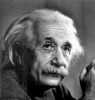 "The word God is for me nothing more than the expression and product of human weaknesses, the Bible a collection of honorable, but still primitive legends which are nevertheless pretty childish. No interpretation no matter how subtle can (for me) change this." -- Albert Einstein -- Written in 1954 to Jewish philosopher Erik Gutkind.

Post #63
The tomb could have been empty because it was never filled. With the Bible there is no telling when the writer will insert supernatural events as explanations, or, nudge the reader to think "what else could have it been?!"
The Bible is filled with supernatural events that couldn't possibly be true, with ones that are supposed to be literal fact. The early books aren't adamant about the empty tomb. They don't harp on Jesus' literal resurrection. This is development. Then, after a few generations, you have works that are clearly late and are less reliable.
These entire "facts" are only guessed at by Biblical Scholars who try to find something!, ANYTHING true in the Bible.
These facts do nothing to support a God. These facts, first, show how creative human beings are at inventing interesting tales. How good we are at entertainment, and how we can create emotional responses with "The Word"; with language. A segment of the population will even regard these stories as literally true, but it is a minority. Most people enjoy the story of triumph over death and an eternal blissful life if they feel they are really able to work for it. These are 80% of the Christians you see in Church on Christmas. The "regular people". The Luke Warm.
There is a better chance that the Bible and all Christian art is a modern forgery than the story of Jesus is literally true.
It's actually more plausible that Mankind is capable of that kind of ridiculous thing than there is a Perfect Father Hovering Ever In The Heavens.
The Bible is filled with supernatural events that couldn't possibly be true, with ones that are supposed to be literal fact. The early books aren't adamant about the empty tomb. They don't harp on Jesus' literal resurrection. This is development. Then, after a few generations, you have works that are clearly late and are less reliable.
These entire "facts" are only guessed at by Biblical Scholars who try to find something!, ANYTHING true in the Bible.
These facts do nothing to support a God. These facts, first, show how creative human beings are at inventing interesting tales. How good we are at entertainment, and how we can create emotional responses with "The Word"; with language. A segment of the population will even regard these stories as literally true, but it is a minority. Most people enjoy the story of triumph over death and an eternal blissful life if they feel they are really able to work for it. These are 80% of the Christians you see in Church on Christmas. The "regular people". The Luke Warm.
There is a better chance that the Bible and all Christian art is a modern forgery than the story of Jesus is literally true.
It's actually more plausible that Mankind is capable of that kind of ridiculous thing than there is a Perfect Father Hovering Ever In The Heavens.
Thinking about God's opinions and thinking about your own opinions uses an identical thought process. - Tomas Rees

Re: The Problem with NonTheists and Facts
Post #64No, we don't know for certain that the universe began to exist out of nothing.WinePusher wrote:The intellectually honest position is that the universe began to exist out of nothing. That much we do know for certain. What is unclear is what caused the universe to begin to exist. Christians say God, nonbelievers like Lawrence Krauss appeal to quantum mechanics.
We don't know if it "began" to exist, or if it's eternal. Big Bounce theory suggests the fundamental constituents of the universe are eternal. In a Multiverse scenario (which isn't necessarily mutually-exclusive of Big Bounce), if there's an infinite (or large) set of universes existing within in an eternal framework in which there's no time and space, they will always exist simultaneously, hence it's possible no concept of beginning or ending even applies.
We also don't know if the universe literally came from nothing. (Lawrence Krauss, as you know, is actually referring to something.) I think it's only creationists who assert factual knowledge that the universe "began to exist out of nothing."
Post #65
The entire discussion is derailed by the equivication of the visible Universe we reside in, and the presumed metaverse in which this universe "banged".
Clearly, there is not a glass dome around what we are expanding into, but this visible universe is expanding into "something made up of nothingness" - as we 4D creatures would see it.
However, it's not right to talk about the universe and this other thing (the metaverse) as anything but "the universe" in the same way you don't talk about the bubble and water being two different things when you say "this is boiling water". It goes without saying that bubbles are part of boiling water. (Visible universes are part of our Universe.)
Like a bubble in a boiling pot, this universe emerged, but it's still the same "stuff" as where it came from (it's all Natural - operates on laws of physics), just with a different offset of positive and negative energy - the right fluctuation.
So, the (visible) universe did seem to "pop" into existence (big bang), but from properties of something that could create such physical fluctuations in itself. A sea of undifferentiated energy - but nothing supernatural.
If you studied the bubble and the water, you would find O and H. They are made of the same thing. The bubbles don't need supernatural "stuff" to appear.
Neither do visible universes (aka, Life Bubbles - a livable universe like ours) in a Universe (metaverse, or, the water) such as ours.
Clearly, there is not a glass dome around what we are expanding into, but this visible universe is expanding into "something made up of nothingness" - as we 4D creatures would see it.
However, it's not right to talk about the universe and this other thing (the metaverse) as anything but "the universe" in the same way you don't talk about the bubble and water being two different things when you say "this is boiling water". It goes without saying that bubbles are part of boiling water. (Visible universes are part of our Universe.)
Like a bubble in a boiling pot, this universe emerged, but it's still the same "stuff" as where it came from (it's all Natural - operates on laws of physics), just with a different offset of positive and negative energy - the right fluctuation.
So, the (visible) universe did seem to "pop" into existence (big bang), but from properties of something that could create such physical fluctuations in itself. A sea of undifferentiated energy - but nothing supernatural.
If you studied the bubble and the water, you would find O and H. They are made of the same thing. The bubbles don't need supernatural "stuff" to appear.
Neither do visible universes (aka, Life Bubbles - a livable universe like ours) in a Universe (metaverse, or, the water) such as ours.
Thinking about God's opinions and thinking about your own opinions uses an identical thought process. - Tomas Rees
-
historia

- Prodigy
- Posts: 3026
- Joined: Wed May 04, 2011 6:41 pm
- Has thanked: 299 times
- Been thanked: 470 times
Re: The Problem with NonTheists and Facts
Post #66I think we may have gone a little too far down into the weeds on this one, so let's bring the conversation back to a couple of major points, and try to work through this step-by-step.Haven wrote:
Still, how is this relevant to the question of the historical Jesus? No one is disputing that Paul and other early Christian thinkers laid the foundations for what is today Christianity, the question is over whether this sect's central figure, Jesus of Nazareth, was real or mythical.
Haven wrote:
I'm not making the claim that Paul invented Jesus, only introducing it as one possibility to explain the story of Jesus and the birth of Christianity.
Right, I understand your argument. Now you need to back-up this claim.
Given the limited evidence surrounding Jesus and early Christianity, I assign equal probability to all of these scenarios.
The way I see it, if you want to make the claim that these hypotheses are all equally probable, you have to demonstrate that each one accounts for the available data (that is, the written sources we have from early Christianity) equally as well as the hypothesis that Jesus existed.
If, on the other hand, we can show that the historical Jesus hypothesis better accounts for the available data, then your claim that all these hypotheses are equally likely is disproved. We don't have enough time to look at each one in depth, of course, so let's focus on just one of the alternative hypotheses you proposed, that Paul invented Jesus.
Before we do that, though, we need to clarify the hypothesis. In what way did Paul "invent" Jesus?
-
Goat

- Site Supporter
- Posts: 24999
- Joined: Fri Jul 21, 2006 6:09 pm
- Has thanked: 25 times
- Been thanked: 207 times
Re: The Problem with NonTheists and Facts
Post #67I am not too sure that you can show that the 'historical Jesus' best fits the data. There is such a lack of data except from corrupted sources, or through sources that have gone through hands that have a reason to filter things.historia wrote:I think we may have gone a little too far down into the weeds on this one, so let's bring the conversation back to a couple of major points, and try to work through this step-by-step.Haven wrote:
Still, how is this relevant to the question of the historical Jesus? No one is disputing that Paul and other early Christian thinkers laid the foundations for what is today Christianity, the question is over whether this sect's central figure, Jesus of Nazareth, was real or mythical.
Haven wrote:
I'm not making the claim that Paul invented Jesus, only introducing it as one possibility to explain the story of Jesus and the birth of Christianity.
Right, I understand your argument. Now you need to back-up this claim.
Given the limited evidence surrounding Jesus and early Christianity, I assign equal probability to all of these scenarios.
The way I see it, if you want to make the claim that these hypotheses are all equally probable, you have to demonstrate that each one accounts for the available data (that is, the written sources we have from early Christianity) equally as well as the hypothesis that Jesus existed.
If, on the other hand, we can show that the historical Jesus hypothesis better accounts for the available data, then your claim that all these hypotheses are equally likely is disproved. We don't have enough time to look at each one in depth, of course, so let's focus on just one of the alternative hypotheses you proposed, that Paul invented Jesus.
Before we do that, though, we need to clarify the hypothesis. In what way did Paul "invent" Jesus?
I would like you to clarify things. What do you mean by a 'historical Jesus'. How far from the 'Gospel Jesus' can the 'historical Jesus' stray to be considered historical?
“What do you think science is? There is nothing magical about science. It is simply a systematic way for carefully and thoroughly observing nature and using consistent logic to evaluate results. So which part of that exactly do you disagree with? Do you disagree with being thorough? Using careful observation? Being systematic? Or using consistent logic?�
Steven Novella
Steven Novella
-
WinePusher
Re: The Problem with NonTheists and Facts
Post #68You should have never brought up all the 'pointless extraneous stuff' to begin with.Tired of the Nonsense wrote:Let's just cut through the pointless extraneous stuff and go right to the heart of the matter.
Tired of the Nonsense wrote:I honestly admit that the tomb was empty. See how easy that was?
WinePusher wrote:Yes, after 6 pages you reluctantly admit it. Glad to hear it.
You never denied the empty tomb? Then what was the point of arguing with my topic if you agree that the tomb was empty and that Jesus existed? Are you just trying to be argumentative?Tired of the Nonsense wrote:You really are living in a world of delusion. Not only have I never denied the empty tomb, it is in fact integral to my argument.
I have said repeatedly that natural explanations are more plausible than supernatural explanations. What I mean by this is at face value, the stolen body hypothesis better explains the empty tomb than the resurrection hypothesis. You see, I'm able to concede facts that actually harm my position without any hesitation. That's called being intellectually honest.Tired of the Nonsense wrote:Since there is near unanimous agreement that the so called apocrypha are nothing but works of total fiction and make believe, then the four canonical Gospels represent the only possible source of information that exists concerning the life and death of Jesus. Such as they are. Because let's be honest, portions of the Gospels defy reason. But all four Gospels unanimously do indicate that Joseph's new tomb, the place where Jesus was taken by his followers directly after his execution, was discovered to be open and empty on Sunday morning. It's a perfectly plausible part of the story in fact, and as such MAY even be true. And the obvious explanation for the empty tomb is that it was much more likely to have been the result of actions taken by the living then it was the result of actions taken by the corpse. Can you bring yourself to publicly agree with this analysis? And if you cannot, is it REALLY in your best interest to make allusions as to whom is being "intellectually honest" and who is not? Because consistently denying the obvious in no way helps your cause.
WinePusher wrote:Depends. As I've previously said, all natural explanations are prima facie more likely than supernatural explanations. But historically speaking, the natural explanation for the empty tomb (the stolen body hypothesis) creates more historical anomalies that it answers while the resurrection doesn't. Yes, the resurrection creates problems in the areas of science and ontology, but as a pure historical event it sufficiently explains the empty tomb.
Yes.Tired of the Nonsense wrote:Yes! All of our experience indicates that natural explanations are overwhelmingly more plausible, and therefore overwhelmingly more likely to be true, then supernatural explanations.
Here's what I mean: There is no historical evidence to support the stolen body hypothesis. It is merely a convenient alternative explanation to the resurrection. I agree completely that the stolen body hypothesis makes more sense than the resurrection, and if some guys grave was found empty I'd conclude that the body was dug up and stolen by grave diggers. I would not conclude that the body magically arose out of the ground. But like I said, the stolen body hypothesis loses more and more credibility as we begin to consider the background information. The Romans anticipated that Jesus' disciples would steal the body in order to make it seem as if he'd risen from the dead and put guards at the entrance of the tomb. This is a piece of information that harms the stolen body hypothesis. In addition, the willingness of the disciples to due for their faith shows that they did not steal the body. Humans are rational beings and would not die for something they knew to be a lie.Tired of the Nonsense wrote:What "historical anomalies" are you speaking of?
-
Jax Agnesson

- Guru
- Posts: 1819
- Joined: Mon Mar 12, 2012 11:54 am
- Location: UK
Re: The Problem with NonTheists and Facts
Post #69Are there other sources for this guard detail, apart from Matthew?WinePusher wrote: . . . . the stolen body hypothesis loses more and more credibility as we begin to consider the background information. The Romans anticipated that Jesus' disciples would steal the body in order to make it seem as if he'd risen from the dead and put guards at the entrance of the tomb. This is a piece of information that harms the stolen body hypothesis.

Re: The Problem with NonTheists and Facts
Post #70WinePusher wrote: The Romans anticipated that Jesus' disciples would steal the body in order to make it seem as if he'd risen from the dead and put guards at the entrance of the tomb. This is a piece of information that harms the stolen body hypothesis.
Christans (like educhris) have told me that the resurrection was a surprise. That no one saw it coming. Yet you seem to be saying that a resurrection (or fake resurrection) was anticipated. So who is right and who is wrong? Was the resurrection anticipated or not. If it wasn't then your argument falls apart. If it does then I'm interested to understand how you came to that conclusion when other Christians come to the exact opposite conclusion.
Jim jones, Joseph smith, heavens gate, and many more people were willing to die for their beliefs (heavens gate members castrated themselves!). Some of them were probably lying. That doesn't make their claims anymore likely true.WinePusher wrote: In addition, the willingness of the disciples to due for their faith shows that they did not steal the body. Humans are rational beings and would not die for something they knew to be a lie.
Please stop using this bad argument.
Religion remains the only mode of discourse that encourages grown men and women to pretend to know things they manifestly do not know.

