

Many, many cultures have imagined God in many, many ways. Certain cultures declare everyone else's idea of God to be false.
How do we objectively determine whose version of God is NOT false?
Which god is God?
Moderator: Moderators
-
Zzyzx
- Site Supporter
- Posts: 25141
- Joined: Sat Mar 10, 2007 10:38 pm
- Location: Bible Belt USA
- Has thanked: 55 times
- Been thanked: 93 times
Re: Which god is God?
Post #111.
Mental constructs, that made up in the mind, can be very convincing, seem very real to the person having the experience. They may act (sometimes disastrously) on voices or visions (or gods or demons) that appear in their thoughts.
It may be difficult for those having such experience to comprehend that their mental constructs are only in their mind " their thoughts -- and are not applicable to others.
Mental constructs, that made up in the mind, can be very convincing, seem very real to the person having the experience. They may act (sometimes disastrously) on voices or visions (or gods or demons) that appear in their thoughts.
It may be difficult for those having such experience to comprehend that their mental constructs are only in their mind " their thoughts -- and are not applicable to others.
SallyF wrote:The "pure conscious state" is still only happening inside your head.Razorsedge wrote:The process starts in your head but it ends at a different level of reality. When you meditate on self, this involves isolating the mind from consciousness. From there you're no longer experiencing with your "head" but rather you're experiencing the reality in a pure conscious state.SallyF wrote:I take it this realisation only happened inside your own head ?Through meditation, I've experienced (observed) the nature of "self" (a pure conscious being) which then led to the realization of a Universal consciousness being the ultimate reality.
The "pure conscious state", the "reality" is demonstrating that "God" only exists inside the minds of the faithfull, and "God" can be anything they imagine it to be.
.
Non-Theist
ANY of the thousands of "gods" proposed, imagined, worshiped, loved, feared, and/or fought over by humans MAY exist -- awaiting verifiable evidence
Non-Theist
ANY of the thousands of "gods" proposed, imagined, worshiped, loved, feared, and/or fought over by humans MAY exist -- awaiting verifiable evidence
-
Don McIntosh
- Apprentice
- Posts: 188
- Joined: Wed Jul 11, 2018 8:20 am
Re: Which god is God?
Post #112That's a bit misleading. What we call "the Bible" for brevity and convention's sake is not a single book by a single author; it's dozens of books by dozens of authors. And in many cases (the Chronicles, the Gospels, the book of Acts, and even Genesis) large portions of the narrative are confirmed through secondary sources like the writings of ancient historians, and/or archaeological findings. In a few cases those findings confirm what were previously considered "legend" because previously they were known only in Scripture (the Hittite nation; the reign or "house" of King David; Hezekiah's water tunnel; the considerable authority of Pontius Pilate; etc.). That puts "the Bible" in the middle of what an apologist friend of mine calls the "web of historicity." In other words there are no sharp lines to be drawn between the Bible and much well-documented ancient Near Eastern history.rikuoamero wrote: [Replying to post 104 by Don McIntosh]
It might shock you to learn that in a courtroom setting, Christianity would lose. It's main, or should I say, only piece of quote unquote evidence is the Bible,Watch a courtroom documentary sometime. Yes, the burden of proof is on the prosecution, but in itself that's not nearly enough for an acquittal. The defense does not simply reiterate their belief that the prosecution has not demonstrated its case; they have to argue their own case. They have to explain why the prosecution's case is weak, why the defense has a better explanation for the facts, etc.
but the problem is, such cannot be entered into the record as an exhibit. It's a document, or series of documents, but documents cannot be shown by a prosecuting lawyer willy nilly as if they are what he says they are. A lawyer working for a husband cannot just offer up a document he says is from a private investigator whom the husband hired to investigate possible infidelity on the part of the wife: no, the investigator has to come into court, testify as to his identity and to his authorship of the report, that it was done in the normal course of his duties.
If this doesn't happen, if the lawyer doesn't have the investigator come in, then the document is regarded as hearsay. It's a case then of "I the lawyer, say this document says it's from the private investigator" but he offers no reason to the court (judge and/or jury) to accept that. Without the PI's testimony, for all they know the lawyer could have forged the report.
Can this be done with the Bible, or any document from the Bible? Nope. None, if any, of the authors are known for sure, and even if we ignore all of that, none of the New Testament is a first hand account of "what happened". We can't put the author of Gospel Luke, for example, on the stand to testify to his identity because one, he's dead, and two, we don't know who he is, or why we should regard this document he wrote as being of any strength.
Well, that's right. I think your arguments effectively call attention to the distinction between the kind of live expert and eyewitness testimony required to make a case in a typical courtroom situation, and the kind of documentary and archaeological evidence culled by historians to reliably reconstruct the past.
Even so, an apologist in our courtroom scenario could call on all sorts of expert scholarly "witnesses" to attest to the general reliability of the New Testament, along with the basic historical facts concerning: the crucifixion of Christ; his disappearance from the tomb; the subsequently very rapid, remarkable rise of the early church in Jerusalem, the very place where Christ was publicly crucified; and the conversion account of Saul of Tarsus/Paul the Apostle, who at one point spearheaded the effort to forcibly stop the Christian movement and later was martyred for his faith in Jesus.
Again I think you make some valid points here, but much of this is based on misapplying the analogy. My reference to the courtroom analogy of presumption of innocence/burden of proof was only meant to underscore that the burden of proof in our debate situation does not lie solely on the "prosecution" (Christians) to demonstrate the truth of Christianity, but that the "defense" (atheists or skeptics) bears a certain burden of their own, to show why the Christian arguments fail to warrant belief.To tie this into the example up above of the cheating wife, this is like the husband's lawyer waving a document saying it's from a PI, whose name he doesn't know, and that the PI's report isn't actually the PI's own experience, but rather what he supposedly heard from unnamed and unknown others years after the 'fact'.
The wife's lawyer just has to point out to the court how incredibly weak this all is. The wife's lawyer doesn't have to prove the wife's innocence.
So you're correct to point out that there are no longer any live witnesses available to attest that they have seen, for example, Jesus Christ appearing to them after being crucified. But that doesn't mean a strong case cannot be made for the resurrection. While the resurrection cannot be empirically verified, I believe it can be confirmed as the best explanation of the relevant historical facts.
Extraordinary evidence requires extraordinary claims.
Awaiting refutations of the overwhelming arguments and evidence for Christian theism.
Transcending Proof
Awaiting refutations of the overwhelming arguments and evidence for Christian theism.
Transcending Proof

Post #113
Everything I'm describing to you simply has to do with a level of consciousness. Western science accepts that there are different levels of consciousness, but they assume that it's all limited to the brain.SallyF wrote: [Replying to post 100 by Razorsedge]
The process starts in your head but it ends at a different level of reality. When you meditate on self, this involves isolating the mind from consciousness. From there you're no longer experiencing with your "head" but rather you're experiencing the reality in a pure conscious state.
The "pure conscious state" is still only happening inside your head.
The "pure conscious state", the "reality" is demonstrating that "God" only exists inside the minds of the faithfull, and "God" can be anything they imagine it to be.
If you get into Eastern science, then you'd realize that there are other levels of consciousness. The fullest expression of consciousness goes beyond the brain; it is part of everything that exists.
Re: Which god is God?
Post #114Everything in my last post can be verified. Meditation is an objective tool that anyone can use to explore the fullest expression of consciousness.Zzyzx wrote: .
Mental constructs, that made up in the mind, can be very convincing, seem very real to the person having the experience. They may act (sometimes disastrously) on voices or visions (or gods or demons) that appear in their thoughts.
It may be difficult for those having such experience to comprehend that their mental constructs are only in their mind " their thoughts -- and are not applicable to others.
-
Zzyzx
- Site Supporter
- Posts: 25141
- Joined: Sat Mar 10, 2007 10:38 pm
- Location: Bible Belt USA
- Has thanked: 55 times
- Been thanked: 93 times
Re: Which god is God?
Post #115.
Do you disagree with anything in my statement quoted above?
Kindly demonstrate how mental processes are independent of or external to the mind
Feel free to present that verification for readers to consider.Razorsedge wrote:Everything in my last post can be verified.Zzyzx wrote: Mental constructs, that made up in the mind, can be very convincing, seem very real to the person having the experience. They may act (sometimes disastrously) on voices or visions (or gods or demons) that appear in their thoughts.
It may be difficult for those having such experience to comprehend that their mental constructs are only in their mind " their thoughts -- and are not applicable to others.
Do you disagree with anything in my statement quoted above?
Objective is defined as: 1. a. Existing independent of or external to the mind; actual or real: objective reality. b. Based on observable phenomena; empirical: objective facts. 2. Uninfluenced by emotions or personal prejudices https://www.thefreedictionary.com/objectiveRazorsedge wrote: Meditation is an objective tool that anyone can use to explore the fullest expression of consciousness.
Kindly demonstrate how mental processes are independent of or external to the mind
.
Non-Theist
ANY of the thousands of "gods" proposed, imagined, worshiped, loved, feared, and/or fought over by humans MAY exist -- awaiting verifiable evidence
Non-Theist
ANY of the thousands of "gods" proposed, imagined, worshiped, loved, feared, and/or fought over by humans MAY exist -- awaiting verifiable evidence
Re: Which god is God?
Post #116Western science indirectly proves my worldview based on how they deal with consciousness. What do I mean by this? Under my worldview, consciousness is formless, boundless, and aware. To date, Western scientists can not show you a consciousness (not even subjective experience),and they can't tell you its boundaries in nature (what's the lowest-most primitive and highest degree of consciousness?). This is precisely what I'd expect Western scientists to run into if my worldview is correct.Zzyzx wrote: .Feel free to present that verification for readers to consider.Razorsedge wrote:Everything in my last post can be verified.Zzyzx wrote: Mental constructs, that made up in the mind, can be very convincing, seem very real to the person having the experience. They may act (sometimes disastrously) on voices or visions (or gods or demons) that appear in their thoughts.
It may be difficult for those having such experience to comprehend that their mental constructs are only in their mind " their thoughts -- and are not applicable to others.
Do you disagree with anything in my statement quoted above?
Eastern science provides direct proof of my worldview. Eastern science, which stems from several millenniums of practice and insight (through Hinduism, Buddhism, etc.) discovered an effective approach (meditation) to explore the nature and origin of consciousness. Meditation shows that there is a state of consciousness that can be separate from the mind and even the body. In this transcendent state, people perceive no boundaries, no form, and they are still aware. Even in out-of-body experiences, people see no form to themselves - just pure awareness navigating through the world.
You also keep trying to draw people of my belief into debates, but I won't fall for that trap. There is no sense in trying to prove this to you or for you when I've offered a clear approach to experience this for yourself. Dr. Eben Alexander did not change from hardline materialist to now questioning materialism by "debating". Experience is what changed him!
The process of meditation involves isolating consciousness from the mind.Zzyzx wrote:Objective is defined as: 1. a. Existing independent of or external to the mind; actual or real: objective reality. b. Based on observable phenomena; empirical: objective facts. 2. Uninfluenced by emotions or personal prejudices https://www.thefreedictionary.com/objectiveRazorsedge wrote: Meditation is an objective tool that anyone can use to explore the fullest expression of consciousness.
Kindly demonstrate how mental processes are independent of or external to the mind
source: https://www.google.com/url?sa=t&rct=j&q ... ajklalr5kbThe Transcendental Meditation technique is an effortless procedure for allowing the excitations of the mind to gradually settle down until the least excited state of mind is reached. This is a state of inner wakefulness with no object of thought or perception, just pure consciousness aware of its own unbounded nature. It is wholeness, aware of itself, devoid of differences, beyond the division of subject and object Transcendental Consciousness.
It is objective in that you remove the mind/body from the picture. Meditation is a reliable approach to reach that state. This is one reason why meditation should be part of the scientific method when it comes to revealing the true nature of consciousness.
Re: Which god is God?
Post #117[Replying to post 116 by Razorsedge]
The mind is the ONLY thing in "the picture".
Meditation is a practice where an individual uses a technique " such as mindfulness, or focusing their mind on a particular object, thought or activity " to train attention and awareness, and achieve a mentally clear and emotionally calm and stable state. https://en.wikipedia.org/wiki/Meditation#Criticisms
It's ALL to do with what's inside the head of the meditator.
The meditator may BELIEVE and even CLAIM they reach a different level of "reality", but in reality, they are only having thoughts inside their own heads that do nothing to determine if the possibly fictional Jesus character was sired by the Holy Ghost on the Blessed Virgin Mary and is therefore "God", for example.
And I really hope the scientific community does not opt for what their minds tell them during meditation We'll have them squabbling like folks do here over what their faith has told them "God" said.
But perhaps it's what you don't wear and how you hold your hand that makes the difference in objectively determining realities
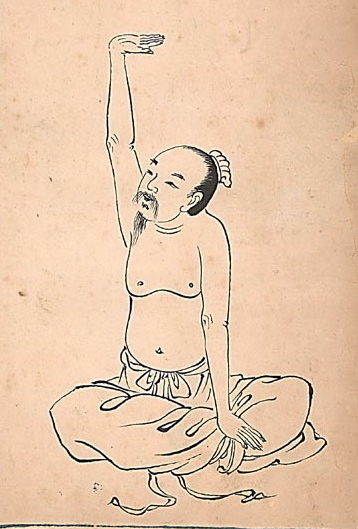
It is objective in that you remove the mind/body from the picture. Meditation is a reliable approach to reach that state. This is one reason why meditation should be part of the scientific method when it comes to revealing the true nature of consciousness.
The mind is the ONLY thing in "the picture".
Meditation is a practice where an individual uses a technique " such as mindfulness, or focusing their mind on a particular object, thought or activity " to train attention and awareness, and achieve a mentally clear and emotionally calm and stable state. https://en.wikipedia.org/wiki/Meditation#Criticisms
It's ALL to do with what's inside the head of the meditator.
The meditator may BELIEVE and even CLAIM they reach a different level of "reality", but in reality, they are only having thoughts inside their own heads that do nothing to determine if the possibly fictional Jesus character was sired by the Holy Ghost on the Blessed Virgin Mary and is therefore "God", for example.
And I really hope the scientific community does not opt for what their minds tell them during meditation We'll have them squabbling like folks do here over what their faith has told them "God" said.
But perhaps it's what you don't wear and how you hold your hand that makes the difference in objectively determining realities
"God" … just whatever humans imagine it to be.
"Scripture" … just whatever humans write it to be.
"Scripture" … just whatever humans write it to be.
-
Zzyzx
- Site Supporter
- Posts: 25141
- Joined: Sat Mar 10, 2007 10:38 pm
- Location: Bible Belt USA
- Has thanked: 55 times
- Been thanked: 93 times
Re: Which god is God?
Post #118.
Many would prefer to just pontificate about their personal beliefs and offer testimonials " on a debate site.
Imagine that, trying to trap someone into debate " on a debate site.Razorsedge wrote: You also keep trying to draw people of my belief into debates, but I won't fall for that trap.
Many would prefer to just pontificate about their personal beliefs and offer testimonials " on a debate site.
.
Non-Theist
ANY of the thousands of "gods" proposed, imagined, worshiped, loved, feared, and/or fought over by humans MAY exist -- awaiting verifiable evidence
Non-Theist
ANY of the thousands of "gods" proposed, imagined, worshiped, loved, feared, and/or fought over by humans MAY exist -- awaiting verifiable evidence
Re: Which god is God?
Post #119Debate = endless excuses to not accept someone's position.Zzyzx wrote: .Imagine that, trying to trap someone into debate " on a debate site.Razorsedge wrote: You also keep trying to draw people of my belief into debates, but I won't fall for that trap.
Many would prefer to just pontificate about their personal beliefs and offer testimonials " on a debate site.
On many occasions I've stated to not simply go by what I say but to experience it for yourself. Sometimes I do go into more details and reasons behind my belief but when I see the person starts rejecting even that (just as you and Sally have done) then I respectfully remind them that they should experience for themselves.
In my experience, I've found many have been convinced of my worldview by "experiencing" it as opposed to debating it. So the real question is why wouldn't you want to experience it for yourself if you're really seeking truth?
-
rikuoamero

- Under Probation
- Posts: 6707
- Joined: Tue Jul 28, 2015 2:06 pm
- Been thanked: 4 times
Re: Which god is God?
Post #120[Replying to post 117 by SallyF]
I'm a longtime practitioner of meditation. Not once has anything like Razorsedge says, ever happened.
I'm a longtime practitioner of meditation. Not once has anything like Razorsedge says, ever happened.

Your life is your own. Rise up and live it - Richard Rahl, Sword of Truth Book 6 "Faith of the Fallen"
I condemn all gods who dare demand my fealty, who won't look me in the face so's I know who it is I gotta fealty to. -- JoeyKnotHead
Some force seems to restrict me from buying into the apparent nonsense that others find so easy to buy into. Having no religious or supernatural beliefs of my own, I just call that force reason. -- Tired of the Nonsense

