
I feel like we've been beating around the bush for... 6000 years!
Can you please either provide some evidence for your supernatural beliefs, or admit that you have no evidence?
If you believe there once was a talking donkey (Numbers 22) could you please provide evidence?
If you believe there once was a zombie invasion in Jerusalem (Mat 27) could you please provide evidence?
If you believe in the flying horse (Islam) could you please provide evidence?
Walking on water, virgin births, radioactive spiders who give you superpowers, turning water into wine, turning iron into gold, demons, goblins, ghosts, hobbits, elves, angels, unicorns and Santa.
Can you PLEASE provide evidence?
Let's cut to the chase. Do you have any evidence?
Moderator: Moderators
-
no evidence no belief
- Banned

- Posts: 1507
- Joined: Sat Dec 29, 2012 10:18 pm
-
Danmark

- Site Supporter
- Posts: 12697
- Joined: Sun Sep 30, 2012 2:58 am
- Location: Seattle
- Been thanked: 1 time
Re: Let's cut to the chase. Do you have any evidence?
Post #2471I would be impressed if the literary quality of the Bible or Quran greatly exceeded the works of mere mortals like Shakespeare, Shelly, Keats, E E Cummings, William Blake and so forth.Sir Hamilton wrote: [Replying to post 1 by no evidence no belief]
What sort of evidence would you like? Would you like God to appear to you? talk to you? And even then how could you know for sure if it is God and not your imagination or an evil spirit deceiving you?
I'd be impressed if there was dramatically less crime in States and countries that have a more religious population. Instead there's more crime in religious localities.
I'd be impressed if the Bible was consistent with what science teaches us, instead of simply reflecting the scientific understanding of the time and place where it was written.
I'd be impressed if the gospel accounts were written in the language of the people who supposedly viewed the events, and those accounts were published contemporaneously with the events they purport to represent.
I'd be impressed if the miracles that believers were promised they could perform, were actually performed.
And yes, I'd be impressed if God actually communicated with us clearly and explained that 90% or so of those who claim to speak for Him are full of chowder and completely misrepresent God.
I am impressed when those who defend the faith do so with 'gentleness and respect.'
-
no evidence no belief
- Banned
- Posts: 1507
- Joined: Sat Dec 29, 2012 10:18 pm
Re: Let's cut to the chase. Do you have any evidence?
Post #2472I would be impressed if there were any non-ambiguous, non-vague, simple and straight forward prophecies in the Bible.Danmark wrote:I would be impressed if the literary quality of the Bible or Quran greatly exceeded the works of mere mortals like Shakespeare, Shelly, Keats, E E Cummings, William Blake and so forth.Sir Hamilton wrote: [Replying to post 1 by no evidence no belief]
What sort of evidence would you like? Would you like God to appear to you? talk to you? And even then how could you know for sure if it is God and not your imagination or an evil spirit deceiving you?
I'd be impressed if there was dramatically less crime in States and countries that have a more religious population. Instead there's more crime in religious localities.
I'd be impressed if the Bible was consistent with what science teaches us, instead of simply reflecting the scientific understanding of the time and place where it was written.
I'd be impressed if the gospel accounts were written in the language of the people who supposedly viewed the events, and those accounts were published contemporaneously with the events they purport to represent.
I'd be impressed if the miracles that believers were promised they could perform, were actually performed.
And yes, I'd be impressed if God actually communicated with us clearly and explained that 90% or so of those who claim to speak for Him are full of chowder and completely misrepresent God.
I am impressed when those who defend the faith do so with 'gentleness and respect.'
I would be impressed if the moral teachings of the Bible were significantly better than those of neighboring tribes, instead of freely endorsing rape, slavery, genocide, infanticide, the subjugation of women.
I would be impressed if the Bible contained some advanced scientific concept that the people at the time would have had no way of knowing about. For example "And thus it was spoken: That energy shall match the mass when multiplied by the speed of a thunderbolt multiplied onto itself" (E=MC2)
Does anybody know of any such thing in the Bible?
-
McCulloch

- Site Supporter
- Posts: 24063
- Joined: Mon May 02, 2005 9:10 pm
- Location: Toronto, ON, CA
- Been thanked: 3 times
Re: Let's cut to the chase. Do you have any evidence?
Post #2473The question is a bit moot. Since it is those with religious beliefs that are making the positive assertion, the onus is on them to provide convincing evidence. The more relevant question is "What evidence have you got?" Let us know what it is that convinced you and your colleagues, and we can thoroughly skeptically and rationally evaluate it.Sir Hamilton wrote: What sort of evidence would you like?
Good point. Even a personal appearance by the goddess Ixtab might not convince me of her existence, as you say, it might just be may be an undigested bit of beef, a blot of mustard, a crumb of cheese, a fragment of an underdone potato. So, I ask again, what have you got?Sir Hamilton wrote: Would you like God to appear to you? talk to you? And even then how could you know for sure if it is God and not your imagination or an evil spirit deceiving you?
Examine everything carefully; hold fast to that which is good.
First Epistle to the Church of the Thessalonians
The truth will make you free.
Gospel of John
First Epistle to the Church of the Thessalonians
The truth will make you free.
Gospel of John
-
no evidence no belief
- Banned
- Posts: 1507
- Joined: Sat Dec 29, 2012 10:18 pm
Re: Let's cut to the chase. Do you have any evidence?
Post #2474Not to mention that it would be helpful for them to clearly define what specific claim they believe they have evidence for.McCulloch wrote:The question is a bit moot. Since it is those with religious beliefs that are making the positive assertion, the onus is on them to provide convincing evidence.Sir Hamilton wrote: What sort of evidence would you like?
And a crucial preliminary question is "What is this evidence... evidence of? What are you trying to convince us of?"McCulloch wrote: The more relevant question is "What evidence have you got?"
-
dianaiad

- Site Supporter
- Posts: 10220
- Joined: Sun Oct 24, 2010 12:30 pm
- Location: Southern California
Re: Let's cut to the chase. Do you have any evidence?
Post #2475Well, you have just put your finger on why I don't claim to be able to prove that God exists, and don't try. If a personal appearance by God (or 'a' god) wouldn't convince you of his/her/its existence, then nothing would.McCulloch wrote:The question is a bit moot. Since it is those with religious beliefs that are making the positive assertion, the onus is on them to provide convincing evidence. The more relevant question is "What evidence have you got?" Let us know what it is that convinced you and your colleagues, and we can thoroughly skeptically and rationally evaluate it.Sir Hamilton wrote: What sort of evidence would you like?
Good point. Even a personal appearance by the goddess Ixtab might not convince me of her existence, as you say, it might just be may be an undigested bit of beef, a blot of mustard, a crumb of cheese, a fragment of an underdone potato. So, I ask again, what have you got?Sir Hamilton wrote: Would you like God to appear to you? talk to you? And even then how could you know for sure if it is God and not your imagination or an evil spirit deceiving you?
Scientifically minded people are still people, and people all tend to discard any evidence (of any description) that messes with their preconceptions. The only difference between me and all the other theists (and atheists) regarding this is that, well....I'm right.
(grin)
-
Danmark
- Site Supporter
- Posts: 12697
- Joined: Sun Sep 30, 2012 2:58 am
- Location: Seattle
- Been thanked: 1 time
Re: Let's cut to the chase. Do you have any evidence?
Post #2476There is no question that our eyes can play tricks on us, especially in the dark.dianaiad wrote:Well, you have just put your finger on why I don't claim to be able to prove that God exists, and don't try. If a personal appearance by God (or 'a' god) wouldn't convince you of his/her/its existence, then nothing would.McCulloch wrote:The question is a bit moot. Since it is those with religious beliefs that are making the positive assertion, the onus is on them to provide convincing evidence. The more relevant question is "What evidence have you got?" Let us know what it is that convinced you and your colleagues, and we can thoroughly skeptically and rationally evaluate it.Sir Hamilton wrote: What sort of evidence would you like?
Good point. Even a personal appearance by the goddess Ixtab might not convince me of her existence, as you say, it might just be may be an undigested bit of beef, a blot of mustard, a crumb of cheese, a fragment of an underdone potato. So, I ask again, what have you got?Sir Hamilton wrote: Would you like God to appear to you? talk to you? And even then how could you know for sure if it is God and not your imagination or an evil spirit deceiving you?
Scientifically minded people are still people, and people all tend to discard any evidence (of any description) that messes with their preconceptions. The only difference between me and all the other theists (and atheists) regarding this is that, well....I'm right.
(grin)
So a brief appearance of a 'god' should not be convincing since it may very well have a Dickensian genesis as Marley suggested. I think most people have had experiences where tricks of light combine with imagination to produce amazingly 'real' images. However, we can usually test those images, turn on the light or walk closer to the object and finally realize the 'ghost' is real, or an illusion.
I can certainly imagine a scenario where God came to me, perhaps 'in all his glory' and I would have no choice but to believe. This is particularly easy if we had a conversation and our meeting took place on successive days where I would have a chance to test and verify that I had not gone completely out of my mind.
-
Tired of the Nonsense

- Site Supporter
- Posts: 5680
- Joined: Fri Oct 30, 2009 6:01 pm
- Location: USA
- Been thanked: 1 time
Re: scientism
Post #2477[Replying to WinePusher]
I was only gone three days, but I seem to have been missing out on a great deal of drama around here. Thanks for being patient.
According to Muslim belief, the Holy Qu'ran was given to Mohammed by the angel Gabriel as a gift from God. As such, it is infallible; perfect in every way. The Qu'ran states categorically that Jesus was never crucified. Christian faith on the other hand stands or falls on the "truth" of the crucifixion and resurrection of Jesus from the dead. If the Holy Qu'ran is simply wrong on this point, then the whole basis for the beliefs of Islam are without foundation. On the other hand, if Jesus was never crucified and raised from the dead, then the whole basis for Christianity is without foundation. Since both conditions can not be valid and true, one of them AT THE VERY LEAST must be invalid and therefore untrue rendering a belief held to the utmost state of devotion by billions to be simply wrong and therefore meaningless. Not everything IS true you see, and abject unwavering faith is absolutely no protection whatsoever from simply being DEAD WRONG!One way or another ONE of these beliefs, AT BEST, held to be the highest standard of undeniable true by those who believe it faithfully, is in actual reality NOTHING BUT MAKE BELIEVE!
Non existence is a "defect?" Again, how utterly arrogant. Do you even notice the way you turn your assumptions into indisputable fact and then attempt to build on them? Non existence represents the utter lack of all possible conflict as well as all possible philosophical conclusions concerning sin and morality. Non existence represents a state where no defects are possible. Only existence provides the possibility of defects.
In the modern information age, it is a concept which is currently being swept to all parts of the globe. The determination of believers to hold onto their faiths blindly can no longer be extended to subsequent generations. I predict that one of the hallmarks of the 21st century, as examined by those in future centuries, will be the wholesale demise of
superstition and religion that will have occurred by the beginning of the 22nd century. And those individuals will look back on superstition and religion with bemused embarrassment.
I was only gone three days, but I seem to have been missing out on a great deal of drama around here. Thanks for being patient.
I have already acknowledged that humans, being fallible, are not given to "know" things to an absolute degree of certainty. Such an ability would itself be supernatural in it's nature. Therefore it is often said that "anything COULD be true." And yet we can immediately see that conditions or circumstances which are in total contradiction to each other, simply cannot both exist logically. So while it may be true that we poor fallible humans are not given to know things to an absolute state of certainty, we certainly CAN know things to such a high degree of probability as to approach perfect logical certainty. Because if anything may be said to be certain, it's that not everything IS true.Winepusher wrote: Finally someone manages to make a good argument about this issue. You said that the laws of physics are considered immutable. Yes, no one would disagree. As an academic discipline the laws of science are assumed to be uniform and immutable. But, this is not an ironclad fact.
According to Muslim belief, the Holy Qu'ran was given to Mohammed by the angel Gabriel as a gift from God. As such, it is infallible; perfect in every way. The Qu'ran states categorically that Jesus was never crucified. Christian faith on the other hand stands or falls on the "truth" of the crucifixion and resurrection of Jesus from the dead. If the Holy Qu'ran is simply wrong on this point, then the whole basis for the beliefs of Islam are without foundation. On the other hand, if Jesus was never crucified and raised from the dead, then the whole basis for Christianity is without foundation. Since both conditions can not be valid and true, one of them AT THE VERY LEAST must be invalid and therefore untrue rendering a belief held to the utmost state of devotion by billions to be simply wrong and therefore meaningless. Not everything IS true you see, and abject unwavering faith is absolutely no protection whatsoever from simply being DEAD WRONG!One way or another ONE of these beliefs, AT BEST, held to be the highest standard of undeniable true by those who believe it faithfully, is in actual reality NOTHING BUT MAKE BELIEVE!
Here is where you are confusing fact and probability with make believe. The laws of physics are rigid and immutable according to all observation and experimentation. The fact that our technology works predictably according to it's design is as much proof positive of the truth of this fact as we poor humans are ever likely going to achieve. The theoretical possibility that the laws of physics COULD be overcome under certain circumstances is nothing like your claim that "there is a real possibility that suspensions of the natural order can occur." While such "suspensions" must remain theoretically possible, given the inherent nature of our own fallibility, there currently is no indication that such "suspensions of the natural order" ever have, or ever will occur. Such possible "suspensions" can only be imagined. And that IS the realm of make believe.Winepusher wrote: This is instead an axiomatic assumption science makes in order to operate. This is not a scientifically proven fact, it is instead an axiomatic assumption meaning that there is a real possibility that suspensions of the natural order can occur. There is no scientific law that disproves miracles.
No, they are talking about a condition which they are perfectly capable of imagining to be true, but which is contradicted by all practical observation, and which can never actually be shown to have undeniably occurred. And which, therefore, corresponds in every real way to make believe.Winepusher wrote: You also have to keep in mind that whenever a Christian talks about miracles, they are not talking about the natural order suspending itself.
A claim which violates all common observation and experience, and for which no ACTUAL physical is provided, is simply an empty claim. Empty claims are an all too common occurrence among humans, as are stories of the violations of natural law. Actual violations of natural law are not common in any sense.Winepusher wrote: The claim behind the resurrection is not that Jesus body magically rose from by his own volition. The claim is that God the father intervened in the natural world and caused Jesus' body to rise. This is part of the background knowledge I was referring to. If you could prove that there were no supernatural 'dimension,' in other words if you would prove that basic principle behind naturalism, then miracles would be impossible. But, when you take into consideration that fact that God exists then the probability of any miracle increases drastically.
Let's postulate, simply as an intellectual exercise, the existence of a universe that exists without the necessity of intelligent design but which contains within it the all the conditions necessary for the existence of sentient life. More specifically, human life. What would you expect the parameters of such a universe to be like? And the answer of course must be, A UNIVERSE JUST LIKE THIS UNIVERSE! If the parameters for our sort of existence were not extent, then we would not exist. If we did not exist, then there would be no one to raise these questions, and, among other things, this discussion would not be occurring. But since you and I can both agree that it IS occurring, to a high degree of probability at least, then we really do exist, along with the universe at large which MUST NECESSARILY exist, and to do so within the necessary parameters. Because we really do exist. An infinite number of alternate universes might well exist, and in NONE of them would we be possible. THIS universe extends within it the possibility of sentient human life however. And not coincidentally WE EXIST IN THIS UNIVERSE. Another way of looking at this is to recognize that things have to be SOME WAY, and in this particular universe they happen to be this way. You are postulating that the entire universe was created for the specific purpose of allowing for us to exist. It's hard to imagine a more hopelessly arrogant conclusion. I'm simply pointing out that the parameters of what is possible in this universe unmistakably allow for the possibility of our sort of existence. And because the universe is unimaginably vast in terms of both time and have simply postulated an extra step you see, and then declared it to be true. I on the other hand am working within the limits of what we can observe to be true. No make believe required.Winepusher wrote: Teleological arguments prove God's existence based on the design and precise structure of the universe. The universe is structured in an improbable and an unlikely way. The physical laws that govern the universe are fine tuned to an extremely unlikely numerical value, and had these laws been set at any other parameter life could not exist. Statistically speaking, chance/coincidence is not an appropriate explanation, therefore a fine tuner/intelligent designer designed the universe.
God is IMAGINED as a maximally great being, meaning that God can have no defects. He is also imagined to be invisible, unknowable, to exist in a realm which is invisible to us, to have complete powers of omnipotence, omniscience and omnipresence, and then to have been disappointed by the inability of His creations to follow His rules. A God who fails to achieve His intention can hardly be said to be without defects.Winepusher wrote: Ontological arguments prove God's existence based on the definition of God. God is defined as a maximally great being, meaning that God can have no defects. Nonexistence is a defect, therefore God must exist. First of all, this argument pretty much destroys the ignostic position. Yes, I realize ignostics are willingly ignorant of all the philosophical scholarship surrounding God, but the fact is that the concept of God is pretty well defined. Therefore, the ignostics usergroup should be abolished.
Non existence is a "defect?" Again, how utterly arrogant. Do you even notice the way you turn your assumptions into indisputable fact and then attempt to build on them? Non existence represents the utter lack of all possible conflict as well as all possible philosophical conclusions concerning sin and morality. Non existence represents a state where no defects are possible. Only existence provides the possibility of defects.
Really? Provide a non imaginary example of any effect which is NOT the result of an even earlier cause. To state that "it is impossible for the chain of causes to regress backwards infinitely," is to speak straight out of your own backside unless you can provide an example, even one, in which this is not the case. Make believe does not count as an example.Winepusher wrote: Cosmological arguments prove God's existence based on the fact that the universe began to exist. Meaning, at one point in the distant past, the universe did not exist at all. The universe is itself contingent. Mathematically speaking, it is impossible for the chain of causes to regress backwards infinitely. Therefore, a non contingent first cause must exist. This cause supernatural, in the sense that it must be spaceless and timeless since space and time are bound by the universe.
Objective moral truths DO NOT EXIST! What exists is common opinion, which within an organized society translates into force of law. As an example, for most of human history slavery was considered both moral and justifiable, according to the common moral opinion within the society. That common opinion within the society has now been reversed 180 degrees. But the truth is, slavery is simply an event. It either occurs or it does not. The right or wrong of it is determined by popular opinion within the society, and is then sustained or prevented by force of law. I happen to be of the opinion slavery is an affront to all human dignity, and within my own time I represent the majority moral opinion. For most of human history and in most societies, I would have been in the minority holding such an opinion. Because morality is itself an opinion. To the universe at large, events are simply events.Winepusher wrote: Moral arguments prove God's existence based on the existence of objective morality. By objective morality I mean a moral statement or declaration. Something like 'killing is an innocent person for fun is wrong.' This is a moral declaration that is objectively true, regardless of any individuals personal opinion. Since an objective moral law exists, there must be a moral law giver. Another version of the moral argument would be the fact that the world would be morally absurd and irrational absent a moral law giver.
We have a difference of opinion, yes. However, until you can provide an undeniable example of a miracle that is definitive and can be established unequivocally to have been the result of supernatural intervention, as opposed to pure coincidence or simply a lack of factual information to examine, even one, then I retain the high ground of observable fact and knowledge, while you continue to retain the low ground of superstition, folklore, baseless assumption and make believe.Winepusher wrote: That is the point of these debates, both on these forums and in the philosophical/apologetic community at large. To determine whether these miracle claims are real or fake. I think they are real and you apparently think they aren't. We are at an impasse. And please, don't use the old 'I'm smarter and I'm not as gulliable as you cause I don't believe in miracles' line. The majority of the human population has been and currently is religious. The majority of great thinkers, philosophers and scientists throughout history have been Christian and have professed belief in God.
I never once contended to be smarter than you. A state of gullibility however inevitably proves to be it's own best evidence.Winepusher wrote: And please, don't use the old 'I'm smarter and I'm not as gulliable as you cause I don't believe in miracles' line.
Non belief is currently the fastest rising position world wide. It certainly is true among the most technological and best educated counties. World wide non belief is currently estimated to be roughly 20% of the population. Prior to the 20th century, non belief would scarcely have registered as a viable position. Non belief is an idea whose time has arrived.Winepusher wrote: The majority of the human population has been and currently is religious.
In the modern information age, it is a concept which is currently being swept to all parts of the globe. The determination of believers to hold onto their faiths blindly can no longer be extended to subsequent generations. I predict that one of the hallmarks of the 21st century, as examined by those in future centuries, will be the wholesale demise of
superstition and religion that will have occurred by the beginning of the 22nd century. And those individuals will look back on superstition and religion with bemused embarrassment.
I am and have in no way implied that I am smarter than you. My overview is certainly a good deal broader than yours, however. Statements such as this do serve to illustrate your narrow thought process and your incredible arrogance. And, oh by the way, this sort of statement is not only embarrassingly provincial in nature, it is also patiently untrue. You have simply saturated yourself in the one point of view that you were indoctrinated into, without ever making an effort to delve into the competing philosophies, which are certainly quite well layered and well thought out in their own right. Hinduism is four thousand years old for Pete's sake. Do you really think that in all that time the Hindu's haven't worked out all the finer philosophical points in great and convoluted detail? Within the Hindu system of thought everything makes perfect sense. Is it truth, or is it pure make believe? Is four thousand years worth of pure make even believe possible?Winepusher wrote: The majority of great thinkers, philosophers and scientists throughout history have been Christian and have professed belief in God.
First of all, no Roman guards at the tomb are anywhere mentioned in scripture. Second, the guards who were mentioned were placed at the entrance of a closed tomb. A tomb which proved to be empty the following day. The disciples had no need to steal the body from a guarded tomb. They already had the body of Jesus. It had been given to them the previous day by the Roman governor, and they had every legal right to do with as they saw fit.Winepusher wrote: You are conflating the two issues that I had previously tried to seperate. Yes, as a purely scientific occurence we would have to assume that the disciples moved the body. But, as a historical explanation it causes more problems because, again, the disciples died for their beliefs on a massive scale. In addition, there would have been Roman guards at the tomb to prevent the disciples from stealing the body. The only explanation for successfully explains these historical anomalies (the empty tomb, the genuine belief of the disciples to have physically experienced the risen Christ, and the quick and widespread expansion of Christianity throughout Palestine and the Roman Empire) is the resurrection hypothesis. In terms of history, the resurrection is the most plausible explanation. But, in terms of biology, medicine and physics the resurrection is the weakest explanation. We seem to disagree on the former but agree on the latter.
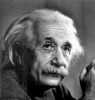 "The word God is for me nothing more than the expression and product of human weaknesses, the Bible a collection of honorable, but still primitive legends which are nevertheless pretty childish. No interpretation no matter how subtle can (for me) change this." -- Albert Einstein -- Written in 1954 to Jewish philosopher Erik Gutkind.
-
no evidence no belief
- Banned
- Posts: 1507
- Joined: Sat Dec 29, 2012 10:18 pm
Re: Let's cut to the chase. Do you have any evidence?
Post #2478I wouldn't expect you to prove the existence of God, but I would certainly be interested in any evidence you might have.dianaiad wrote:Well, you have just put your finger on why I don't claim to be able to prove that God exists, and don't try.McCulloch wrote:The question is a bit moot. Since it is those with religious beliefs that are making the positive assertion, the onus is on them to provide convincing evidence. The more relevant question is "What evidence have you got?" Let us know what it is that convinced you and your colleagues, and we can thoroughly skeptically and rationally evaluate it.Sir Hamilton wrote: What sort of evidence would you like?
Good point. Even a personal appearance by the goddess Ixtab might not convince me of her existence, as you say, it might just be may be an undigested bit of beef, a blot of mustard, a crumb of cheese, a fragment of an underdone potato. So, I ask again, what have you got?Sir Hamilton wrote: Would you like God to appear to you? talk to you? And even then how could you know for sure if it is God and not your imagination or an evil spirit deceiving you?
That is a demonstrably false statement. I disbelieve in the existence of multiple entities that have personally appeared in front of me, and believe in the existence of multiple that have never personally appeared in front of me.dianaiad wrote:If a personal appearance by God (or 'a' god) wouldn't convince you of his/her/its existence, then nothing would.
For example, once Santa personally appeared to me in a crowded mall in front of hundreds of witnesses. I still don't believe Santa exists.
On a different occasion, I was walking through Times Square and I witnessed the personal appearance of Batman and Spiderman at the same time. I even took a photo of it. I still don't believe in Batman, and am pretty sure Spiderman doesn't exist either.

Once, while I was holding a phone to my head subsequent to the phone ringing, I distinctly heard the voice of a Nigerian Prince who offered $50 million to me. It turns out he was just a scammer.
On a different occasion, I saw Jim Morrison in my cereal bowl. But probably that had to do with being a little... tipsy.
It is not sign of excessive skepticism if you consider that maybe what you just saw is not necessarily what you think you just saw.
On the contrary, I've never had a personal apparition from Obama, George Bush, Julius Caesar or Jesus of Nazareth, but I believe these people exist/existed.
So, I have just demonstrated without any room for doubt whatsoever that your statement is wrong. I disbelieve in many entities that I have seen, and believe in many that I have not seen.
Now the following part is just my speculation, so please disregard it if inaccurate: I feel that when you say "If seeing something with your own eyes will not persuade you, then nothing will", what you're saying is "If you are so stubborn and overly skeptical and biased that even seeing something with your own two eyes - which is the ultimate way of determining the truth and is never wrong - then you are without hope and nothing will convince you". If this is your position, then it's not a very thoughtful one. There are many better ways of discerning the truth than visual contact, and therefore both belief in the absence of visual contact and disbelief in the presence of visual contact are perfectly reasonable.
I'm absolutely convinced that you are right that everybody has the tendency to discard evidence that conflicts with their presuppositions. But I would express the opinion that this tendency is much more strongly manifest in the religious than the non-religious, and much less present in the scientific-minded than the anti-scientific-minded.dianaiad wrote:Scientifically minded people are still people, and people all tend to discard any evidence (of any description) that messes with their preconceptions.
It's much easier to persuade a scientist with an evidence based argument than it is to persuade a religious fundamentalist with an evidence based argument.
The only difference between me and theists is that, well.... I'm demonstrably right.dianaiad wrote:The only difference between me and all the other theists (and atheists) regarding this is that, well....I'm right.
Medicine works, prayer doesn't. Demonstrable.
People talk, donkeys don't. Demonstrable.
Birds fly, people don't (talking about ascension, not airplanes). Demonstrable.
The earth is round, not flat. Demonstrable.
Solid water can support a walking person. Liquid water cannot. Demonstrable.
Re: Let's cut to the chase. Do you have any evidence?
Post #2479[quote="[url=http://debatingchristianity.com/forum/v ... 027#541027]
If you believe there once was a talking donkey (Numbers 22) could you please provide evidence?
[/quote]
Don't know about the one in numbers but I could point to a few that are around today.
If you believe there once was a talking donkey (Numbers 22) could you please provide evidence?
[/quote]
Don't know about the one in numbers but I could point to a few that are around today.
-
Danmark
- Site Supporter
- Posts: 12697
- Joined: Sun Sep 30, 2012 2:58 am
- Location: Seattle
- Been thanked: 1 time
Re: scientism
Post #2480What is the basis for the statement:Tired of the Nonsense wrote: [Replying to WinePusher
God is IMAGINED as a maximally great being, meaning that God can have no defects. He is also imagined to be invisible, unknowable, to exist in a realm which is invisible to us, to have complete powers of omnipotence, omniscience and omnipresence, and then to have been disappointed by the inability of His creations to follow His rules. A God who fails to achieve His intention can hardly be said to be without defects.Winepusher wrote: Ontological arguments prove God's existence based on the definition of God. God is defined as a maximally great being, meaning that God can have no defects. Nonexistence is a defect, therefore God must exist. First of all, this argument pretty much destroys the ignostic position. Yes, I realize ignostics are willingly ignorant of all the philosophical scholarship surrounding God, but the fact is that the concept of God is pretty well defined. Therefore, the ignostics usergroup should be abolished.
Non existence is a "defect?" Again, how utterly arrogant. Do you even notice the way you turn your assumptions into indisputable fact and then attempt to build on them? Non existence represents the utter lack of all possible conflict as well as all possible philosophical conclusions concerning sin and morality. Non existence represents a state where no defects are possible. Only existence provides the possibility of defects.
"I realize ignostics are willingly ignorant of all the philosophical scholarship surrounding God...."
Philosophers and students of varied persuasions understand the long history of the argument and philosophical refutations presented.
The core of the ontological argument is just as you have phrased it, God is defined as a maximally great being, meaning that God can have no defects. Nonexistence is a defect, therefore God must exist.
Reduced to its simplest, this amounts to saying that because I can imagine such an entity, the entity must exist. On its face, and stripped of pages of philosophical meandering, the argument is absurd. One cannot will into existence beings a priori. The perfect thing does not exist just because I can, in the abstract, imagine such a thing. Or as others have put it, somewhat differently, only God as the ability to imagine such a perfect being.
Hume put it thusly:
I shall begin with observing, that there is an evident absurdity in pretending to demonstrate a matter of fact, or to prove it by any arguments a priori. Nothing is demonstrable, unless the contrary implies a contradiction. Nothing, that is distinctly conceivable, implies a contradiction. Whatever we conceive as existent, we can also conceive as non-existent. There is no being, therefore, whose non-existence implies a contradiction. Consequently there is no being, whose existence is demonstrable. I propose this argument as entirely decisive, and am willing to rest the whole controversy upon it.
http://en.wikisource.org/wiki/Dialogues ... ion/Part_9

