

Dawkins' The God Delusion

Argue for and against Christianity

Moderator: Moderators

Post Reply
User avatar
Jagella
Banned
Banned
Posts: 3667
Joined: Wed Jan 04, 2006 12:01 am
Been thanked: 2 times
Contact:

Dawkins' The God Delusion

Post #1

Post by Jagella »

I just got done reading for the second time Richard Dawkin's book, The God Delusion. If you're not familiar with this work, then allow me to explain that it spearheaded the "new atheism." The title of The God Delusion, according to Wikipedia, was inspired by Robert Pirsig saying in his Lila: "...when one person suffers from a delusion it is called insanity. When many people suffer from a delusion it is called religion."

The God Delusion has had a significant impact on culture. According to Wikipedia:
In early December 2006, it reached number four in the New York Times Hardcover Non-Fiction Best Seller list after nine weeks on the list. More than three million copies were sold. According to Dawkins in a 2016 interview with Matt Dillahunty, an unauthorised Arabic translation of this book has been downloaded 3 million times in Saudi Arabia.The book has attracted widespread commentary, with many books written in response.
So this response to The God Delusion is what I would like to discuss. Needless to say, any book calling God a delusion that sells millions of copies is a big threat to Christianity. Apologists have gone on the defensive attacking Dawkins himself as well as his book. They've written books with titles like "The Dawkins Delusion" to assure the faithful that they need not be shaken by people like Dawkins; Dawkins is wrong and Christianity is right.

One criticism in particular that has been leveled at Dawkins is that he just doesn't understand Christianity. He doesn't get the arguments for God by great theologians like Anselm and Aquinas. Since Dawkins doesn't have the credentials to critique these amazing arguments for the existence of God, his The God Delusion need not be taken seriously.

Unfortunately for apologists, Dawkins has a clever rejoinder for these claims against him. He states: "Do you have to read up on leprechology before disbelieving in leprechauns?" I agree with Dawkins here. Apologists flatter themselves claiming that one needs to be an expert in "God-ology" to see the strengths and potential weaknesses in their arguments for the Bible god. In reality, simple common sense is most often quite adequate to see that the arguments for theism are baloney.

But enough for now about my opinion on The God Delusion...

Question for Debate: What impact if any has The God Delusion had on your opinions on the existence of the gods?

Guy Threepwood
Sage
Posts: 502
Joined: Wed Sep 28, 2016 6:00 pm

Re: Dawkins' The God Delusion

Post #61

Post by Guy Threepwood »

[Replying to post 60 by Jagella]
Well, maybe you should tell me how improbable an event needs to be to assume chance cannot explain that event.


I believe the odds of 4 royal flushes in a row are similar or less than 1 in all the stars in the observable universe- i.e. in many billions of trillions.. somewhere in the region 1 in 10^23- feel free to do the math. But as in many probability cases, it's probably far less likely than one would intuitively imagine.

It's a little like the grains of wheat on the chess board- each improbability compounds the rest into astronomical figures very quickly- way beyond what a 'rough guess' would usually come to

so if you worked in the fraud dept in the Casino- you tell your boss -hey it might be luck!!??

Of course not- you know he's cheating beyond any reasonable doubt. Because even if your security system makes the odds of cheating 1 in a trillion, cheating is still a far less improbable explanation than chance


The odds of 'HELP' of course are more difficult to calculate- but similarly, if you work for the coast guard and fly over this on a supposedly deserted island- do you tell your co-pilot 'why not put that down to luck- it's possible!'?

possible does not equal most likely

The tolerances for the correct rate of universal expansion to avoid collapse or tearing apart, alone are something like 1 part in 10^16. Compound this with just the odds of randomly assembling a simple protein into a functional order of amino acids- before you can even begin any Darwinian process... and now you're getting into hyper-exponential values very quickly- numbers so large they have to be described in powers of powers of powers.

I agree that in Darwin's time, in the Victorian age classical model of reality- you could still look at apparently simple blobs of protoplasm in a microscope, vague smudges in the sky through a telescope- and posit a handful of 'simple immutable laws' out of which everything might develop- but that's simply no longer the case

In fact this is the very rationale of all the multiverse/many world theories- that you would need a practically or literally infinite number of random tries to get a basic functional space/time matter/energy universe, far less life that contemplates it's own meaning!!

So just like the other examples, of course chance is possible, you just have to rule out ID to a practically impossible extent to make it a less improbable explanation- and we simply have no basis to do that. We don't know of any security system trying to prevent creative minds manufacturing universes!

Guy Threepwood
Sage
Posts: 502
Joined: Wed Sep 28, 2016 6:00 pm

Re: Dawkins' The God Delusion

Post #62

Post by Guy Threepwood »

[Replying to post 60 by Jagella]
To sum up this post, I see that the fallacy in much of your reasoning is that you don\'t consider natural selection but misrepresent evolution as happening as a result of chance only. If chance cannot presumably explain something, then try natural selection. You\'ll be amazed at how well natural explanation explains the diversity of life and even nonliving things. No gods required!
natural selection can only select from what has already been created.

It can create exactly nothing


superior designs naturally outperform, outlast and are hence replicated in greater numbers- of course, that's why we have more Ford Mustangs on the road than Ford Pintos-

nobody is debating the power of natural selection, the only question is, and always has been; how the selections themselves are actually created.

Darwinian evolution puts this core problem down to 100% pure blind luck, random copying errors.. that's not going to get the job done.

User avatar
Jagella
Banned
Banned
Posts: 3667
Joined: Wed Jan 04, 2006 12:01 am
Been thanked: 2 times
Contact:

Re: Dawkins' The God Delusion

Post #63

Post by Jagella »

Guy Threepwood wrote: [Replying to post 60 by Jagella]
Well, maybe you should tell me how improbable an event needs to be to assume chance cannot explain that event.
I believe the odds of 4 royal flushes in a row are similar or less than 1 in all the stars in the observable universe- i.e. in many billions of trillions.. somewhere in the region 1 in 10^23- feel free to do the math. But as in many probability cases, it's probably far less likely than one would intuitively imagine.
Well, those are some amazing numbers, but they don't answer my question. How improbable does an event need to be to assume chance cannot explain that event? If you're going to argue that very improbable events cannot happen, then tell us what is the "cut off" probability beyond which intelligent intention is required. Why can nothing be more improbable than that?

While you get ready to post that number and why nothing can be more improbable, allow me to post some of my own probability calculations. Let's say that on average, the chances of any particular human sperm cell fertilizing the egg is one in one thousand. (The probability is probably much lower than that, but I'm being kind to you.) So what is the probability that Guy is here after only ten generations? The computation is...

(1/1000)^10 = 10^-30

So after a mere ten generations, your probability of sitting here posting ID apologetics is far, far less than getting those four consecutive royal flushes. Yet here you are, Guy!

The moral of the story is that ID apologists mislead people by coming up with very low probabilities for various natural phenomena making it appear that the Bible god is needed to do it. But the truth is that very improbable events happen all the time. The low probabilities simply reflect the enormous numbers of ways things can happen in nature.

And by the way, the only probability that bars an event occurring is ZERO. Any event of probability greater than zero can happen.
so if you worked in the fraud dept in the Casino- you tell your boss -hey it might be luck!!??

Of course not- you know he's cheating beyond any reasonable doubt. Because even if your security system makes the odds of cheating 1 in a trillion, cheating is still a far less improbable explanation than chance
As I see it, any sensible casino boss would never conclude a gamer is cheating based merely on the gamer getting hands of cards that seem too lucky to be true. He should look for direct evidence that the gamer is cheating. Gamers are allowed to be lucky, after all.

So to summarize this post, I'd say that your ID inspired views are wrong-headed because those views distort the application of probability to natural events. We live in a world that doesn't care how much we find some events to be improbable--they strill happen.

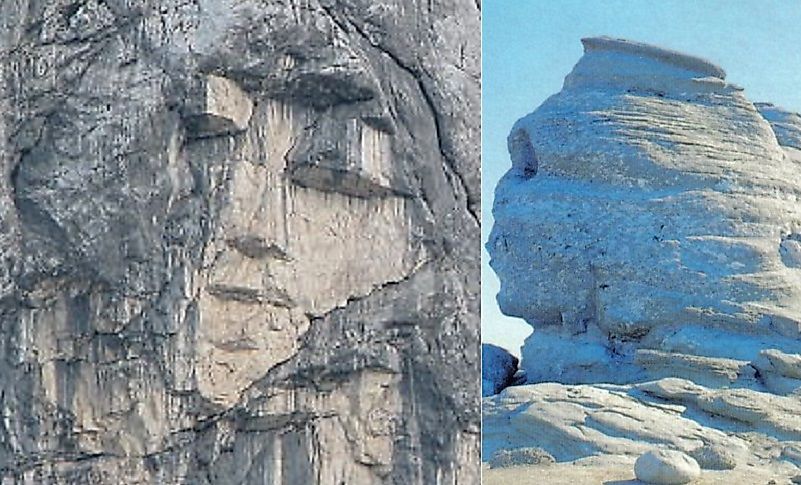
Like this one happened:

Image

User avatar
William
Savant
Posts: 16491
Joined: Tue Jul 31, 2012 8:11 pm
Location: Te Waipounamu
Has thanked: 1038 times
Been thanked: 1951 times
Contact:

Re: Dawkins' The God Delusion

Post #64

Post by William »

[Replying to post 63 by Jagella]
So to summarize this post, I'd say that your ID inspired views are wrong-headed because those views distort the application of probability to natural events. We live in a world that doesn't care how much we find some events to be improbable--they strill happen.

Like this one happened:

Image
While certainly the idea of individual rocks being conscious is hard to seriously contemplate, it is far, far easier to think of the planet Earth herself as being so, giving reason as to why elaborate biological forms evolved as they have (science gives us a theory as to how) and in that, the complexity is stunning and bespeaks of an extremely intelligent and complex mind behind the creativity, should that indeed be the case.

Far more complex than a wind shaped rock formation. These themselves may simply act as subtle hints of a mind behind the mystery.

I think that is the essence of the difference in individuals who lean toward theological explanations and those who don't. Atheists appear to have little to no interest in the 'Why' question, preferring to simply accept the 'how' answers which science provides.

Perhaps moral systems extract easiest from 'why' answers than they do from 'how' answers, because of the obvious additions to thought processes that the 'why' question invites?

User avatar
Jagella
Banned
Banned
Posts: 3667
Joined: Wed Jan 04, 2006 12:01 am
Been thanked: 2 times
Contact:

Re: Dawkins' The God Delusion

Post #65

Post by Jagella »

William wrote:While certainly the idea of individual rocks being conscious is hard to seriously contemplate, it is far, far easier to think of the planet Earth herself as being so, giving reason as to why elaborate biological forms evolved as they have (science gives us a theory as to how) and in that, the complexity is stunning and bespeaks of an extremely intelligent and complex mind behind the creativity, should that indeed be the case.
Then what explains that complex mind? If the earth needs a complex mind to explain its complexity, then the complex mind would need to be explained via a complex mind to create it, and so on forever.

So you've committed the common apologetics' mistake of arguing to an infinite regress of creators.

Besides, you haven't demonstrated that a complex earth or cosmos needs a mind to create it. Why can't the universe be complex on its own?
Far more complex than a wind shaped rock formation. These themselves may simply act as subtle hints of a mind behind the mystery.
I didn't post the face-like rock formation as an example of complexity. I posted it because it resembles a face--or at least it looks that way to us humans. We people have a habit of seeing things where there are none our minds seeking patterns that resemble other things. This habit might explain our beliefs in gods seeing them where there are none.
I think that is the essence of the difference in individuals who lean toward theological explanations and those who don't. Atheists appear to have little to no interest in the 'Why' question, preferring to simply accept the 'how' answers which science provides.
I don't know why you would say that. LOL Dawkins discusses this very issue in The God Delusion. Atheists can ask why as much as theists do.
Perhaps moral systems extract easiest from 'why' answers than they do from 'how' answers, because of the obvious additions to thought processes that the 'why' question invites?
Whatever that might mean. :confused2:

In summary, I should reiterate that theists may well be seeing things that aren't really there. If they have that habit, then it should come as no surprise that they believe in gods that aren't there.

User avatar
Mithrae
Prodigy
Posts: 4326
Joined: Mon Apr 05, 2010 7:33 am
Location: Australia
Has thanked: 112 times
Been thanked: 195 times

Re: Dawkins' The God Delusion

Post #66

Post by Mithrae »

Jagella wrote:
William wrote:While certainly the idea of individual rocks being conscious is hard to seriously contemplate, it is far, far easier to think of the planet Earth herself as being so, giving reason as to why elaborate biological forms evolved as they have (science gives us a theory as to how) and in that, the complexity is stunning and bespeaks of an extremely intelligent and complex mind behind the creativity, should that indeed be the case.
Then what explains that complex mind? If the earth needs a complex mind to explain its complexity, then the complex mind would need to be explained via a complex mind to create it, and so on forever.

So you've committed the common apologetics' mistake of arguing to an infinite regress of creators.

Besides, you haven't demonstrated that a complex earth or cosmos needs a mind to create it. Why can't the universe be complex on its own?.
As discussed all the way back in post #15, while it's necessary at some point to posit something which 'just is,' a fundamental brute fact, it is more parsimonious and thus preferrable to minimize such assumptions -to admit a single or simple brute fact rather than numerous or complex ones. And, as Richard Dawkins himself argues, alongside biological evolution thought is the only mechanism we know of whereby iteratively-increasing complexity allows explanation of highly complex systems from simpler origins. So given a highly-complex and finely-tuned universe which obviously cannot be explained by reference to evolutionary processes, it is reasonable to turn to thought as a powerful explanatory hypothesis; the iteratively-increasing complexity of a universal Mind/s, rather than the eternally-perfect and therefore eternally-complex God of Christianity).

User avatar
rikuoamero
Under Probation
Posts: 6707
Joined: Tue Jul 28, 2015 2:06 pm
Been thanked: 4 times

Re: Dawkins' The God Delusion

Post #67

Post by rikuoamero »

[Replying to post 66 by Mithrae]

Please explain what you mean by "finely tuned universe". I do not consider our universe to be finely tuned, at least not if one is thinking finely tuned for human life.
Image

Your life is your own. Rise up and live it - Richard Rahl, Sword of Truth Book 6 "Faith of the Fallen"

I condemn all gods who dare demand my fealty, who won't look me in the face so's I know who it is I gotta fealty to. -- JoeyKnotHead

Some force seems to restrict me from buying into the apparent nonsense that others find so easy to buy into. Having no religious or supernatural beliefs of my own, I just call that force reason. -- Tired of the Nonsense

User avatar
Jagella
Banned
Banned
Posts: 3667
Joined: Wed Jan 04, 2006 12:01 am
Been thanked: 2 times
Contact:

Re: Dawkins' The God Delusion

Post #68

Post by Jagella »

rikuoamero wrote:Please explain what you mean by "finely tuned universe". I do not consider our universe to be finely tuned, at least not if one is thinking finely tuned for human life.
What apologists mean by "fine tuning" is that the universe is made to allow for the existence of life. This argument violates Christian theology by limiting God resulting in a conflict in Christian beliefs. It's also illogical in that the universe could conceivably be much better "tuned" than it is.

User avatar
Mithrae
Prodigy
Posts: 4326
Joined: Mon Apr 05, 2010 7:33 am
Location: Australia
Has thanked: 112 times
Been thanked: 195 times

Re: Dawkins' The God Delusion

Post #69

Post by Mithrae »

rikuoamero wrote: [Replying to post 66 by Mithrae]

Please explain what you mean by "finely tuned universe". I do not consider our universe to be finely tuned, at least not if one is thinking finely tuned for human life.
https://en.m.wikipedia.org/wiki/Fine-tuned_Universe

It seems that there are a number of variables/fundamental constants for which only a very narrow range of values would permit - a long-lasting universe, stable matter, formation of stars and second-generation stars, formation of heavier elements - all necessary preconditions for the existence of biological life.

Again I'm basically just going with Dawkins on that one; if memory serves he's pretty clear that one of the main reasons for his advocacy of the many-worlds theory is to 'explain' those otherwise-remarkable characteristics of our universe as merely happening to be the kind of universe (out of the many) which thinking/observing beings would necessarily find themselves in.

User avatar
William
Savant
Posts: 16491
Joined: Tue Jul 31, 2012 8:11 pm
Location: Te Waipounamu
Has thanked: 1038 times
Been thanked: 1951 times
Contact:

Re: Dawkins' The God Delusion

Post #70

Post by William »

[Replying to post 65 by Jagella]
Then what explains that complex mind? If the earth needs a complex mind to explain its complexity, then the complex mind would need to be explained via a complex mind to create it, and so on forever.

So you've committed the common apologetics' mistake of arguing to an infinite regress of creators.
What negates the 'turtles all the way down argument is that the Source Creator has always existed.

One can read more about that argument in my Members Notes, here;

On the theory of the universe having always existed and will always exist. Image

and;

Timelessness vs infinite regress argument Image
Besides, you haven't demonstrated that a complex earth or cosmos needs a mind to create it. Why can't the universe be complex on its own?
Why can't the universe exclude consciousness as part of the process in order that the question need never be asked?

One can read more about that argument in my Members Notes, here;

Biological Evolution is a platform in which intelligence can and does display itself. Image


and;

On the theory of the universe having always existed and will always exist. Image
Far more complex than a wind shaped rock formation. These themselves may simply act as subtle hints of a mind behind the mystery.
I didn't post the face-like rock formation as an example of complexity. I posted it because it resembles a face--or at least it looks that way to us humans. We people have a habit of seeing things where there are none our minds seeking patterns that resemble other things. This habit might explain our beliefs in gods seeing them where there are none.
Nonetheless the pictures themselves were argued by me to perhaps being hints rather than overly active human imaginations. The point I made was that the complexity is relevant in relation to biological life forms.
This is to say clearly enough, that biological life forms can be seen as evidence of a complex mind involved in the creation of, rather than the shaping through the 'winds' of time and chemical reaction etc, which the scientific community largely claims as accidental coincidence.

That is what you didn't address, coincidentally enough...perhaps it was an accident at that.

:)
I don't know why you would say that. LOL Dawkins discusses this very issue in The God Delusion. Atheists can ask why as much as theists do.
Be that as it may...you give no verified examples so should I take your word for that or will you provide quotes?
In summary, I should reiterate that theists may well be seeing things that aren't really there. If they have that habit, then it should come as no surprise that they believe in gods that aren't there.
I am a theist.
I believe that the Earth is a 'GOD'.
The Earth happens to be 'there'.

The Earth expresses activity which can be attributed to being that of a 'GOD'.

Post Reply